Information
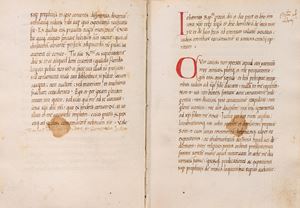
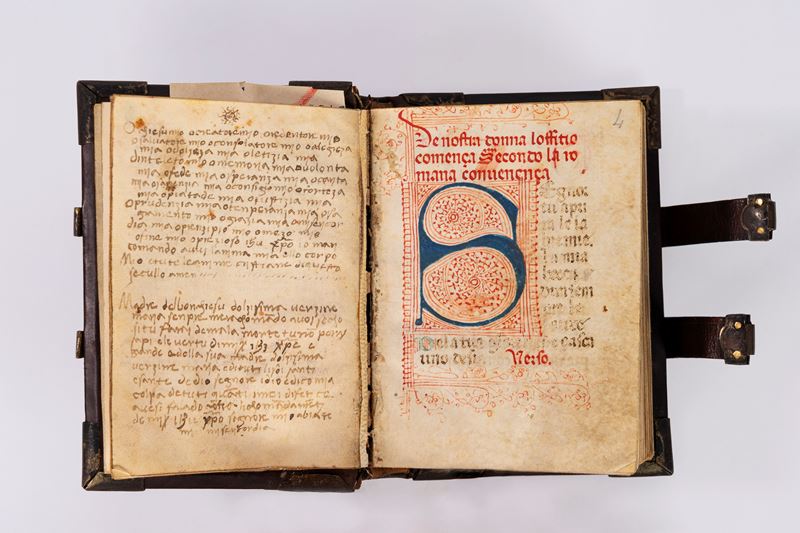
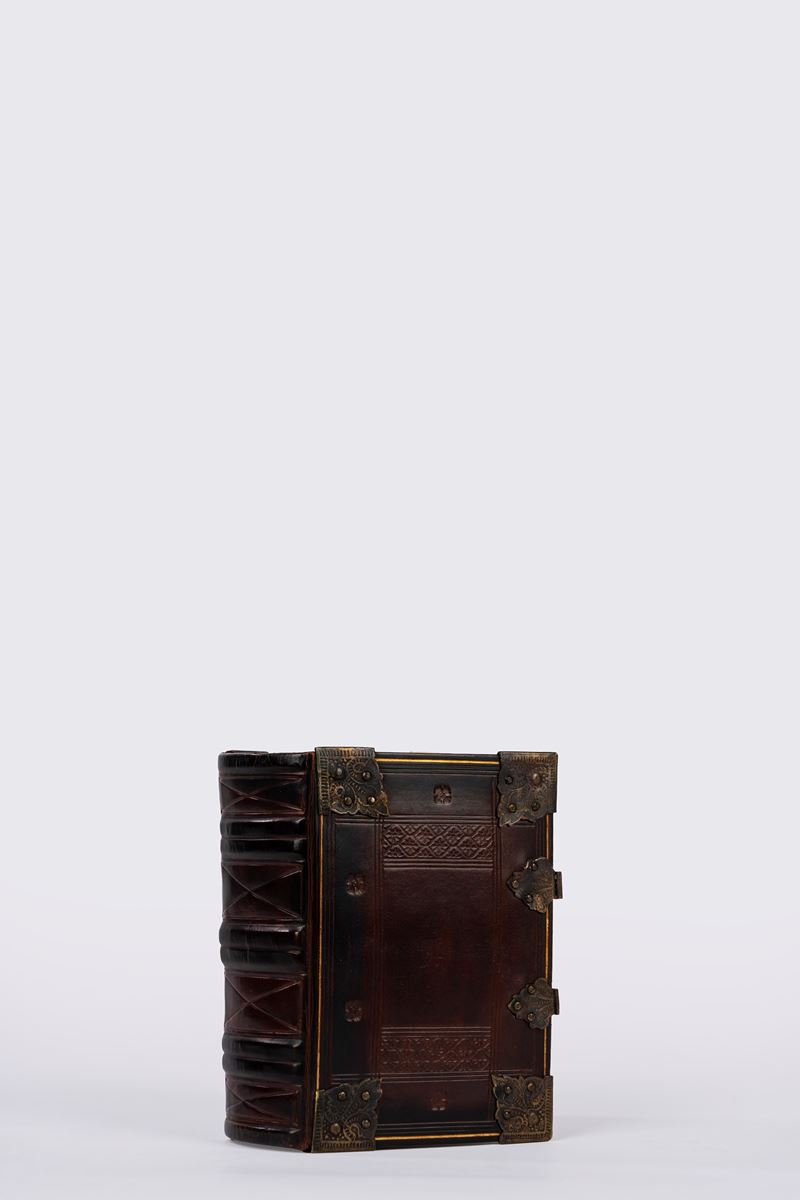
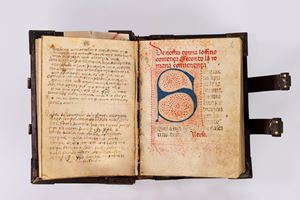
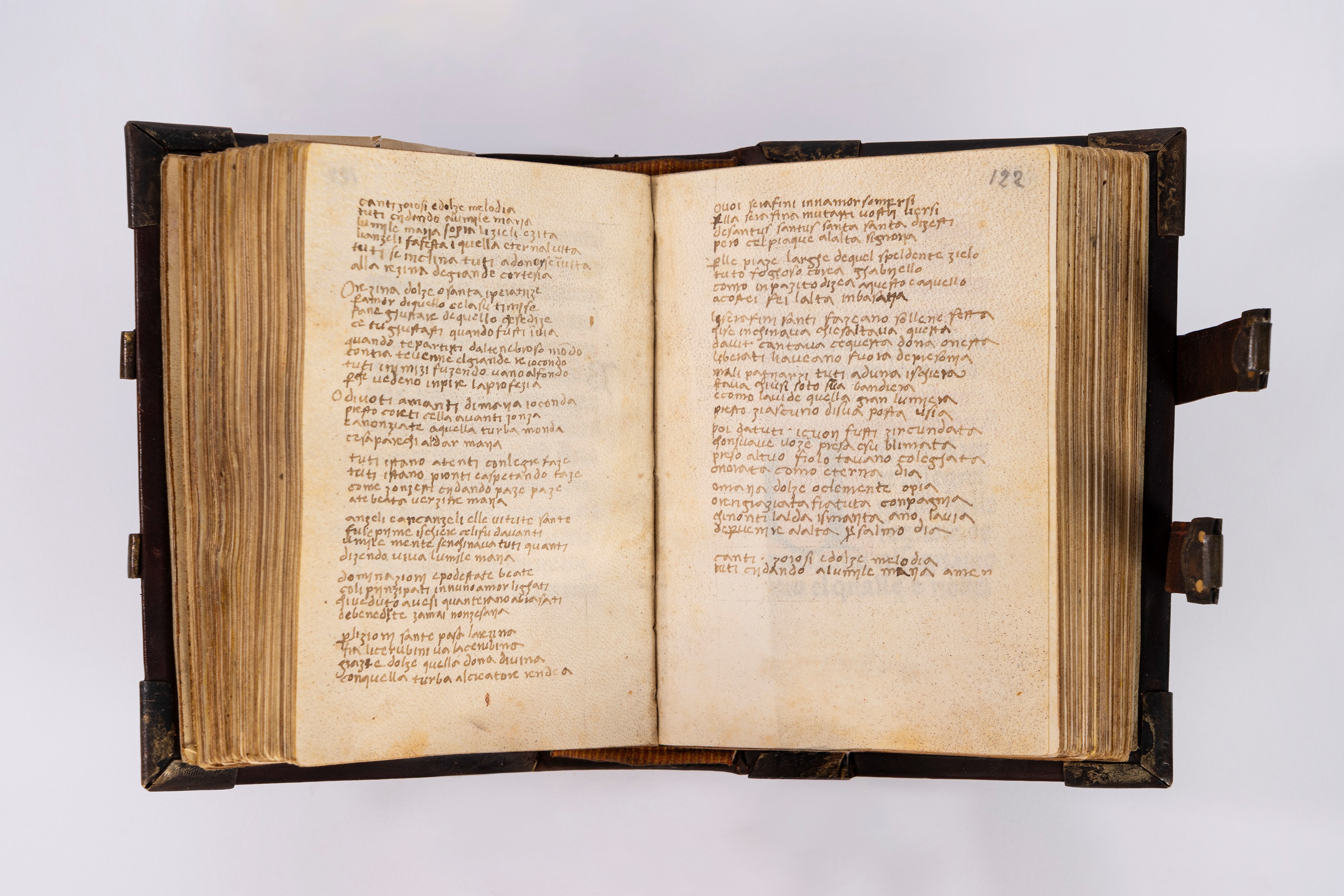
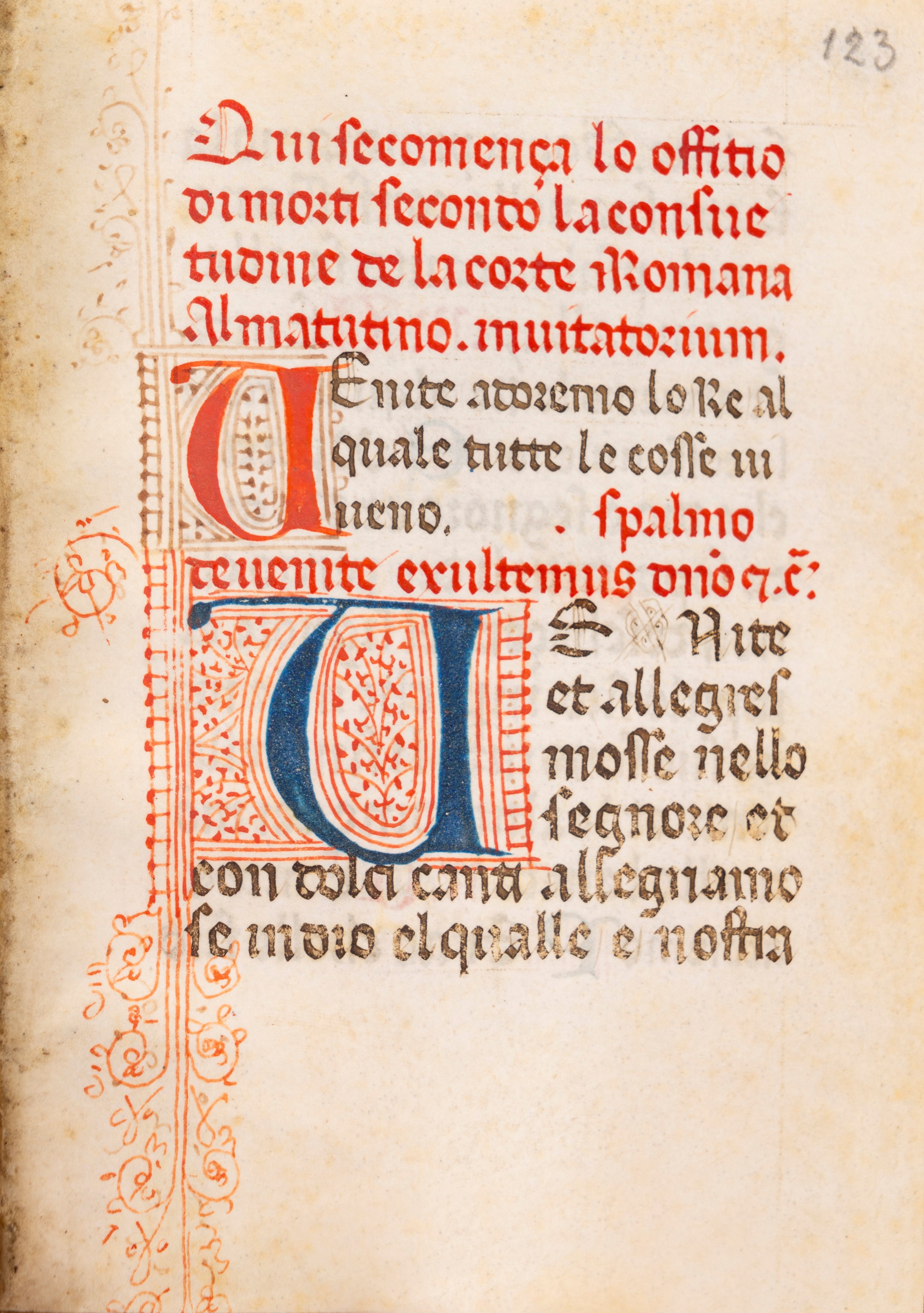
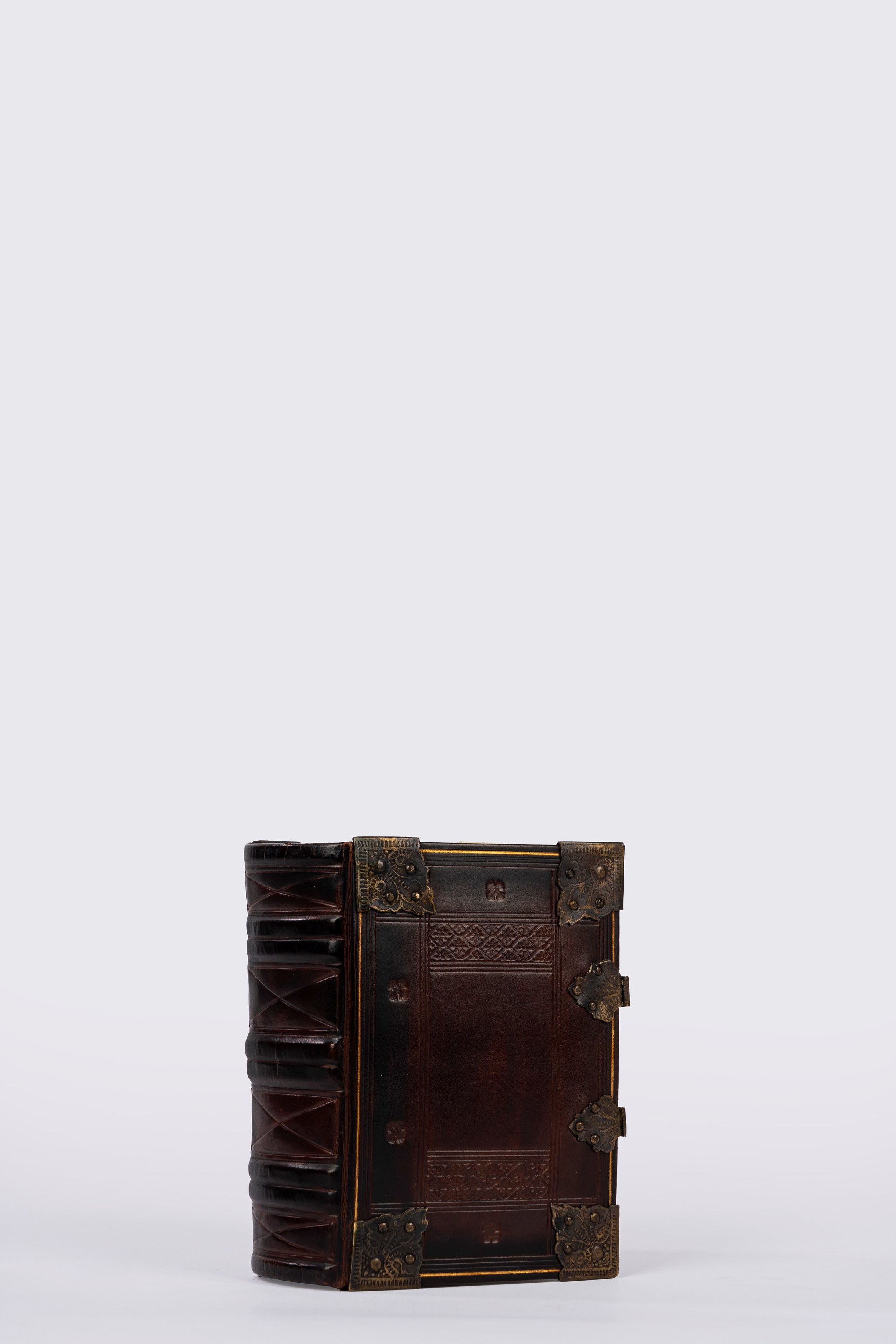
Rare parchment manuscript in Italian [Book of Hours], dating from the second half of the 15th century, probably from the Veneto region , 220 leaves, 110 x 80 mm., Gothic character in black and red, large and small filigreed initials, alternating in red and blue, references to notebooks, the first 4 leaves of the Calendar, chronologically from a slightly later period, are missing, light stains. Modern binding in full brown leather in the antique style, with clasps and corner pieces.
Content :
c.4r: Our lady's office begins According to the Roman convention
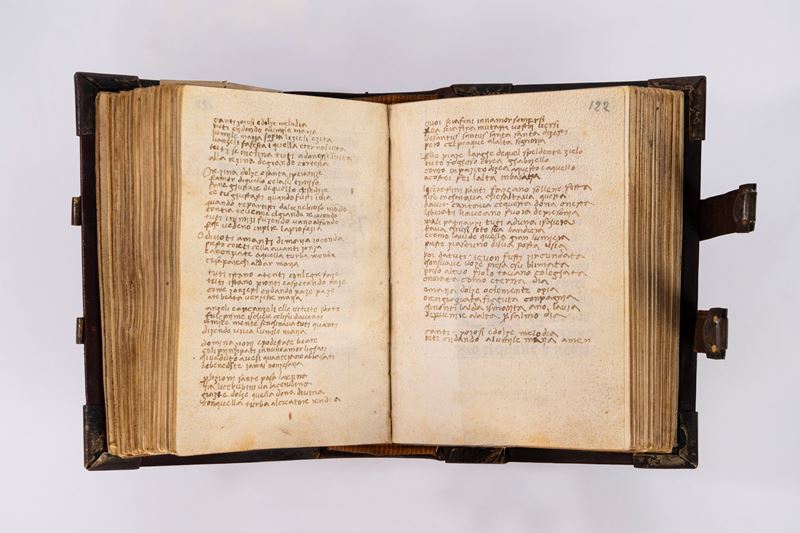
cc.121v-122r: Joyous songs and sweet melodies, (laud transcribed in italics by a different but contemporary hand)
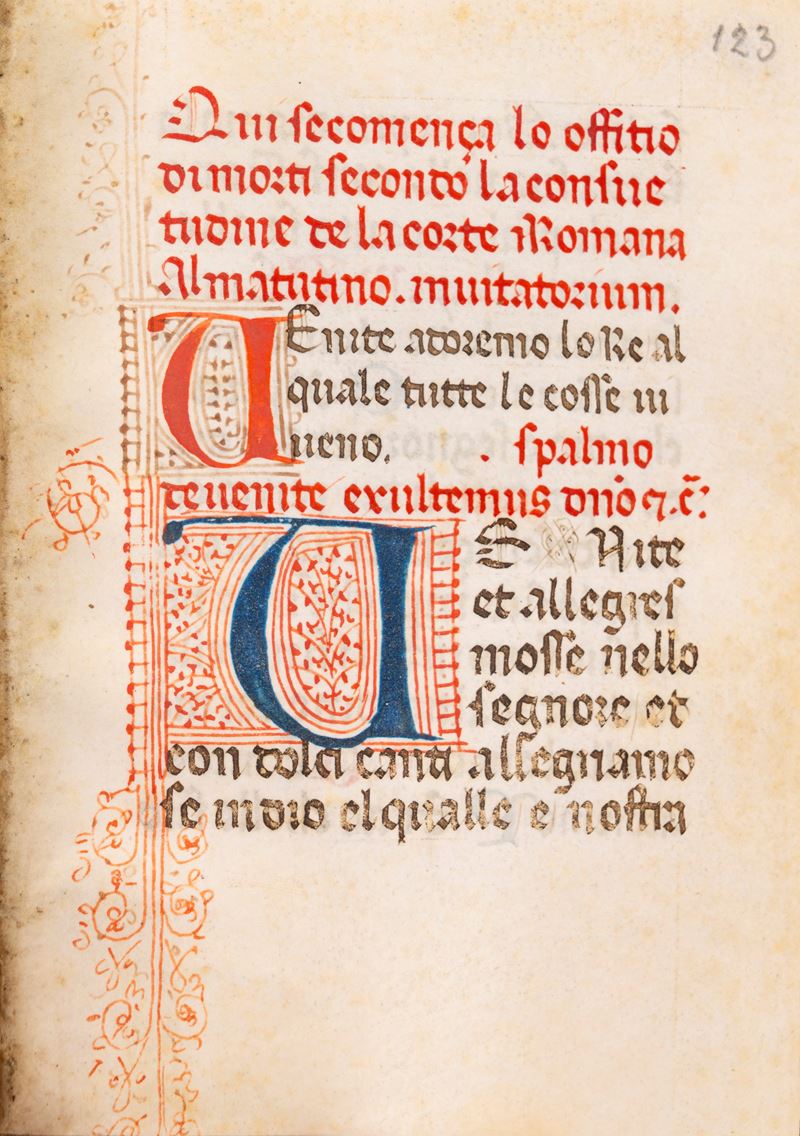
cc.123r-180r: The office of the dead according to the custom of the Roman court
cc.181r-198v: Whoever takes penitential psalms to vulgarize
cc.199r-218v: The passion of mes.Yhesu christo
cc.219r-220v: Verbu caro facto est de virgine Maria
Content :
c.4r: Our lady's office begins According to the Roman convention
cc.121v-122r: Joyous songs and sweet melodies, (laud transcribed in italics by a different but contemporary hand)
cc.123r-180r: The office of the dead according to the custom of the Roman court
cc.181r-198v: Whoever takes penitential psalms to vulgarize
cc.199r-218v: The passion of mes.Yhesu christo
cc.219r-220v: Verbu caro facto est de virgine Maria
Specialist Notes
Books of Hours are volumes of personal prayers, widespread in medieval Europe, particularly in the late Middle Ages and the Renaissance. They contain a liturgical calendar, psalms, antiphons, and other prayers to mark the canonical hours of the day. In the 15th century, Italy experienced a period of great cultural and artistic ferment, thanks to Humanism and the beginning of the Renaissance. Books of Hours also reflected this climate, evolving from simple collections of sacred texts to works of art, illustrated with precious miniatures and rich decorations. They served as guides for daily prayer, intended primarily for laypeople, often nobles or wealthy bourgeoisie. They were small, pocket-sized books, often produced on parchment, for personal use. They were usually decorated with brightly colored miniatures, naturalistic details, and sacred figures. In Italy, especially in the wealthy courts of Northern and Central Italy, they were enriched by Byzantine and Gothic influences, but also by emerging Renaissance styles. The predominant language remained Latin, sometimes accompanied by short texts in the Italian vernacular. In this case, the entire text is in the vernacular and constitutes a notable rarity.
Contact
Condition report
To request a Condition Report, please contact libriestampe@finarte.it
The department will provide you with a general report of the condition of the property described above. Please note that what Finarte declares with respect to the state of conservation of the objects corresponds only to a qualified opinion and that we are not professional conservators or restorers.
We urge you to consult with a restorer or conservator of your choice who will be better able to provide a detailed, professional report. We always suggest prospective buyers to inspect each lot to satisfy themselves as to condition during the exhibition days as indicated in the catalog.
Suggested lots
Caricamento lotti suggeriti...