Estimate
€ 12.000 - 14.000
Sold
€ 15.210
The price includes buyer's premium
Do you have a similar item you would like to sell?
Information
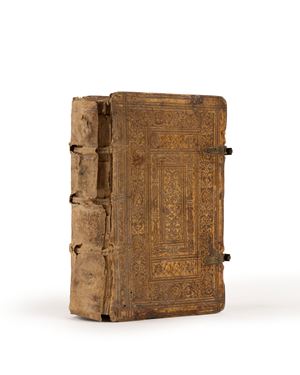
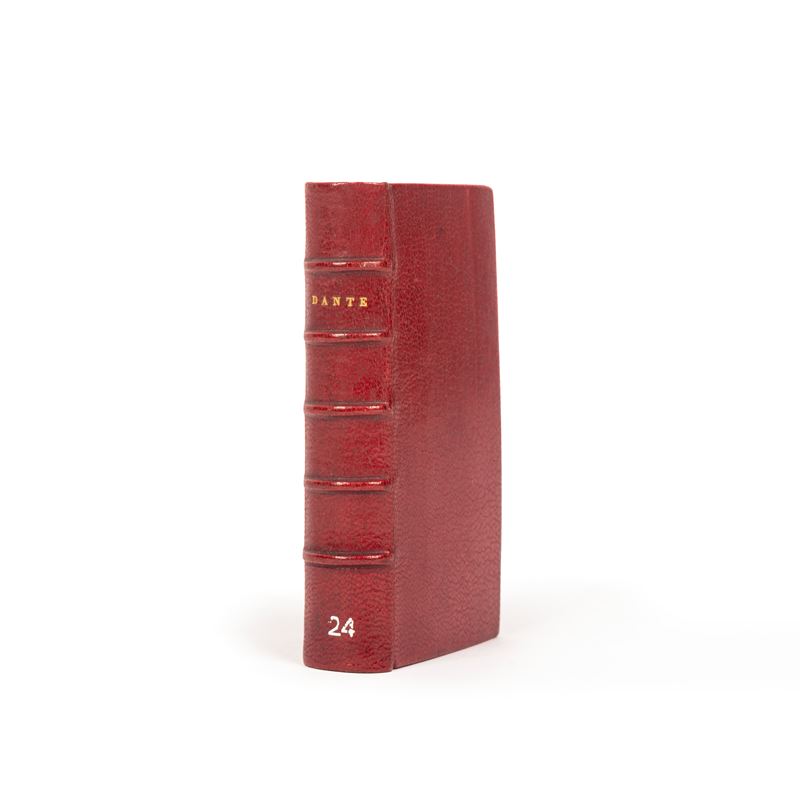
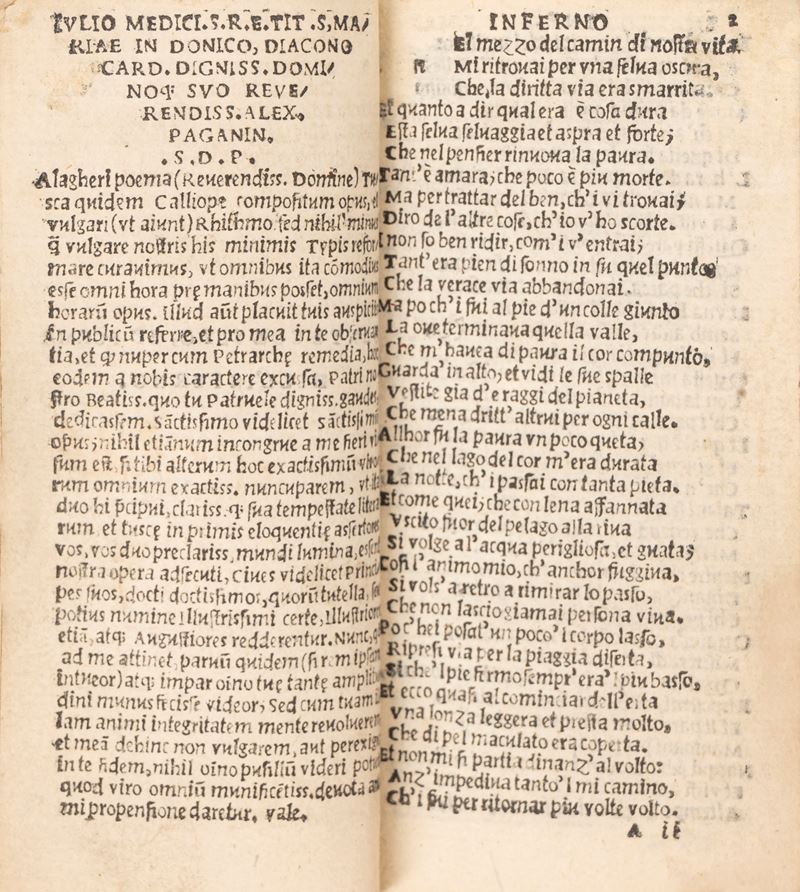
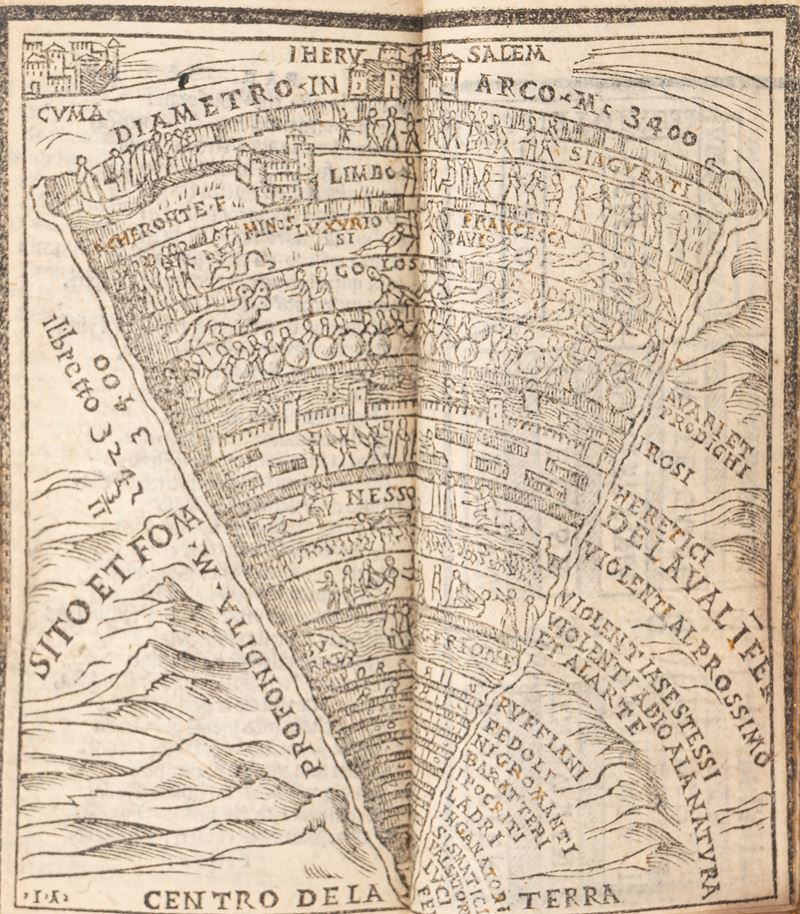
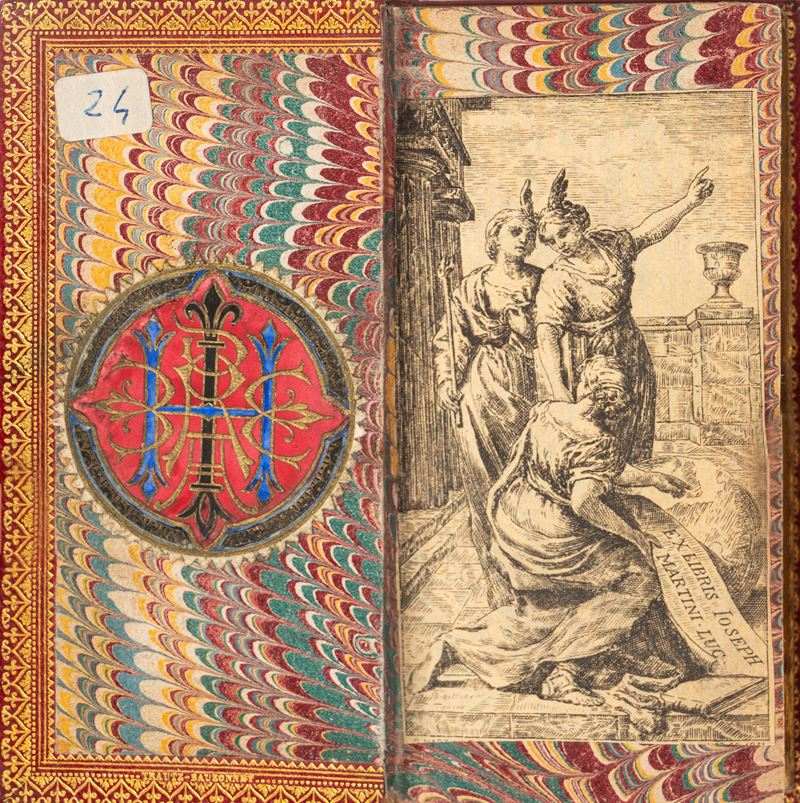
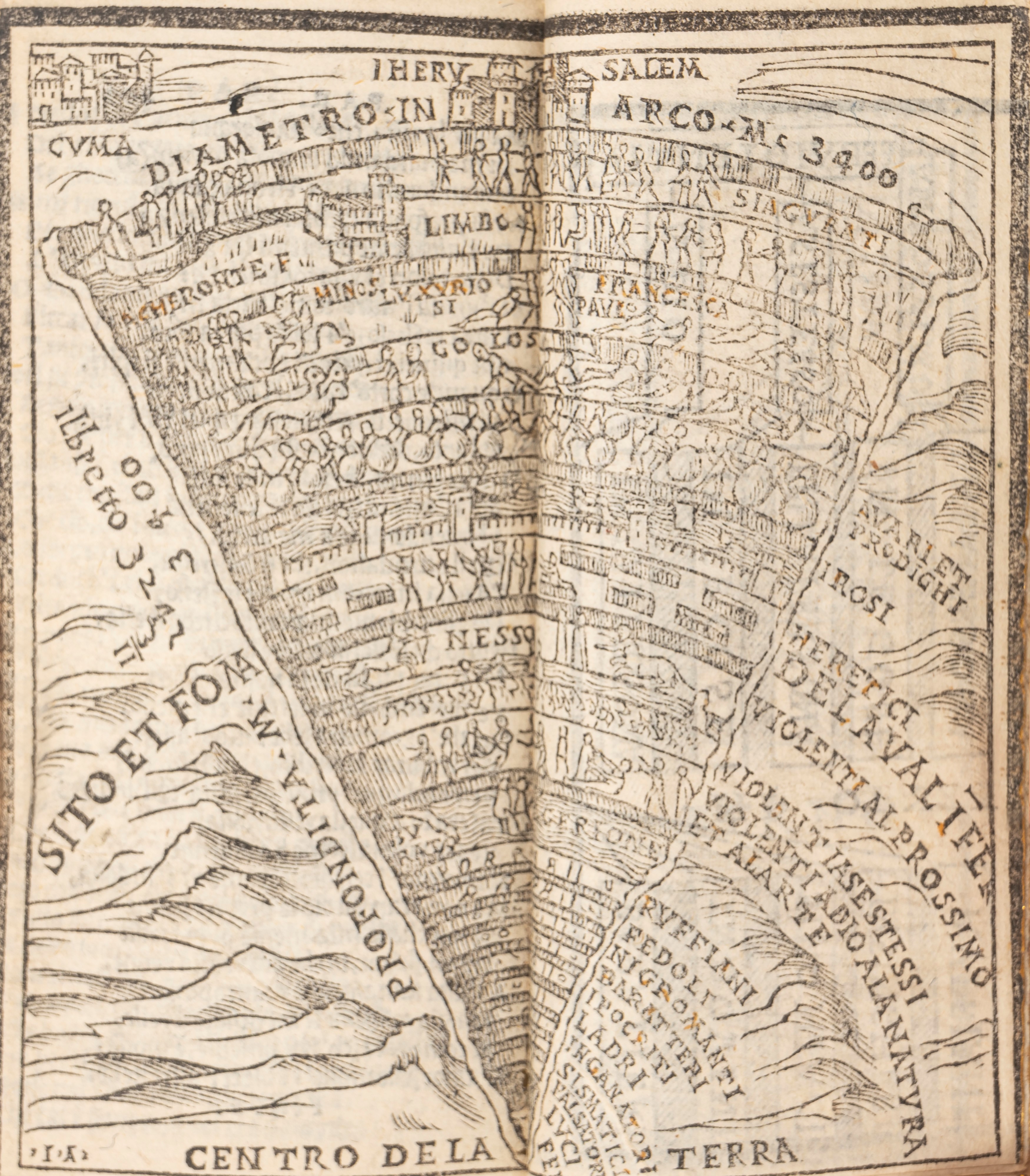
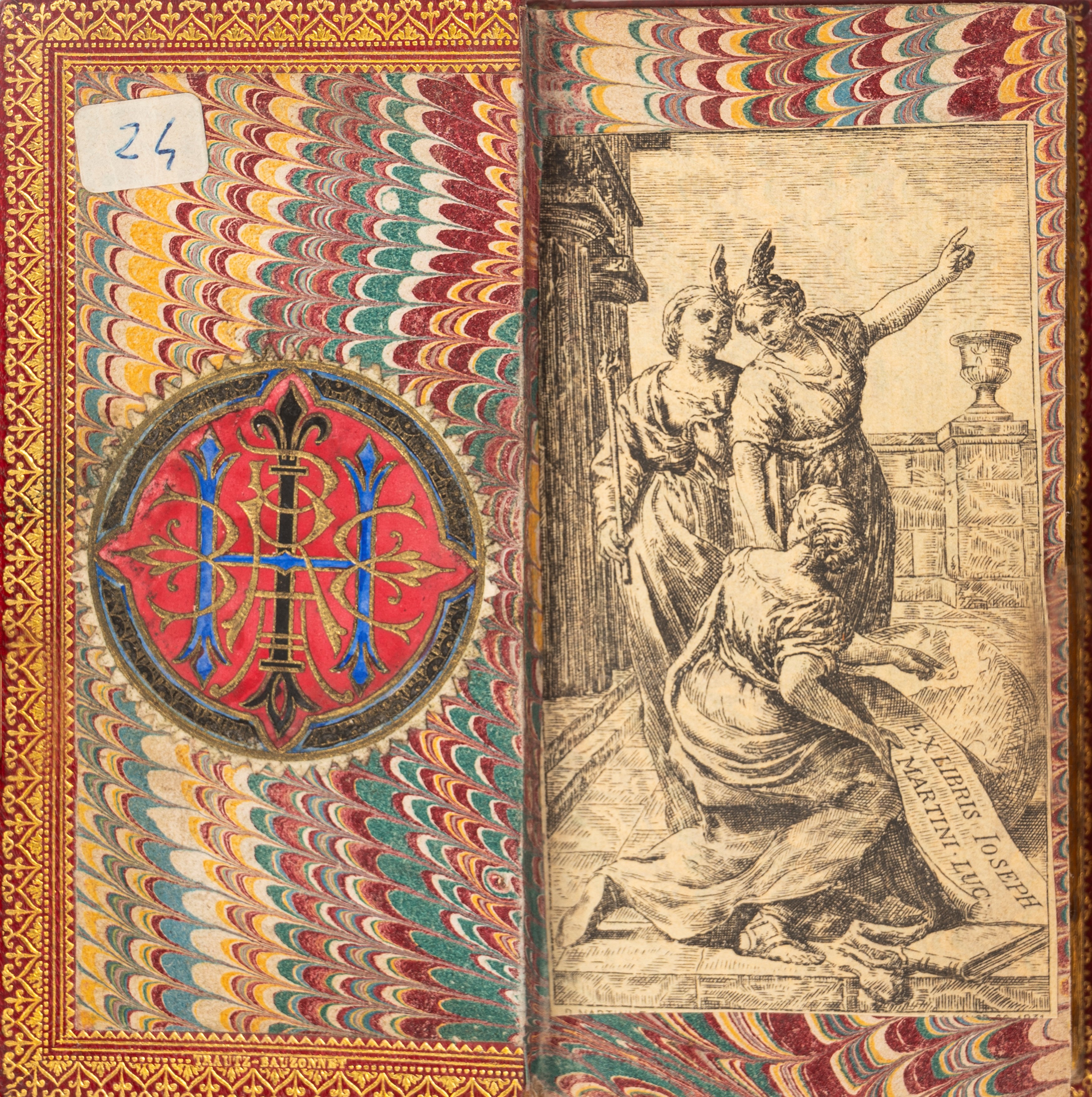
[Venice, Alessandro Paganini, between 1515 and 1516]. In 24° long. Italic and Gothic font, spaces for capitals with guide letters at the beginning of each canto, three woodcuts, two of which are double-page, depicting the Site and Form of Hell (cc. EE2v-EE3r) and the schemes of Hell (cc. . EE3v-EE4r) and of Purgatory (c. EE4v), PERFECT EXEMPLARY, binding in full red morocco with golden cuts and gold title on the spine, made by Trautz-Bauzonnet. Exemplary by Giuseppe Martini with his handwritten note in pencil and ex libris; ex libris with Edouard Rahir monogram (?) on the pastedown.
Specialist Notes
Very rare edition of the Comedy, the first in 24°.
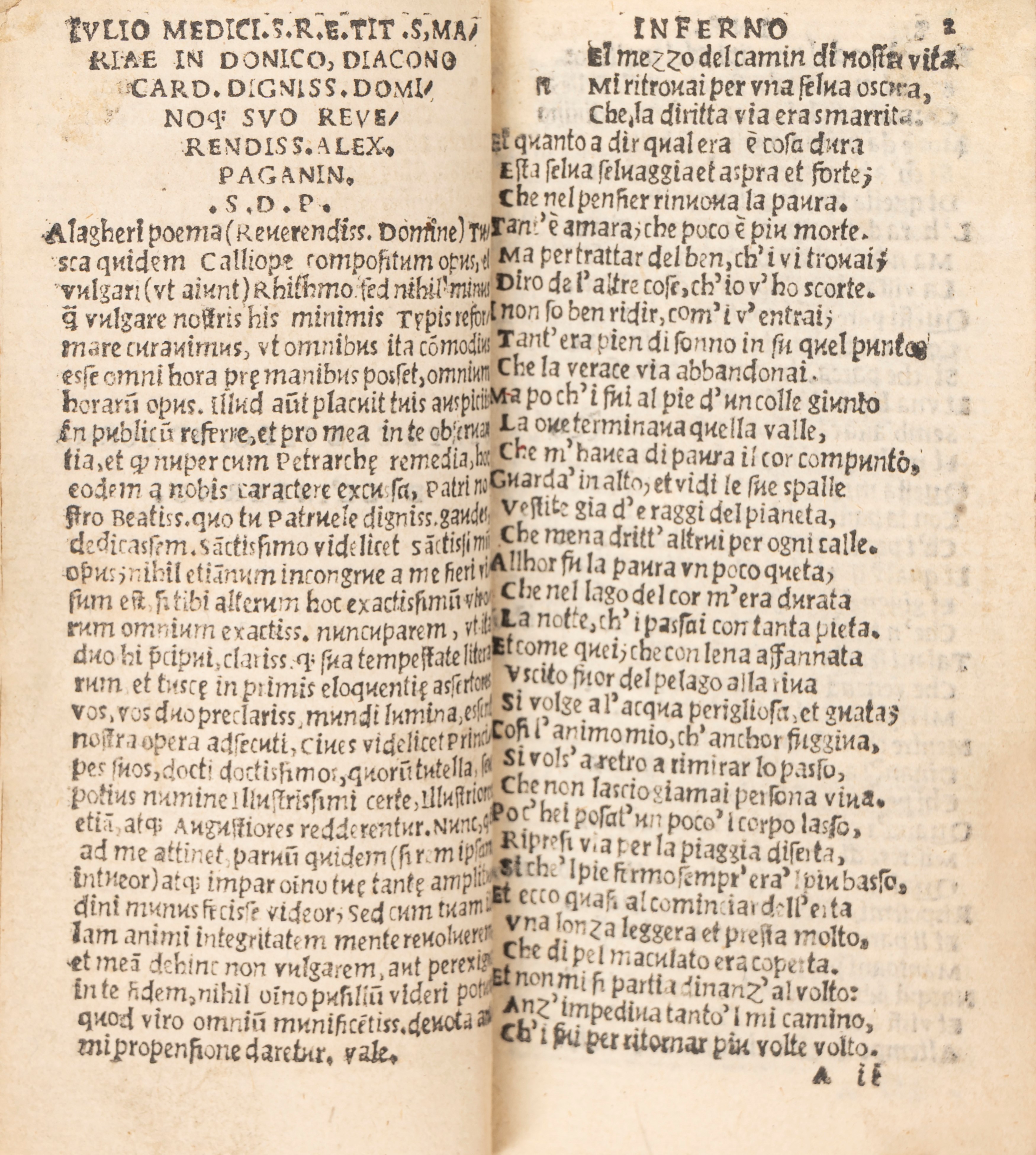
Paganino's Dantino, so nicknamed because it represents the smallest Renaissance edition of the poem, is illustrated by four woodcuts placed at the end of the volume, created by the famous Venetian cartographer and engraver Giovanni Andrea Vavassore, identified by the monogram 'IA' engraved on the first plate. Just as Aldo reinvented the octavo format, dedicating it to vernacular literature and the Greek-Latin classics, so Paganini, who considered Manutius as a master, was the true creator of the twenty-fourth format, which testifies not only to eclecticism and inventiveness commercial activity of the Benaco printer, but also the definitive overcoming of some fifteenth-century modules of book production. The edition, dedicated to Cardinal Giulio de' Medici, is included in a series inaugurated by Paganino in the same year with Petrarca's Rime, Bembo's Asolani and Sannazaro's Arcadia, also dedicated by the printer to illustrious contemporary personalities and patrons: «Dante in the twenty-fourth is dedicated to Giulio de' Medici and refers to the edition, nuper excussa, of De remedyis: connection with a clear strategic value in Paganino's catalogue, that of choosing, as dedicatees, the most authorized authors Tuscans, the two great Medici, characters extremely involved by family tradition (and not only) with vulgar culture. So conscious is the operation that it will be necessary to think of the printing of the Comedy right after that of De remediis, therefore in the same 1515». The name of the printer comes from the dedication to Giulio de' Medici, on c. A1v. Another issue with numbering in Roman numerals and recomposition line by line. (Angela Nuovo, Alessandro Paganino (1509-1538), Padua 1990, p. 28). De Batines I, 77-78. Mambelli, 26; Martini, p. 30; Adams D, 337; Baroncelli, 46; Brunet II, 502; Cat. Books, n. 582; Essling, 540-41; Sander, 2323-24.
Paganino's Dantino, so nicknamed because it represents the smallest Renaissance edition of the poem, is illustrated by four woodcuts placed at the end of the volume, created by the famous Venetian cartographer and engraver Giovanni Andrea Vavassore, identified by the monogram 'IA' engraved on the first plate. Just as Aldo reinvented the octavo format, dedicating it to vernacular literature and the Greek-Latin classics, so Paganini, who considered Manutius as a master, was the true creator of the twenty-fourth format, which testifies not only to eclecticism and inventiveness commercial activity of the Benaco printer, but also the definitive overcoming of some fifteenth-century modules of book production. The edition, dedicated to Cardinal Giulio de' Medici, is included in a series inaugurated by Paganino in the same year with Petrarca's Rime, Bembo's Asolani and Sannazaro's Arcadia, also dedicated by the printer to illustrious contemporary personalities and patrons: «Dante in the twenty-fourth is dedicated to Giulio de' Medici and refers to the edition, nuper excussa, of De remedyis: connection with a clear strategic value in Paganino's catalogue, that of choosing, as dedicatees, the most authorized authors Tuscans, the two great Medici, characters extremely involved by family tradition (and not only) with vulgar culture. So conscious is the operation that it will be necessary to think of the printing of the Comedy right after that of De remediis, therefore in the same 1515». The name of the printer comes from the dedication to Giulio de' Medici, on c. A1v. Another issue with numbering in Roman numerals and recomposition line by line. (Angela Nuovo, Alessandro Paganino (1509-1538), Padua 1990, p. 28). De Batines I, 77-78. Mambelli, 26; Martini, p. 30; Adams D, 337; Baroncelli, 46; Brunet II, 502; Cat. Books, n. 582; Essling, 540-41; Sander, 2323-24.
Contact
Suggested lots
Caricamento lotti suggeriti...
More Lots
94
Alighieri, Dante
Works of the divine poet Danthe with his comments: recorrecti et with every diligence newly..., 1512
Estimate € 3.500 - 4.500
Starting bid € 3.500