Information
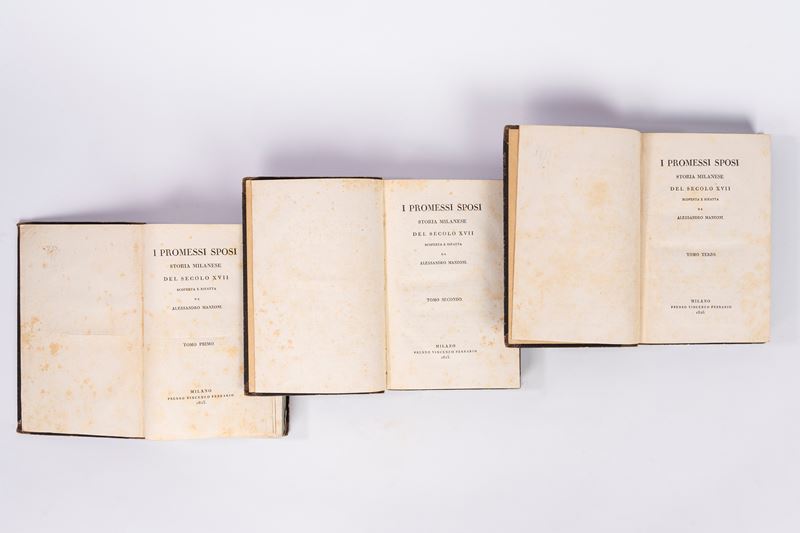
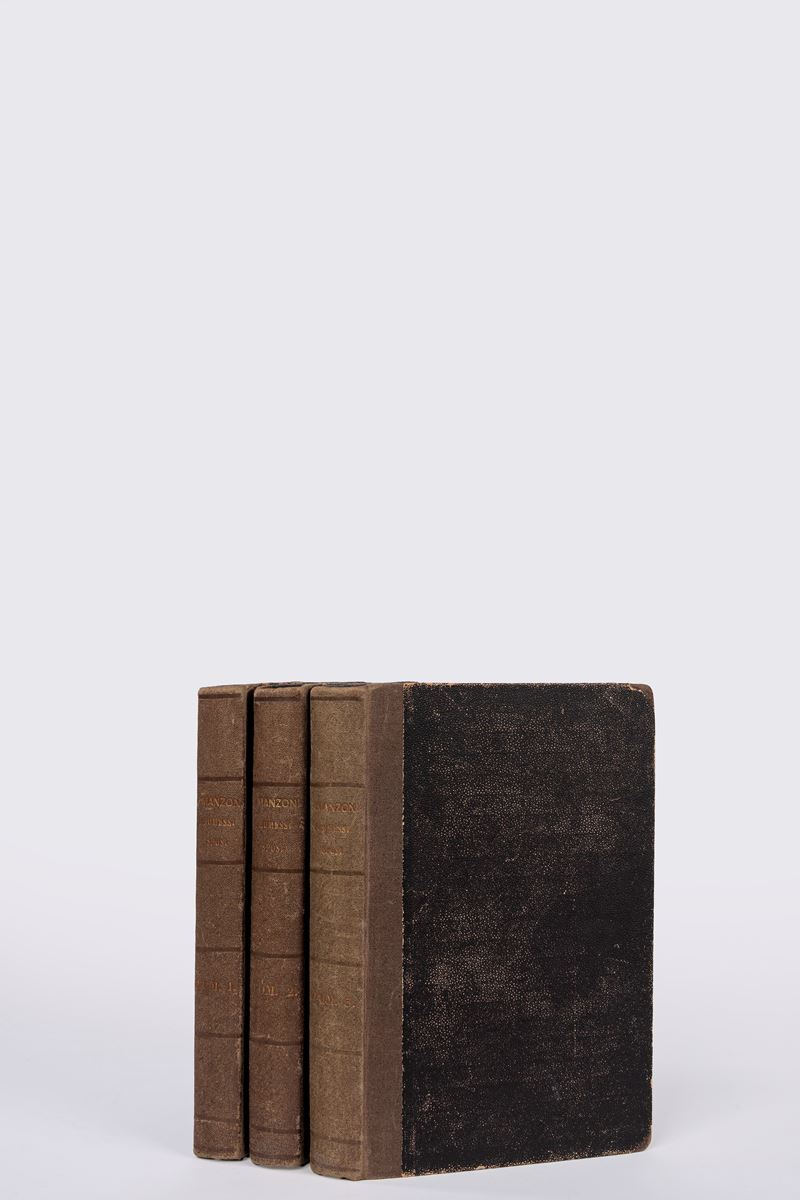
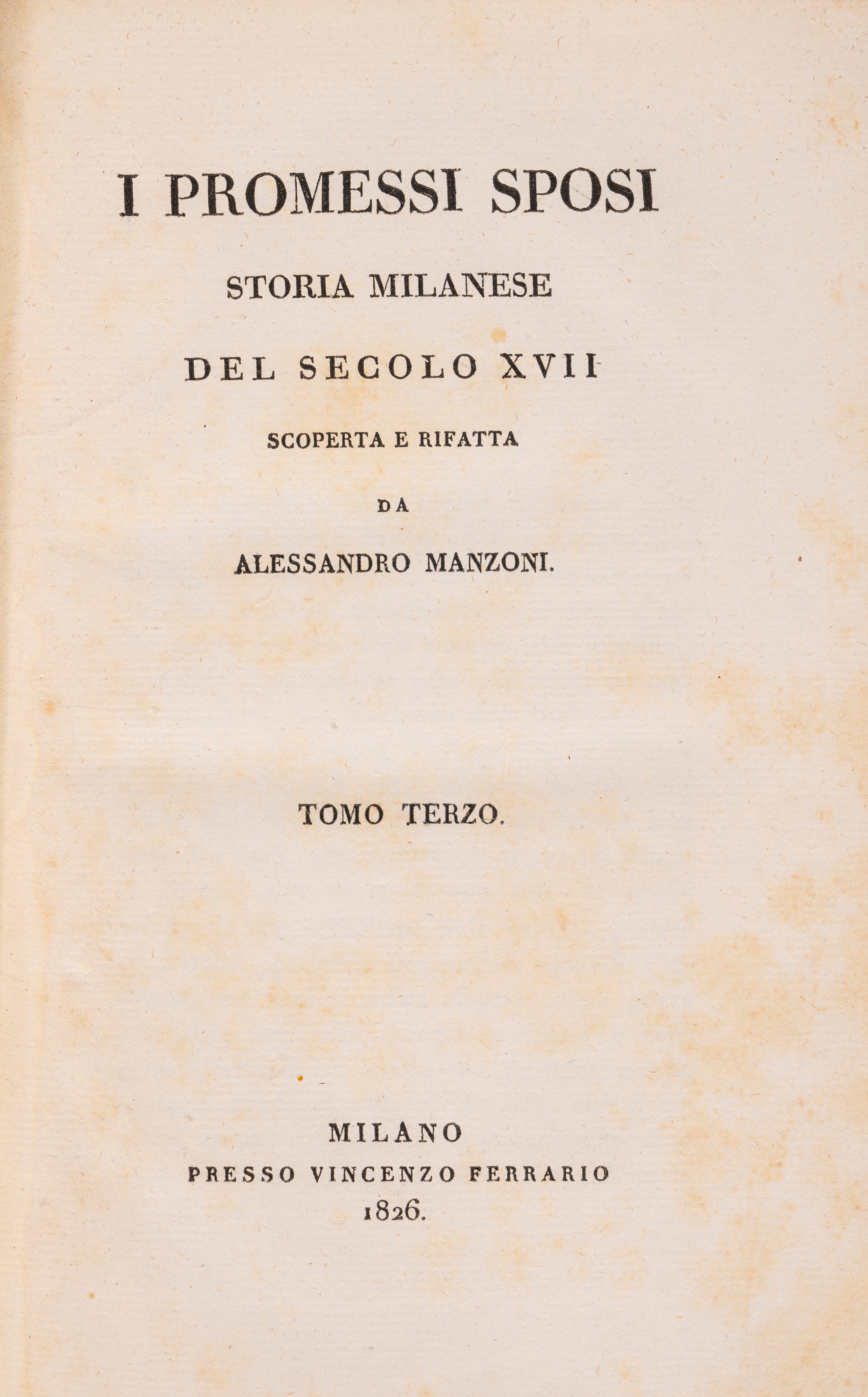
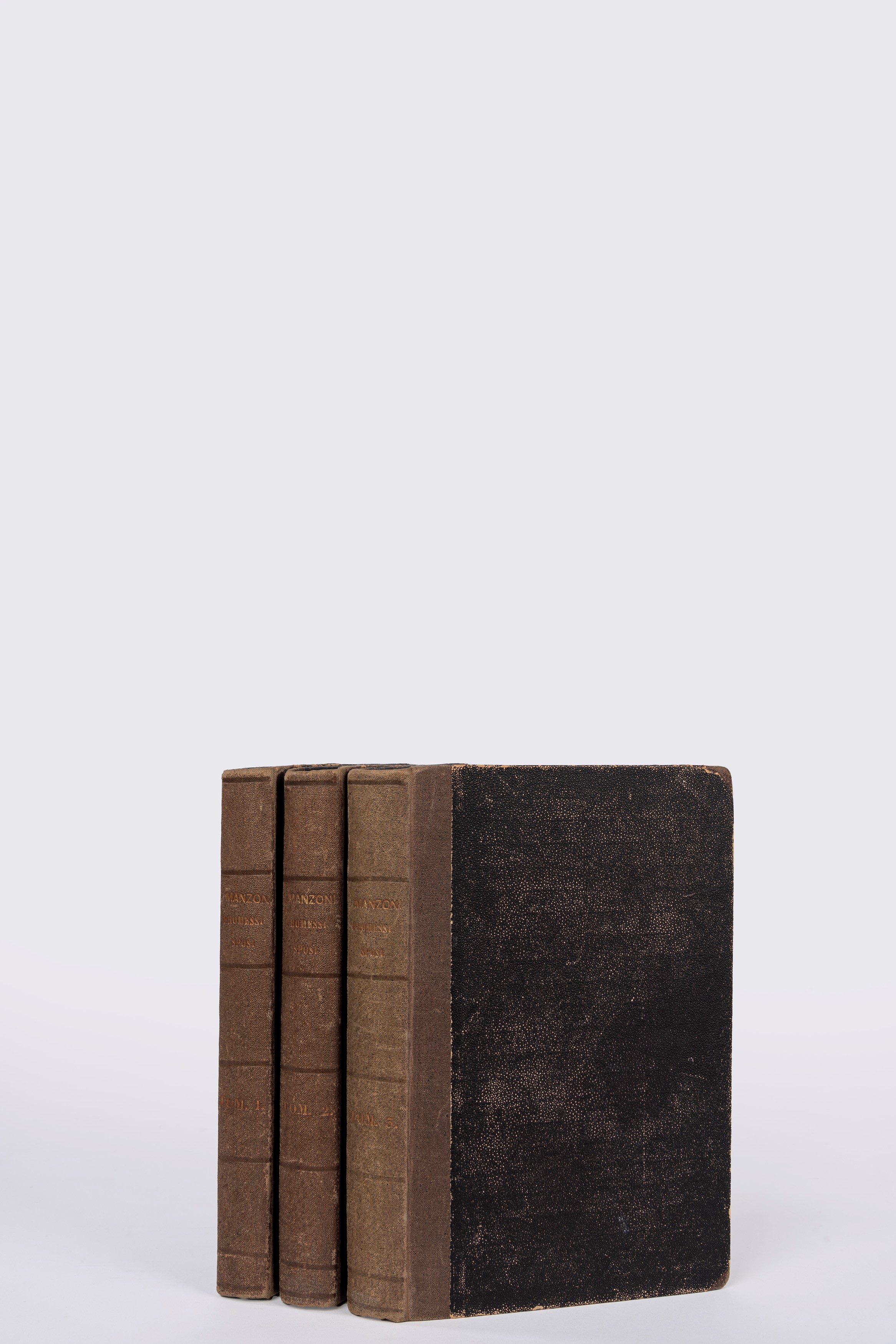
Milan, at Vincenzo Ferrario, 1825-1826. In 8°, 3 vols. pp. [4] 352; [4] 368; [4] 416 [2], with final errata. 202 x 130 mm. Slight marginal foxing, otherwise an excellent copy, in a 19th-century percale binding.
Specialist Notes
THE FOUNDATIVE NOVEL OF OUR LANGUAGE AND THE IDENTITY OF ITALIAN CULTURE
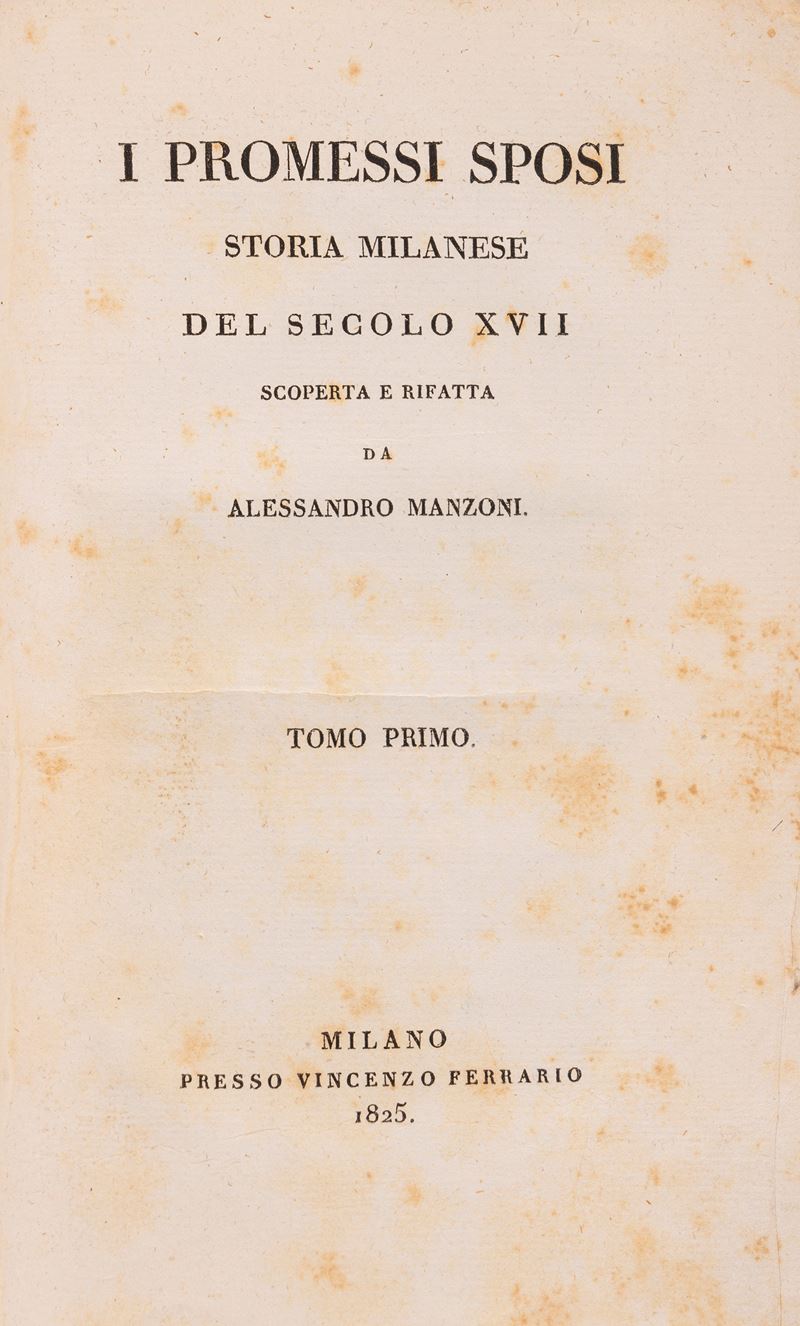
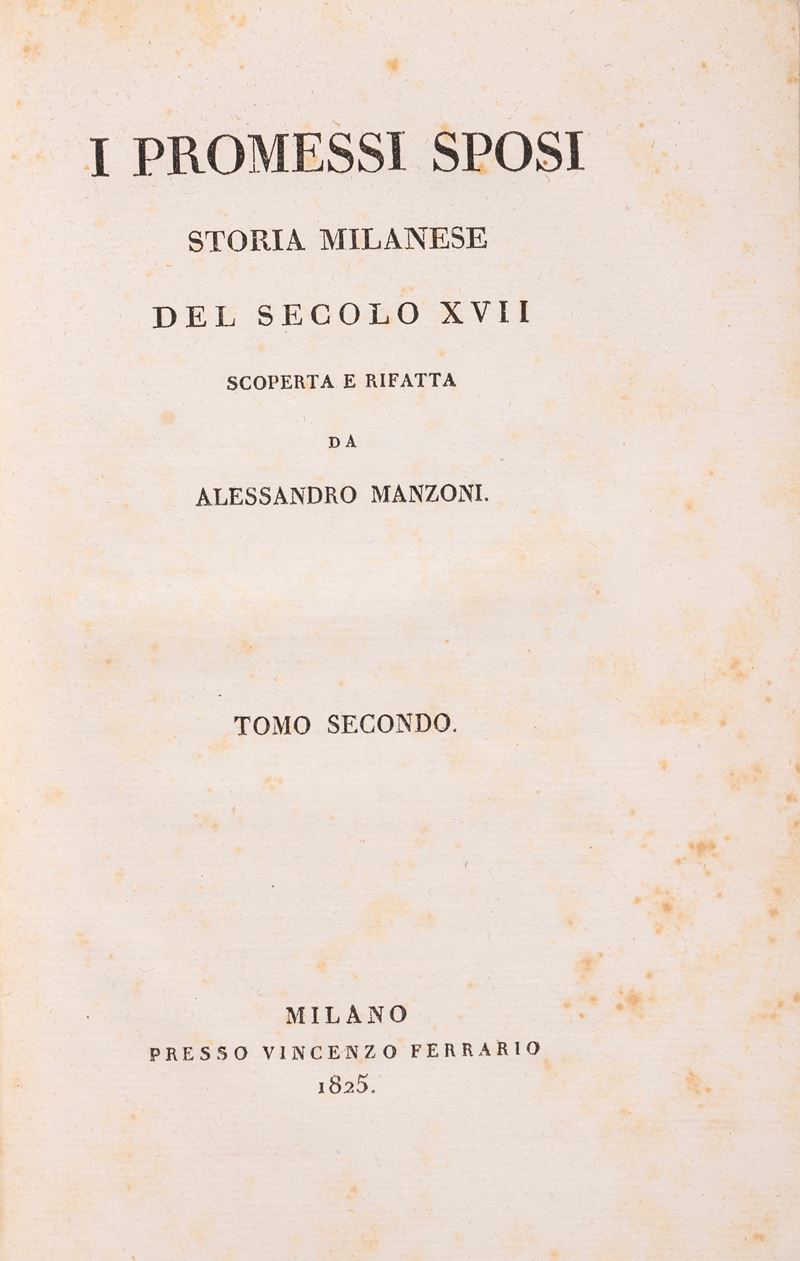
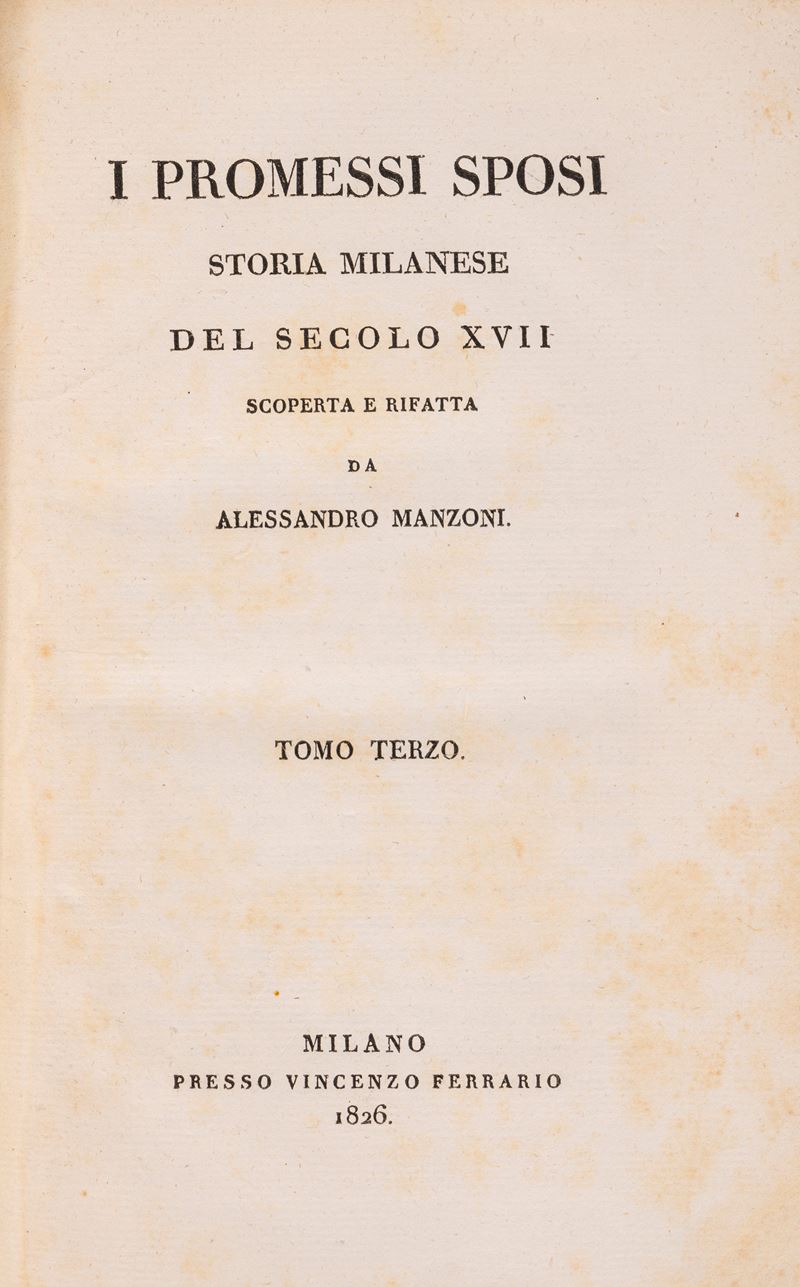
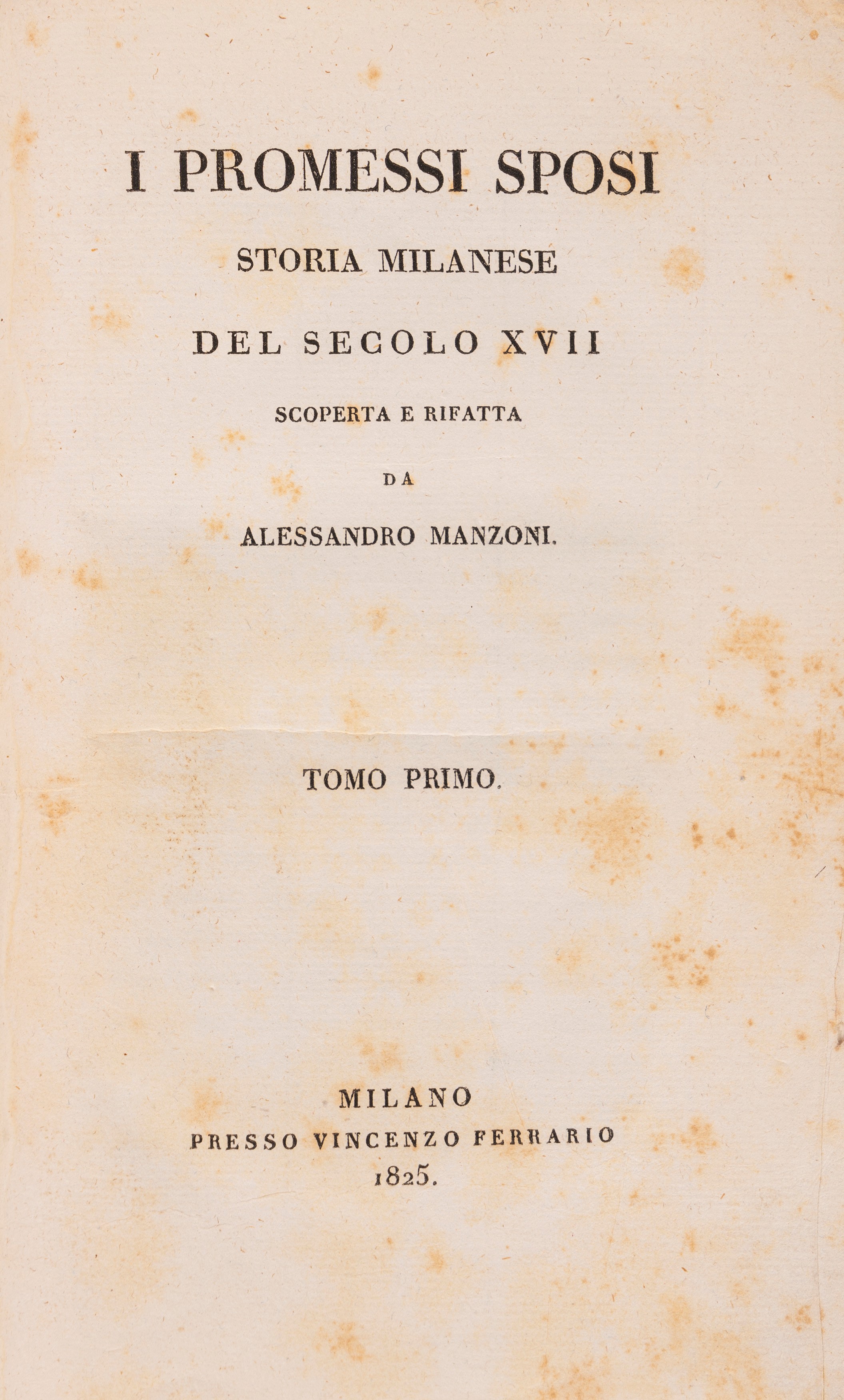
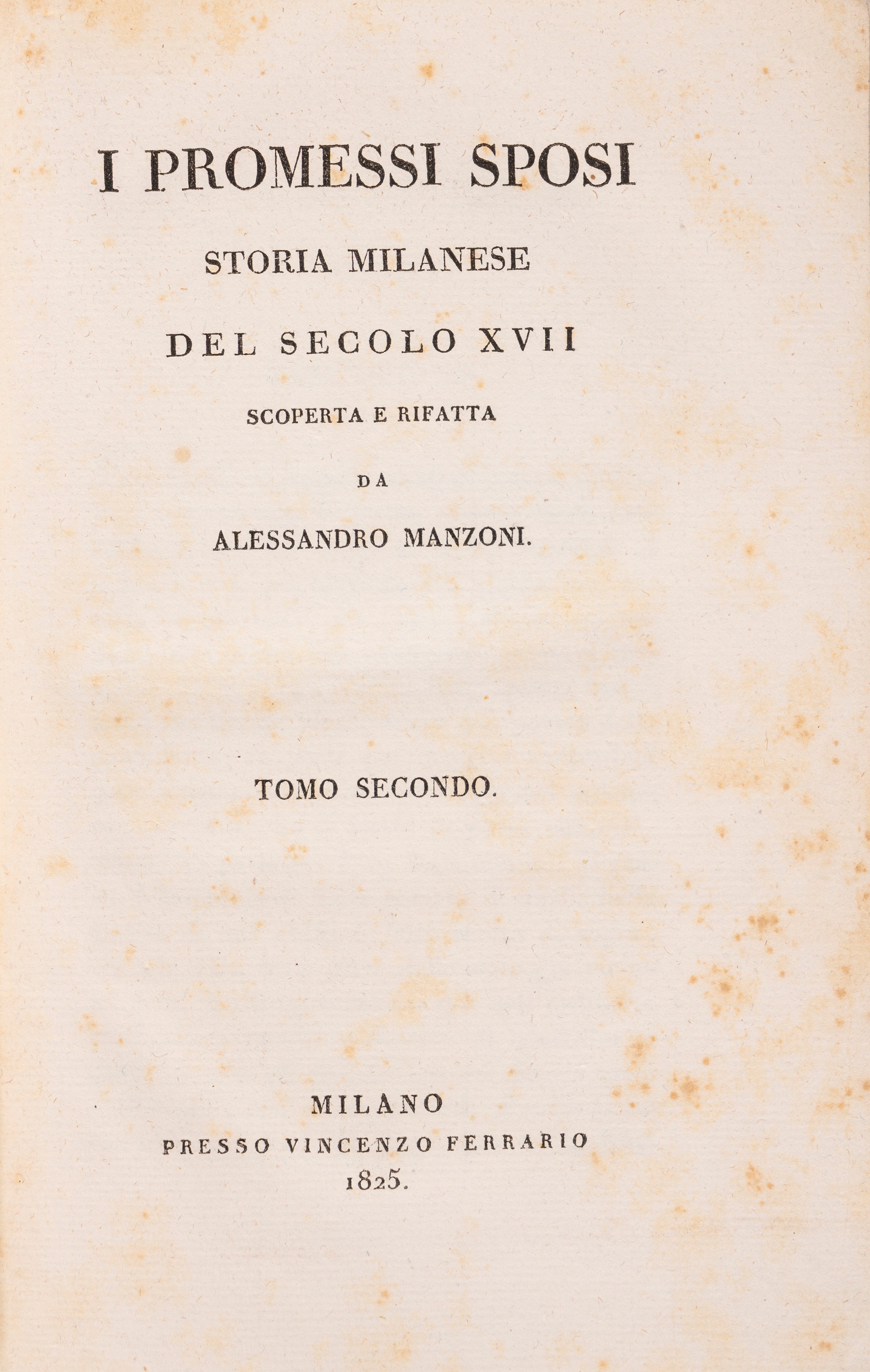
Manzoni finished drafting the novel in September 1823 and immediately undertook a diligent revision of the text. By June 1824, the publisher Ferrario was able to submit the first volume for censorship, and it was printed in October of the same year. However, the title page was stamped with "1825," with the hope of completing the rest of the work by that date. Work progressed quickly on the second volume, which was indeed published in 1825, as indicated on the title page. The third volume, however, took longer: the presses were set in motion in 1826, and the title page was stamped with that year's date, but the deadline was not met, and the final publication took place only in June 1827.
As is well known, Manzoni closely followed the printing of the work, correcting typos and oversights while the presses were still in motion; tangible evidence of this is the variant versions, which are in truth few in number, but are now recognizable thanks to the complete and valuable collation work carried out by Harris and Sartorelli. The present copy contains the variants in volume III: p. 378, line 13, the preposition 'di' has been dropped from the phrase "in more than one place in this story"; the error is also noted in the errata, which indicates its presence "in some copies"; p. 330, line 14: it reads "gioia mondana" rather than "gioia carnale."
This last case is perhaps the most interesting, the only one that can truly be considered an authorial variant (the others could easily have been amended by the publisher). However, if, in the erroneous cases, we are certain which reading is the older one, naturally the correct one, we are here faced with two perfectly adiaphorous variants, for which it is extremely difficult to establish which is the older one. And yet, Harris and Sartorelli, based on some material evidence, hypothesize that the first state bore the reading "carnale," later replaced in the printing process with "mondana"; among the copies listed by the two scholars, those bearing the second reading would be fewer.
(Pontremoli Antiquarian Bookshop, online )
Manzoni finished drafting the novel in September 1823 and immediately undertook a diligent revision of the text. By June 1824, the publisher Ferrario was able to submit the first volume for censorship, and it was printed in October of the same year. However, the title page was stamped with "1825," with the hope of completing the rest of the work by that date. Work progressed quickly on the second volume, which was indeed published in 1825, as indicated on the title page. The third volume, however, took longer: the presses were set in motion in 1826, and the title page was stamped with that year's date, but the deadline was not met, and the final publication took place only in June 1827.
As is well known, Manzoni closely followed the printing of the work, correcting typos and oversights while the presses were still in motion; tangible evidence of this is the variant versions, which are in truth few in number, but are now recognizable thanks to the complete and valuable collation work carried out by Harris and Sartorelli. The present copy contains the variants in volume III: p. 378, line 13, the preposition 'di' has been dropped from the phrase "in more than one place in this story"; the error is also noted in the errata, which indicates its presence "in some copies"; p. 330, line 14: it reads "gioia mondana" rather than "gioia carnale."
This last case is perhaps the most interesting, the only one that can truly be considered an authorial variant (the others could easily have been amended by the publisher). However, if, in the erroneous cases, we are certain which reading is the older one, naturally the correct one, we are here faced with two perfectly adiaphorous variants, for which it is extremely difficult to establish which is the older one. And yet, Harris and Sartorelli, based on some material evidence, hypothesize that the first state bore the reading "carnale," later replaced in the printing process with "mondana"; among the copies listed by the two scholars, those bearing the second reading would be fewer.
(Pontremoli Antiquarian Bookshop, online )
Contact
Condition report
To request a Condition Report, please contact libriestampe@finarte.it
The department will provide you with a general report of the condition of the property described above. Please note that what Finarte declares with respect to the state of conservation of the objects corresponds only to a qualified opinion and that we are not professional conservators or restorers.
We urge you to consult with a restorer or conservator of your choice who will be better able to provide a detailed, professional report. We always suggest prospective buyers to inspect each lot to satisfy themselves as to condition during the exhibition days as indicated in the catalog.
Suggested lots
Caricamento lotti suggeriti...