
Information
oil on canvas, unframed
92 x 70.5 cm
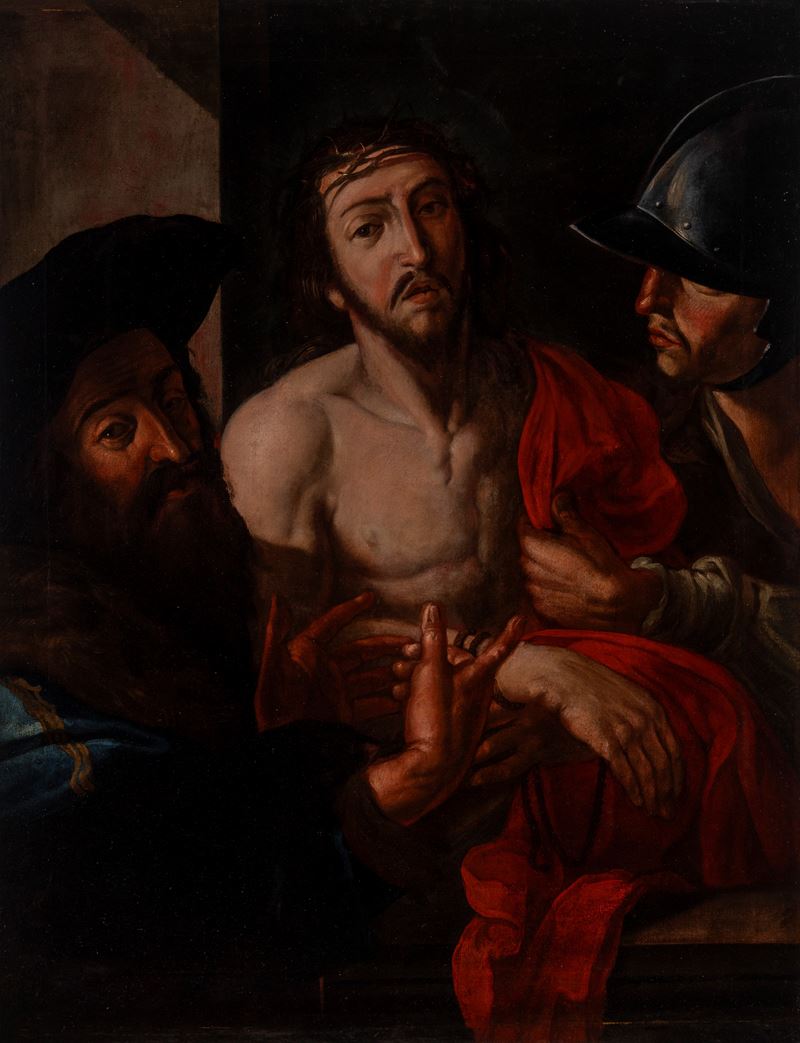
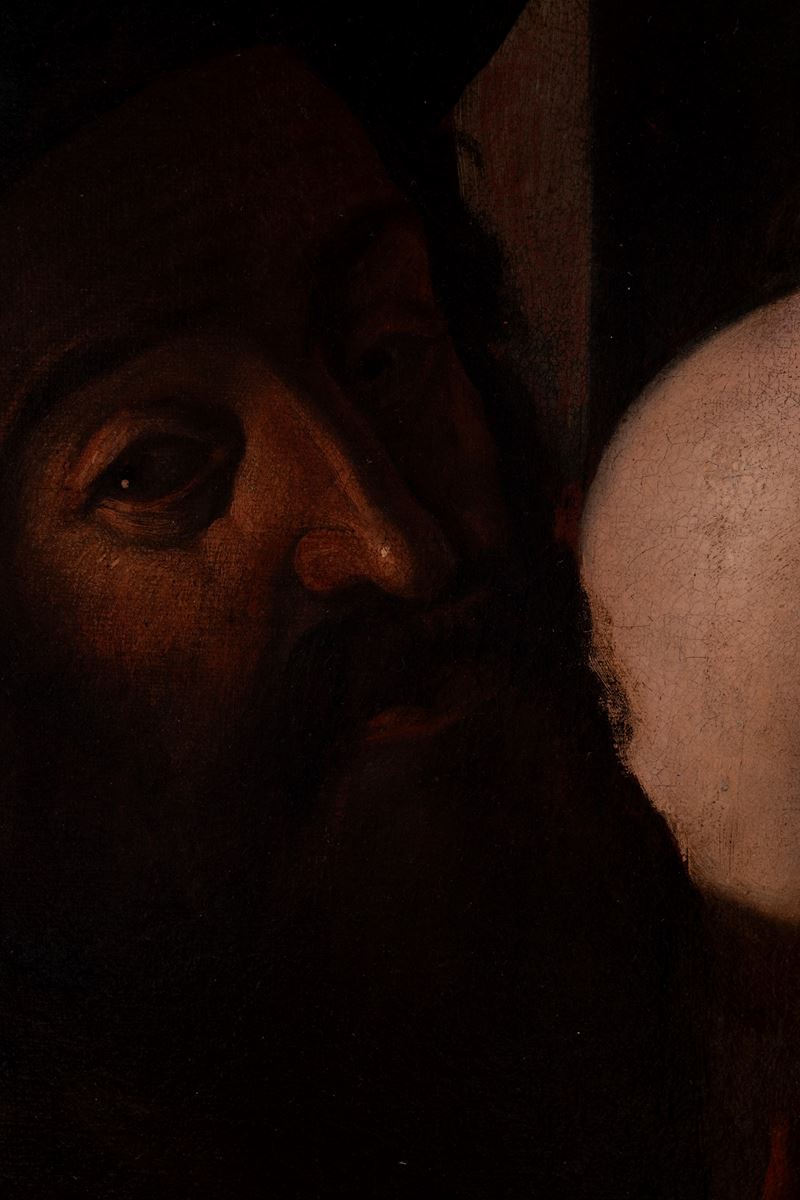
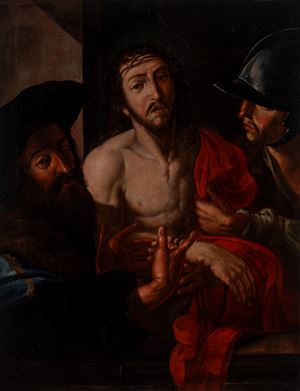
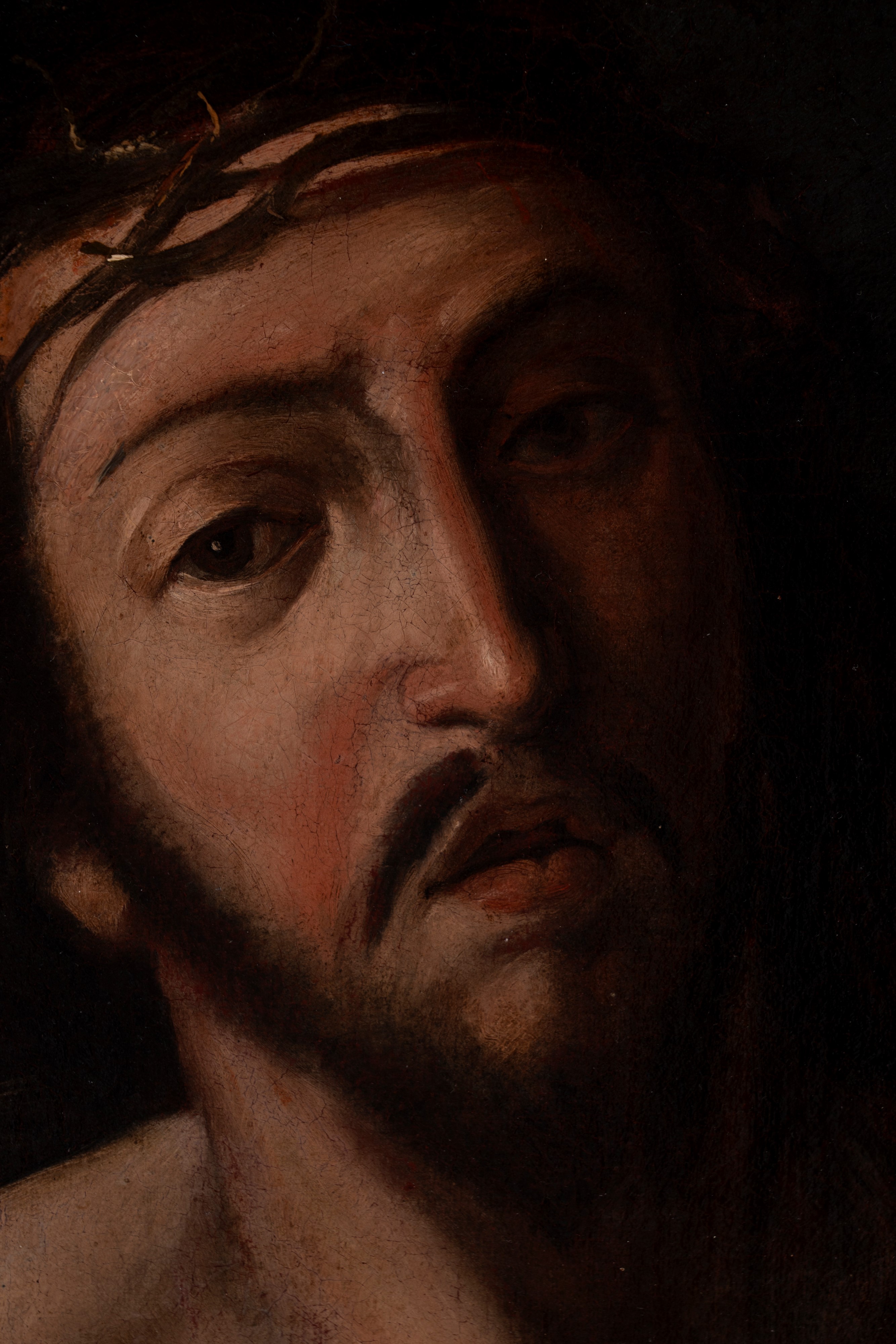
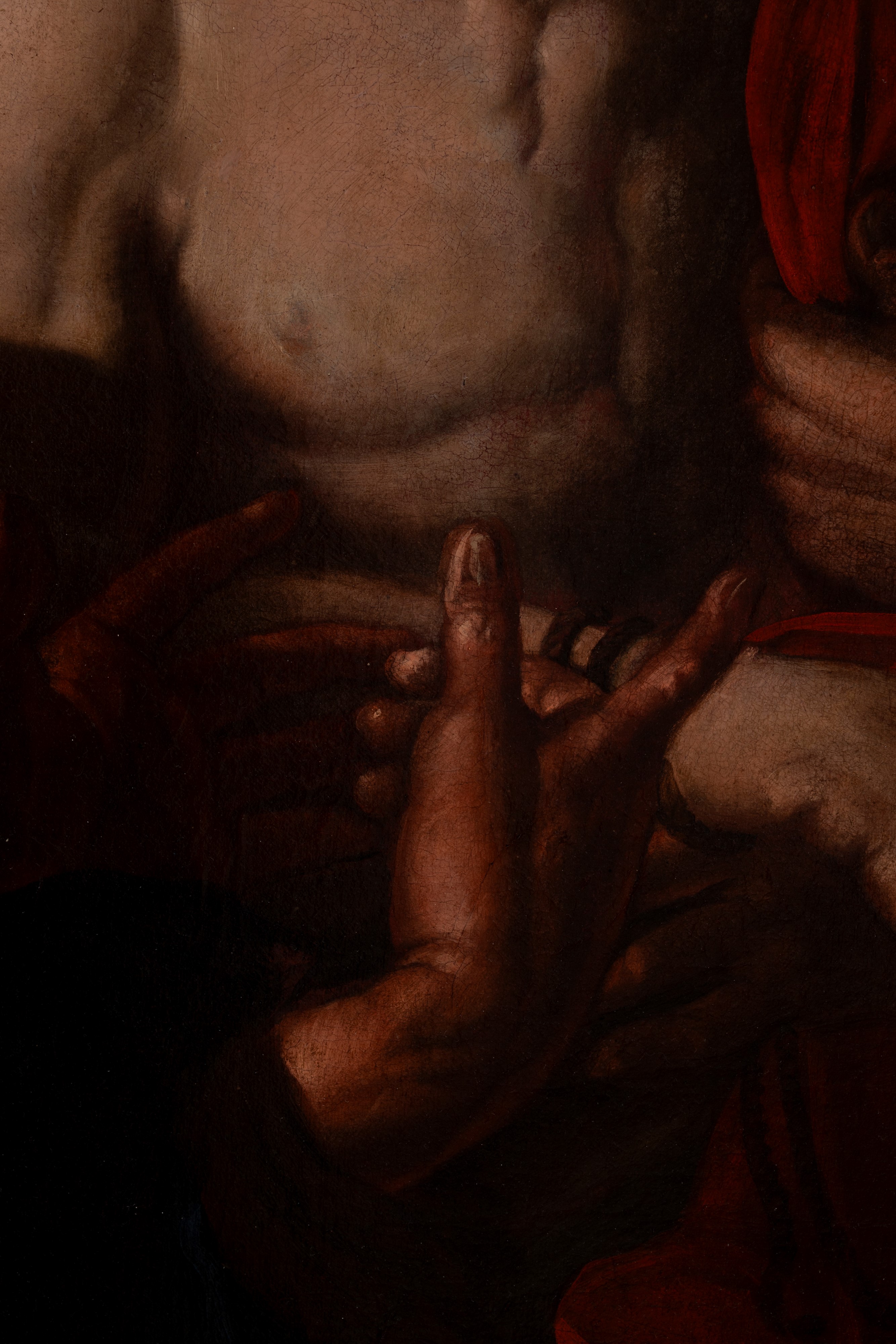
The painting, purchased on the antiques market in 2011 by the current owner, as Professor Antonio Vannugli states in the detailed report drawn up on 14 April 2025, a copy of which is available, presents a style of "strict observance of Caravaggio", so much so as to suggest a fairly faithful derivation from a lost model by Caravaggio.
92 x 70.5 cm
The painting, purchased on the antiques market in 2011 by the current owner, as Professor Antonio Vannugli states in the detailed report drawn up on 14 April 2025, a copy of which is available, presents a style of "strict observance of Caravaggio", so much so as to suggest a fairly faithful derivation from a lost model by Caravaggio.
The subject, undoubtedly explored several times by the Lombard painter throughout his artistic career, as attested by 17th-century documentary and literary sources, is reflected in at least three compositions attributed to him during the 20th century. In particular, reference is made to the Ecce Homo in the Palazzo Bianco in Genoa and to two paintings in private collections in New York (Cortez collection) and Madrid (collection of the descendants of Evaristo Perez de Castro), works of which, Vannugli states, at least three copies are known.
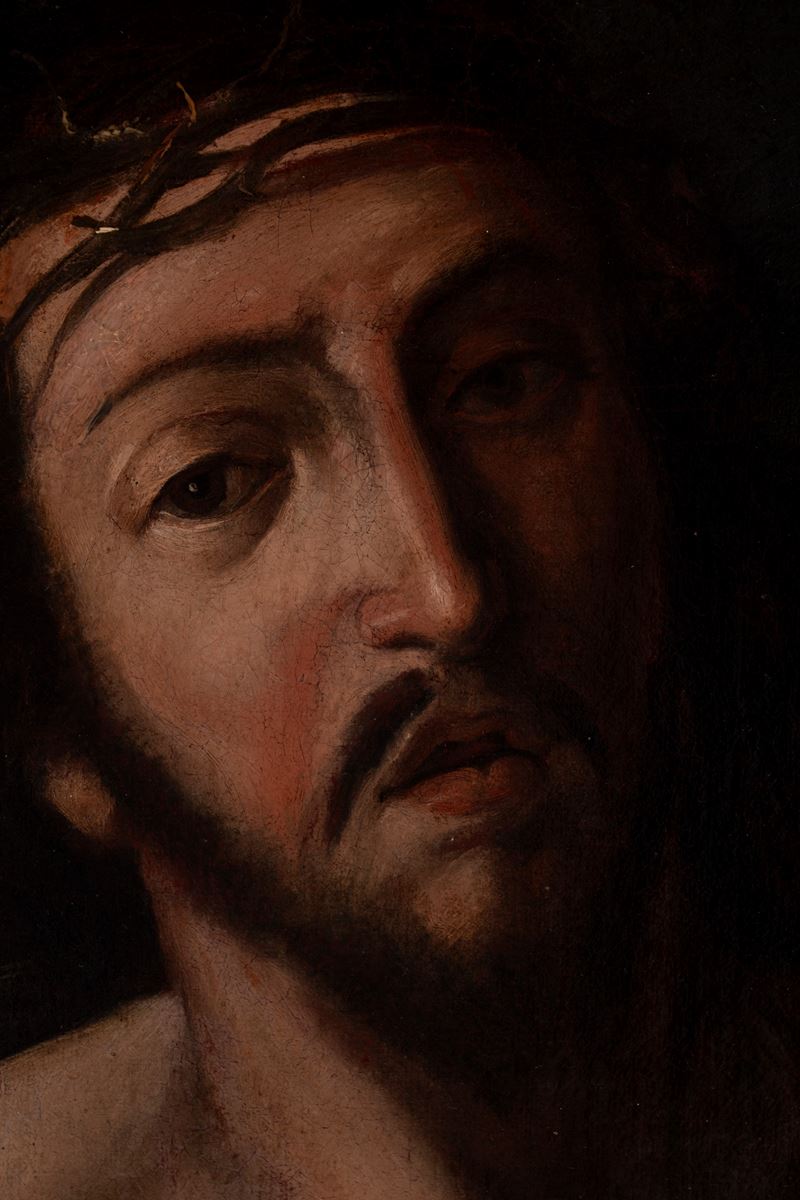
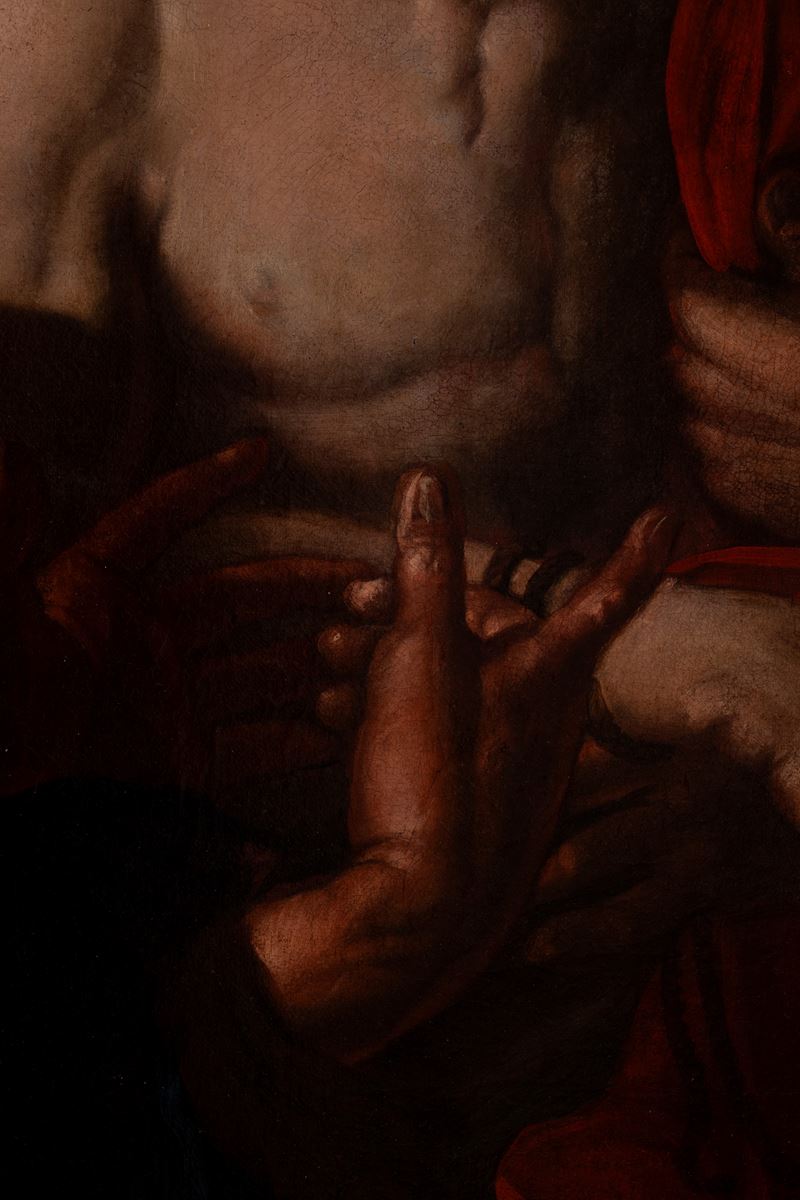
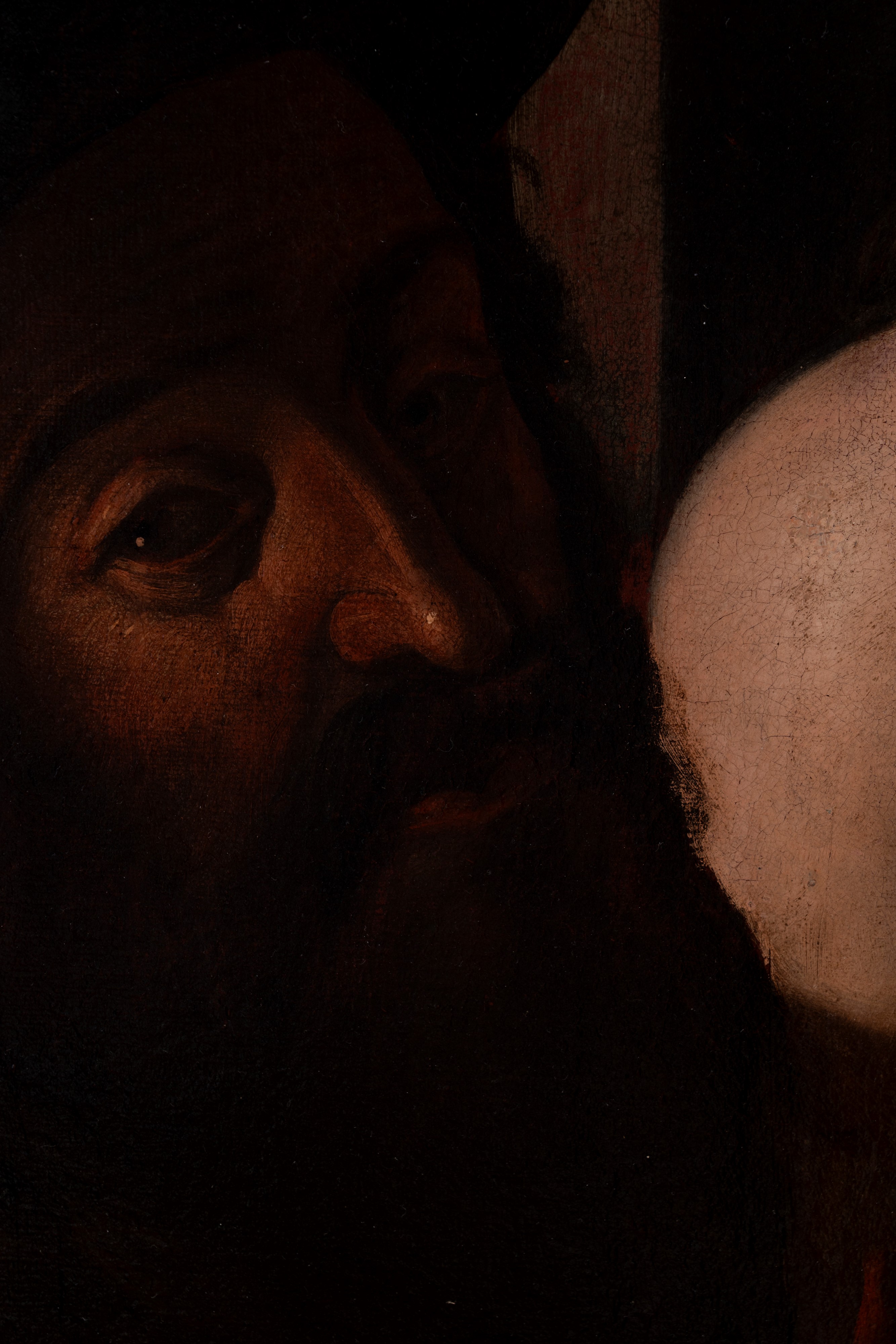
The present painting, with its use of the parapet, the presence of Pilate pointing toward Jesus, and especially the role of the light spreading from the left, undoubtedly harks back to the Madrid version, while differing in the arrangement of the other figures. The composition also appears very similar to the examples in the Museum für Kunst und Kulturgeschichte in Dortmund and the private collection in Cittadella, in the province of Padua. Caravaggio's authorship had been considered, although this was later refuted, but nevertheless attributed to his circle.
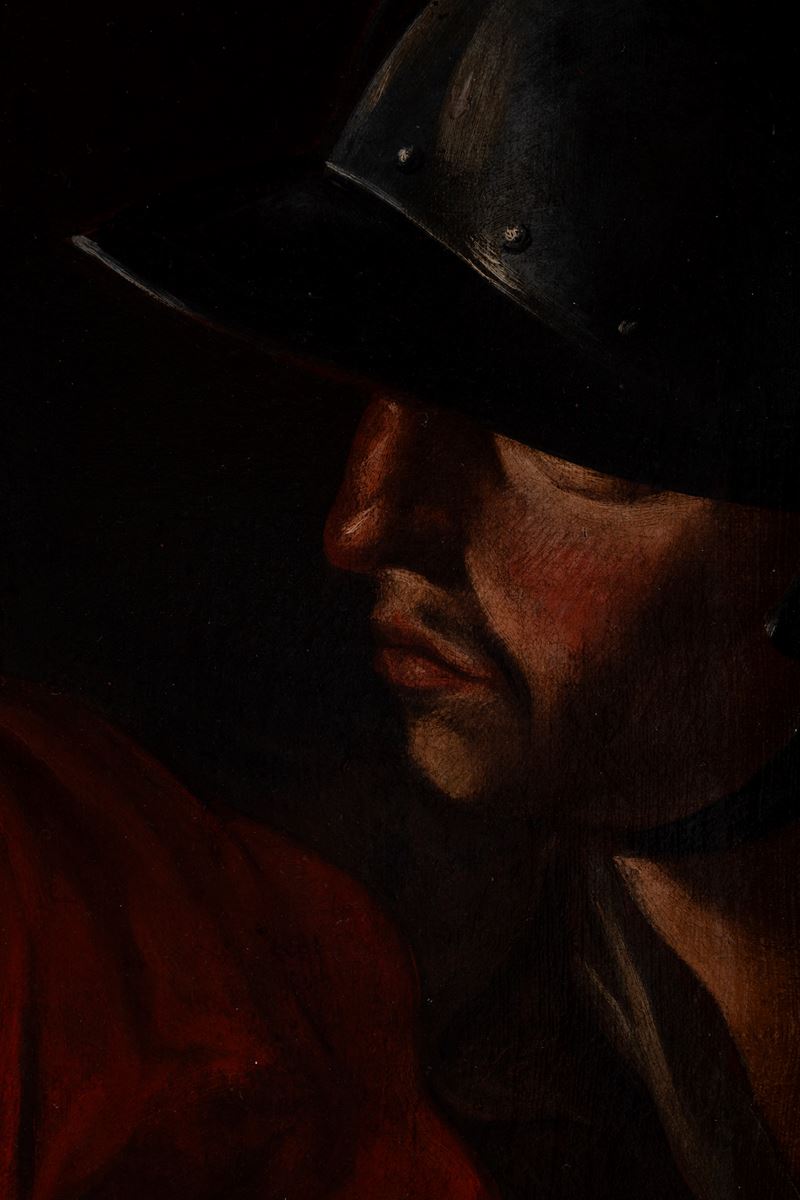
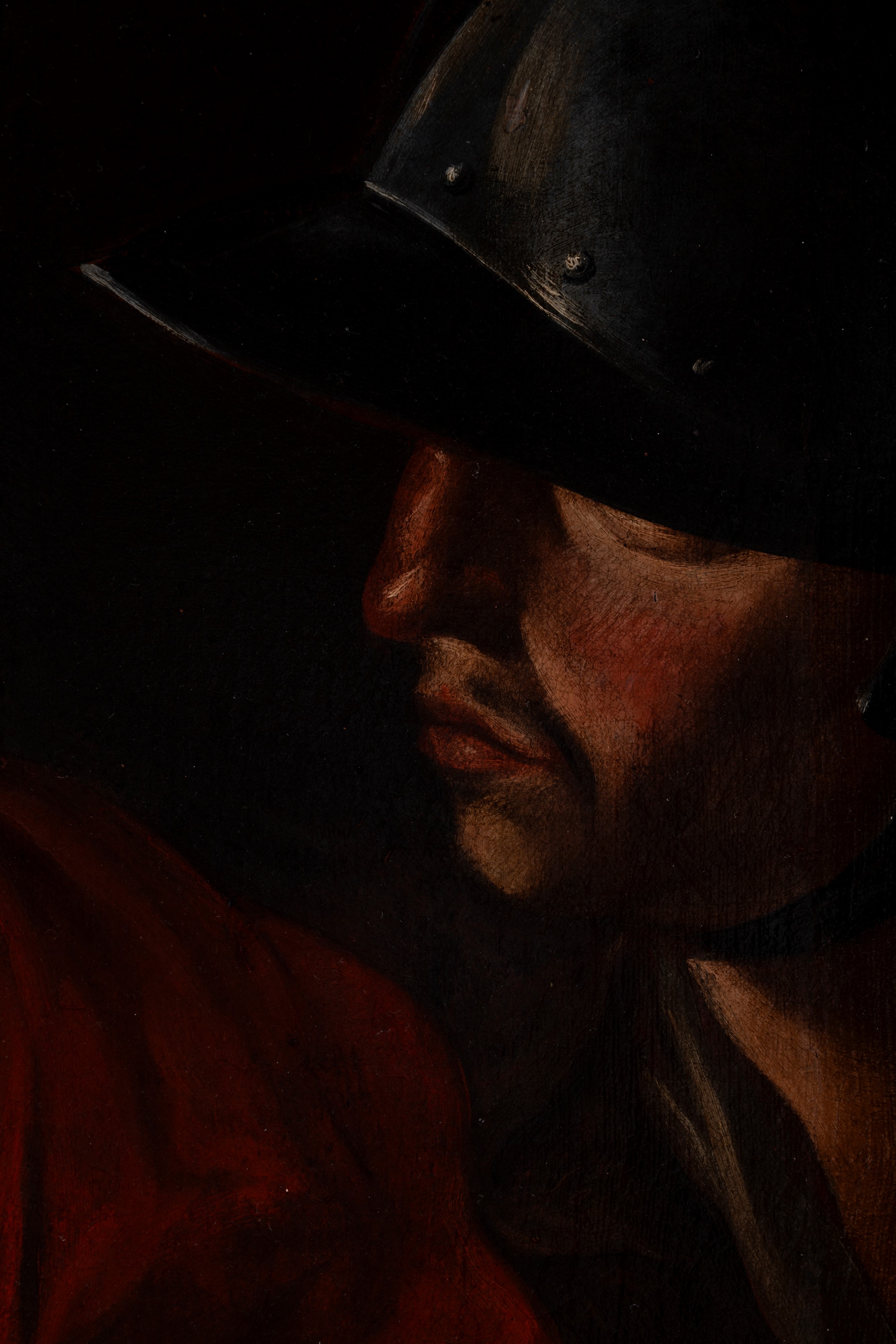
The multitude of versions and copies testifies to the subject's popularity and widespread use in the 17th century. Differences primarily concern details such as the blood, the framing, and the rendering of the faces, but they all depict the moment of the Ecce Homo with Pilate and soldiers, with some narrative and compositional variations. In the present painting, there is only one soldier, as in the Dortmund example, and he wears a morion, a Spanish-inspired headdress.
According to the November 2024 diagnostic investigation by scholar Roberta Lapucci, cited by Vannugli himself, the canvas presents corrections and regrets that would have hidden some symbols of the Passion.
After careful analysis and detailed comparisons, both Roberta Lapucci and Professor Vannugli agree in asserting a possible attribution to the early hand of Francesco Buoneri, known as Cecco del Caravaggio, dating the work around the second decade of the 17th century.
After careful analysis and detailed comparisons, both Roberta Lapucci and Professor Vannugli agree in asserting a possible attribution to the early hand of Francesco Buoneri, known as Cecco del Caravaggio, dating the work around the second decade of the 17th century.
Contact
Condition report
To request a Condition Report, please contact dipintiantichi@finarte.it
The department will provide you with a general report of the condition of the property described above. Please note that what Finarte declares with respect to the state of conservation of the objects corresponds only to a qualified opinion and that we are not professional conservators or restorers.
We urge you to consult with a restorer or conservator of your choice who will be better able to provide a detailed, professional report. We always suggest prospective buyers to inspect each lot to satisfy themselves as to condition during the exhibition days as indicated in the catalog.
Suggested lots
Caricamento lotti suggeriti...
More Lots
225
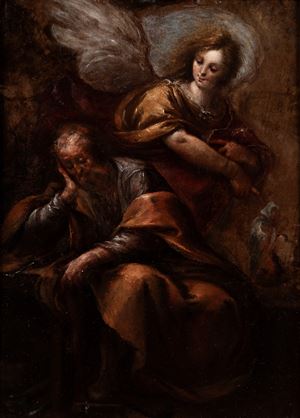
Attribuito a Carlo Francesco Nuvolone
Joseph's Dream
Estimate € 3.500 - 5.500
Starting bid € 3.200
226