
Information
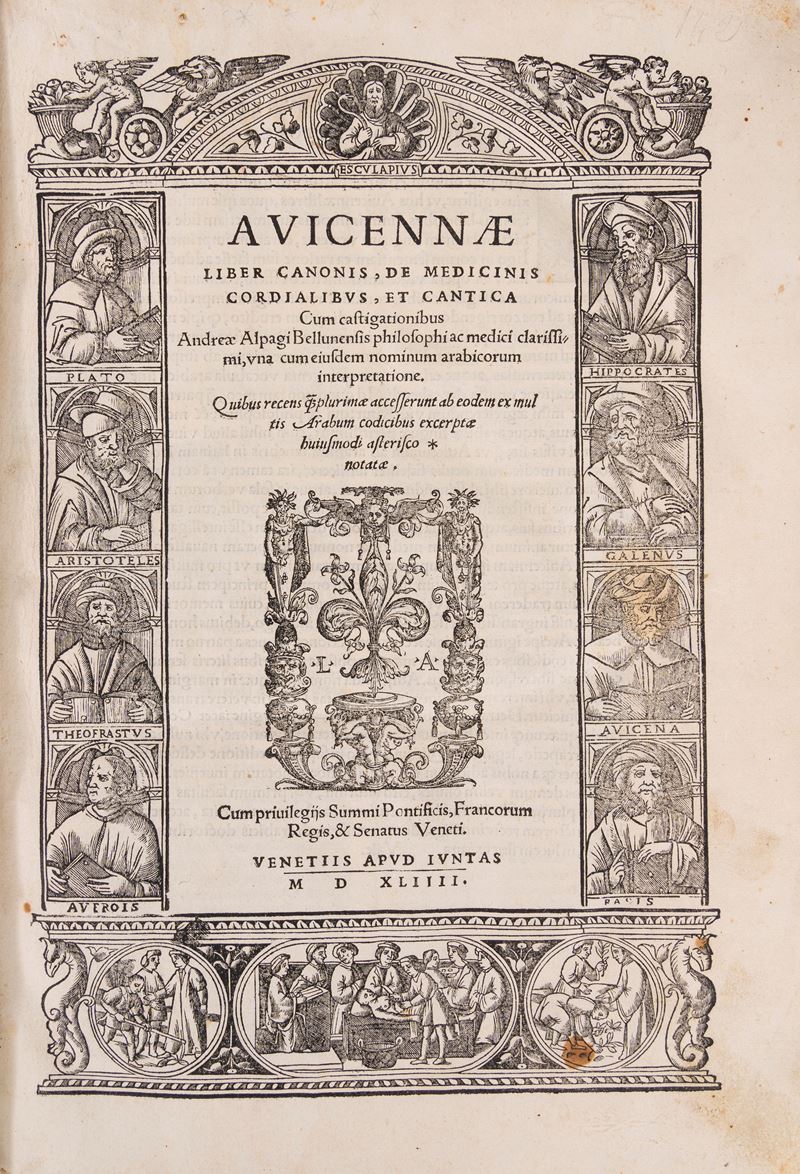
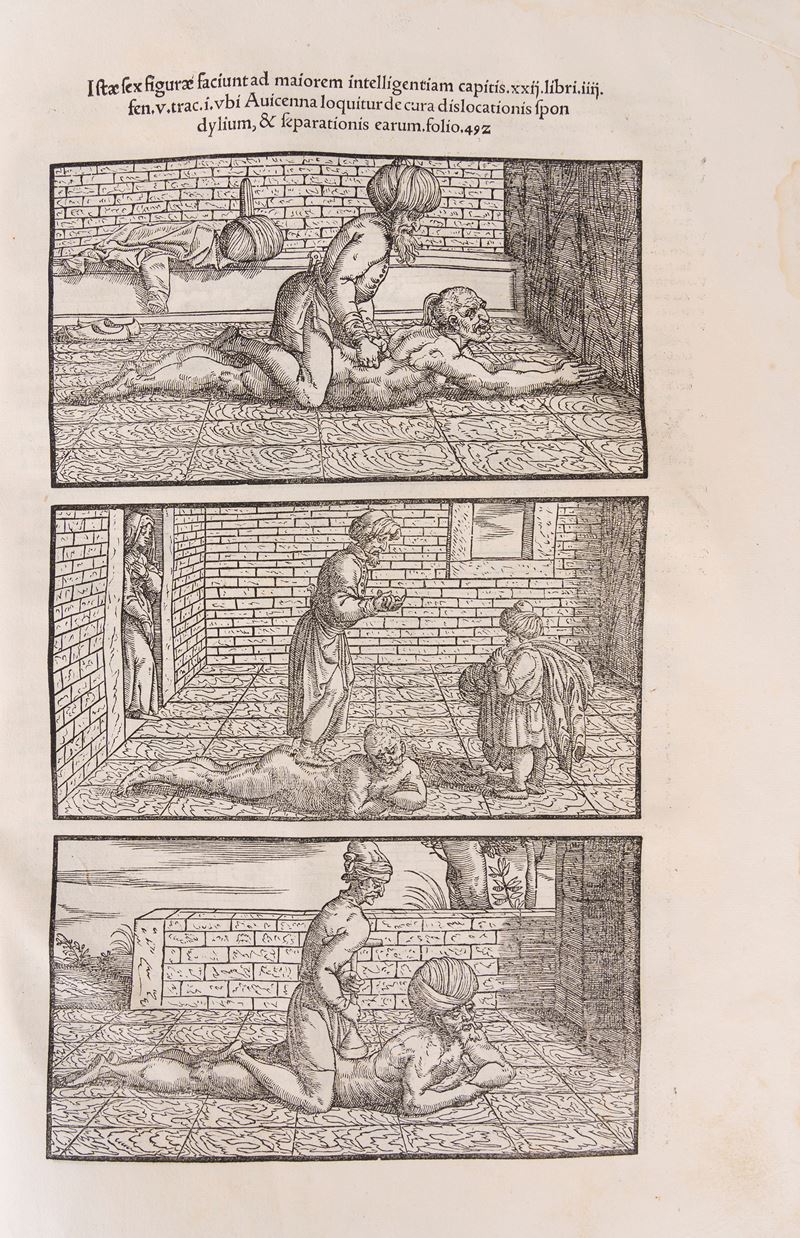
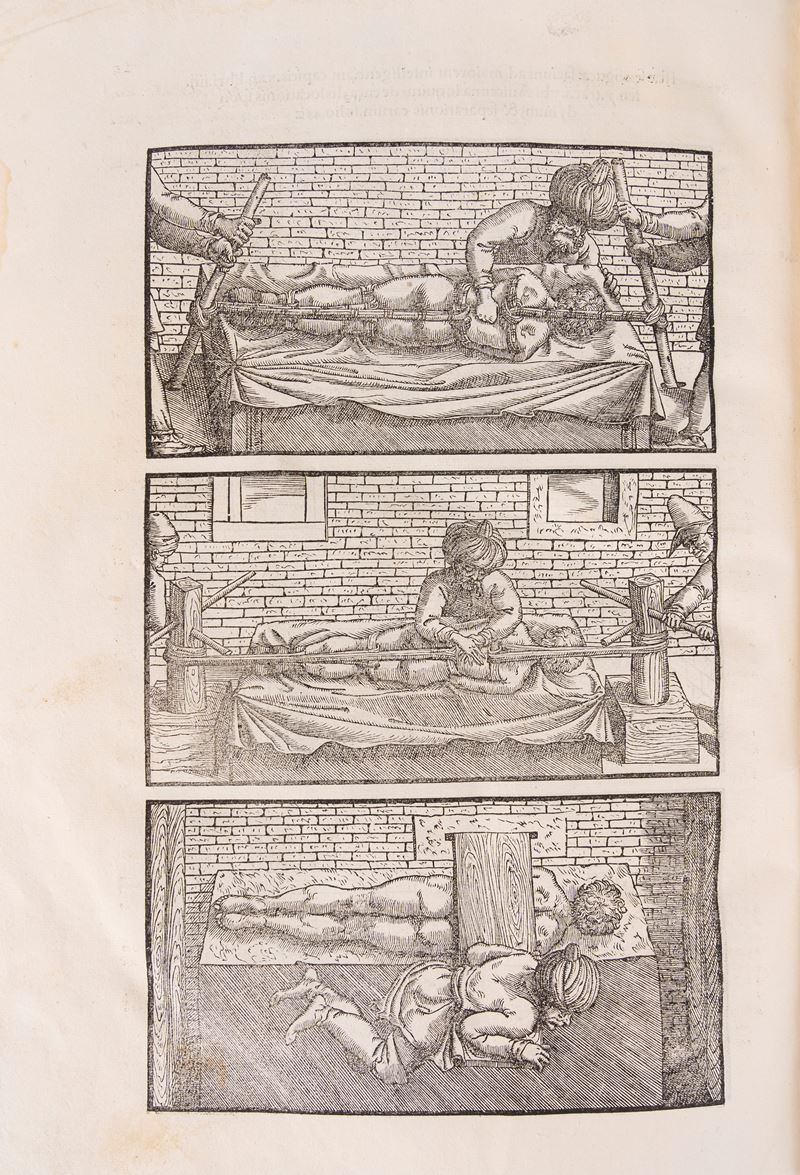
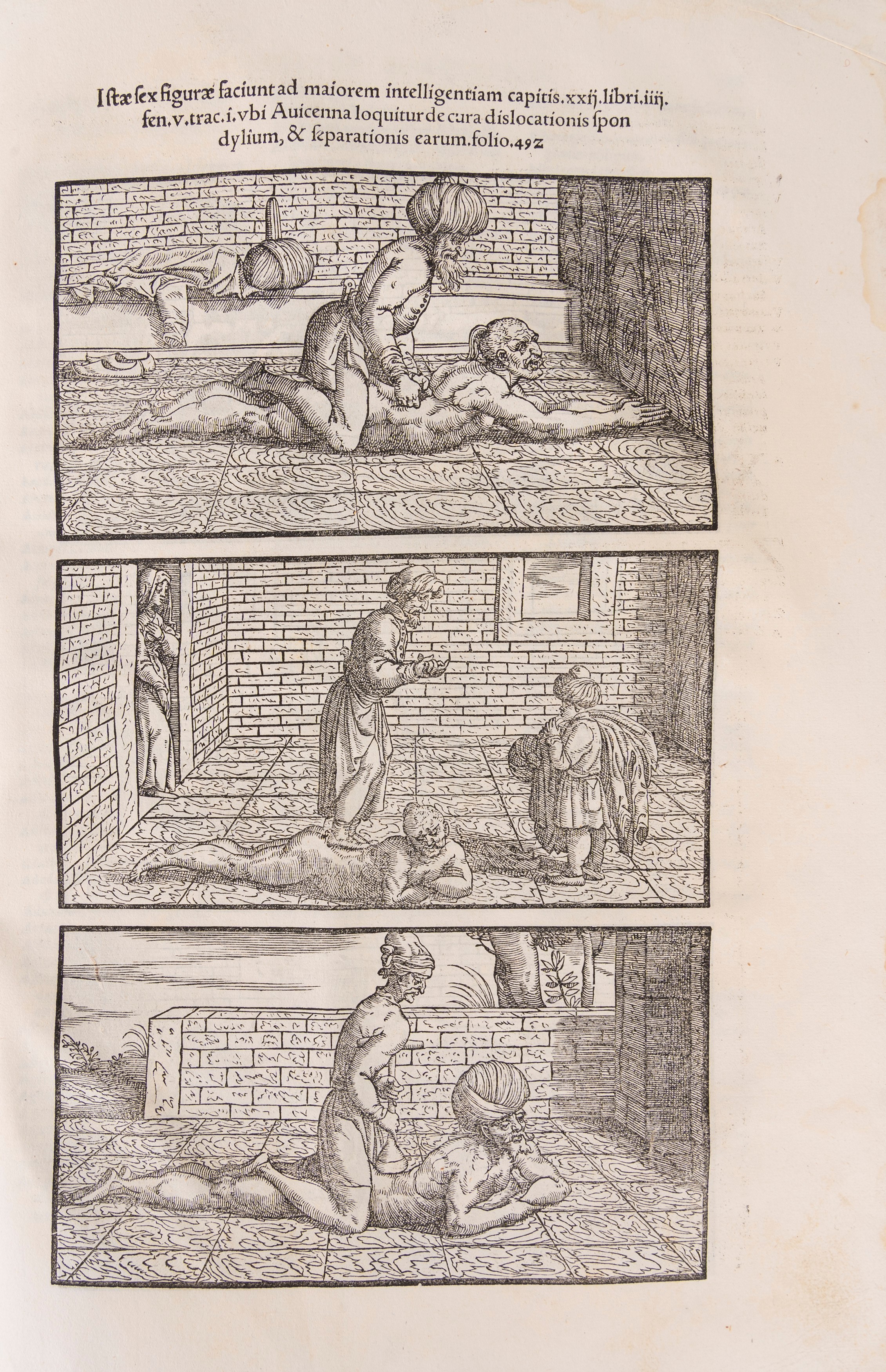
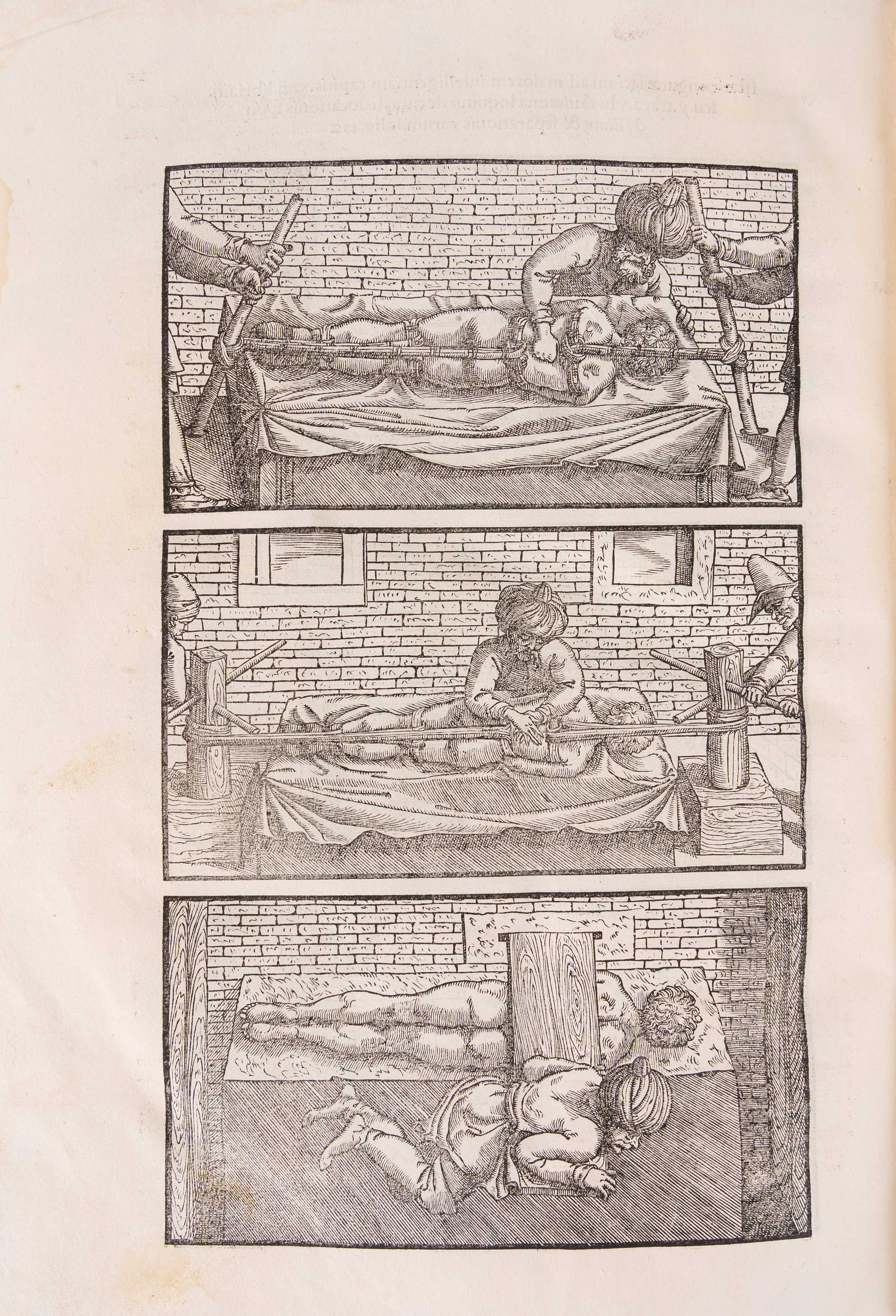
Venice, apud Iuntas, 1548. In 2°. Large architectural frontispiece richly illustrated, with portraits of illustrious doctors of antiquity, at the bottom a scene from a surgical operation, figured initials, on f. 416 v a diagram relating to the anatomy of the eye, a work divided into five books for a total of 593 leaves (1186 pages), followed by its own frontispiece Interpretatio Arabicorum Nominum , also printed in Venice by the Giunta in 1544. 26 leaves. Leaf 17 contains the first illustrations relating to Chiropractic techniques with six beautiful depictions of various positions .
Specialist Notes
Extremely rare first Giuntina edition of Avicenna, enriched by six images of chiropractic.
This is the first edition ever to contain illustrations: six meticulous woodcuts depicting a doctor performing chiropractic treatments, usually first attributed to Giunta's 1555 edition, where they were moved from the appendix to the text.
The text is based on Gerard of Cremona's translation, edited and revised by Andrea Alpago of Belluno (ca. 1450–1521/22), who also included an extensive glossary of Arabic terms as an appendix, "Interpretatio Arabicorum nominum" (no original Arabic edition was printed until 1593). The illustrated frontispiece includes portraits of the great classical Greek and Roman and medieval Islamic figures in medicine and philosophy: Asclepius, Hippocrates, Galen, Avicenna, Rasis, Plato, Aristotle, Theophrastus, and Averroes. The first edition prepared by Alpago appeared posthumously in 1527, as did his glossary, but both were expanded for the current edition, which served as a model for all subsequent editions in the centuries to come. Ibn Sina's Keta-b al-qanun fi'l-tebb (Canon of Medicine), hailed as "the most famous medical text ever written" (Garrison & Morton 43), was written in Arabic but widely translated throughout the Middle Ages and formed the basis of medical education in the West until the mid-17th century. Completed in 1025, the Qanun is divided into five books, devoted to the fundamental principles of medicine, materia medica (which lists approximately 800 drugs), pathology, and diseases affecting the body as a whole and its various parts.
This is the first edition ever to contain illustrations: six meticulous woodcuts depicting a doctor performing chiropractic treatments, usually first attributed to Giunta's 1555 edition, where they were moved from the appendix to the text.
The text is based on Gerard of Cremona's translation, edited and revised by Andrea Alpago of Belluno (ca. 1450–1521/22), who also included an extensive glossary of Arabic terms as an appendix, "Interpretatio Arabicorum nominum" (no original Arabic edition was printed until 1593). The illustrated frontispiece includes portraits of the great classical Greek and Roman and medieval Islamic figures in medicine and philosophy: Asclepius, Hippocrates, Galen, Avicenna, Rasis, Plato, Aristotle, Theophrastus, and Averroes. The first edition prepared by Alpago appeared posthumously in 1527, as did his glossary, but both were expanded for the current edition, which served as a model for all subsequent editions in the centuries to come. Ibn Sina's Keta-b al-qanun fi'l-tebb (Canon of Medicine), hailed as "the most famous medical text ever written" (Garrison & Morton 43), was written in Arabic but widely translated throughout the Middle Ages and formed the basis of medical education in the West until the mid-17th century. Completed in 1025, the Qanun is divided into five books, devoted to the fundamental principles of medicine, materia medica (which lists approximately 800 drugs), pathology, and diseases affecting the body as a whole and its various parts.
Contact
Condition report
To request a Condition Report, please contact libriestampe@finarte.it
The department will provide you with a general report of the condition of the property described above. Please note that what Finarte declares with respect to the state of conservation of the objects corresponds only to a qualified opinion and that we are not professional conservators or restorers.
We urge you to consult with a restorer or conservator of your choice who will be better able to provide a detailed, professional report. We always suggest prospective buyers to inspect each lot to satisfy themselves as to condition during the exhibition days as indicated in the catalog.
Suggested lots
Caricamento lotti suggeriti...
![On the method of measuring distances, surfaces, bodies, plants, provinces, [...] according to the true rules of Euclid, and of other most praised writers](https://api.finarte.it/api/lotto/immagine/179366/0/300.jpg)