Estimate
€ 600 - 800
Sold
€ 762
The price includes buyer's premium
Do you have a similar item you would like to sell?
Information
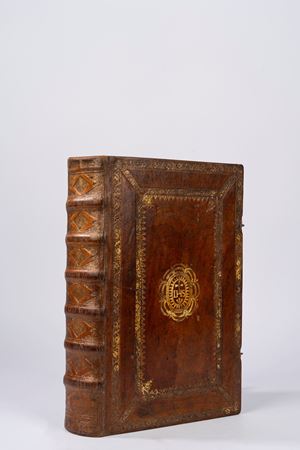
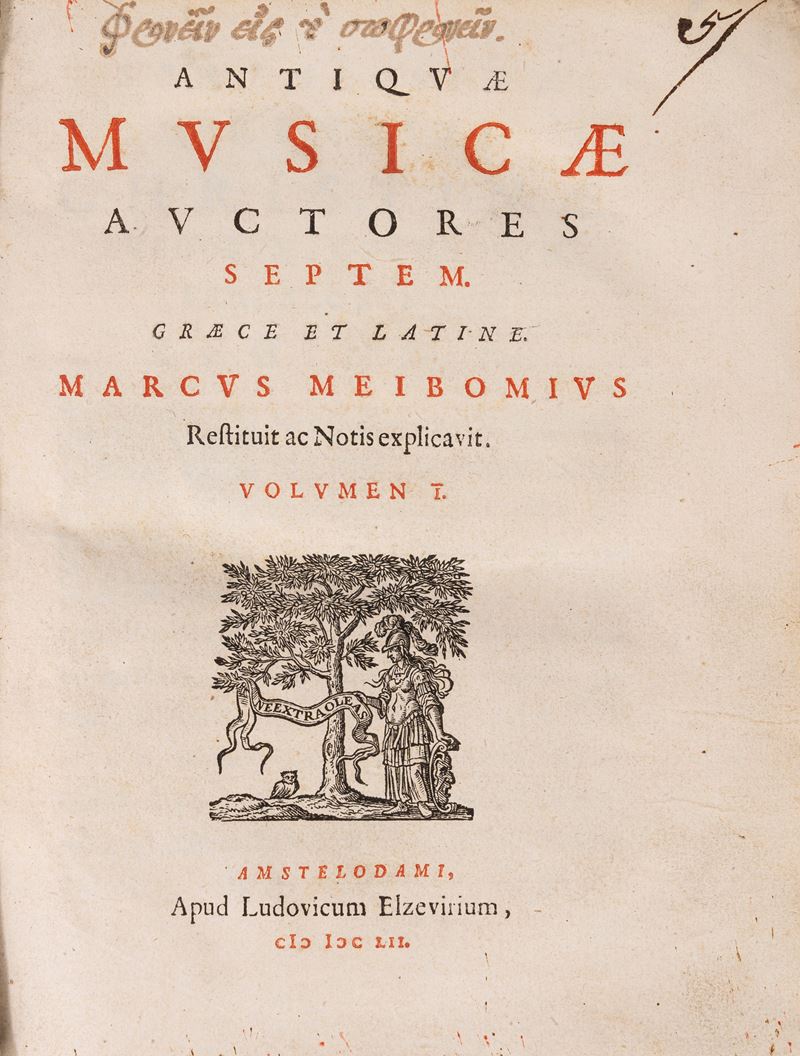
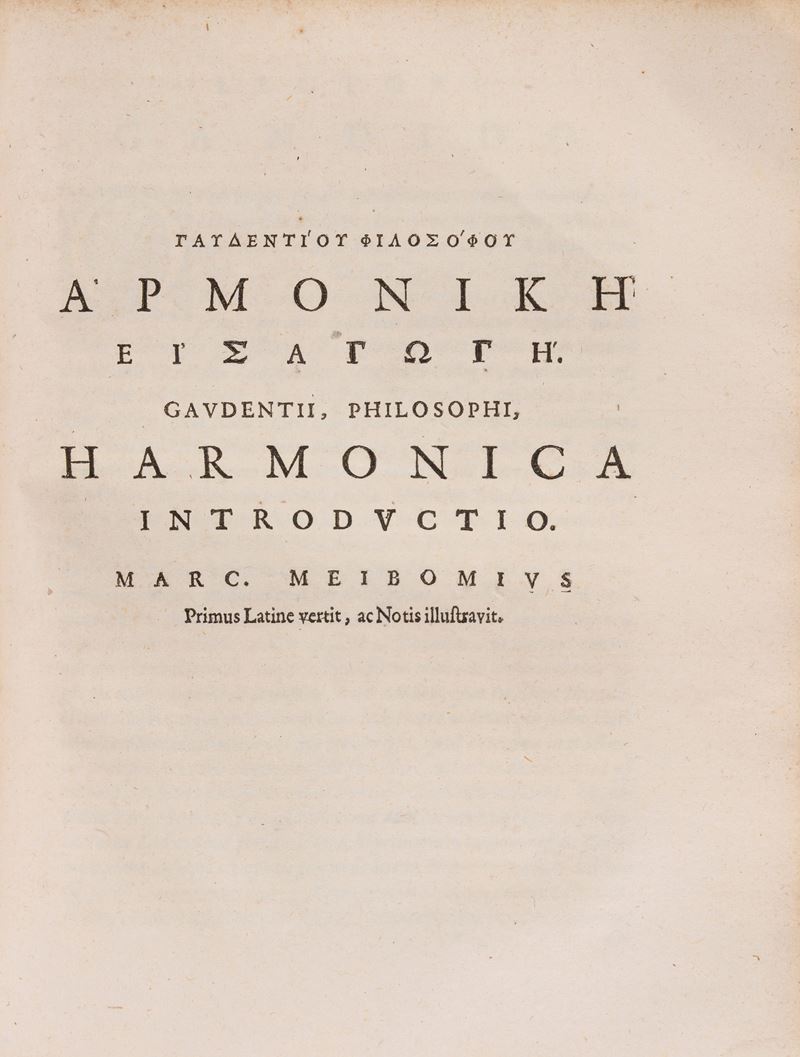
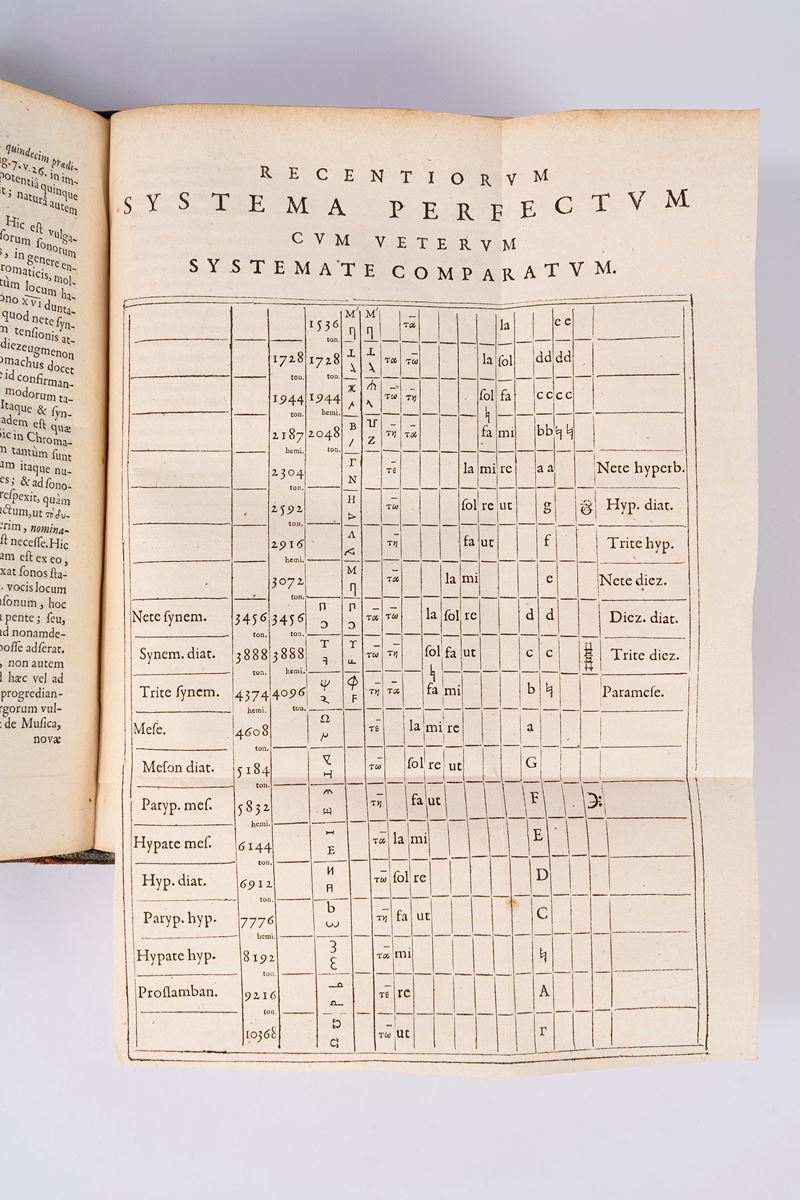
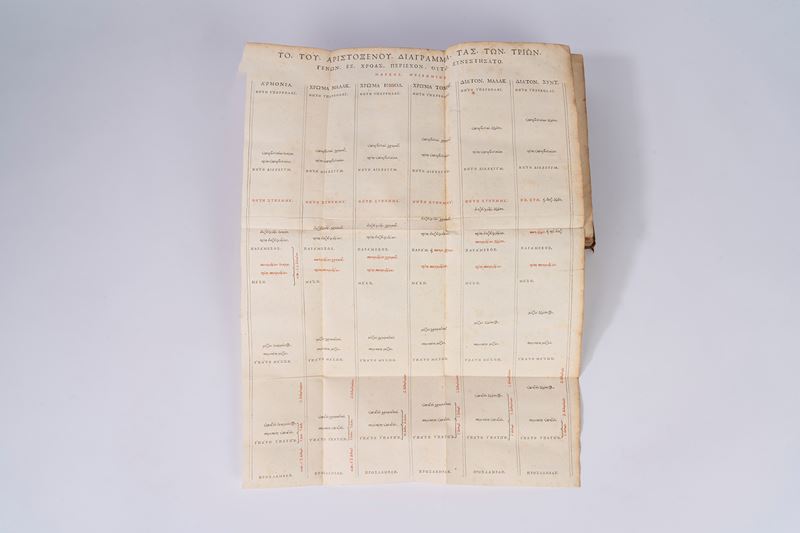
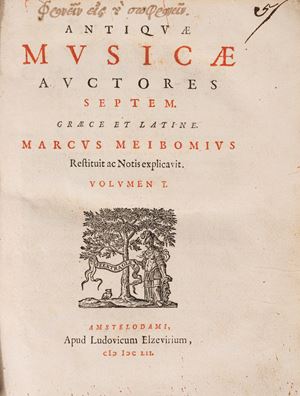
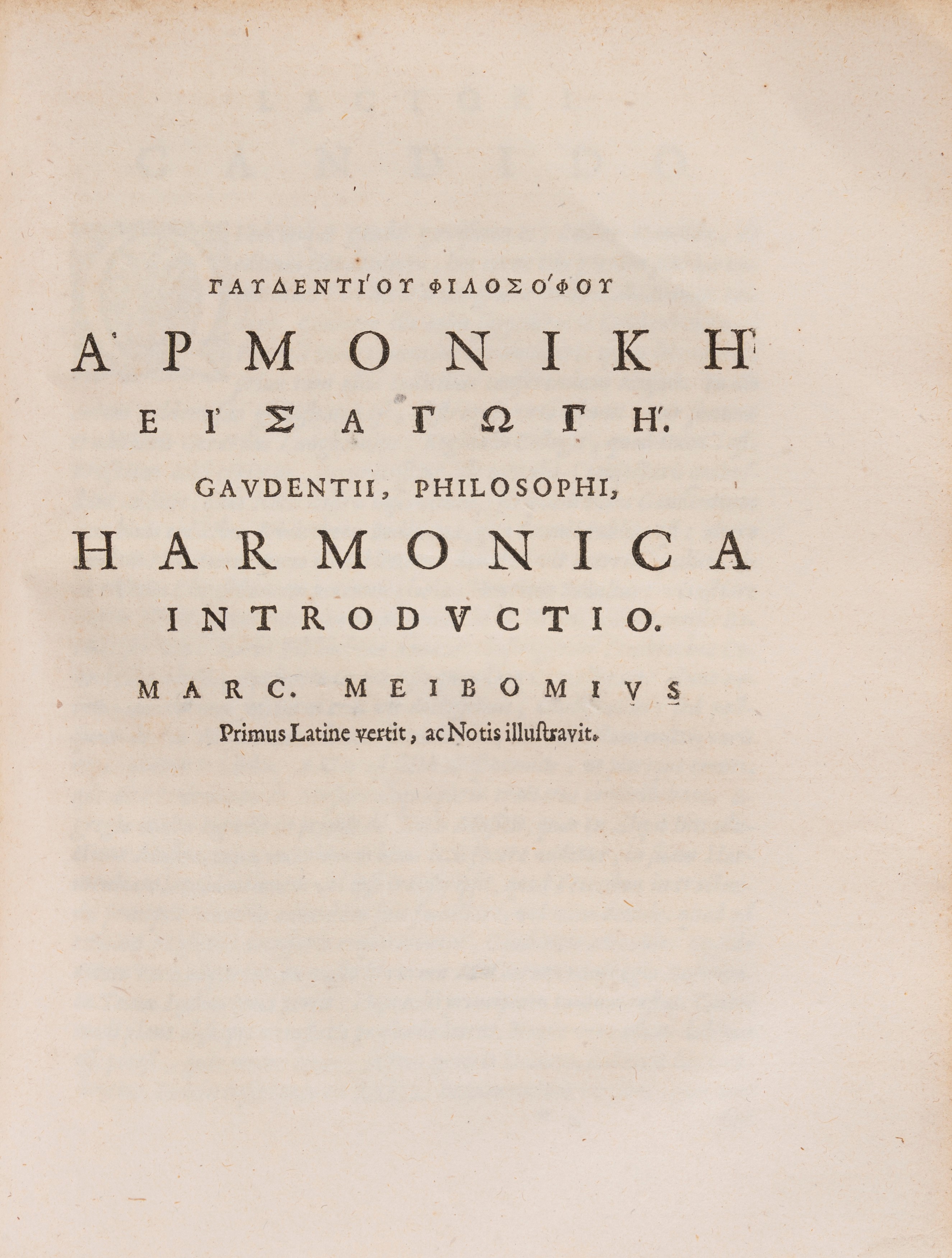
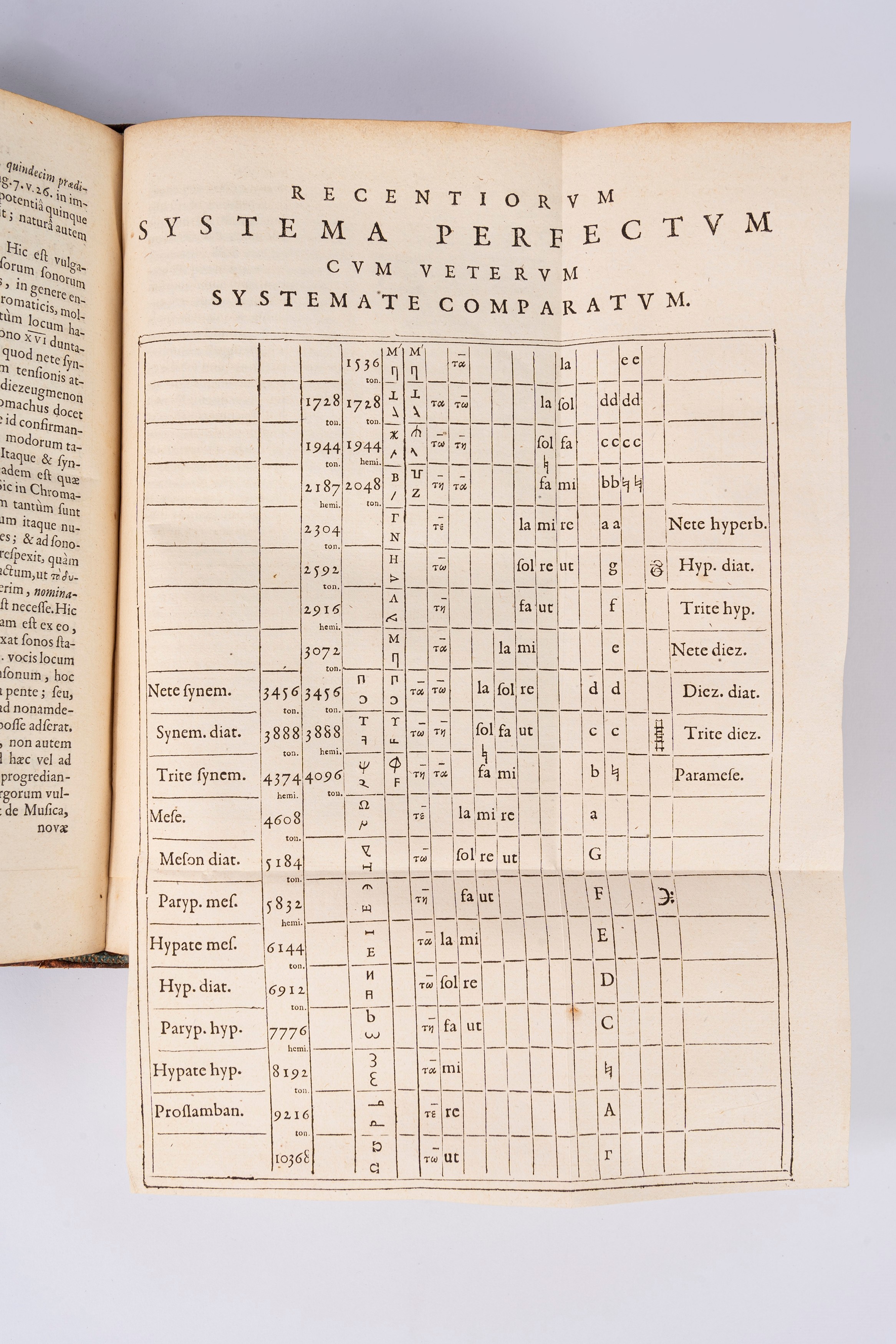
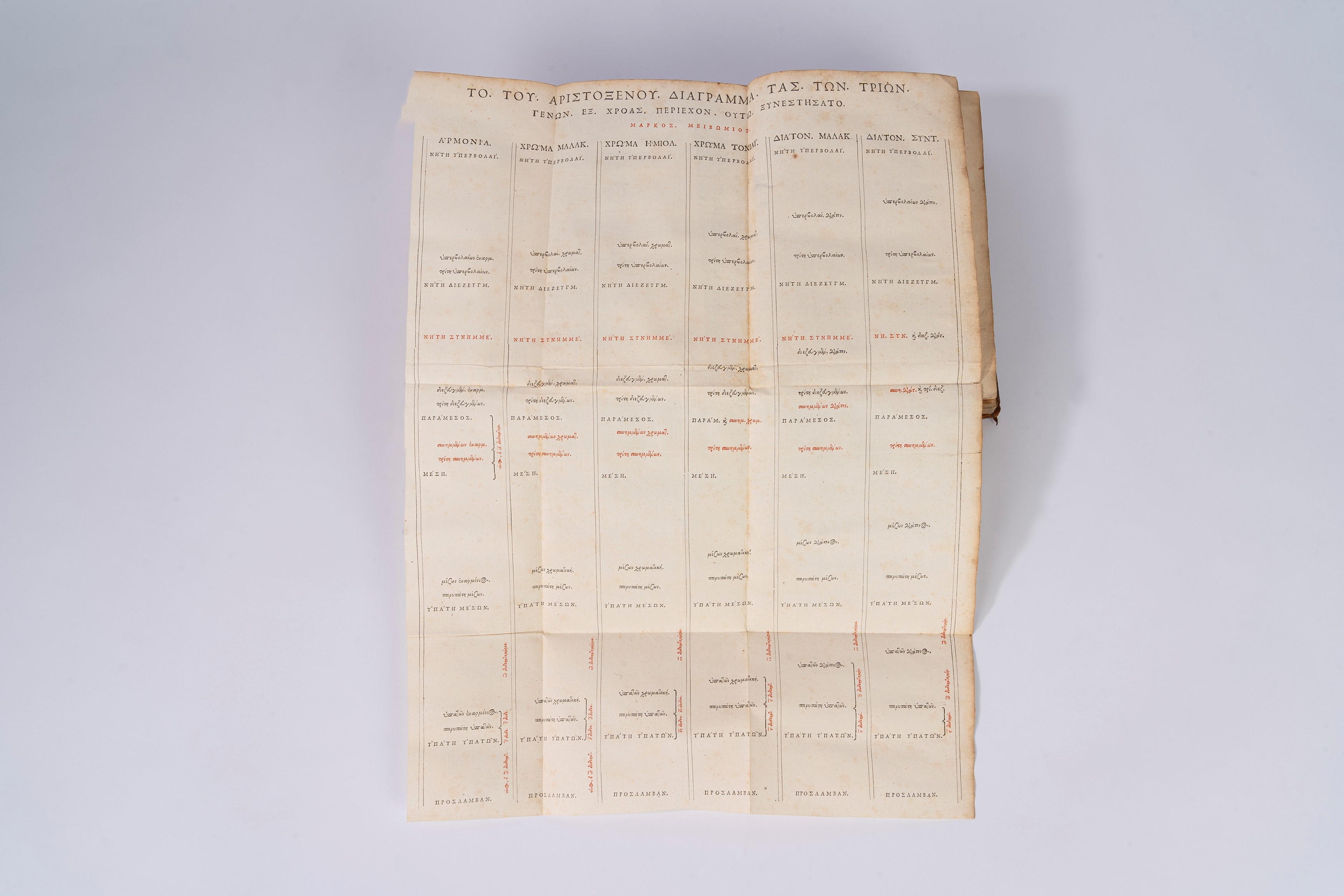
Amsterdam, apud Ludovicum Elzevirium, 1652. In 4vo, 2 vols in one, title in red and black, woodcut vignette on the title page and manuscript trace in the upper margin, five folded plates, 4 of which in red and black, text printed in two columns in Latin and Greek, marginal foxing, 18th-century bazzana binding, cracked, defects on the spine. Ex libris manuscript Mauritius Wheeler, 1673.
Specialist Notes
RARE AND IMPORTANT FIRST EDITION, OF ILLUSTRIOUS PROVENANCE.
The work brings together fundamental treatises on ancient Greek music theory, including works by Aristoxenus, Euclid, and Nicomachus, edited and commented by Marcus Meibomius. Its main merit was to have preserved and disseminated texts that would otherwise have remained confined to the Greek manuscript tradition, thus contributing to the birth of historical musicology. However, the edition also reflects the philological limitations of the seventeenth century: some translations are inaccurate, and the critical apparatus is still embryonic by modern standards. Overall, however , it remains a pioneering work, more important for the transmission of ancient knowledge than for its scholarly accuracy.
Provenance: Maurice Wheeler (1648–1727), Church of England clergyman, scholar, and almanac maker. In 1673, while serving as chaplain at Christ Church and vicar of St. Ebbe's Church, Oxford, Wheeler compiled and published a groundbreaking and highly regarded almanac.
The work brings together fundamental treatises on ancient Greek music theory, including works by Aristoxenus, Euclid, and Nicomachus, edited and commented by Marcus Meibomius. Its main merit was to have preserved and disseminated texts that would otherwise have remained confined to the Greek manuscript tradition, thus contributing to the birth of historical musicology. However, the edition also reflects the philological limitations of the seventeenth century: some translations are inaccurate, and the critical apparatus is still embryonic by modern standards. Overall, however , it remains a pioneering work, more important for the transmission of ancient knowledge than for its scholarly accuracy.
Provenance: Maurice Wheeler (1648–1727), Church of England clergyman, scholar, and almanac maker. In 1673, while serving as chaplain at Christ Church and vicar of St. Ebbe's Church, Oxford, Wheeler compiled and published a groundbreaking and highly regarded almanac.
Contact
Suggested lots
Caricamento lotti suggeriti...
More Lots
125
Paolo, Leopardi
Pauli Leopardi Isembergensis Furnii, Emendationum et miscellaneorum libri viginti , 1668
Estimate € 150 - 250
Starting bid € 150