Information
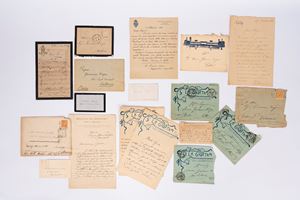
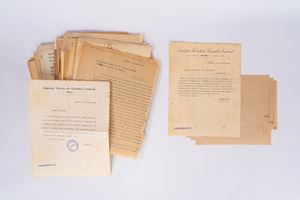
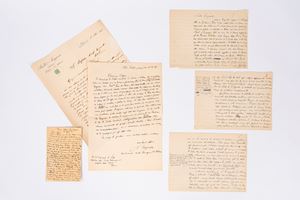
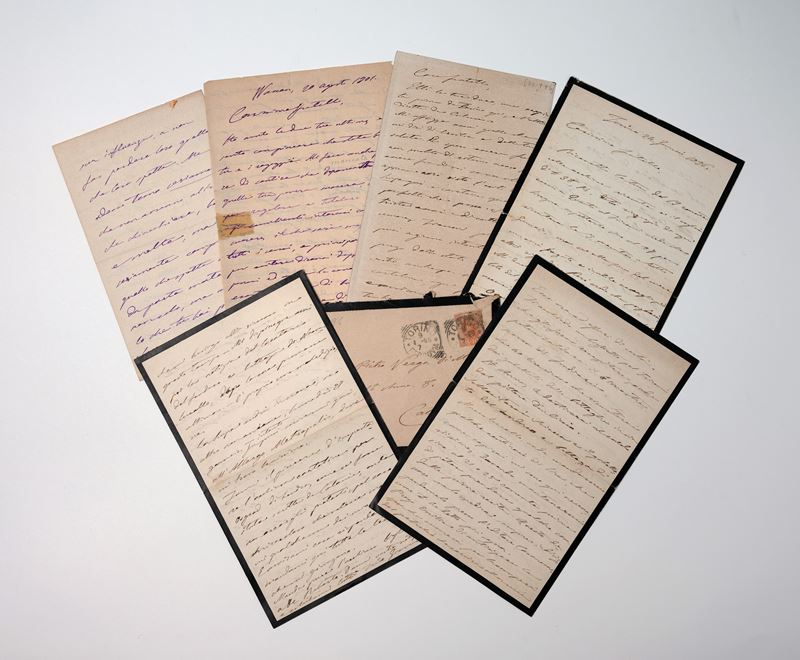
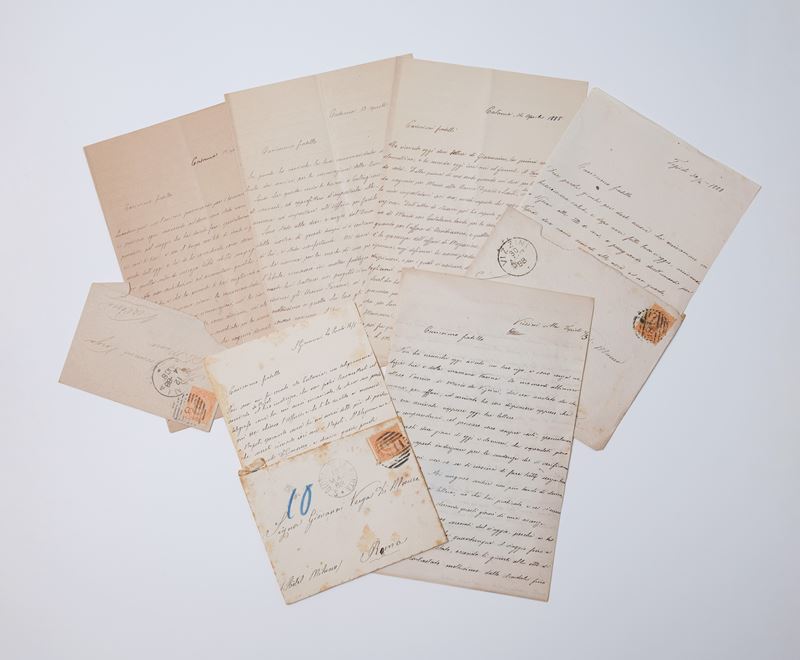
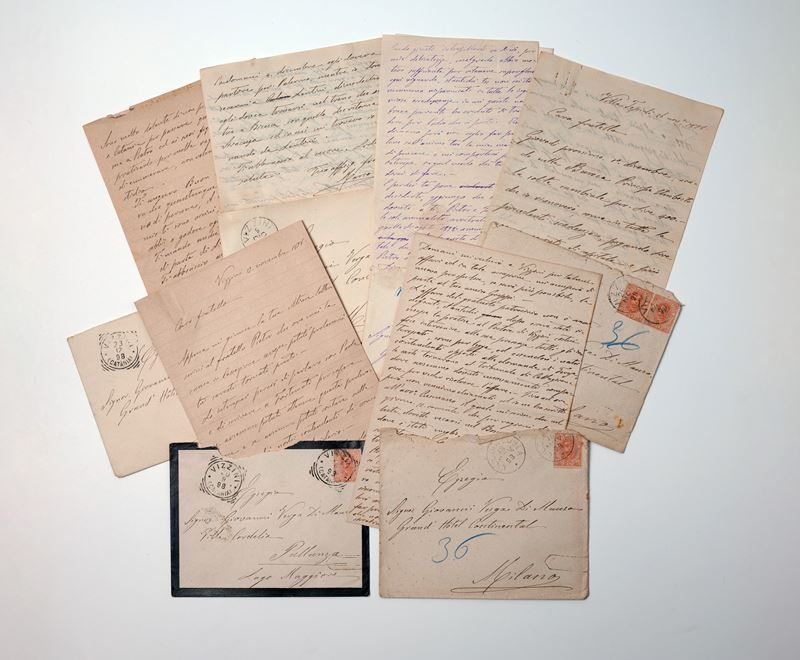
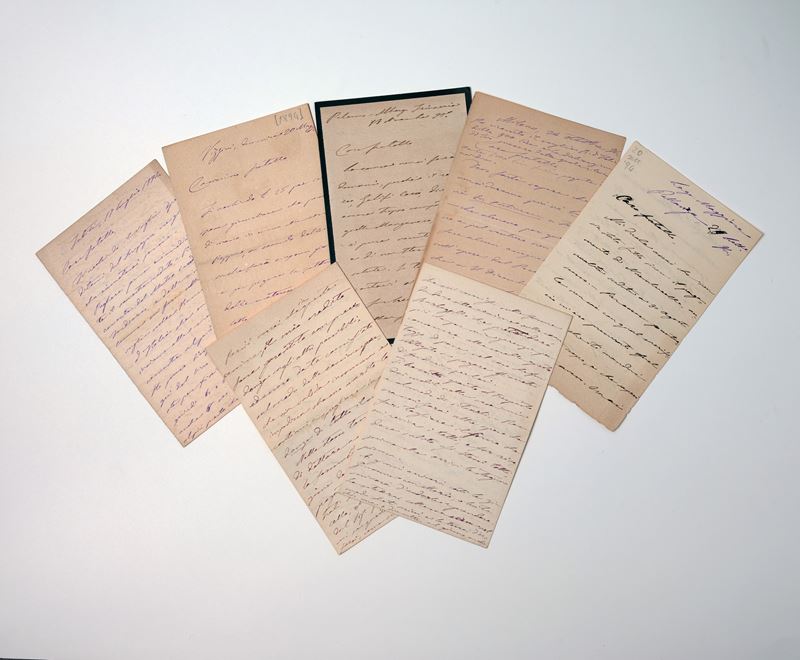
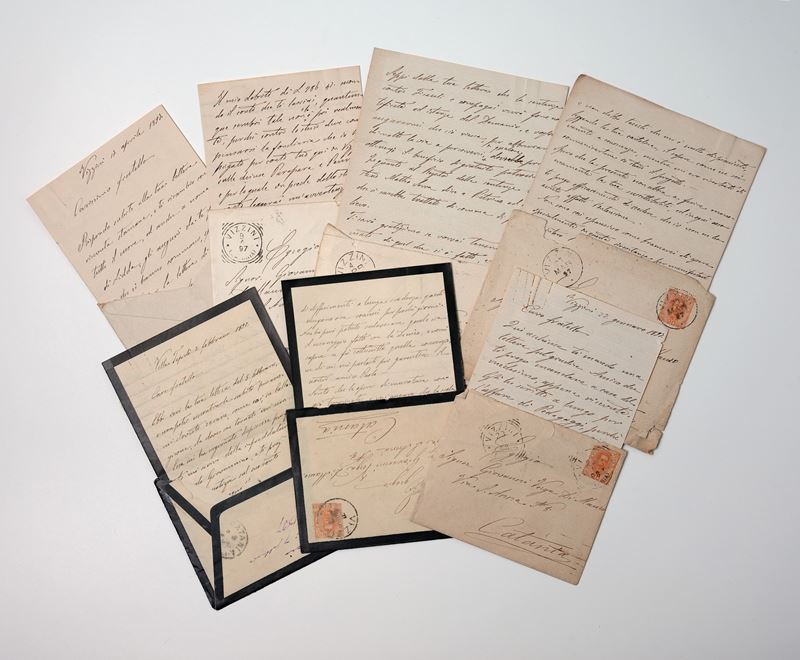
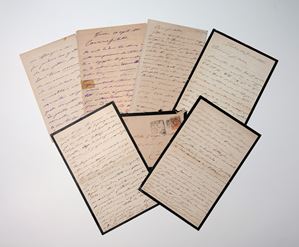
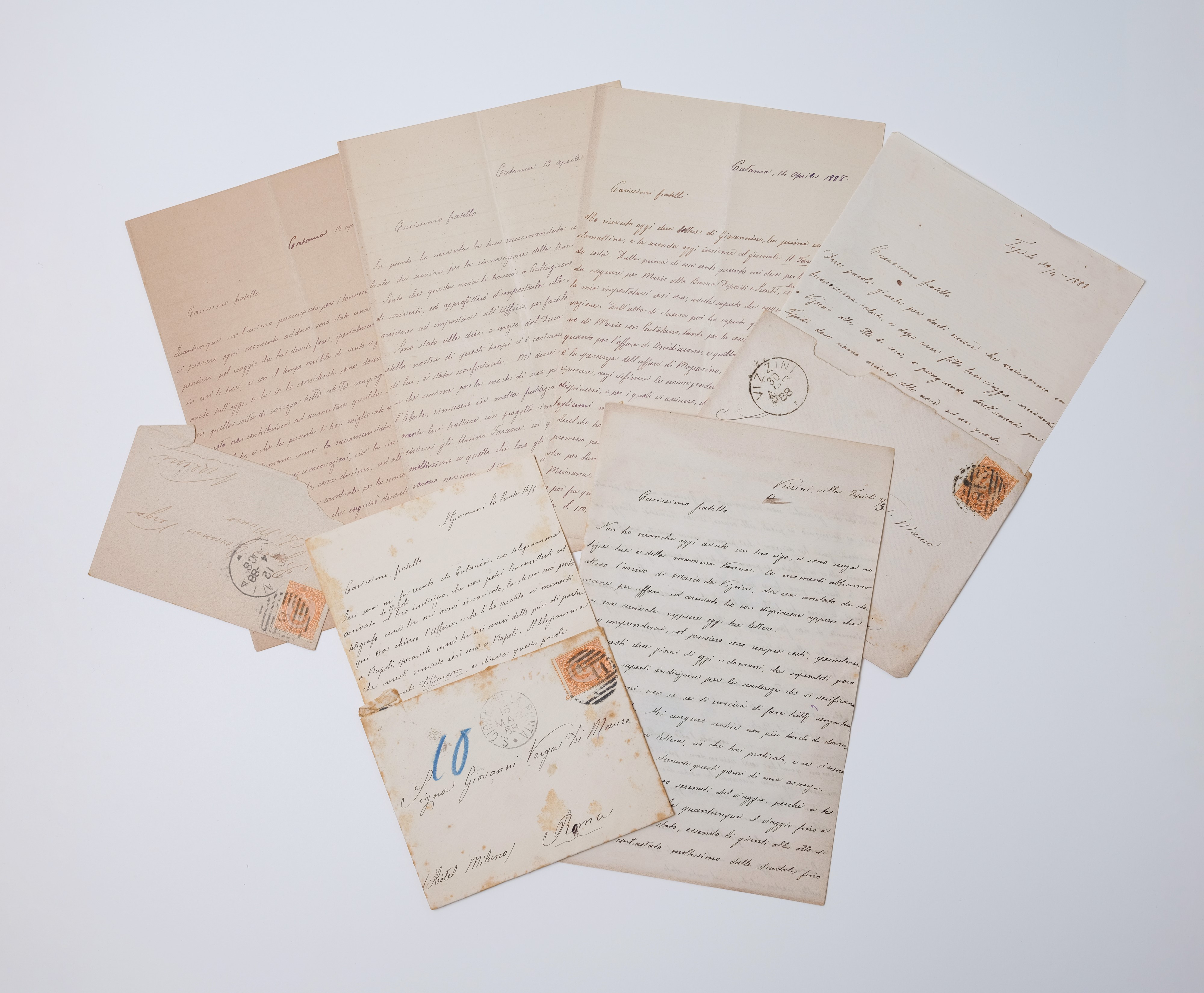
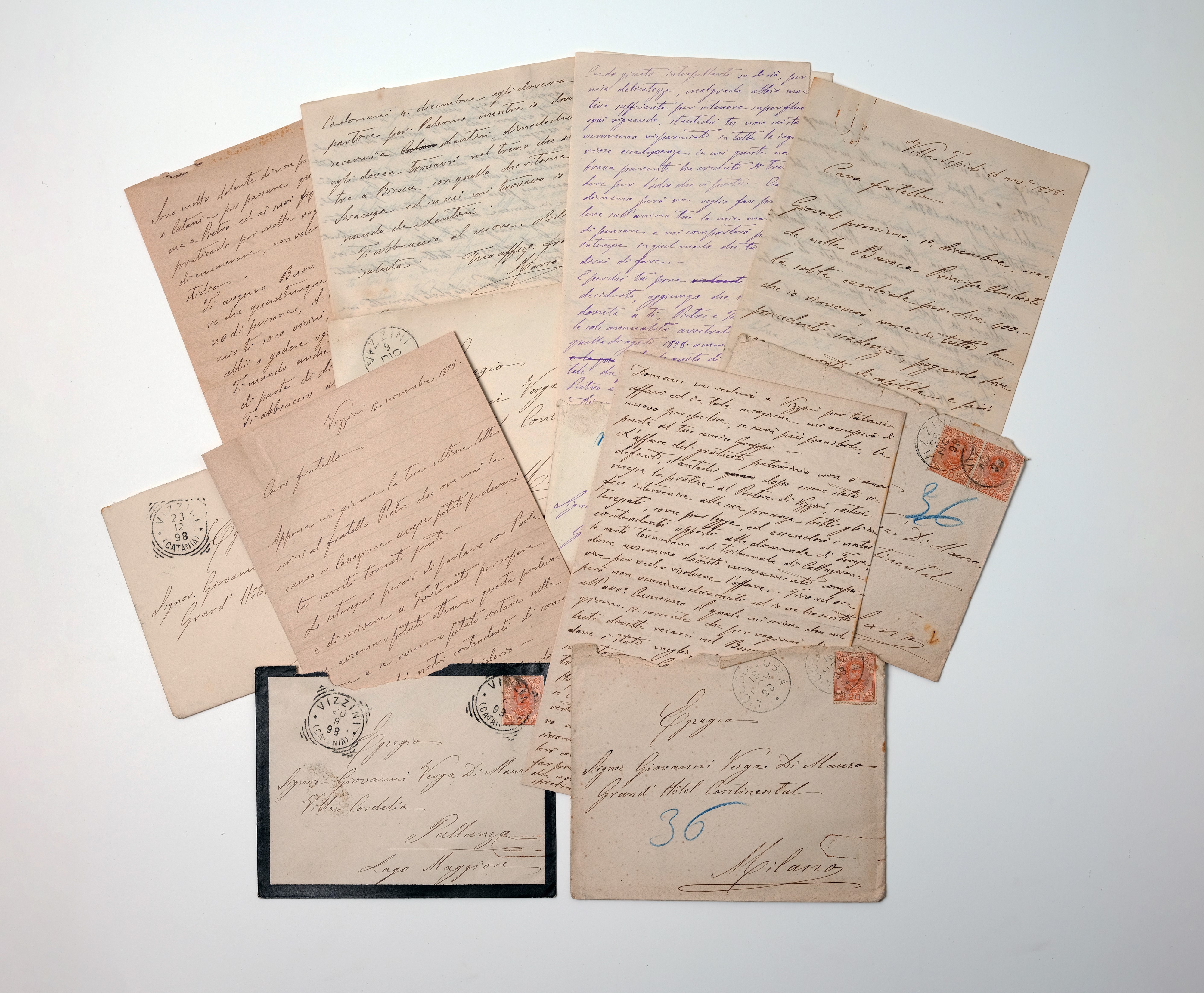
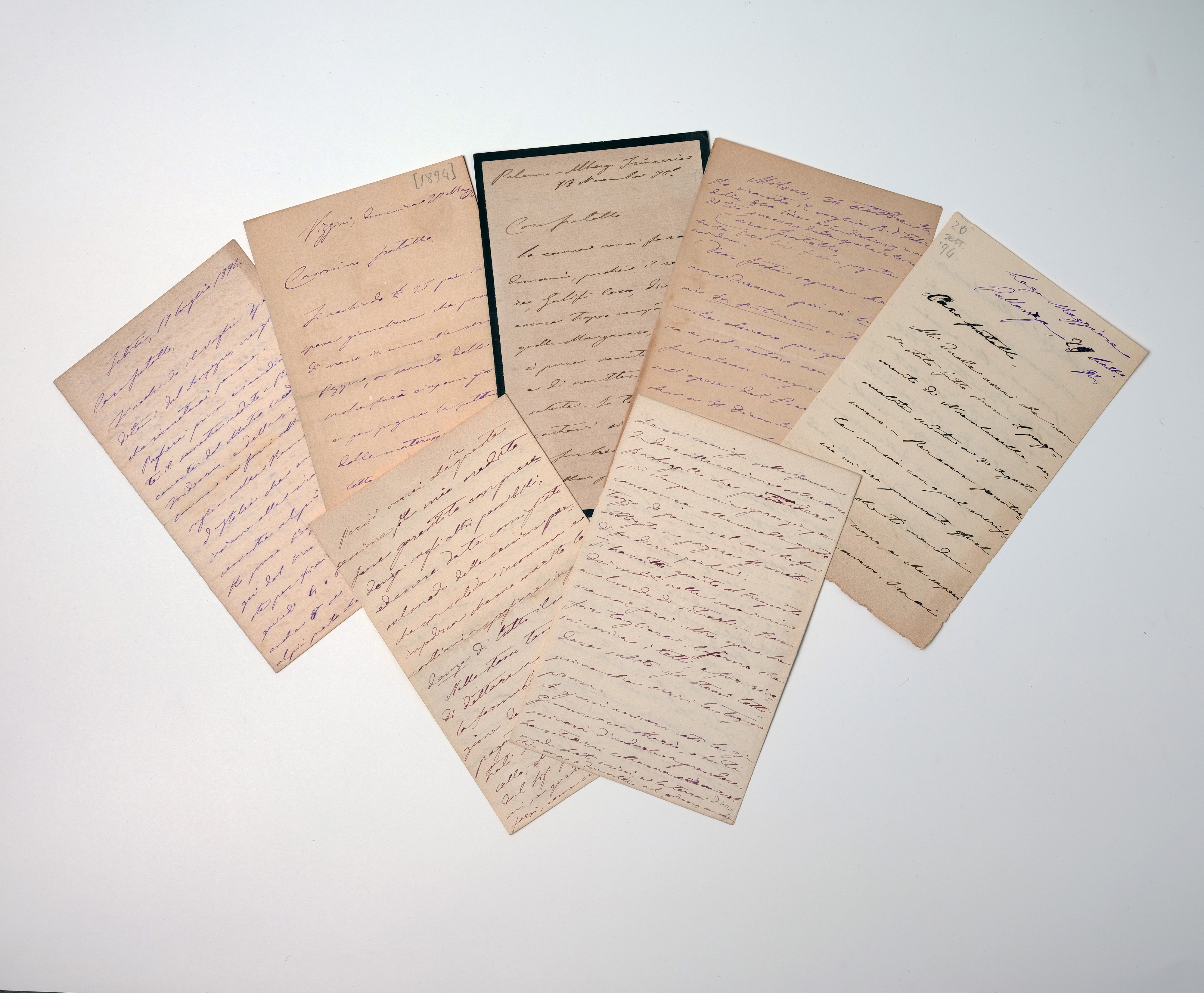
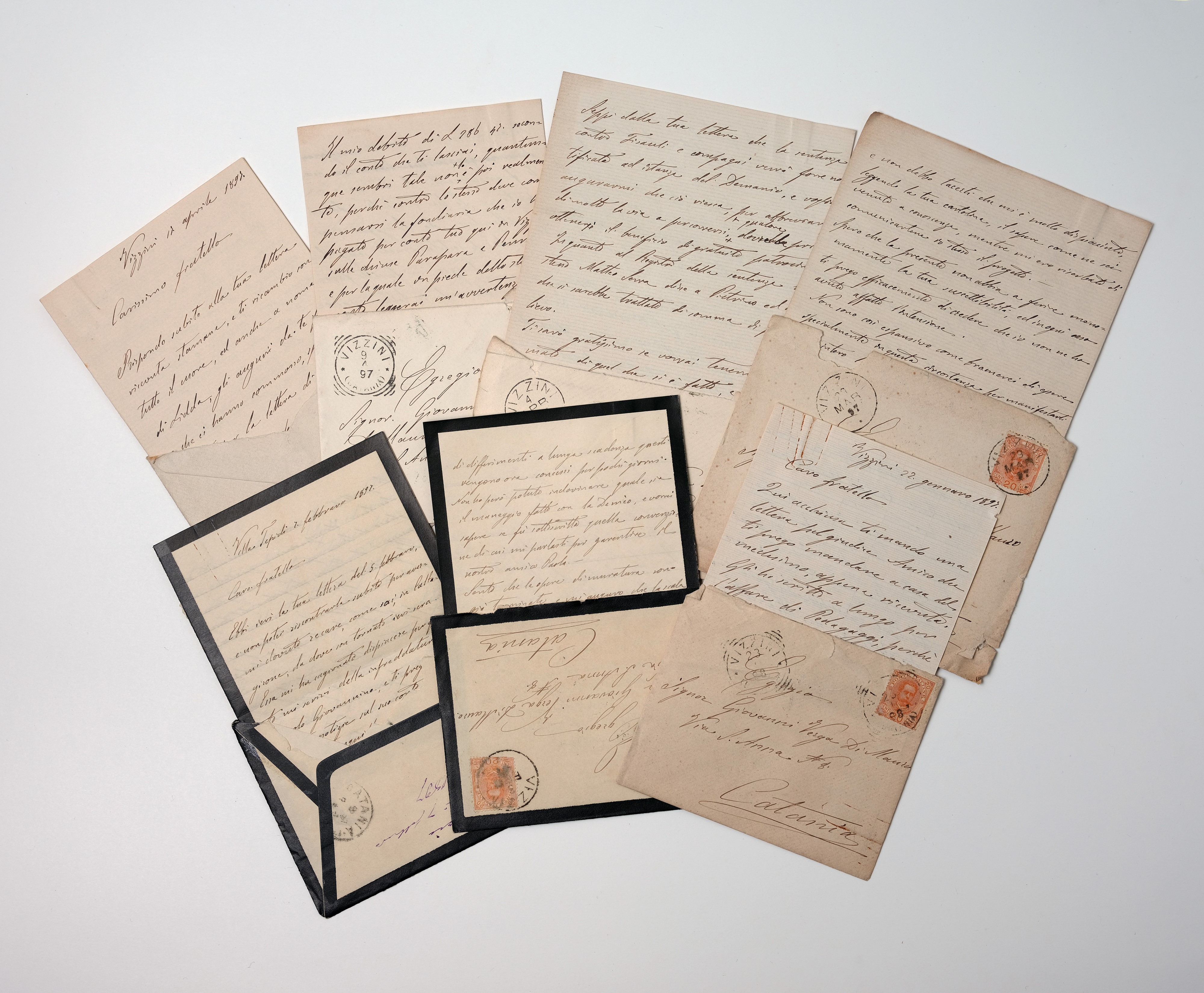
An impressive family archive, consisting of the correspondence sent by Giovanni Verga to his brother Pietro Verga, from 1893 to 1912, for a total of 18 letters, 6 postcards, and 3 telegrams; but above all, the enormous mass of UNPUBLISHED correspondence sent by his brothers and relatives to Giovanni Verga, over 1,300 letters distributed across 18 containers , the largest of which contains 831 letters sent by Mario Verga to Giovanni between 1881 and 1918.
Specialist Notes
"Pallanza, September 22, 1894.
Dear brother, I have just received the manuscript of La Lupa , but it is not what I wanted. Instead, look for a copy of La Lupa, which I think is not my own, either in my manuscript folders, or in my desk drawer, or in a large yellow envelope among my papers. Send it to me here immediately. I return to Milan on October 2nd. Yours, Giovanni. From Saturday onwards, write to me, addressing your letters to Milan.
"Milan, October 24, 1894.
Dear brother, I must let you know that neither Lupa nor In Portineria will be performed in Turin anymore, that at least for this year and the next one, there is no reason to count on Puccini's opera, and that on December 31st I have to pay 4,000 lire to Treves (discounted at great sacrifice in the hope of bringing me up to date with the Nuovalucello annuity). I have received the B. d'Italia money order for 800 lire and your father-in-law's statement showing that the 6,000 lire were paid by the two of us. (...)"
"Turin, January 18, 1896.
Dearest brother, I received your letter of the 15th yesterday, and I'm sorry, first of all, to hear that Ersilia isn't feeling well. Please give me news of her and all of you soon. I'm well, and I'm pleased so far with the progress of rehearsals and with what's been done with the sets and the stage design. Andò spares no expense. He's brilliant and intelligent in directing his actors, who are excellent, especially Reiter, who, after Duse, is the only one who can play that part well. Everyone seems happy and confident in success. I'd like to be that way, since the expectations and goodwill of the Turin public and the press, of which I have so much daily proof, and the extremely dangerous precedent of the phenomenal and exceptional success of Cavalleria Rusticana, are creating a precedent and a commitment far beyond my strength. In any case, however things turn out, I'll take it philosophically.
I hear what you're saying about business. I received a very kind and affectionate letter from my friend Paola, and I'm sure it will help me much better than I could in sorting out my sister Teresa's affairs. Help him with this as best you can. I can see we'll have some trouble with Tricomi, and if I can get through the year, it will be a miracle. You will have provided for the painter for the remaining 40 lire, with the monthly payment for Mario's two shops in Via St. Anna. (...) La Lupa will be performed, if nothing else happens, on Monday, January 27th. (...) Please send the enclosed note to De Roberto. Let me know what you're doing and give my regards to everyone. Yours, Giovanni."
"Milan, January 30, 1896.
Dear brother, I received your two, one rejected first from Turin here and the other headed from Catania. (...) And I hope to be back home soon to be among you, if only as soon as I've seen the outcome of the Lupa here and made what use of it I can. I'm very sad and in a bad mood. Please keep me updated as much as you can. In the meantime, I beg you to check on your health, even just by a simple postcard, every day, and also write to me if Compagnoni has reimbursed you...."
The family correspondence of a great writer is one of the most valuable documents useful for reconstructing an artist's career. Giovanni Verga had four siblings: Mario, Rosa, Pietro, and Teresa. He was the eldest of five children born to Giovanni Battista Verga Catalano and Caterina Di Mauro Barbagallo. Regarding his family relationships with his siblings, biographical sources and correspondence show that they were generally close and continuous, as was typical of bourgeois and landed Sicilian families in the 19th century. The surviving correspondence documents numerous exchanges between Verga and his family; it is no coincidence that the critical edition of his correspondence includes an entire volume dedicated to letters to his siblings. Pietro Verga was the brother with whom Giovanni had the best-documented relationship. Pietro often dealt with practical and financial matters in Sicily during the writer's extended stays in Florence and Milan. The letters between the two frequently concern the administration of family property, agricultural affairs, and economic matters. Mario Verga also participated in family life and the management of joint interests, although the available documentation is less extensive than that relating to Pietro. This archive, with the 831 letters exchanged between Mario and Giovanni Verga , perhaps fills the gap previously noted by scholars. Biographical evidence shows that the brothers remained bound by shared family interests and the management of the Verga family's estate, which belonged to the Sicilian agrarian bourgeoisie. Even when Giovanni lived in the North, he maintained a constant correspondence with his family members who remained in Sicily. The existence of an entire volume of the national edition of the correspondence dedicated to Letters to his Brothers confirms the importance of these exchanges. Scholars note that Mario represented a sort of bridge for Giovanni with his Catanian family during his formative years as a writer. The known letters do not reveal any significant conflicts between the two; on the contrary, they reveal a relationship marked by trust and collaboration, especially in his youth.
An immense archive, all waiting to be studied.
This lot has been declared of notable historical and cultural interest by the Sicilian Archival Superintendency.
Dear brother, I have just received the manuscript of La Lupa , but it is not what I wanted. Instead, look for a copy of La Lupa, which I think is not my own, either in my manuscript folders, or in my desk drawer, or in a large yellow envelope among my papers. Send it to me here immediately. I return to Milan on October 2nd. Yours, Giovanni. From Saturday onwards, write to me, addressing your letters to Milan.
"Milan, October 24, 1894.
Dear brother, I must let you know that neither Lupa nor In Portineria will be performed in Turin anymore, that at least for this year and the next one, there is no reason to count on Puccini's opera, and that on December 31st I have to pay 4,000 lire to Treves (discounted at great sacrifice in the hope of bringing me up to date with the Nuovalucello annuity). I have received the B. d'Italia money order for 800 lire and your father-in-law's statement showing that the 6,000 lire were paid by the two of us. (...)"
"Turin, January 18, 1896.
Dearest brother, I received your letter of the 15th yesterday, and I'm sorry, first of all, to hear that Ersilia isn't feeling well. Please give me news of her and all of you soon. I'm well, and I'm pleased so far with the progress of rehearsals and with what's been done with the sets and the stage design. Andò spares no expense. He's brilliant and intelligent in directing his actors, who are excellent, especially Reiter, who, after Duse, is the only one who can play that part well. Everyone seems happy and confident in success. I'd like to be that way, since the expectations and goodwill of the Turin public and the press, of which I have so much daily proof, and the extremely dangerous precedent of the phenomenal and exceptional success of Cavalleria Rusticana, are creating a precedent and a commitment far beyond my strength. In any case, however things turn out, I'll take it philosophically.
I hear what you're saying about business. I received a very kind and affectionate letter from my friend Paola, and I'm sure it will help me much better than I could in sorting out my sister Teresa's affairs. Help him with this as best you can. I can see we'll have some trouble with Tricomi, and if I can get through the year, it will be a miracle. You will have provided for the painter for the remaining 40 lire, with the monthly payment for Mario's two shops in Via St. Anna. (...) La Lupa will be performed, if nothing else happens, on Monday, January 27th. (...) Please send the enclosed note to De Roberto. Let me know what you're doing and give my regards to everyone. Yours, Giovanni."
"Milan, January 30, 1896.
Dear brother, I received your two, one rejected first from Turin here and the other headed from Catania. (...) And I hope to be back home soon to be among you, if only as soon as I've seen the outcome of the Lupa here and made what use of it I can. I'm very sad and in a bad mood. Please keep me updated as much as you can. In the meantime, I beg you to check on your health, even just by a simple postcard, every day, and also write to me if Compagnoni has reimbursed you...."
The family correspondence of a great writer is one of the most valuable documents useful for reconstructing an artist's career. Giovanni Verga had four siblings: Mario, Rosa, Pietro, and Teresa. He was the eldest of five children born to Giovanni Battista Verga Catalano and Caterina Di Mauro Barbagallo. Regarding his family relationships with his siblings, biographical sources and correspondence show that they were generally close and continuous, as was typical of bourgeois and landed Sicilian families in the 19th century. The surviving correspondence documents numerous exchanges between Verga and his family; it is no coincidence that the critical edition of his correspondence includes an entire volume dedicated to letters to his siblings. Pietro Verga was the brother with whom Giovanni had the best-documented relationship. Pietro often dealt with practical and financial matters in Sicily during the writer's extended stays in Florence and Milan. The letters between the two frequently concern the administration of family property, agricultural affairs, and economic matters. Mario Verga also participated in family life and the management of joint interests, although the available documentation is less extensive than that relating to Pietro. This archive, with the 831 letters exchanged between Mario and Giovanni Verga , perhaps fills the gap previously noted by scholars. Biographical evidence shows that the brothers remained bound by shared family interests and the management of the Verga family's estate, which belonged to the Sicilian agrarian bourgeoisie. Even when Giovanni lived in the North, he maintained a constant correspondence with his family members who remained in Sicily. The existence of an entire volume of the national edition of the correspondence dedicated to Letters to his Brothers confirms the importance of these exchanges. Scholars note that Mario represented a sort of bridge for Giovanni with his Catanian family during his formative years as a writer. The known letters do not reveal any significant conflicts between the two; on the contrary, they reveal a relationship marked by trust and collaboration, especially in his youth.
An immense archive, all waiting to be studied.
This lot has been declared of notable historical and cultural interest by the Sicilian Archival Superintendency.
Contact
Condition report
To request a Condition Report, please contact libriestampe@finarte.it
The department will provide you with a general report of the condition of the property described above. Please note that what Finarte declares with respect to the state of conservation of the objects corresponds only to a qualified opinion and that we are not professional conservators or restorers.
We urge you to consult with a restorer or conservator of your choice who will be better able to provide a detailed, professional report. We always suggest prospective buyers to inspect each lot to satisfy themselves as to condition during the exhibition days as indicated in the catalog.
Suggested lots
Caricamento lotti suggeriti...