48
Incunabolo
Incunabolo
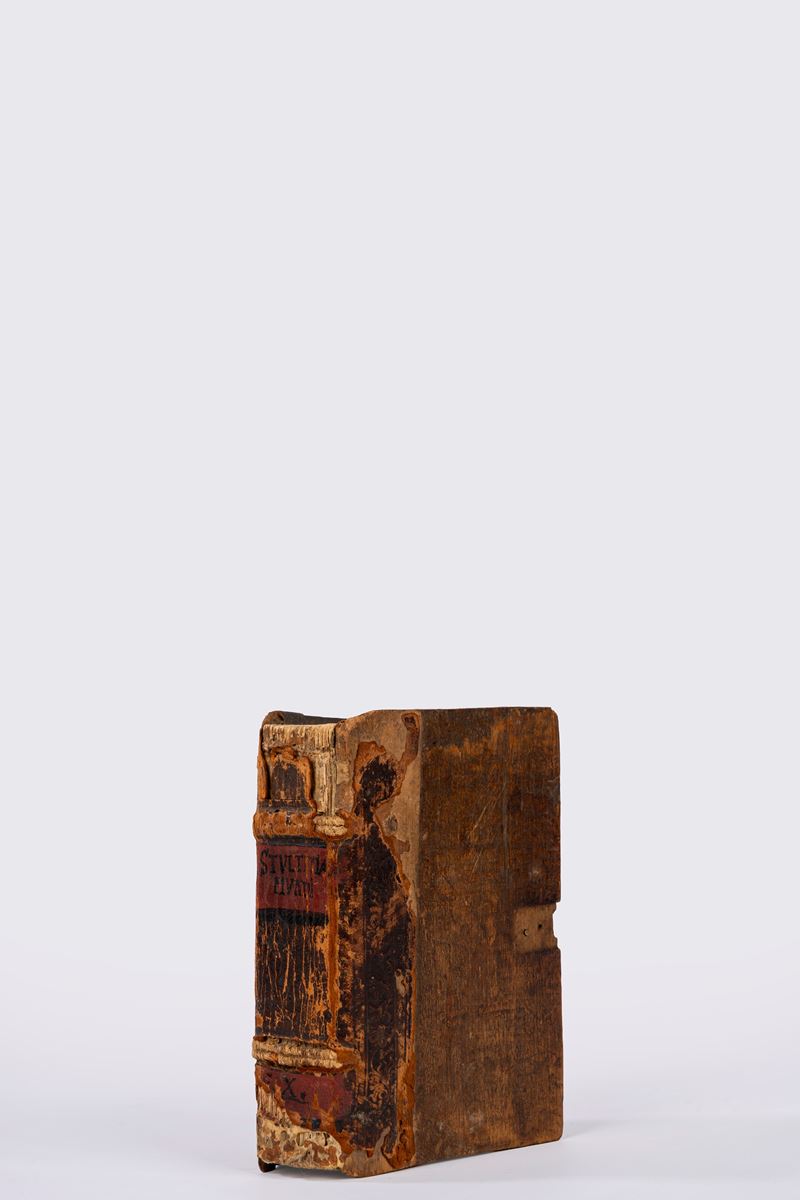
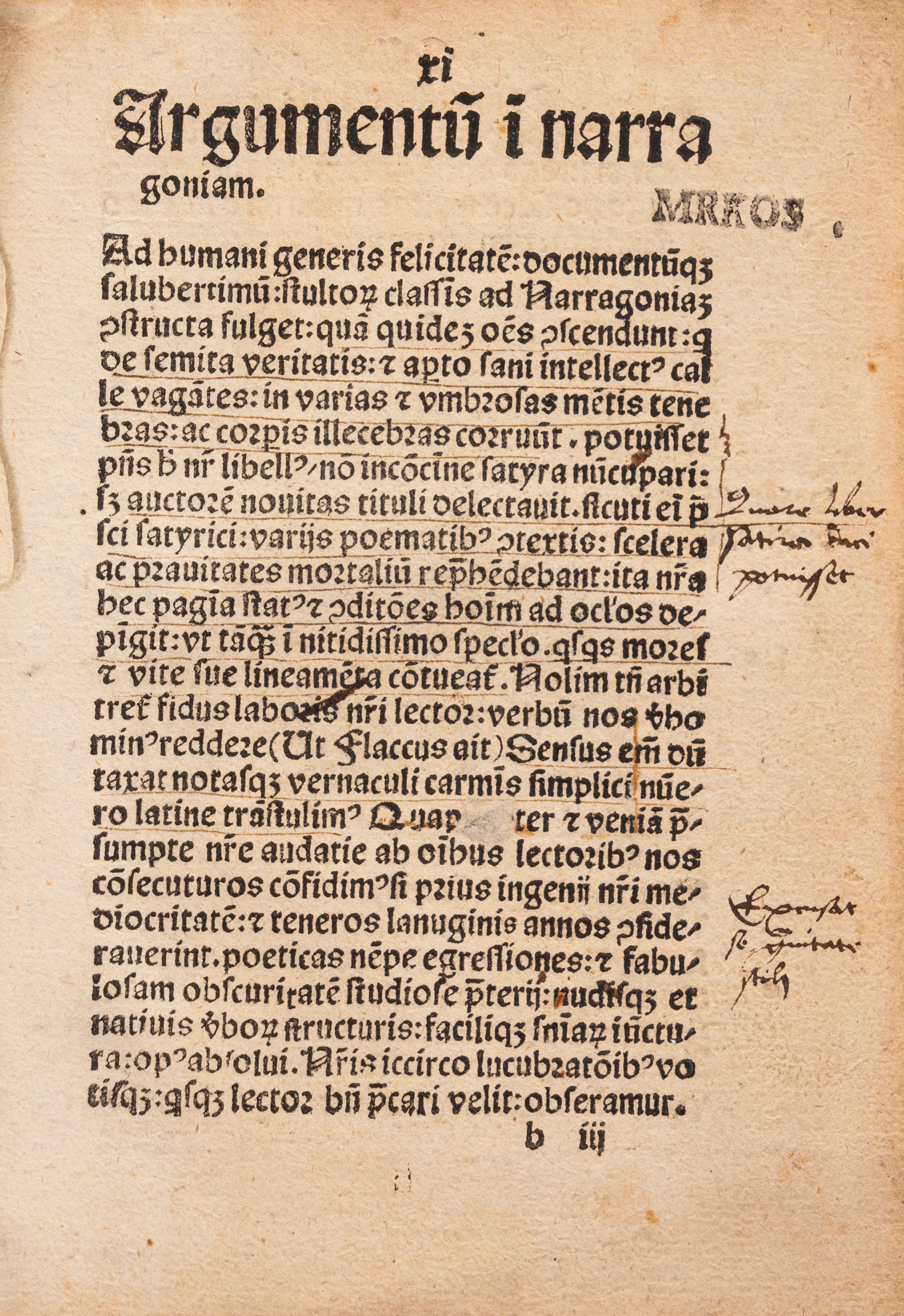
Das Narrenschiff [Latin] Stultifera navis. Translation: Jacobus Locher Philomusus, 1497
Estimate
€ 2.000 - 3.000
Sold
€ 4.191
The price includes buyer's premium
Do you have a similar item you would like to sell?
Information
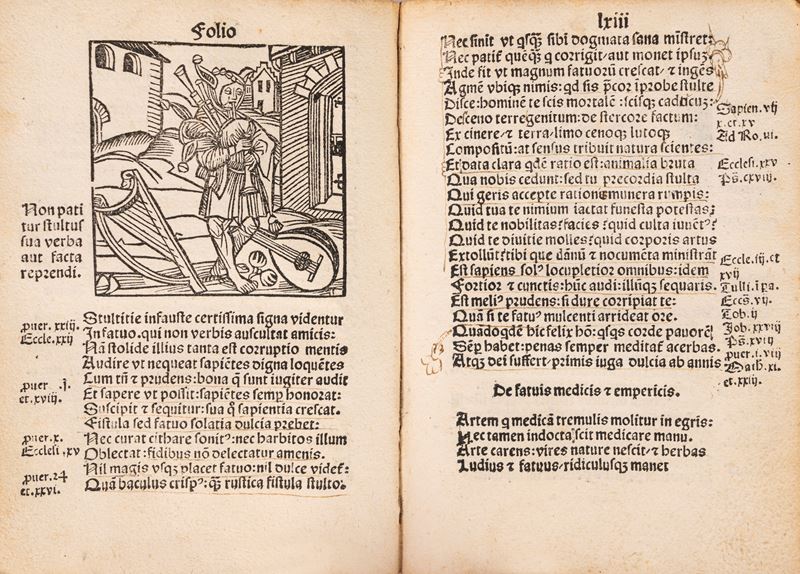
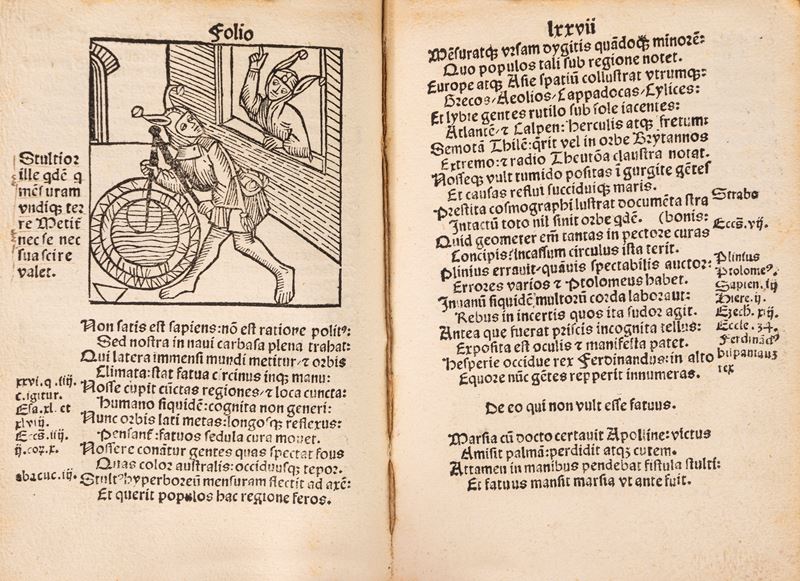
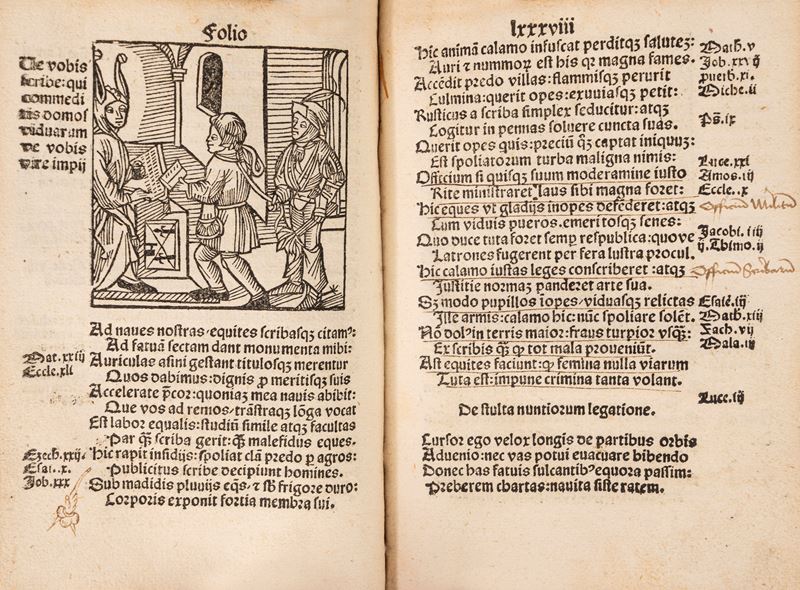
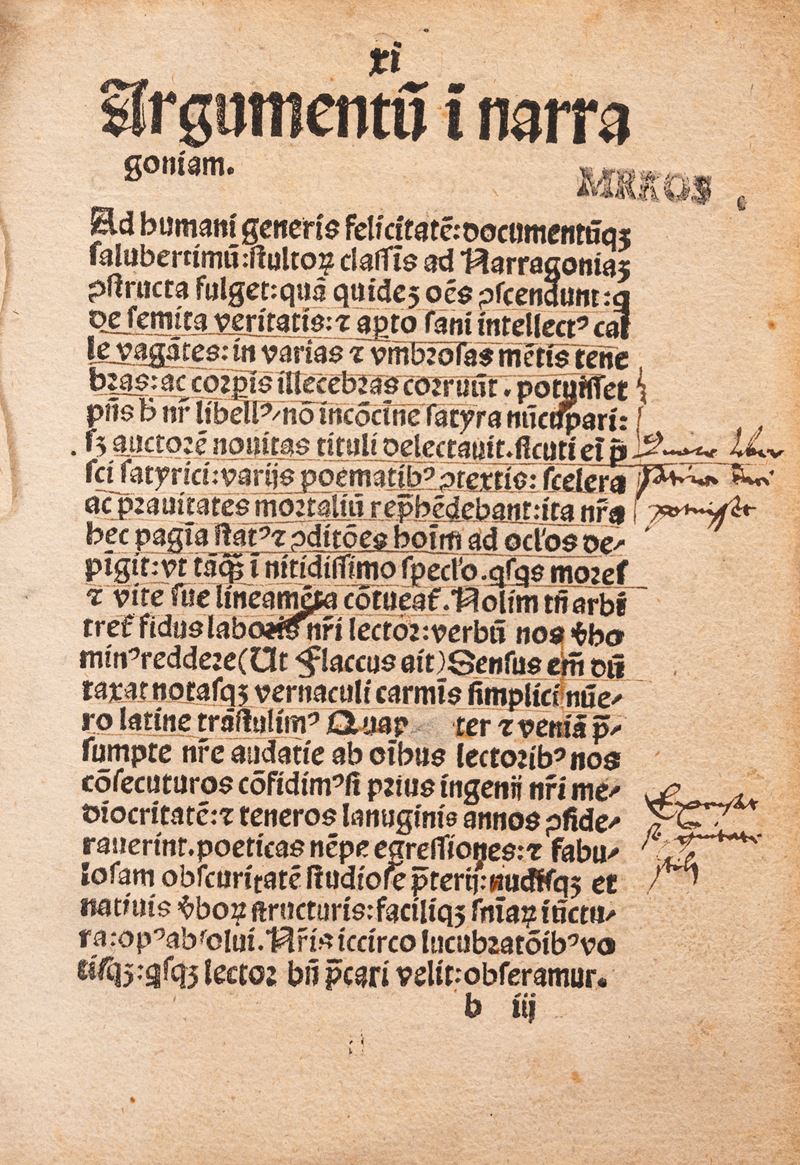
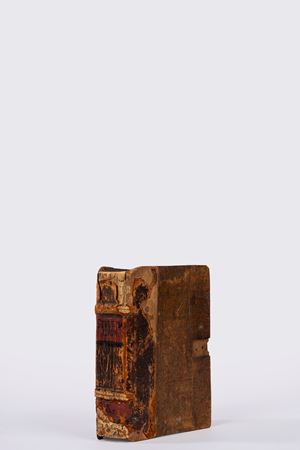
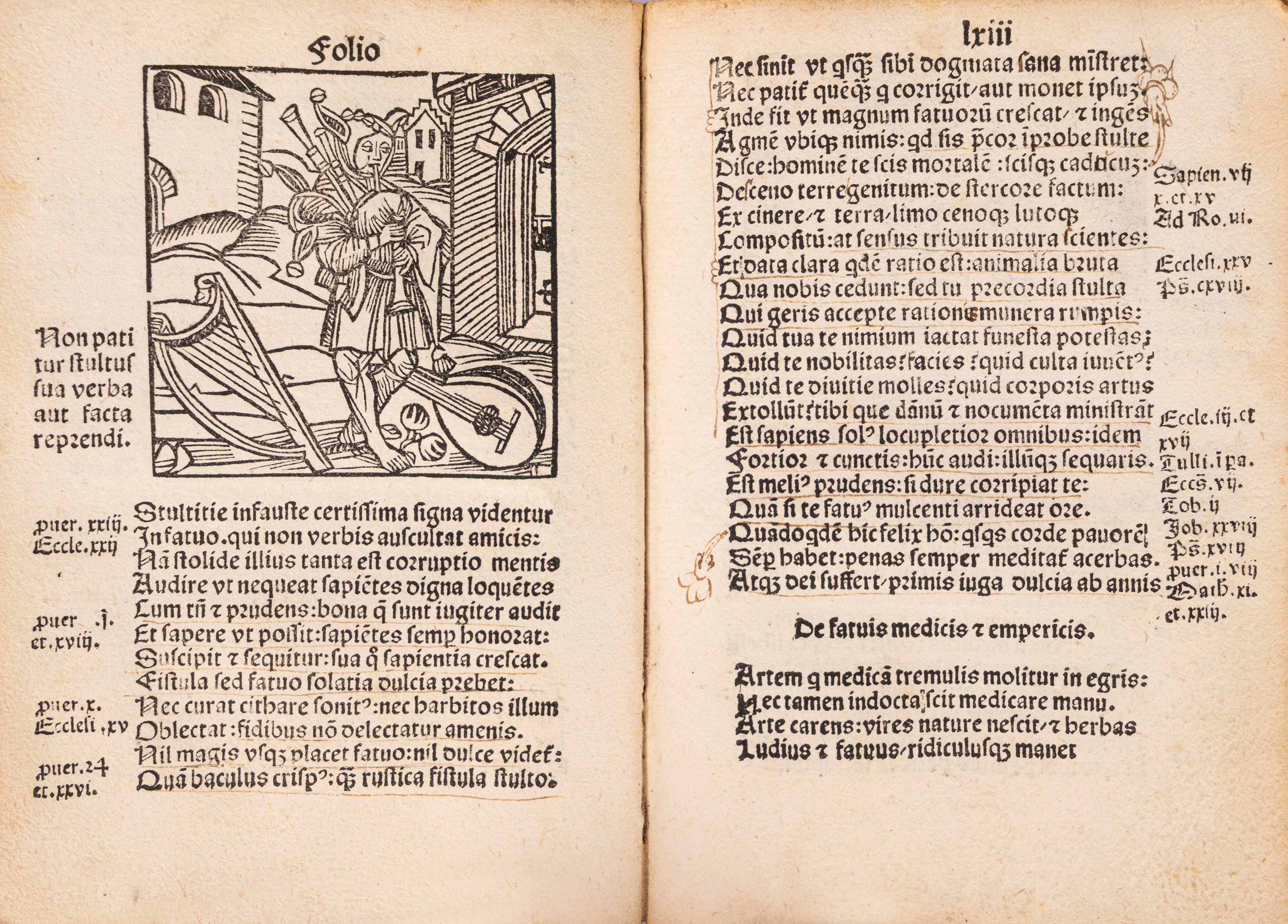
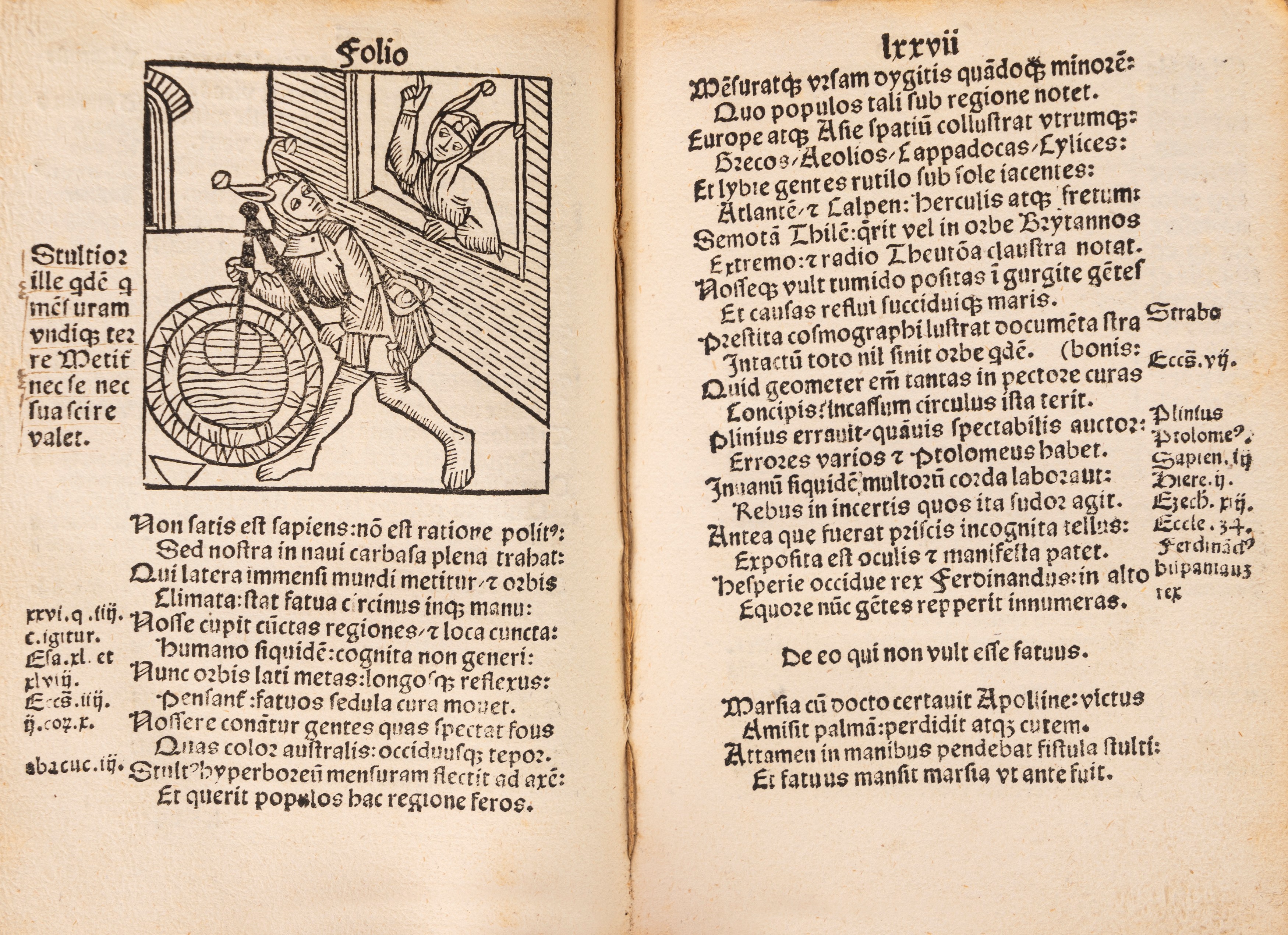
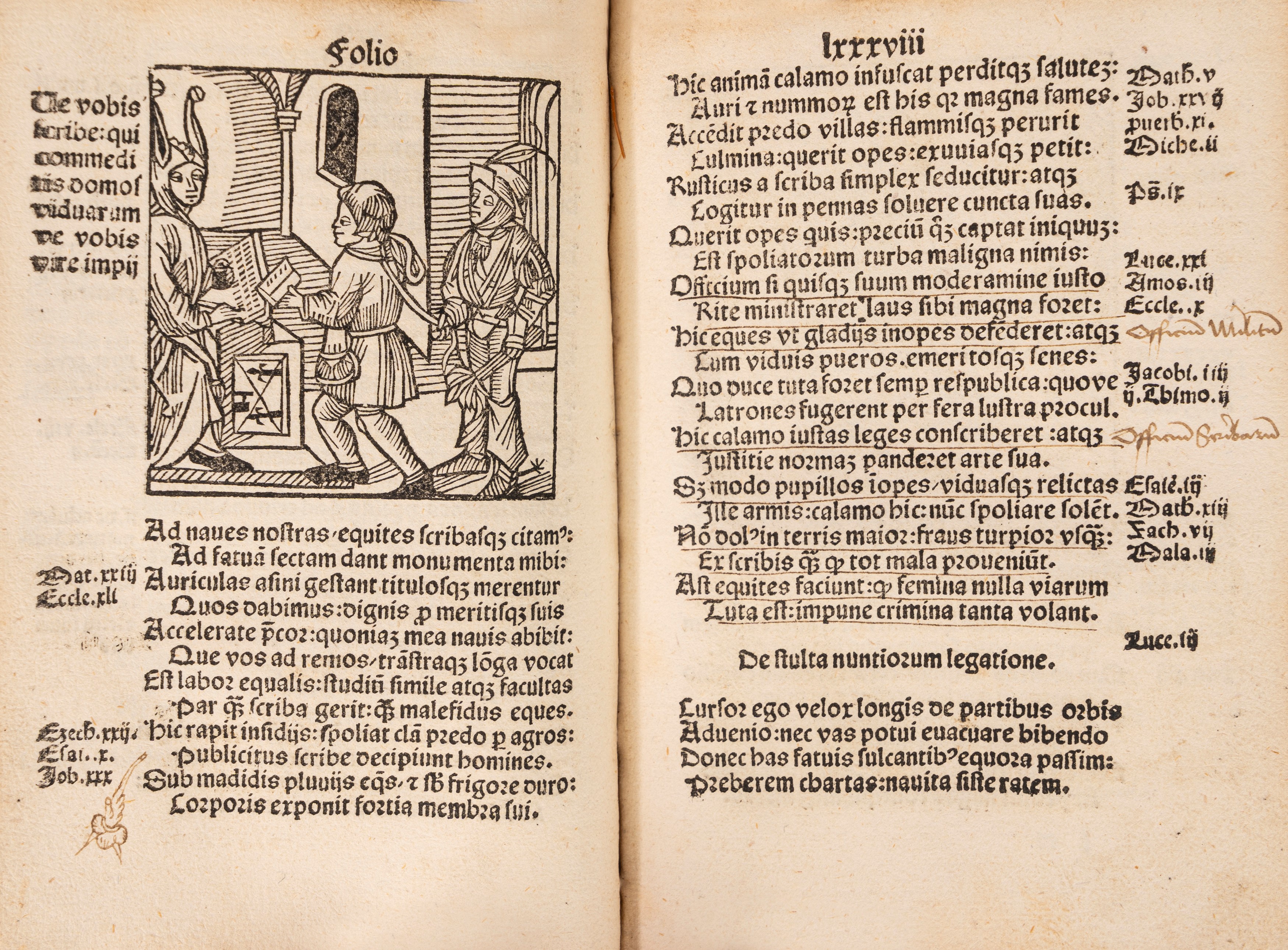
Augsburg, Johann Schönsperger, 1 April 1497. In 8°. Dozens of illustrations in the text, some attributable to Dürer; 10 initial leaves are missing (folio a and the first two leaves of b). Contemporary cypress and leather binding; defects and losses on the spine. Ownership notes and occasional marginal comments.
Specialist Notes
La Stultifera navis is the Latin translation of Sebastian Brant's famous Das Narrenschiff (The Ship of Fools) , originally published in German in 1494. The work is a moral satire featuring a ship full of fools heading for the fantastical "Narragonia," an allegory of human vices and weaknesses. It was one of the biggest European bestsellers of the 15th and 16th centuries. The Latin translation was carried out by Jakobus Locher under Brant's supervision. The Latin version allowed the work to reach an international audience of humanists, universities, and European courts. The Augsburg edition came out just a month after the first Latin edition, printed in Basel on March 1, 1497, a sign of the work's enormous immediate success. The work is illustrated with over one hundred woodcuts . Many derive from the iconographic cycle of the first edition, and numerous images are attributed to Albrecht Dürer or his circle. These images serve more than just decorative purposes: they constitute one of the most influential examples of the dialogue between text and image in the humanist culture of the early Renaissance.
Ship of Fools is considered one of the texts that marks the transition from medieval allegory to modern satire. Its influence extended to numerous later authors, including Erasmus of Rotterdam. Several book historians call it the first German literary work to have a truly European resonance.
BMC III, 370; Goff B-1088; GW 5056; HC *3748; Bod-inc B-508; BSB-Ink B-818; ISTC ib01088000; PMM 37.
Ship of Fools is considered one of the texts that marks the transition from medieval allegory to modern satire. Its influence extended to numerous later authors, including Erasmus of Rotterdam. Several book historians call it the first German literary work to have a truly European resonance.
BMC III, 370; Goff B-1088; GW 5056; HC *3748; Bod-inc B-508; BSB-Ink B-818; ISTC ib01088000; PMM 37.
Contact
Suggested lots
Caricamento lotti suggeriti...