Information
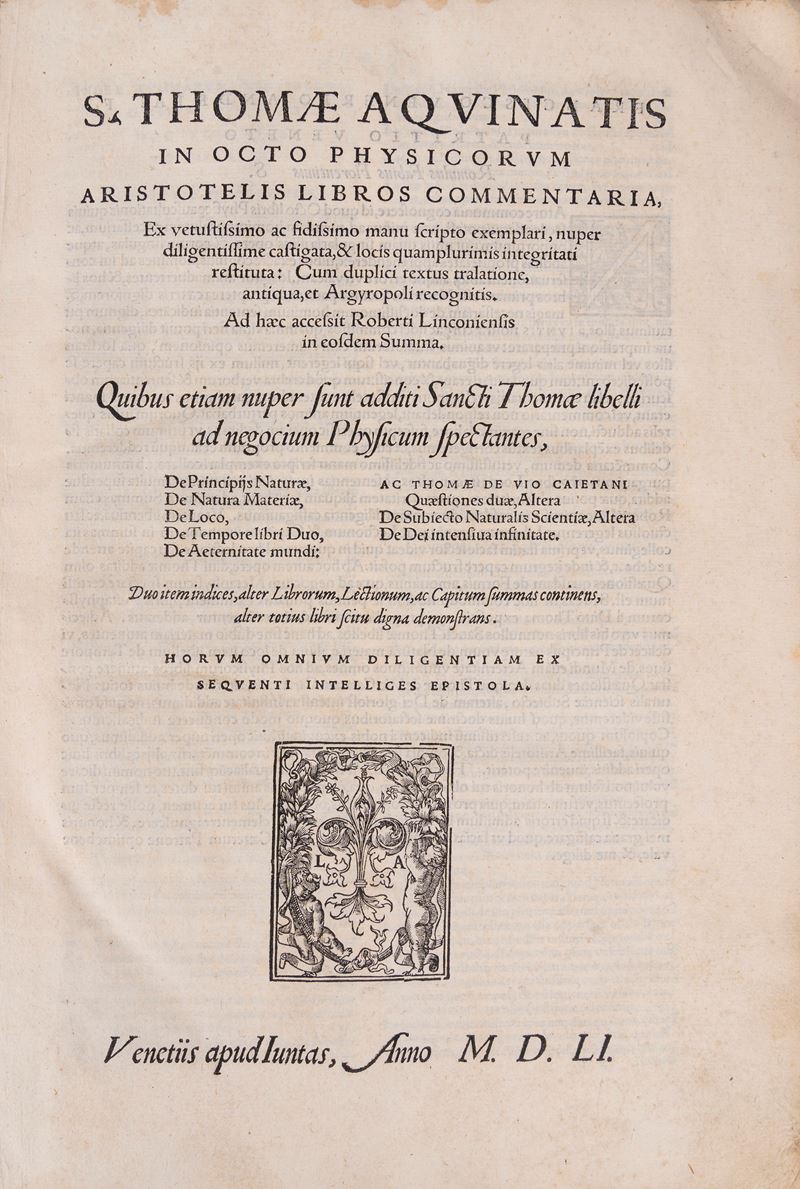
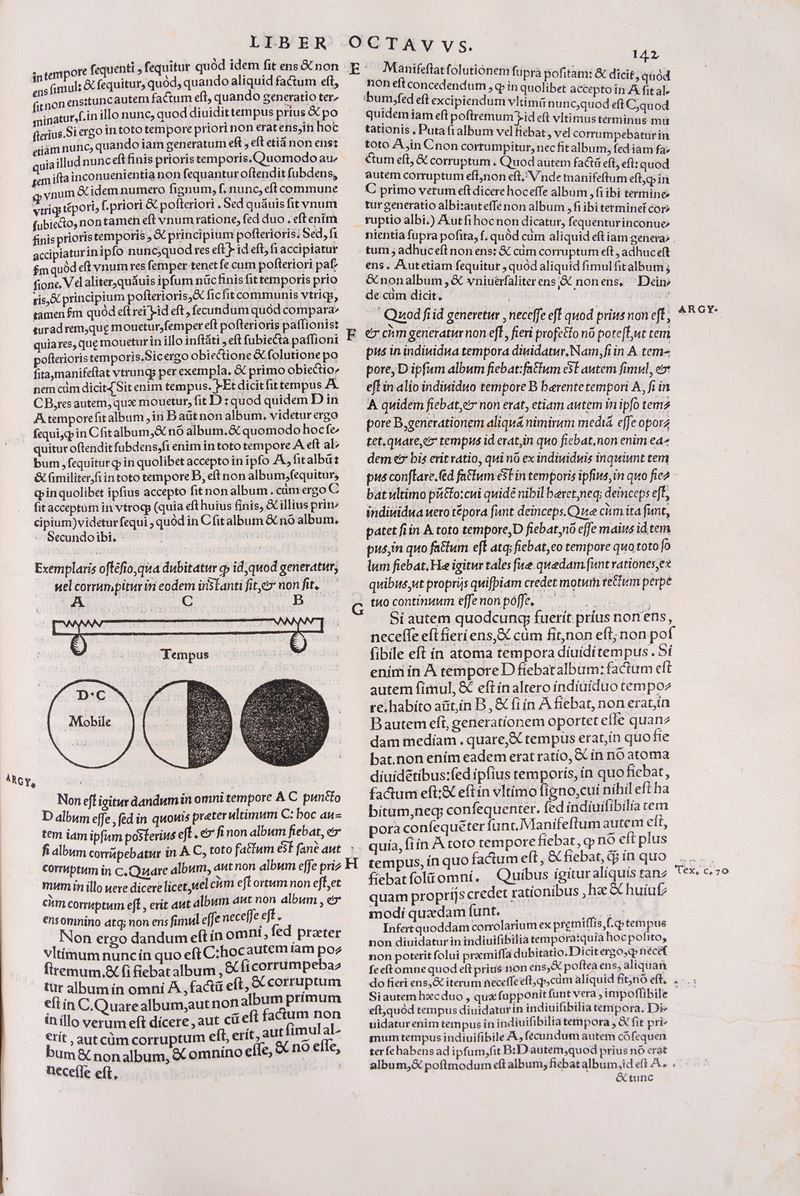
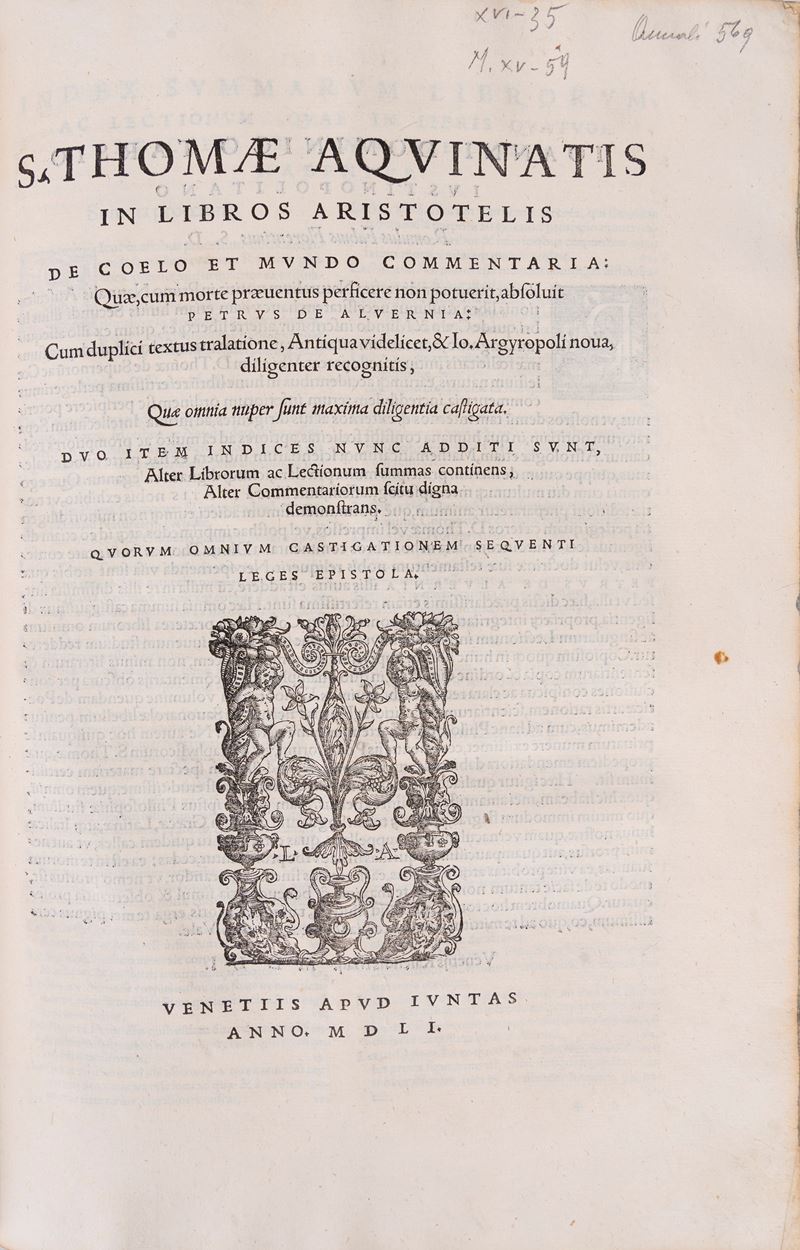
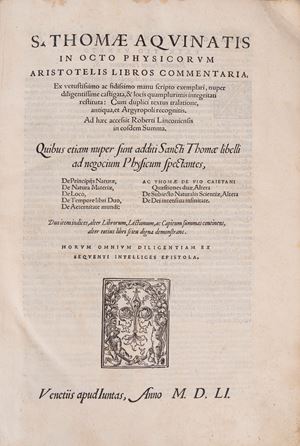
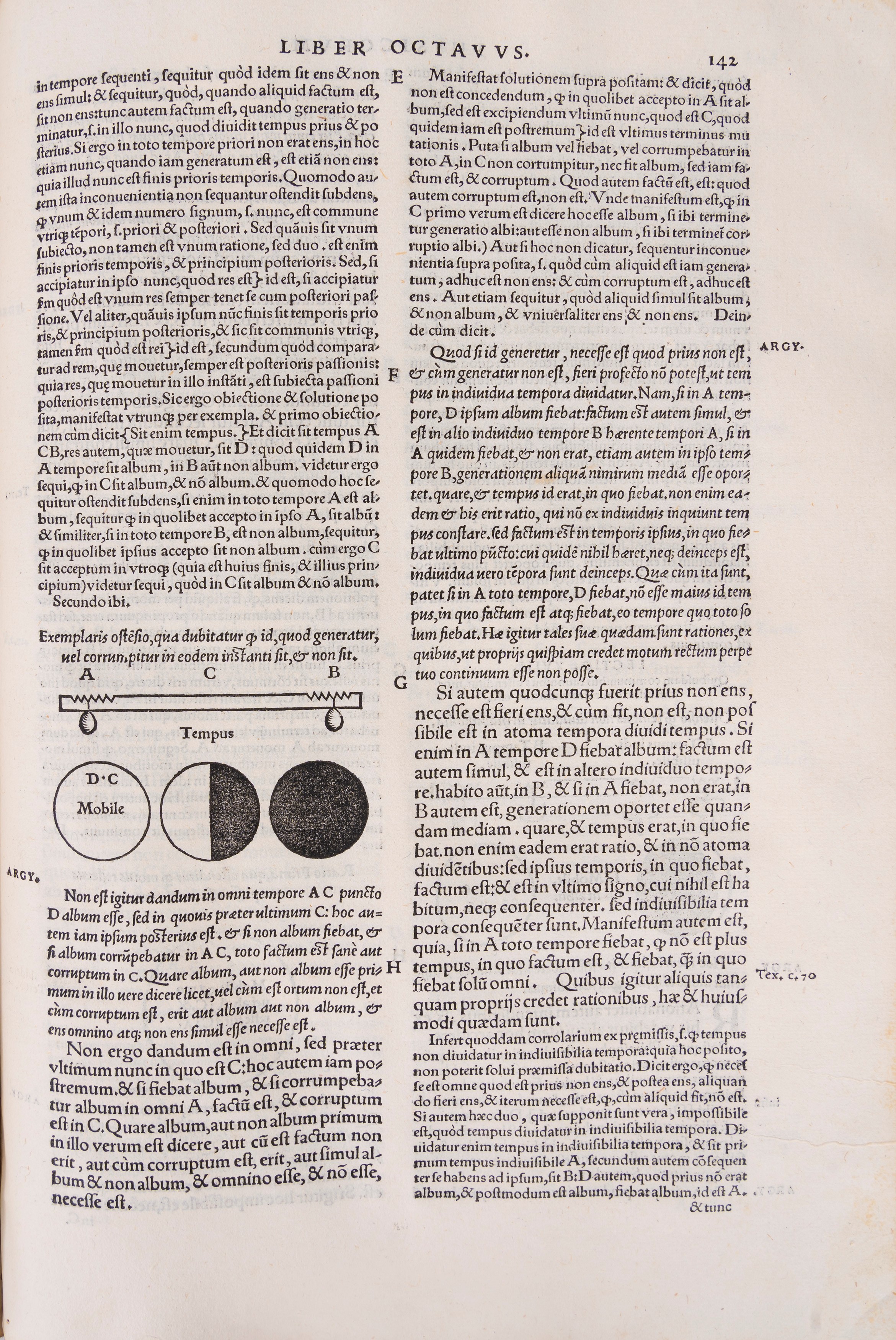
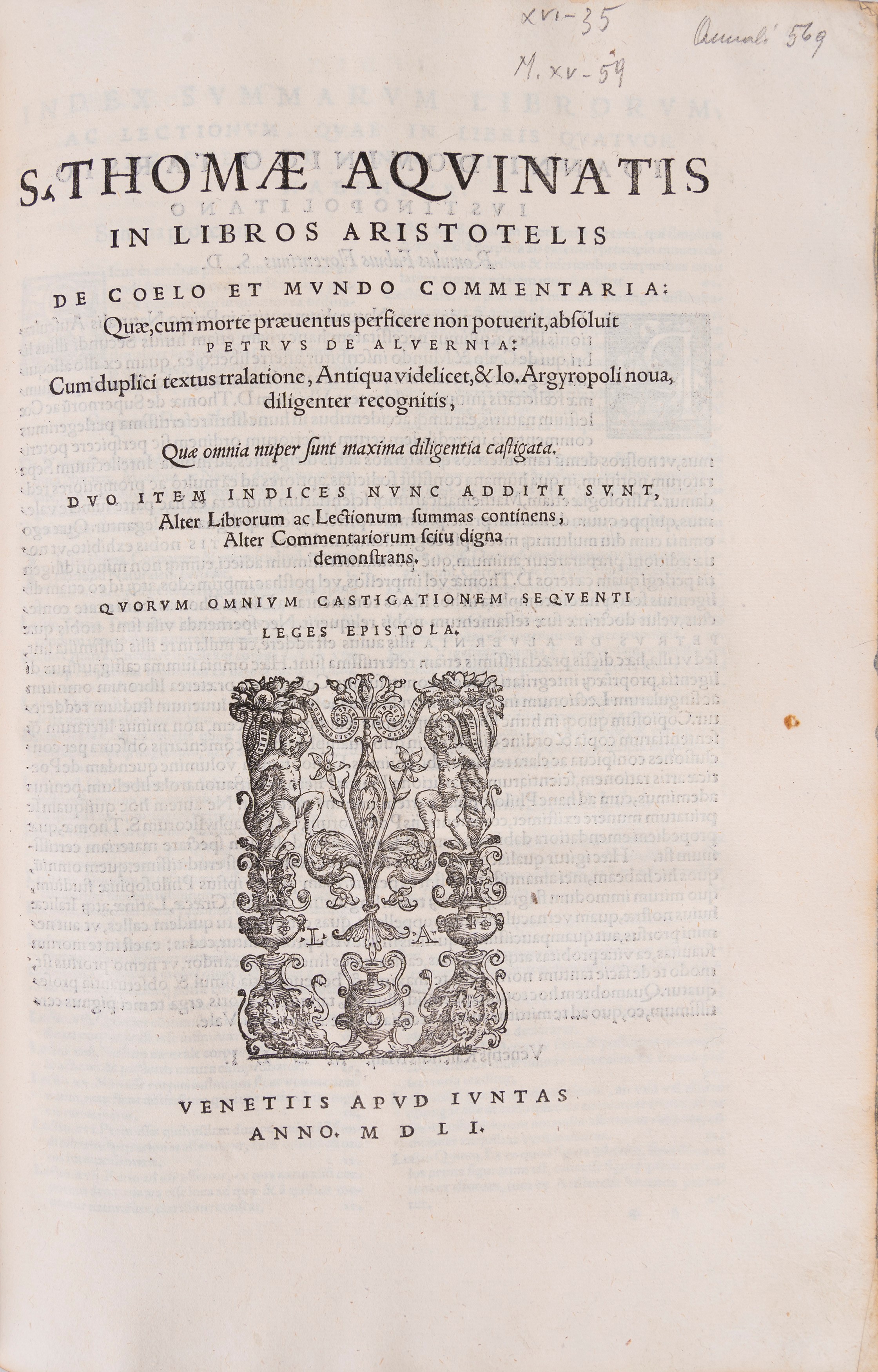
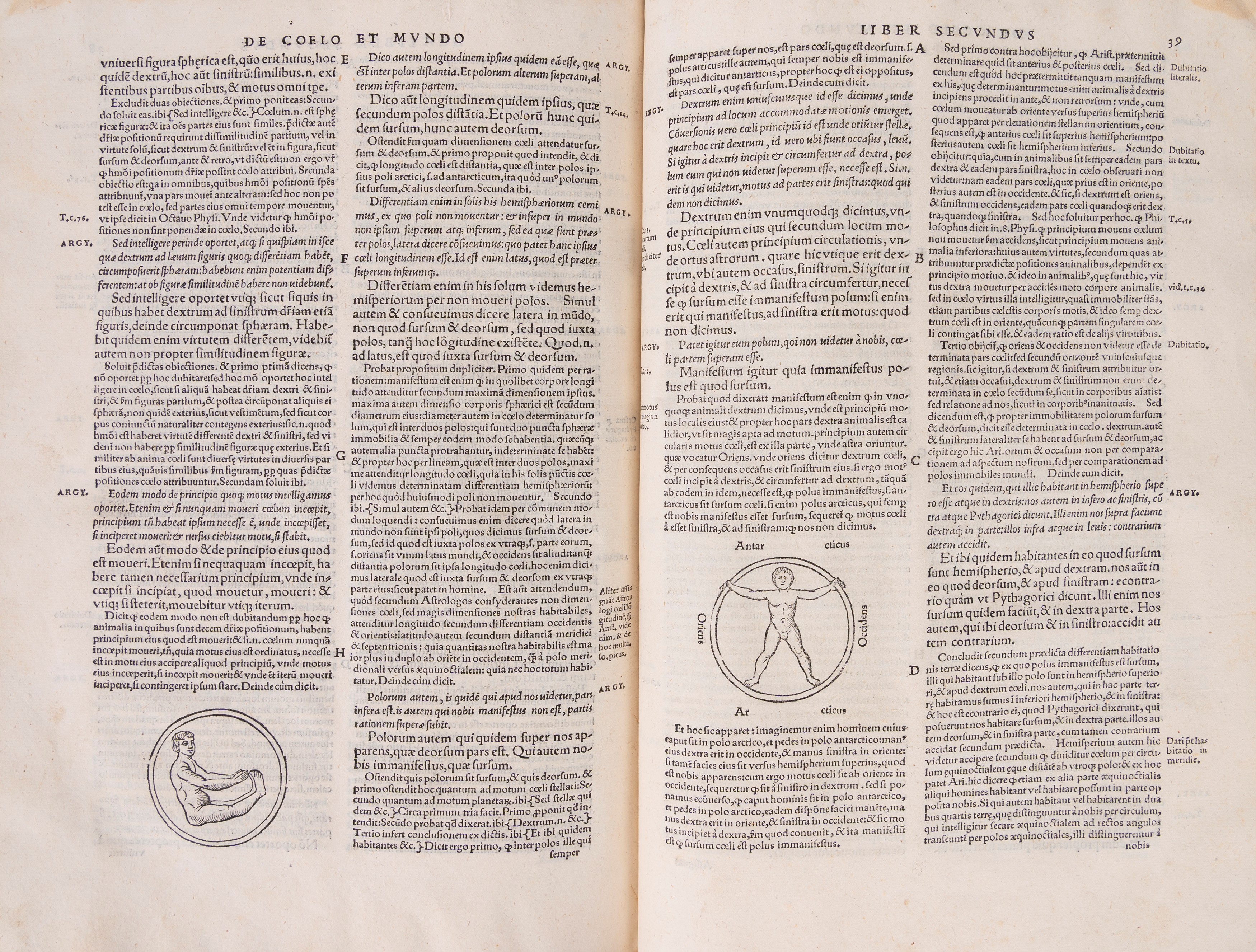
Venetians: apud Iuntas, 1551 (Venetian: apud haeredes Lucaentonij Iuntae, mense Ianuario 1551). On 2°. On the title page, Florentine lily and initials LA surrounded by a garland supported by two putti, dozens of diagrams, figures, schemes and small illustrations in the text. Bound with. S.Thomae Aquinatis In Libros Aristotelis De Coelo et Mundo Commentaria . Venice, apud Iuntas, 1551. Florentine lily with initials on the title page, diagrams and woodcut figures, an excellent example. Contemporary binding in parchment-covered cardboard.
Specialist Notes
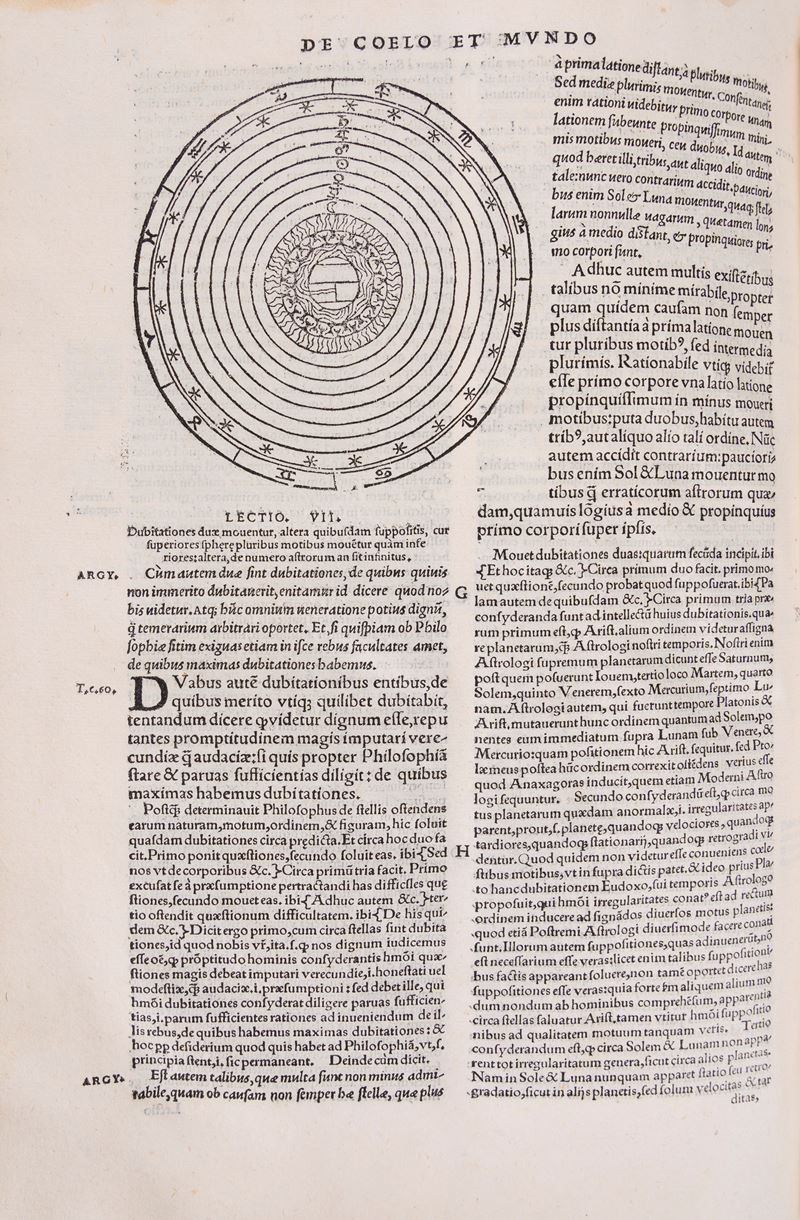
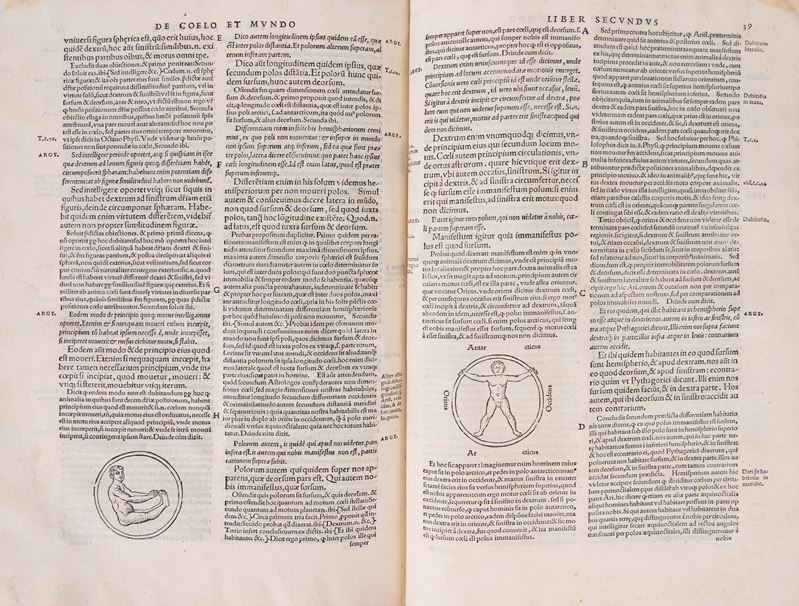
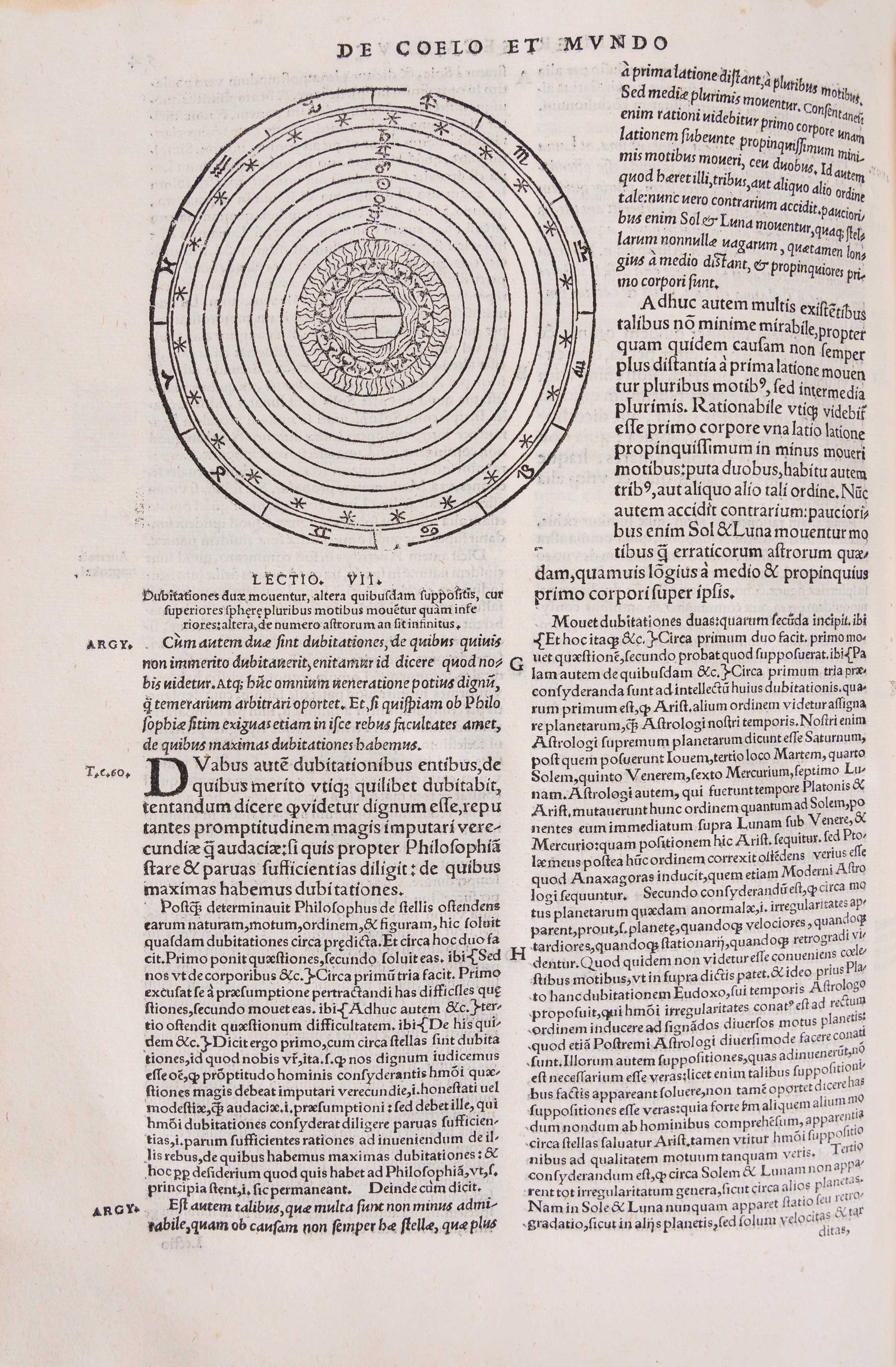
Work II: A very important and fundamental edition of St. Thomas's Commentary on Aristotle's principal cosmological treatise , a cornerstone of his thought, written around 350 BC, which dominated ancient culture first and then medieval (Christian and Islamic) culture for nearly two millennia. On folio 54v, one of the most famous cosmological illustrations in history, that of the "geocentric Celestial Spheres" by Eudoxus and Aristotle.
The volume presents Aristotle's text in the translation prepared by Joannes Argyropylos, a professor of Greek in Florence, where he had fled after the fall of Constantinople, and what is called a "Translatio antiqua," presumably the textus communis, a version of William of Moerbeke's translation, which usually accompanies the works of St. Thomas in these editions. Petrus de Alverna completes the commentary left unfinished at the time of Thomas Aquinas's death. "With the rediscovery of Aristotle in the 11th century, a new type of scientific and cultural mentality arose, so much so that Thomas Aquinas could affirm (in his commentary on Aristotle: De caelo et mundo) that 'the study of philosophy has not the aim of knowing what men thought but of knowing what the truth of thought is.'"
The volume presents Aristotle's text in the translation prepared by Joannes Argyropylos, a professor of Greek in Florence, where he had fled after the fall of Constantinople, and what is called a "Translatio antiqua," presumably the textus communis, a version of William of Moerbeke's translation, which usually accompanies the works of St. Thomas in these editions. Petrus de Alverna completes the commentary left unfinished at the time of Thomas Aquinas's death. "With the rediscovery of Aristotle in the 11th century, a new type of scientific and cultural mentality arose, so much so that Thomas Aquinas could affirm (in his commentary on Aristotle: De caelo et mundo) that 'the study of philosophy has not the aim of knowing what men thought but of knowing what the truth of thought is.'"
Contact
Suggested lots
Caricamento lotti suggeriti...