156
Stabia - Scavi
Stabia - Scavi
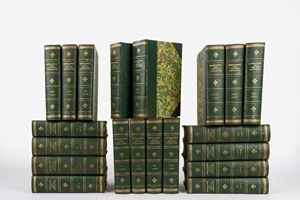
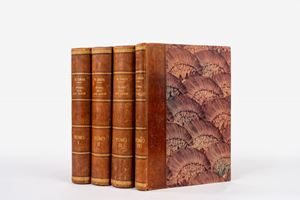
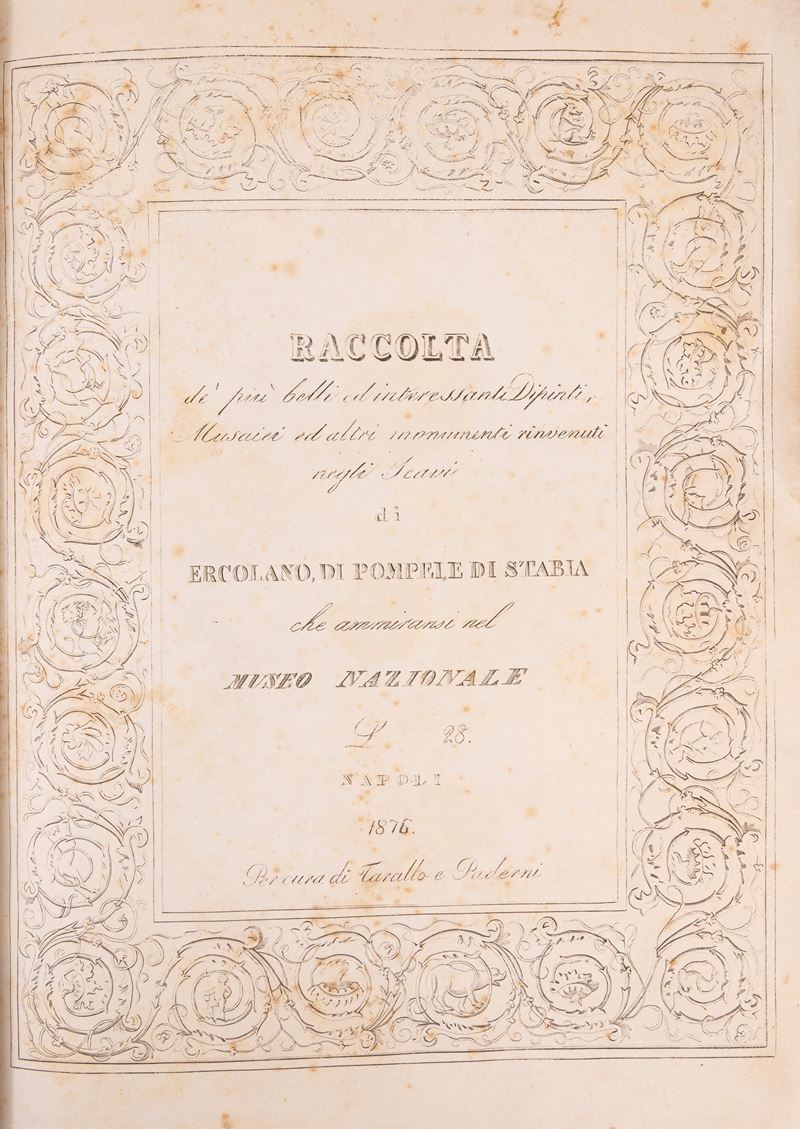
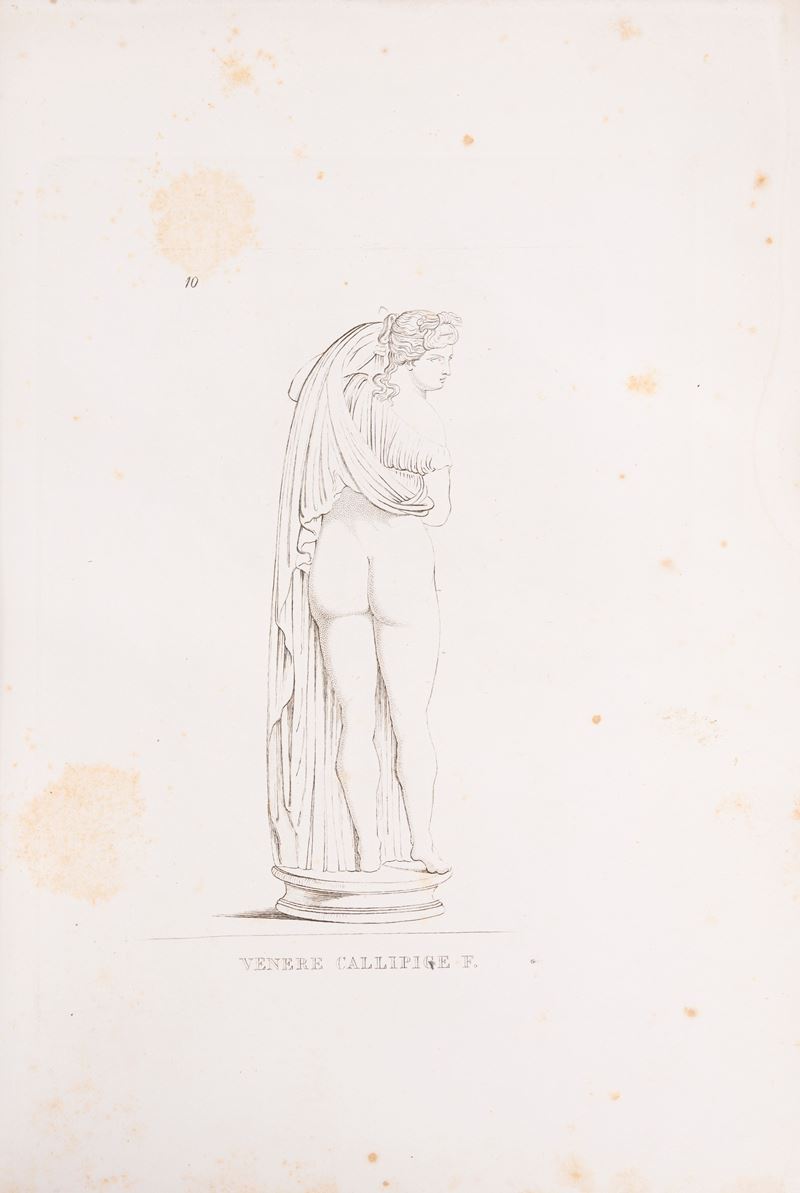
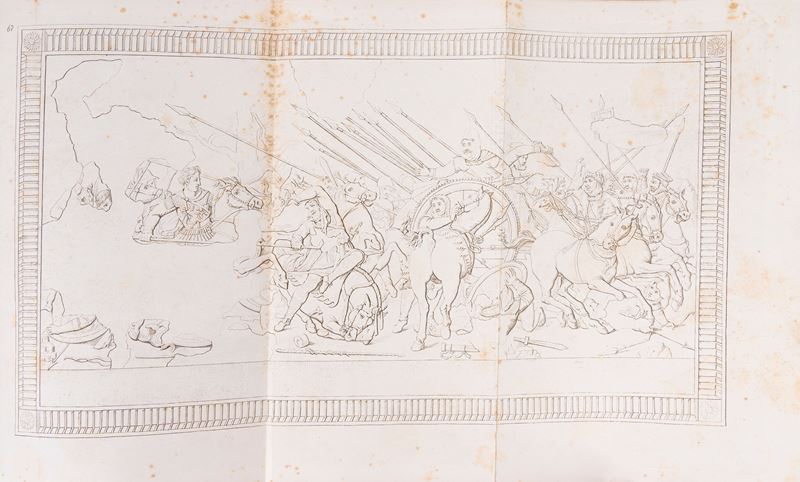
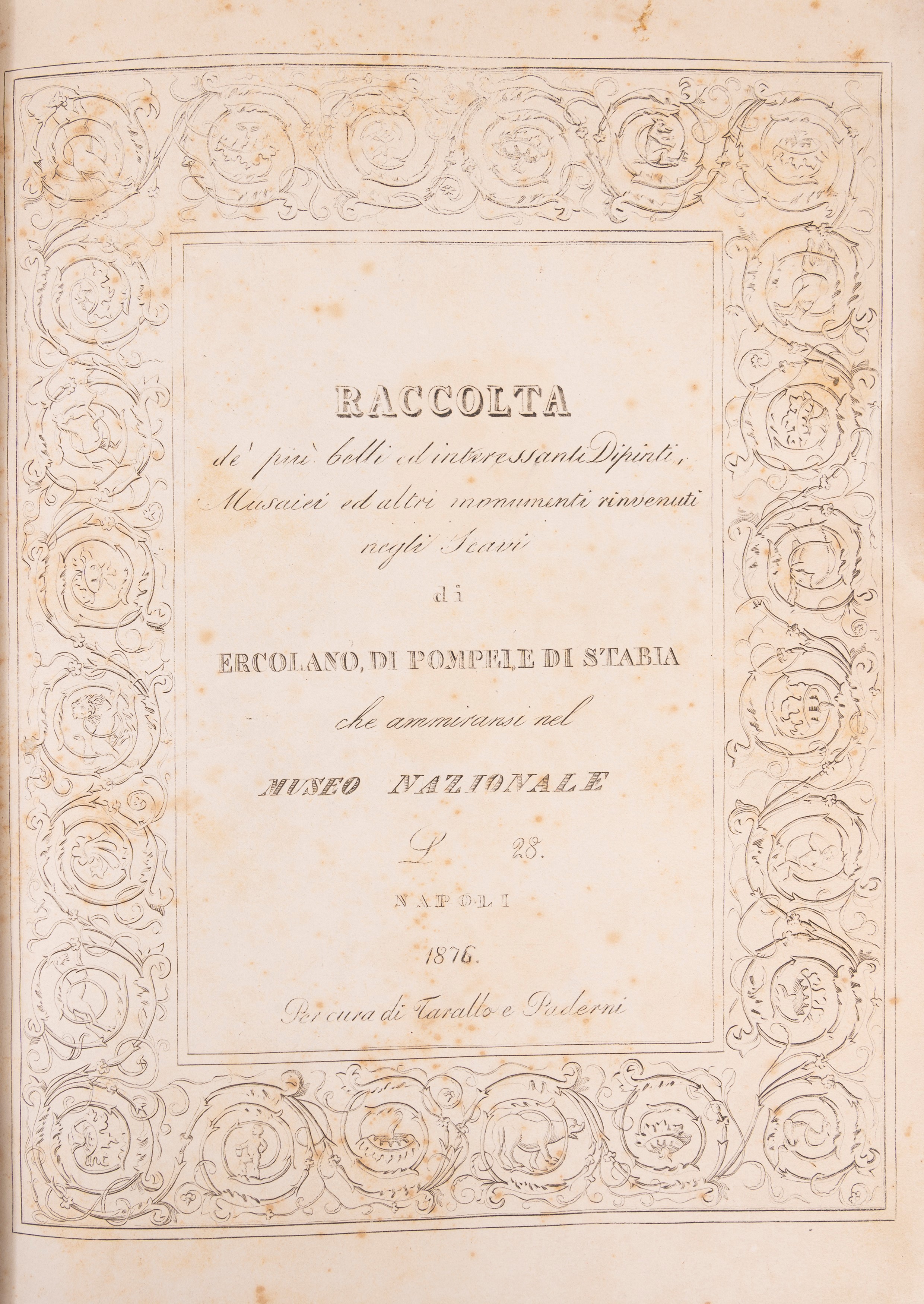
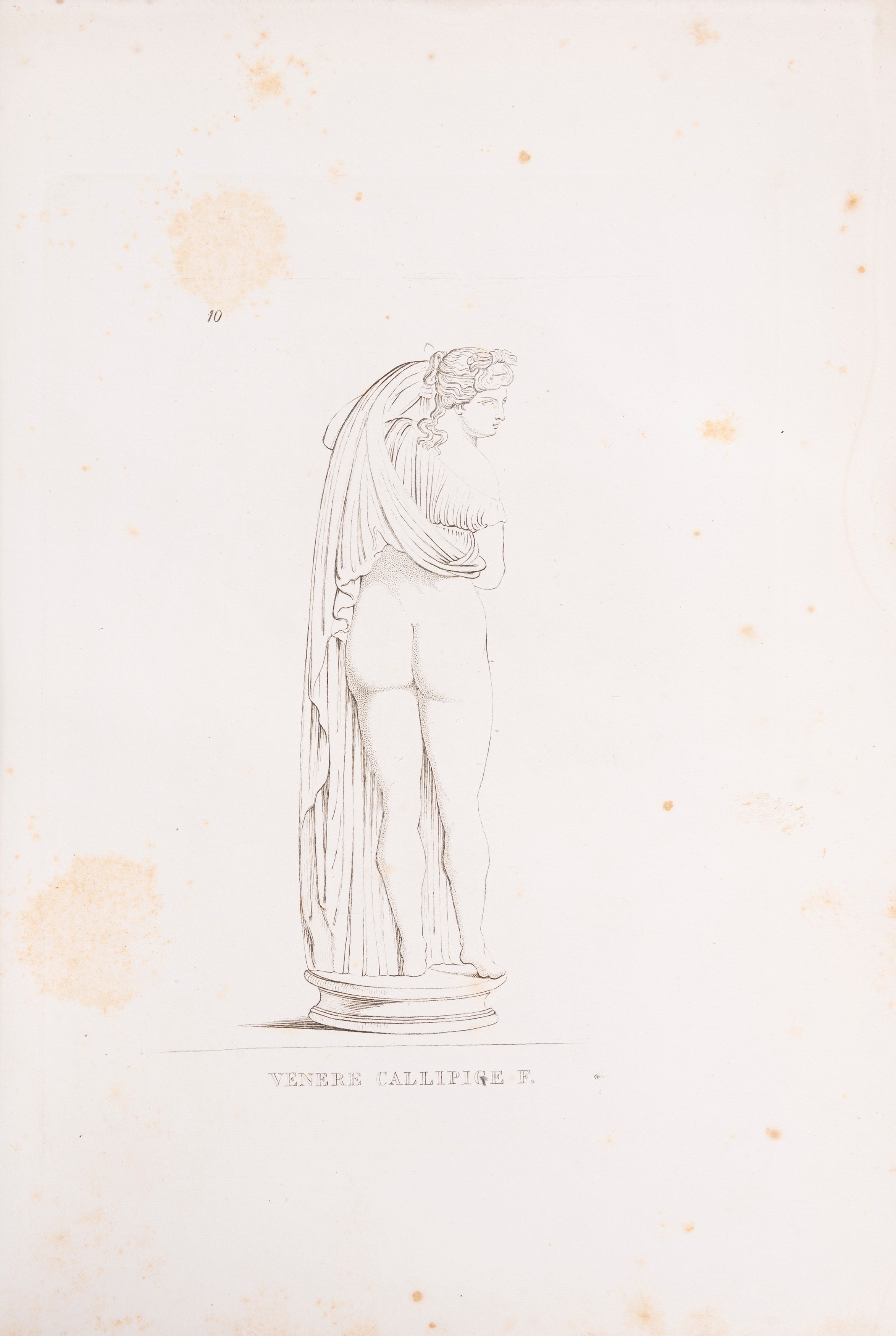
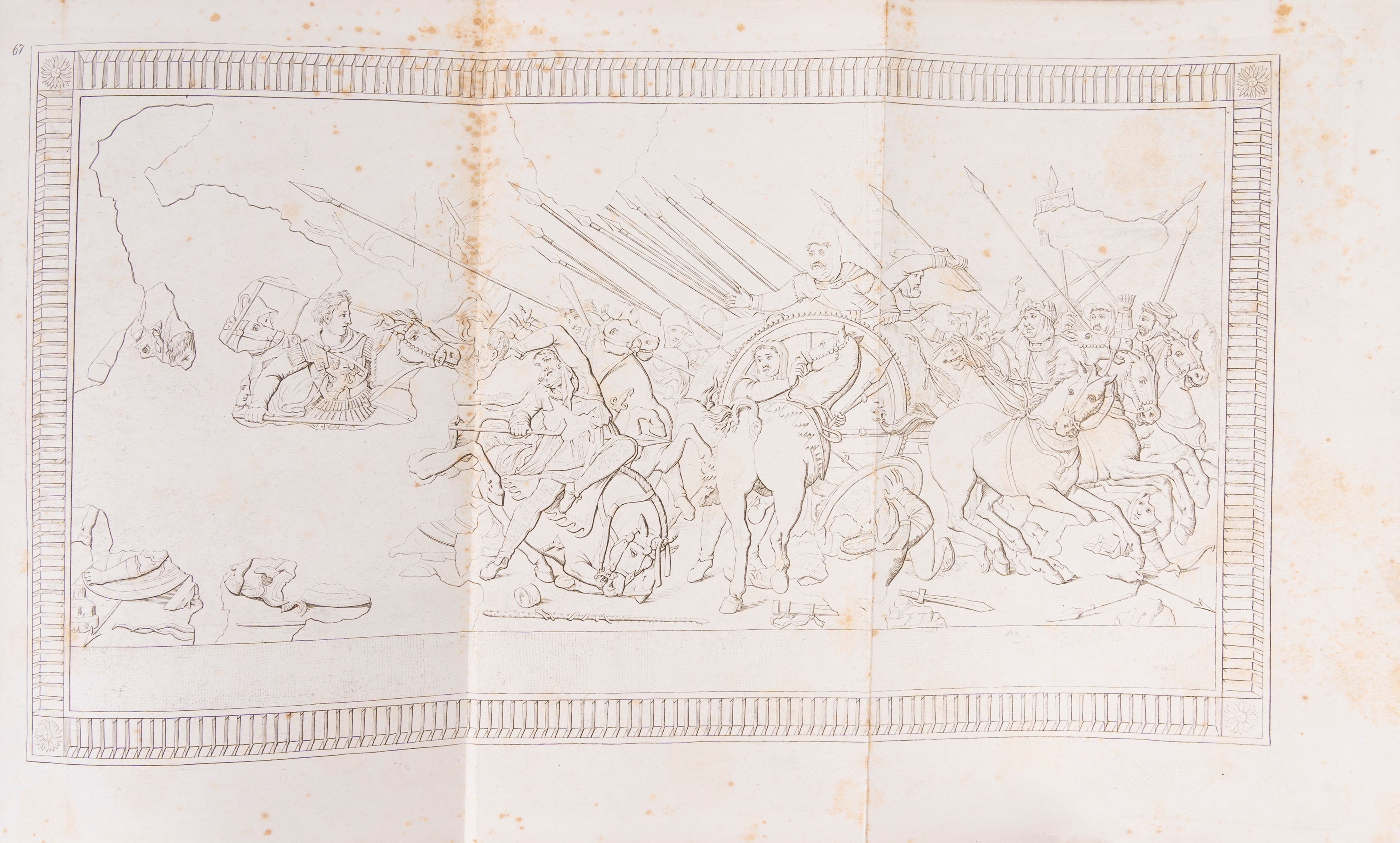
Collection of the most beautiful and interesting paintings, mosaics and other monuments found in the excavations of Herculaneum, Pompeii and Stabiae, 1876
Estimate
€ 300 - 320
Sold
€ 381
The price includes buyer's premium
Do you have a similar item you would like to sell?
Information
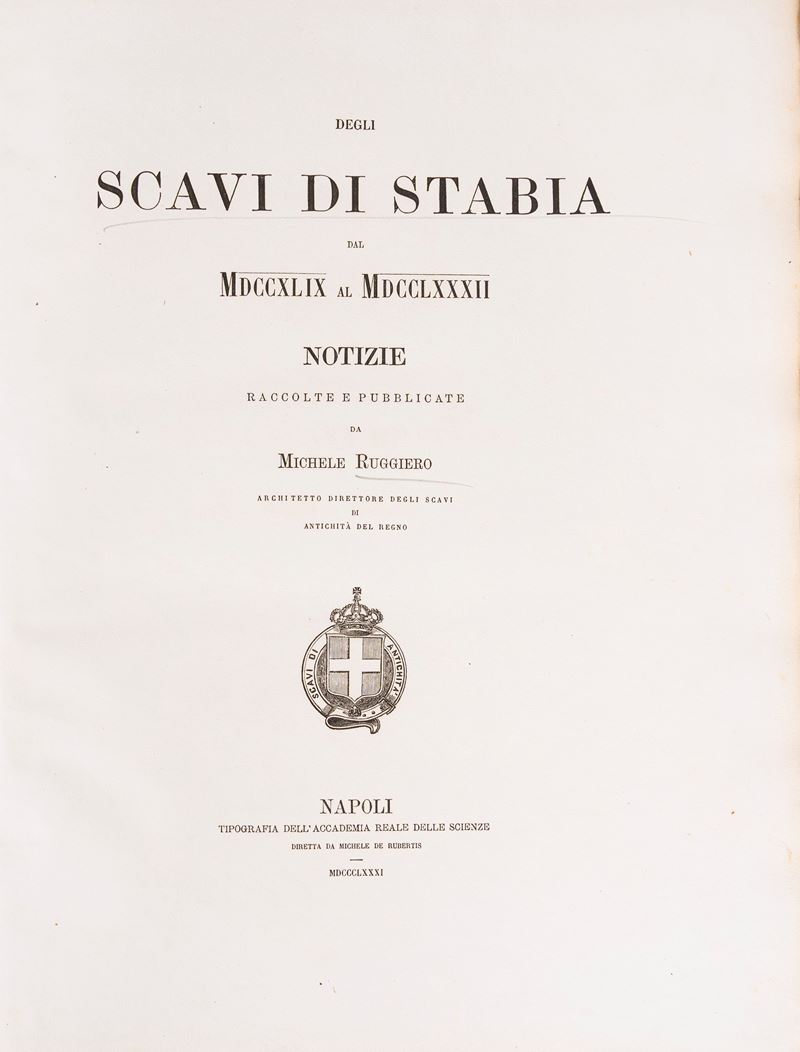
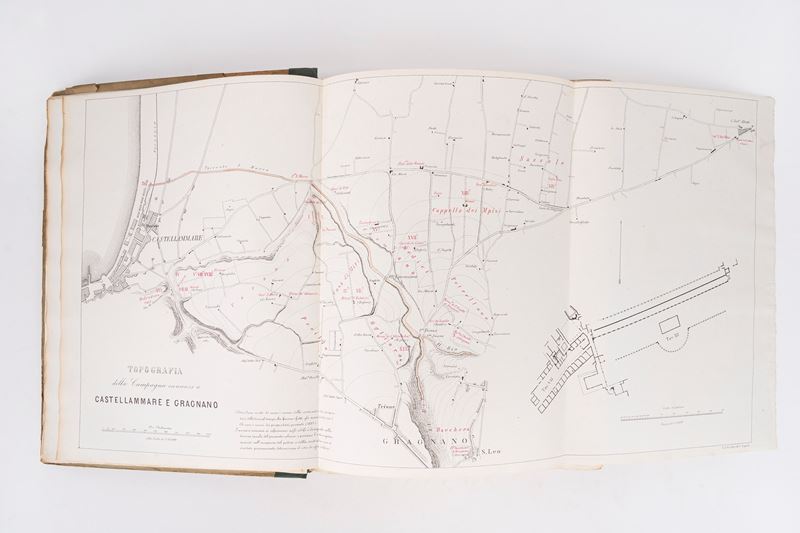
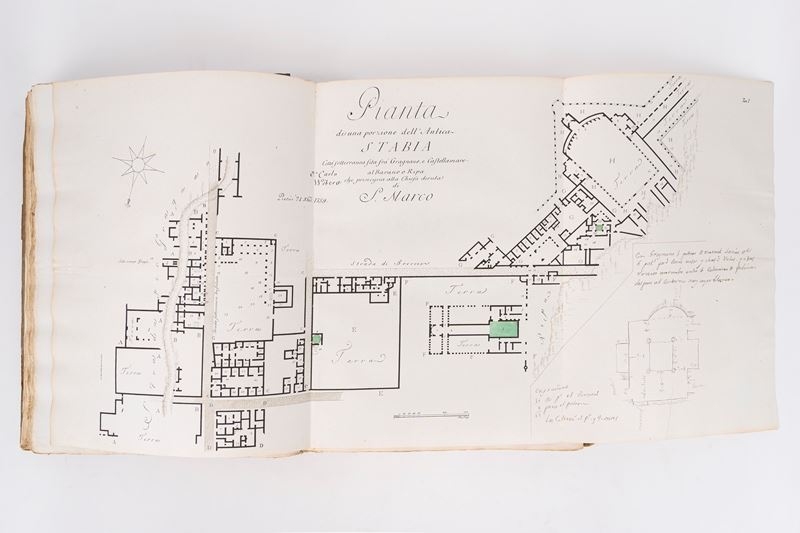
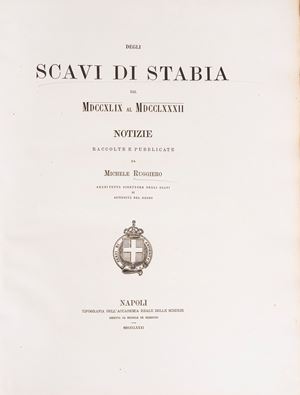
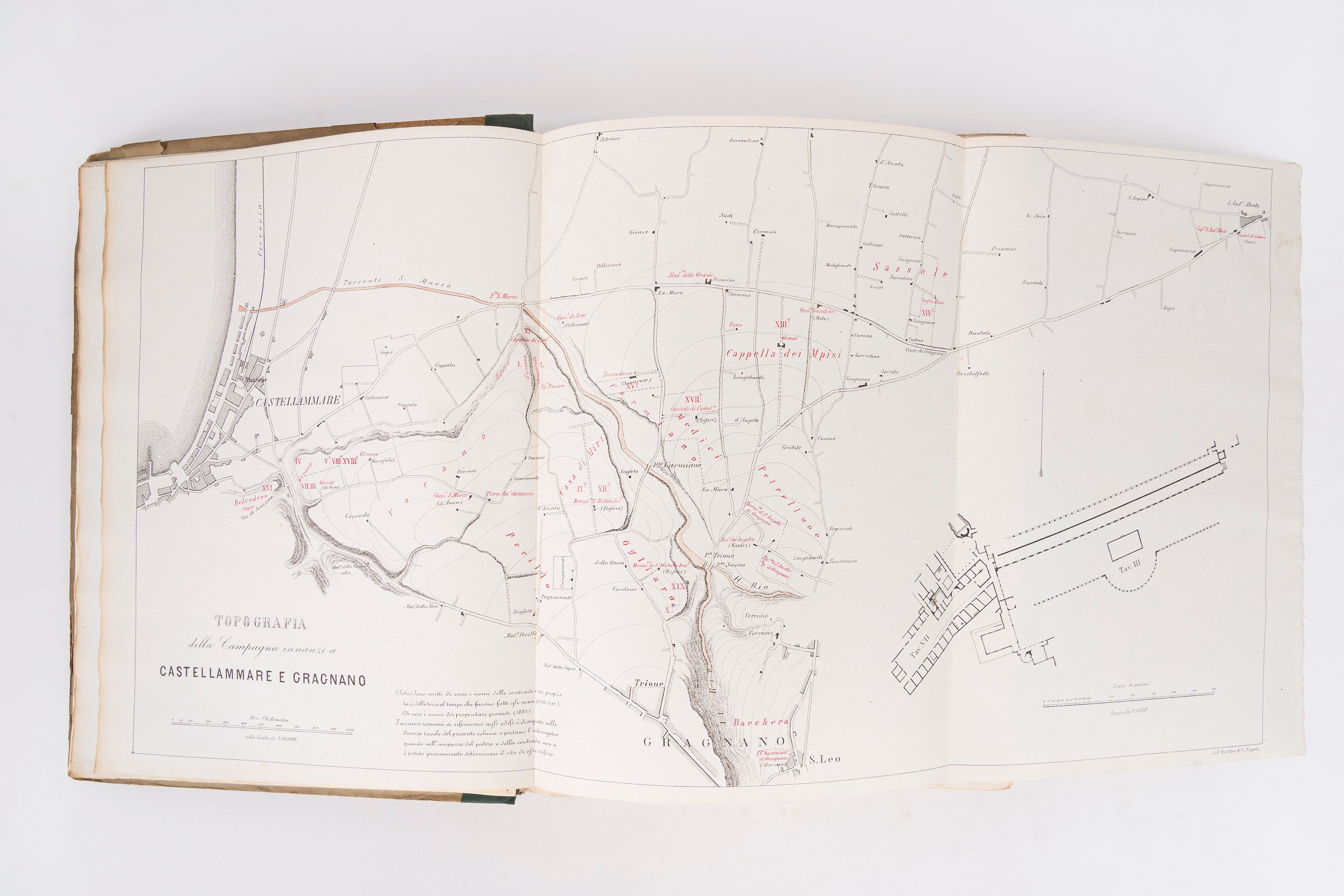
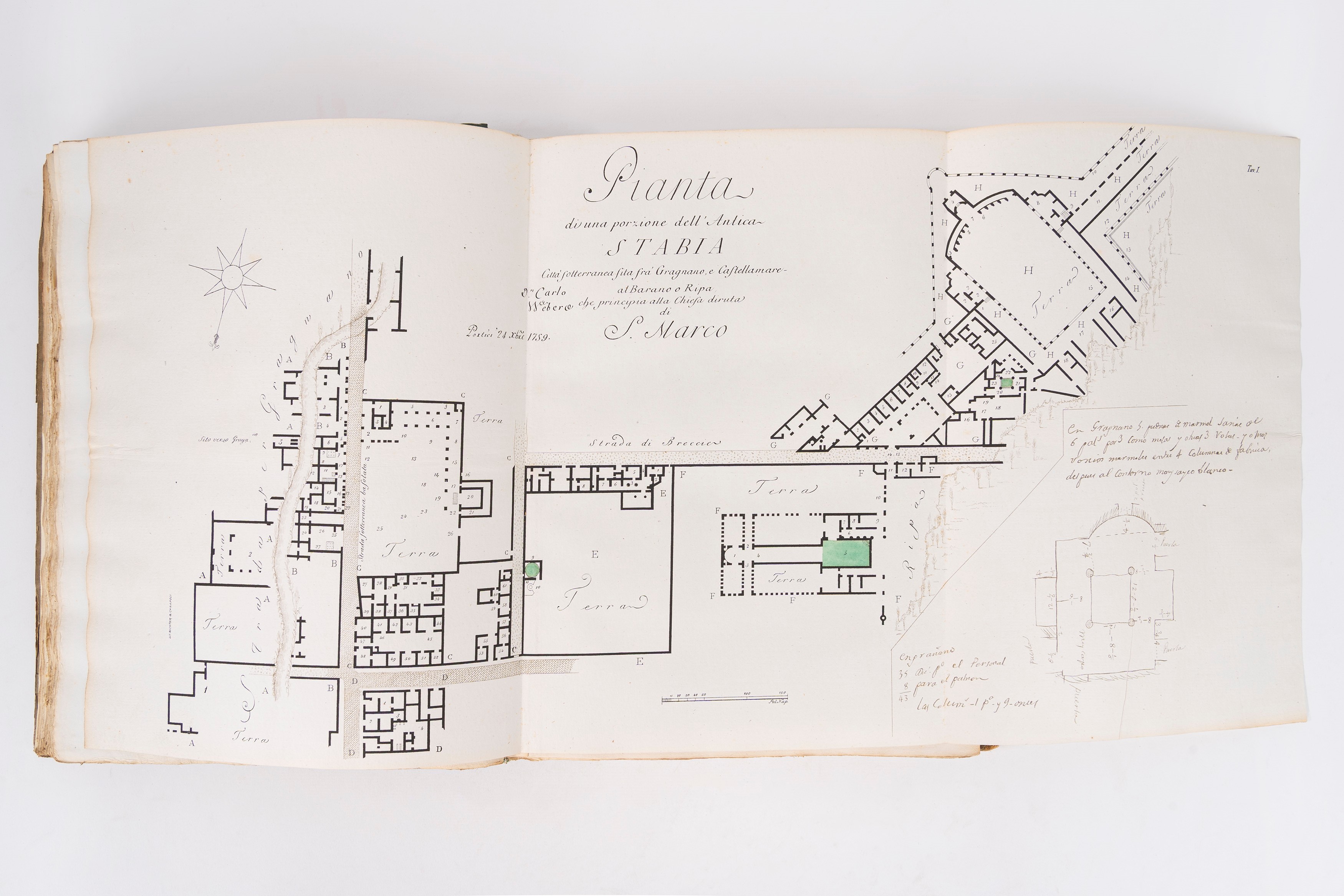
Naples, edited by Tarallo and Paderni, 1876. 8°. Title page within a classical frame, scattered foxing. Two folded plates. Half-leather binding with gilt title and decorations on the spine. § Ruggiero Michele, Degli scavi di Stabia dal MDCCXLIX al MDCCLXXXII. Naples, Tipografia dell'Accademia Reale delle Scienze, 1881. 2°. Large folded three-color map, depicting the "Topography of the Countryside before Castellammare and Gragnano" and 19 lithographic plates, some colored, some double-page, others in double or triple suite. Half-cloth binding.
Specialist Notes
"The archaeological excavations of Stabia have uncovered the remains of the ancient city of Stabia (in Latin Stabiae), in the area of present-day Castellammare di Stabia, near the Varano hill, as well as a group of buildings that were part of its ager. The excavation campaign began in 1749, during the reign of Charles of Bourbon, using tunnels, while orderly and systematic open-air investigations had to wait until 1950, the year from which the work of the director Libero D'Orsi became central. Smaller in size than the excavations of Pompeii and Herculaneum, they allow us to observe a different aspect of the lifestyle of the ancient Romans: in fact, while the first two locations were cities, Stabia, after a past as a fortified village, was in Roman times a holiday resort, where numerous residential villas decorated with paintings and embellished with furnishings were built; there was, however, no shortage of rustic villas" ( sub vocis , Wikipedia).
The curator of the work is the archaeologist and architect Michele Ruggiero (Naples, 1811-1900), director of the excavations of Pompeii, to whom we also owe the "History of the excavations of Herculaneum" (Naples, 1885) and "Of the excavations of antiquities and of the mainland provinces of the ancient kingdom of Naples from 1743 to 1876" (Naples, 1888). > Fera-Morlicchio, II,1267: "It is to be considered the most detailed work on the excavations and archaeological finds of ancient Stabia."
The curator of the work is the archaeologist and architect Michele Ruggiero (Naples, 1811-1900), director of the excavations of Pompeii, to whom we also owe the "History of the excavations of Herculaneum" (Naples, 1885) and "Of the excavations of antiquities and of the mainland provinces of the ancient kingdom of Naples from 1743 to 1876" (Naples, 1888). > Fera-Morlicchio, II,1267: "It is to be considered the most detailed work on the excavations and archaeological finds of ancient Stabia."
Contact
Suggested lots
Caricamento lotti suggeriti...
More Lots
158