Information
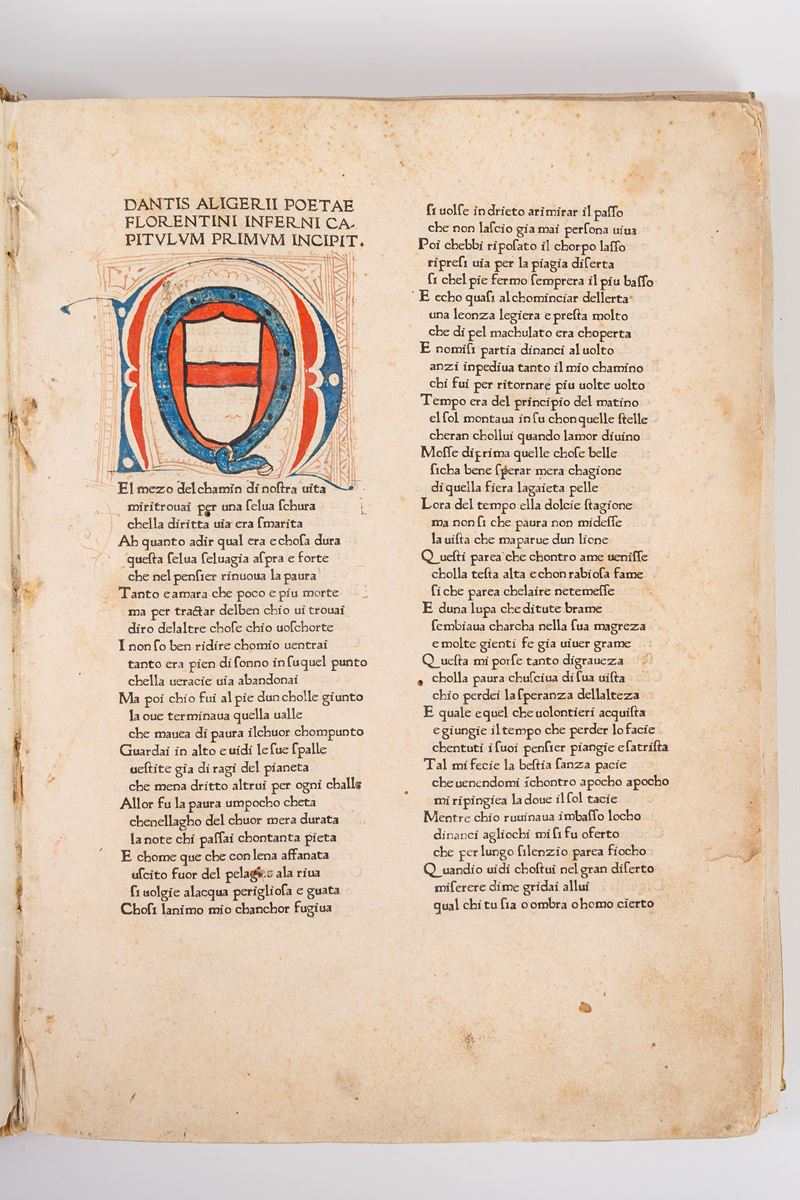
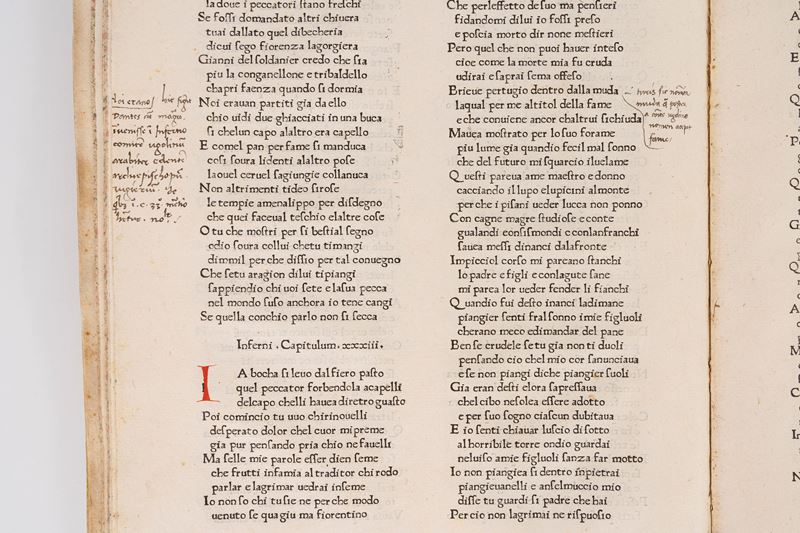
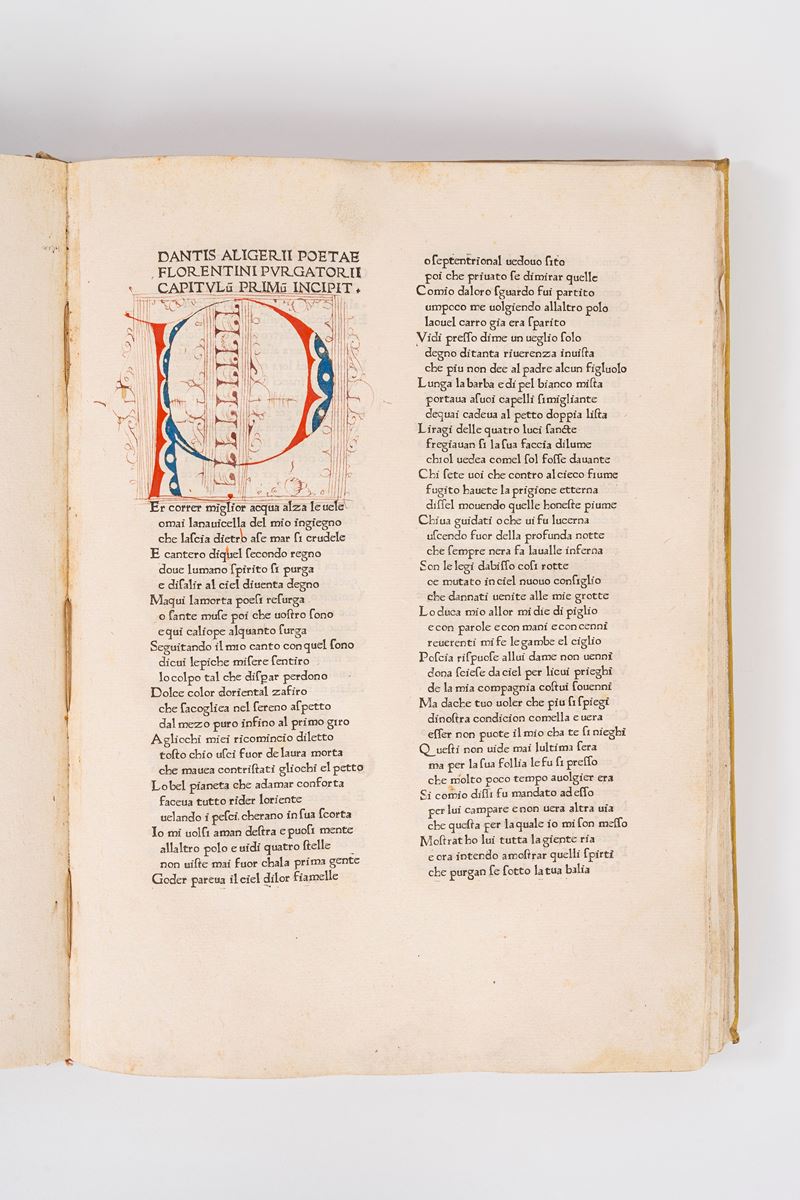
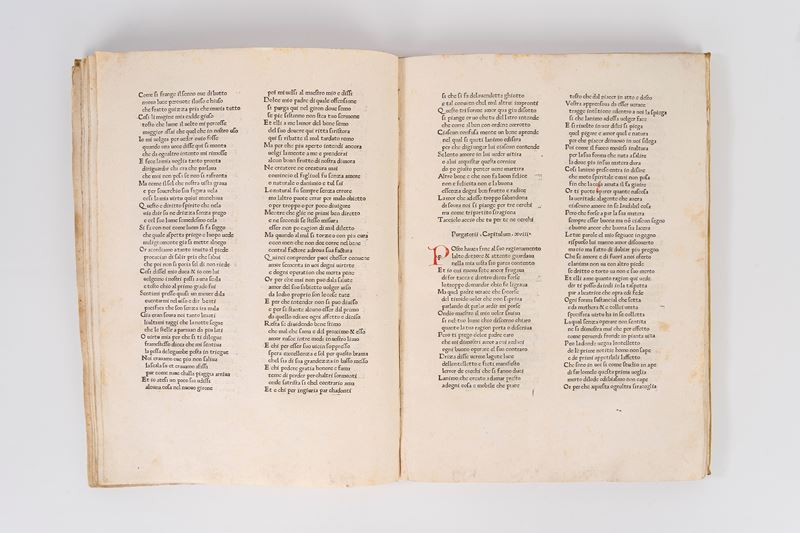
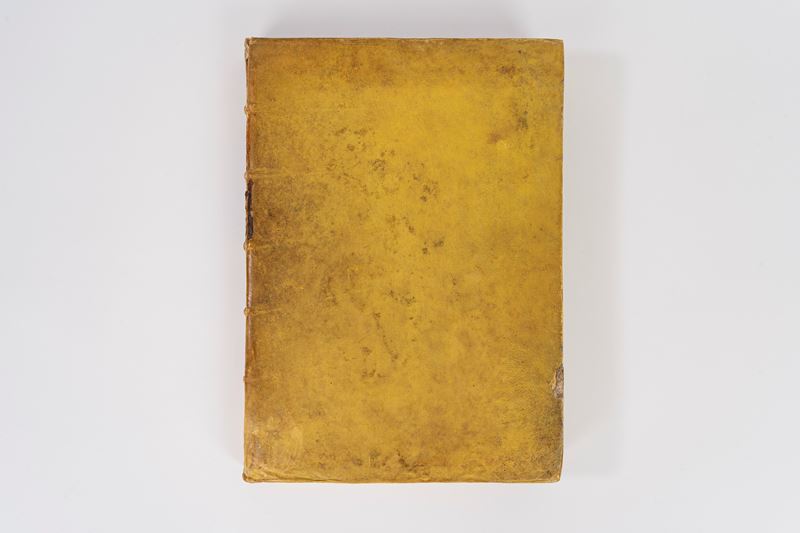
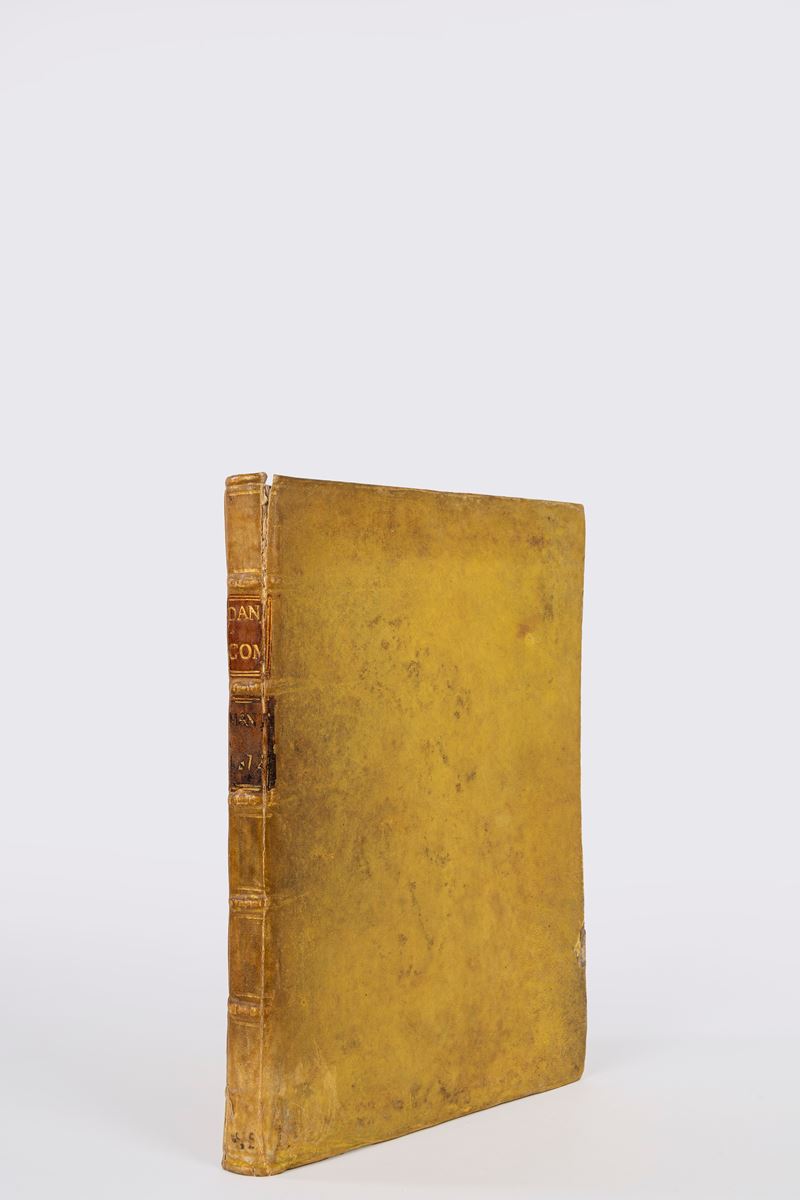
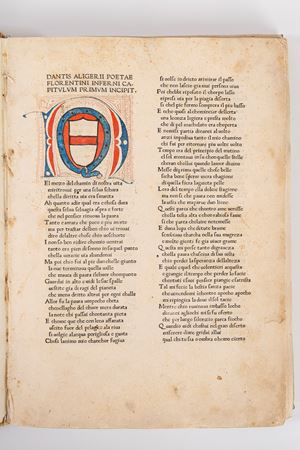
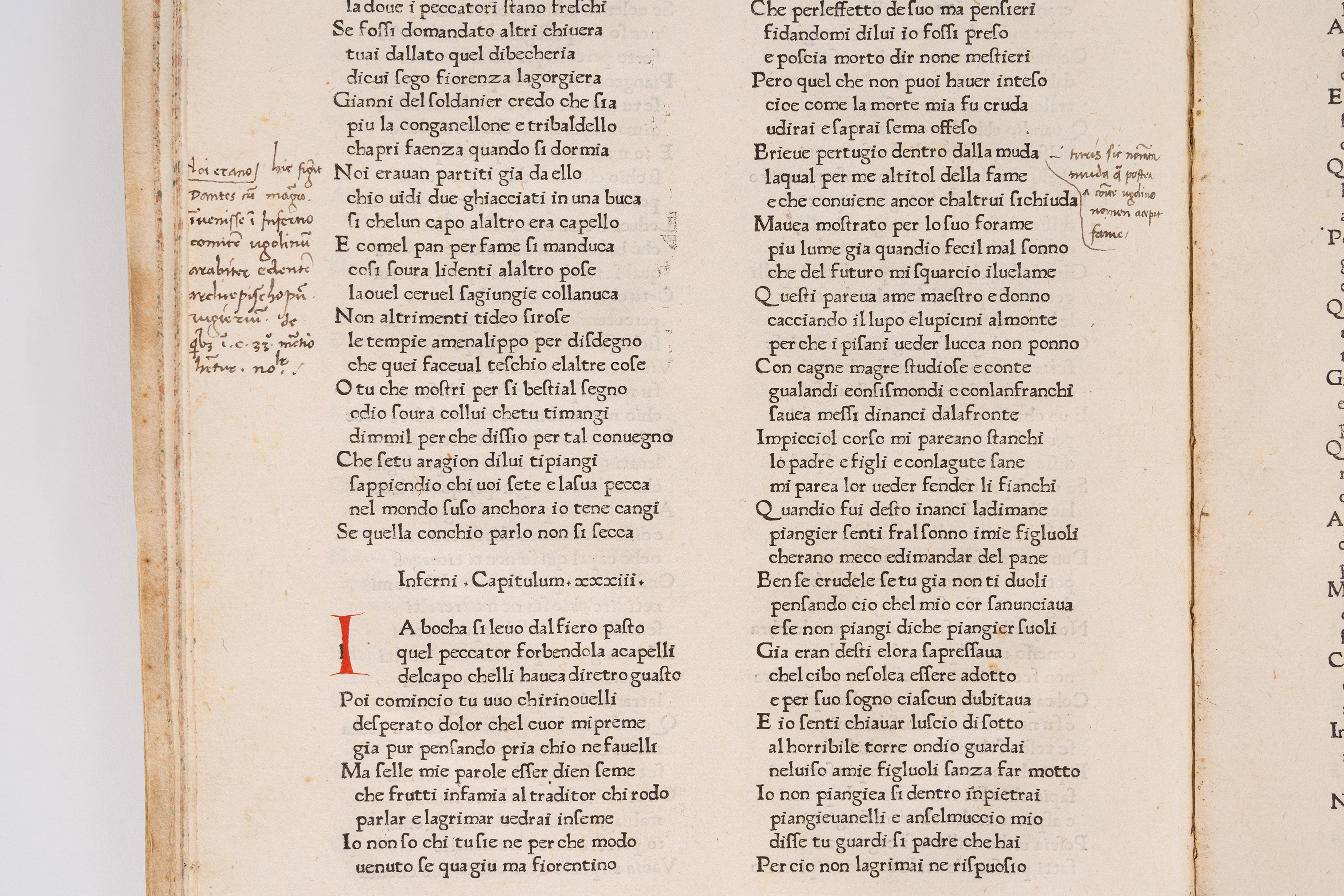
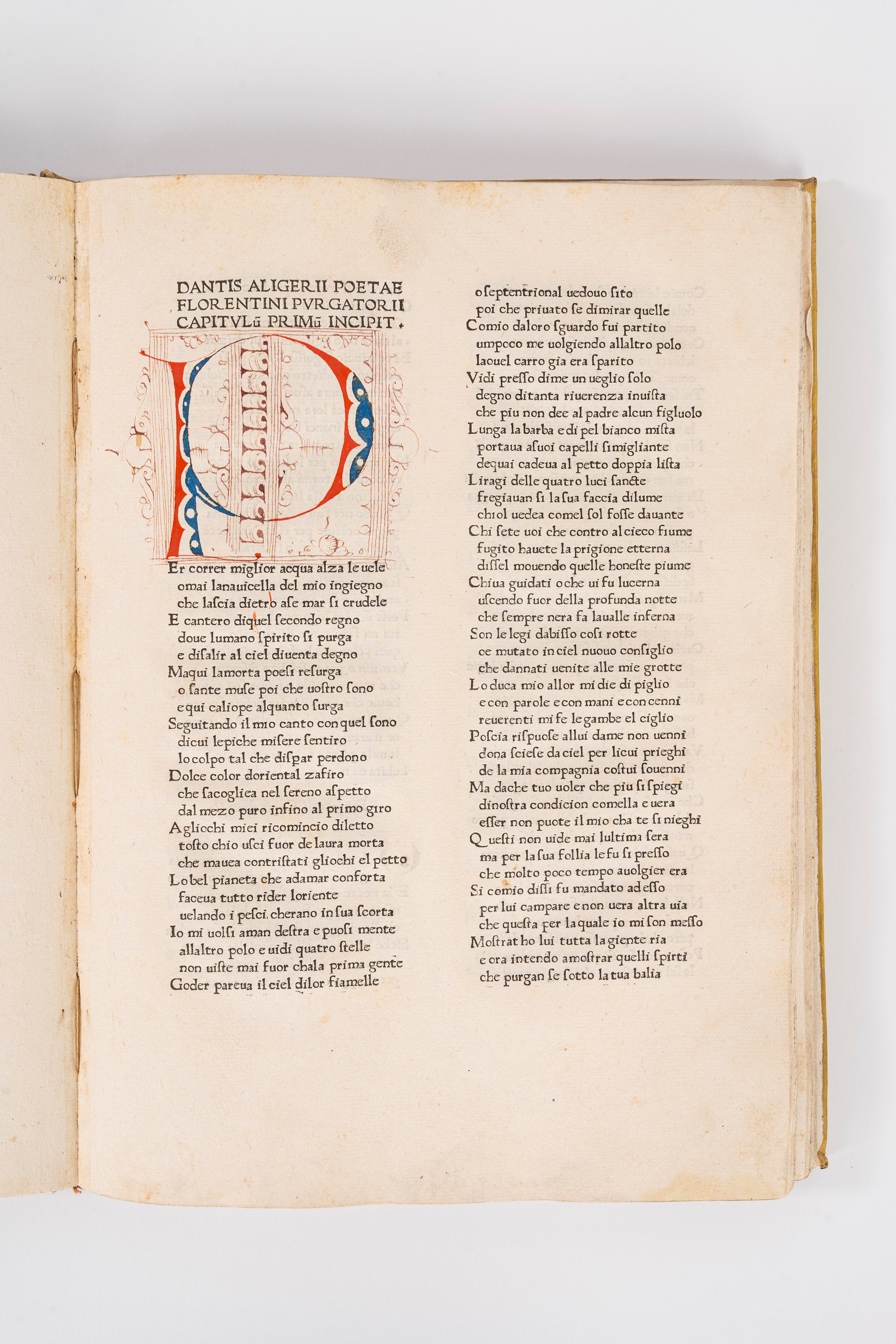
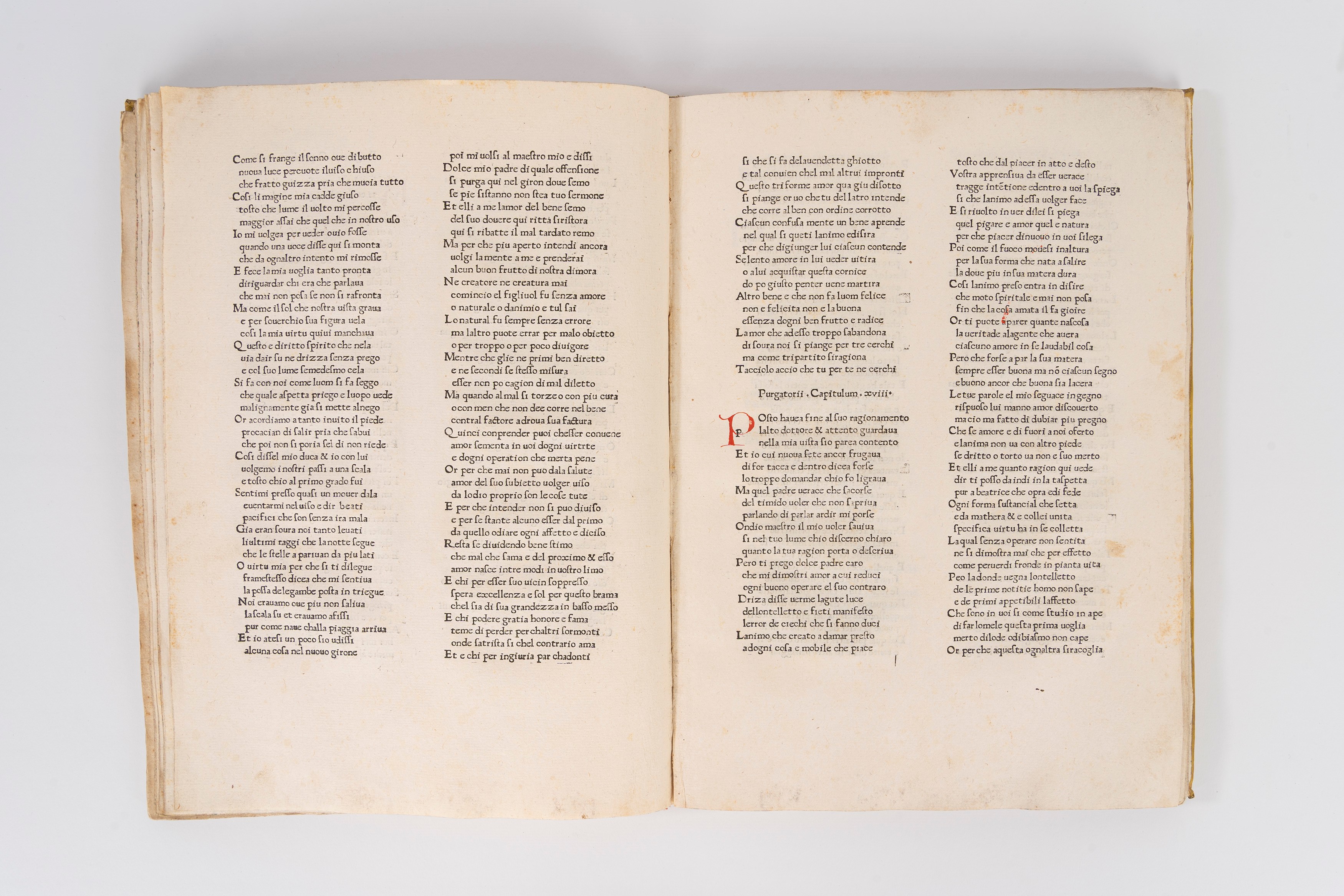
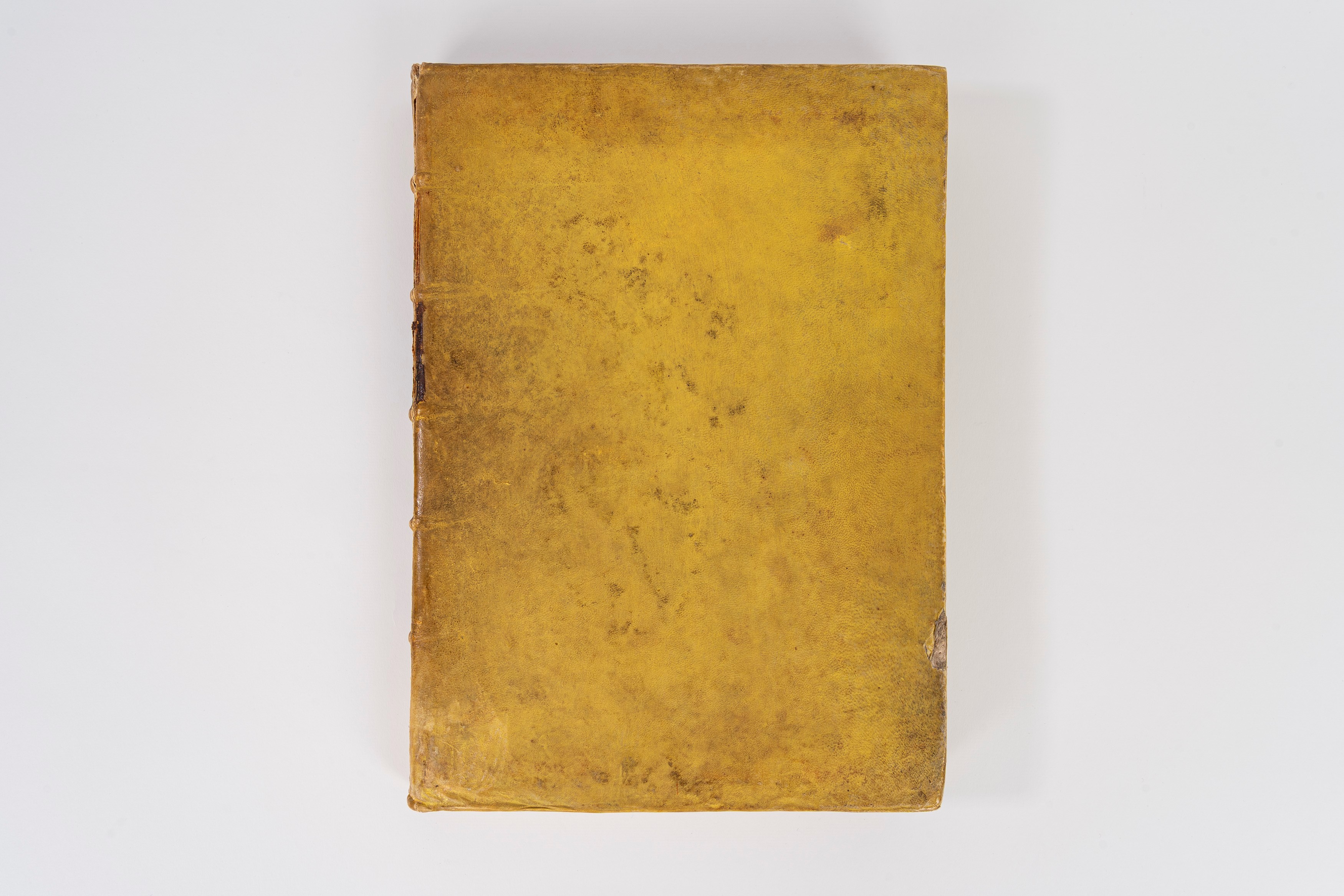
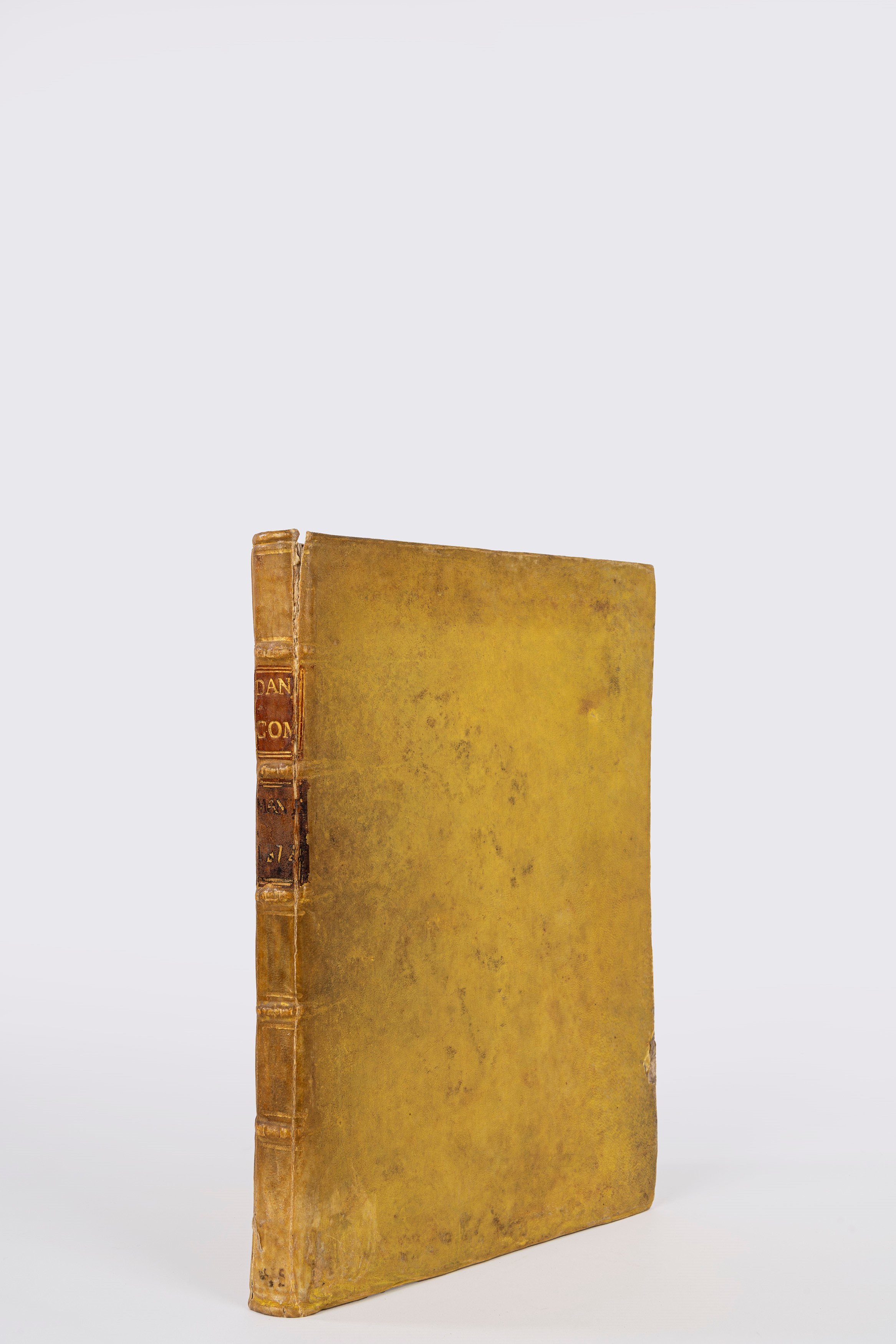
Mantua, Georgius de Augusta and Paulus de Butzbach, per Columbinus Veronensis, 1472. In 2°. The edition was printed in the same year as the princeps of the Comedy (Foligno, 1472) but for layout, quality of type and philological reliability it is the most important of the three editions of 1472. The volume is printed in two columns of 41 lines, without numbering, signatures or references, and is printed in R106 Roman characters. Our copy begins with a magnificent illuminated initial in red and blue, which is also repeated at the beginning of Purgatory and Paradise. It does not contain the Capitulo by Columbinus Veronese, absent in the majority of known copies. There are some contemporary annotations in Latin , 8 in total, of varying length. This copy is to be considered among the most exceptional among those known, primarily for its dimensions, 319 x 230 mm. , far superior to those of the British Library copy, the Trivulziana copy, and the Bibliothéque Nationale in Paris. The copy is in uniformly perfect condition, with the only problem being the lack of four leaves, which were replaced with facsimiles on old paper, skilfully executed on the Trivulziana copy, and one restored leaf: leaves 78, 83, 86, 89, and 90. The latter (the colophon leaf) has been restored by integrating the missing section, namely the left column, while the one bearing the colophon is intact and in excellent condition. These interventions on the copy were probably carried out around the 1950s. Modern full leather binding.
Specialist Notes
THE MOST IMPORTANT EDITION OF DANTE IN THE FOURTEENTH CENTURY
"Halfway between the age of Vittorino da Feltre and that of the Marchioness Isabella and Castiglione, the Mantuan printing of Dante, which in the same year was accompanied by one of the very few printings of the Decameron, represents well the decisive turning point whereby in Mantua, as in other courts in that period of time, humanistic culture came to terms with the fourteenth-century tradition and began to produce a new court literature in the new language." (C. Dionisotti, Dante nel Quattrocento , p. 367)
The usual brilliant Dionisotti is right on target when he intuits that the Mantuan edition of Dante is crucial for understanding the turning point in humanist culture around the 1470s, the turning point that ushered in the vernacular and a new era of courtly writing . The 1472 Mantuan edition of the Divine Comedy occupies a place of absolute importance in the history of Dante's text, not only because it belongs to the group of the very first printings of the work, but above all because it represents the first attempt at a conscious philological intervention on the poem in the typographical age . It constitutes the point of transition between the fourteenth-century manuscript tradition and the new civilization of the printed book. In 1472 the Comedy was printed for the first time in three different cities: - Foligno (11 April 1472), edition commonly considered the princeps because it is dated; - Mantua (1472, without day and month); - Venice [not Jesi] (July 18, 1472), for Federico de' Conti.
Mantuan printing was born in the court of the Gonzaga family, one of the most important humanist centers in northern Italy. The typographers were two Germans, Georgius de Augusta and Paulus de Butzbach, active in the very early years of Mantuan printing. The enterprise was carried out under the supervision of the humanist Colombino Veronese (Columbinus Veronensis), a key figure in the quality of the text.
From a philological point of view, the 1472 Mantovana is probably the most important of the three Dante editions published that year . Modern studies agree that Colombino used as a basic manuscript a copy very close to the famous " Codex Vaticanus Latinus 3199" or even the Vaticanus Latinus 3199 itself. This codex is today considered one of the most authoritative representatives of the ancient tradition of the Divine Comedy. The most important aspect of the Mantua edition is Colombino Veronese's intervention. He did not merely finance or promote the undertaking, but acted as a true editor of the text. This element is crucial, as it demonstrates a humanistic awareness of the value of the text and the need to transmit it in a correct form. But Colombino did not limit himself to copying a single manuscript: he carried out a veritable collation with other codices, likely available in the Gonzaga library . This produced a text that is generally more correct than the Foligno and Venetian ones, one of the most correct of those betrayed in the fifteenth century.
The Divine Comedy, printed in Mantua in 1472 by Georgius de Augusta and Paulus de Butzbach, under the direction of Colombino Veronese, is one of the monuments of Italian incunabula . If the Foligno edition represents Dante's typographical birth, the Mantuan edition represents the birth of Dante philology in print: a text carefully constructed from manuscripts, elegant in material, historically linked to Gonzaga humanism, and crucial to the poem's transmission in subsequent centuries.
There are 15 copies registered in the world on ISTC; of these 15, only 5 are found in public libraries in Italy (Milan, Naples, Padua, Udine and Verona).
Goff D23; H 5939; Pell 4108; CIBN D-9; IGI 353; Oates 2582; Pr 6882; BMC VII 928; GW 7959; Fac: (ed. L. Pescasio) Mantua, 1972. ISTC: id00023000
"Halfway between the age of Vittorino da Feltre and that of the Marchioness Isabella and Castiglione, the Mantuan printing of Dante, which in the same year was accompanied by one of the very few printings of the Decameron, represents well the decisive turning point whereby in Mantua, as in other courts in that period of time, humanistic culture came to terms with the fourteenth-century tradition and began to produce a new court literature in the new language." (C. Dionisotti, Dante nel Quattrocento , p. 367)
The usual brilliant Dionisotti is right on target when he intuits that the Mantuan edition of Dante is crucial for understanding the turning point in humanist culture around the 1470s, the turning point that ushered in the vernacular and a new era of courtly writing . The 1472 Mantuan edition of the Divine Comedy occupies a place of absolute importance in the history of Dante's text, not only because it belongs to the group of the very first printings of the work, but above all because it represents the first attempt at a conscious philological intervention on the poem in the typographical age . It constitutes the point of transition between the fourteenth-century manuscript tradition and the new civilization of the printed book. In 1472 the Comedy was printed for the first time in three different cities: - Foligno (11 April 1472), edition commonly considered the princeps because it is dated; - Mantua (1472, without day and month); - Venice [not Jesi] (July 18, 1472), for Federico de' Conti.
Mantuan printing was born in the court of the Gonzaga family, one of the most important humanist centers in northern Italy. The typographers were two Germans, Georgius de Augusta and Paulus de Butzbach, active in the very early years of Mantuan printing. The enterprise was carried out under the supervision of the humanist Colombino Veronese (Columbinus Veronensis), a key figure in the quality of the text.
From a philological point of view, the 1472 Mantovana is probably the most important of the three Dante editions published that year . Modern studies agree that Colombino used as a basic manuscript a copy very close to the famous " Codex Vaticanus Latinus 3199" or even the Vaticanus Latinus 3199 itself. This codex is today considered one of the most authoritative representatives of the ancient tradition of the Divine Comedy. The most important aspect of the Mantua edition is Colombino Veronese's intervention. He did not merely finance or promote the undertaking, but acted as a true editor of the text. This element is crucial, as it demonstrates a humanistic awareness of the value of the text and the need to transmit it in a correct form. But Colombino did not limit himself to copying a single manuscript: he carried out a veritable collation with other codices, likely available in the Gonzaga library . This produced a text that is generally more correct than the Foligno and Venetian ones, one of the most correct of those betrayed in the fifteenth century.
The Divine Comedy, printed in Mantua in 1472 by Georgius de Augusta and Paulus de Butzbach, under the direction of Colombino Veronese, is one of the monuments of Italian incunabula . If the Foligno edition represents Dante's typographical birth, the Mantuan edition represents the birth of Dante philology in print: a text carefully constructed from manuscripts, elegant in material, historically linked to Gonzaga humanism, and crucial to the poem's transmission in subsequent centuries.
There are 15 copies registered in the world on ISTC; of these 15, only 5 are found in public libraries in Italy (Milan, Naples, Padua, Udine and Verona).
Goff D23; H 5939; Pell 4108; CIBN D-9; IGI 353; Oates 2582; Pr 6882; BMC VII 928; GW 7959; Fac: (ed. L. Pescasio) Mantua, 1972. ISTC: id00023000
Contact
Condition report
To request a Condition Report, please contact libriestampe@finarte.it
The department will provide you with a general report of the condition of the property described above. Please note that what Finarte declares with respect to the state of conservation of the objects corresponds only to a qualified opinion and that we are not professional conservators or restorers.
We urge you to consult with a restorer or conservator of your choice who will be better able to provide a detailed, professional report. We always suggest prospective buyers to inspect each lot to satisfy themselves as to condition during the exhibition days as indicated in the catalog.
Suggested lots
Caricamento lotti suggeriti...
![Das Narrenschiff [Latin] Stultifera navis. Translation: Jacobus Locher Philomusus](https://api.finarte.it/api/lotto/immagine/196662/0/300.jpg)