
91
Alighieri, Dante
(Firenze 1265 - Ravenna 1321)
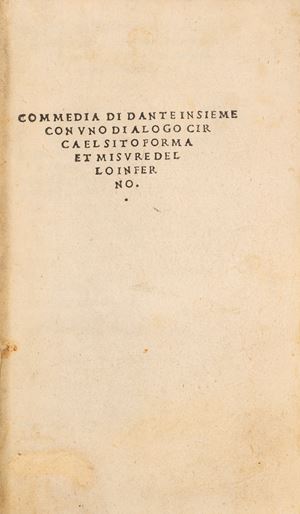
Dante's Comedy, together with a dialogue on the site, form, and dimensions of Hell - Dialogue by Antonio Manetti ...on the site, form..., 1506
Estimate
€ 1.500 - 2.000
Sold
€ 3.870
The price includes buyer's premium
Do you have a similar item you would like to sell?
Information
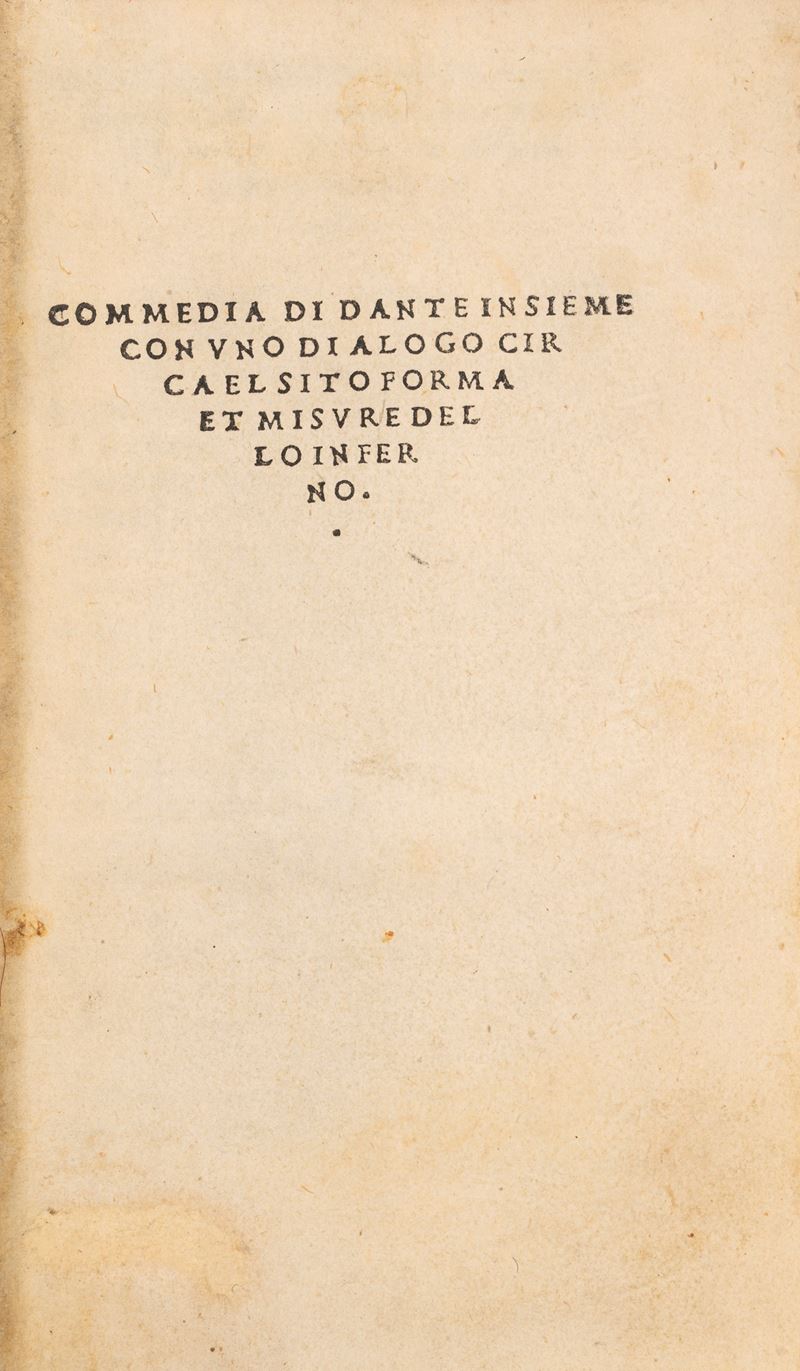
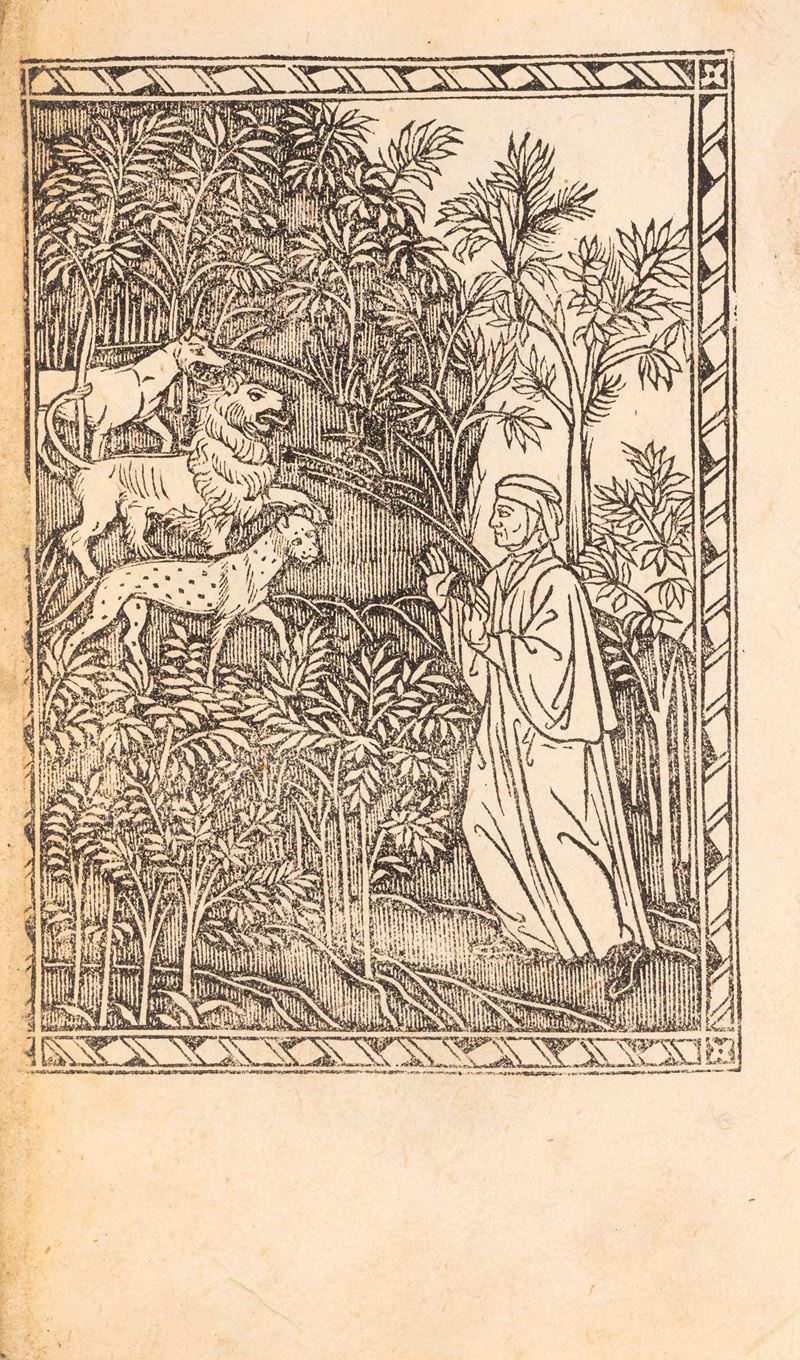
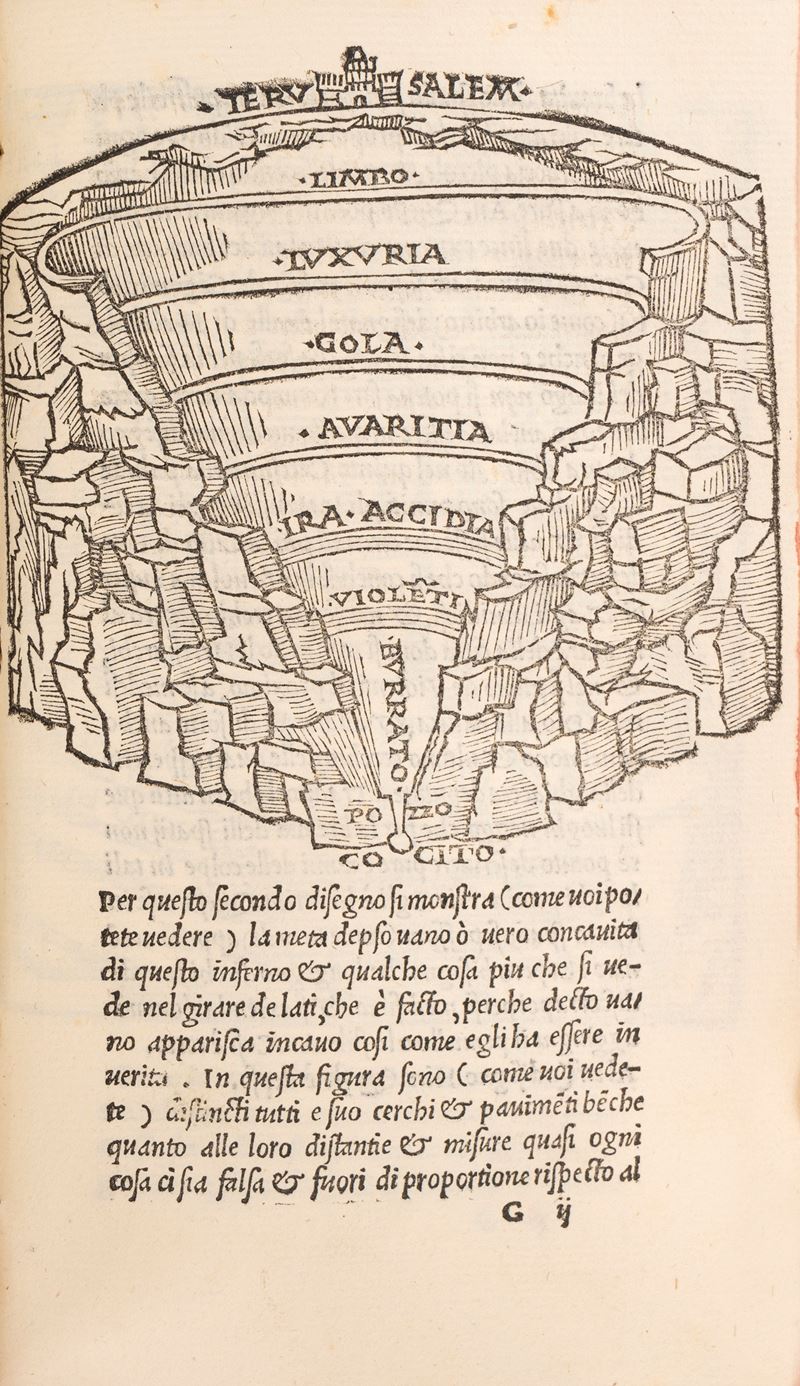
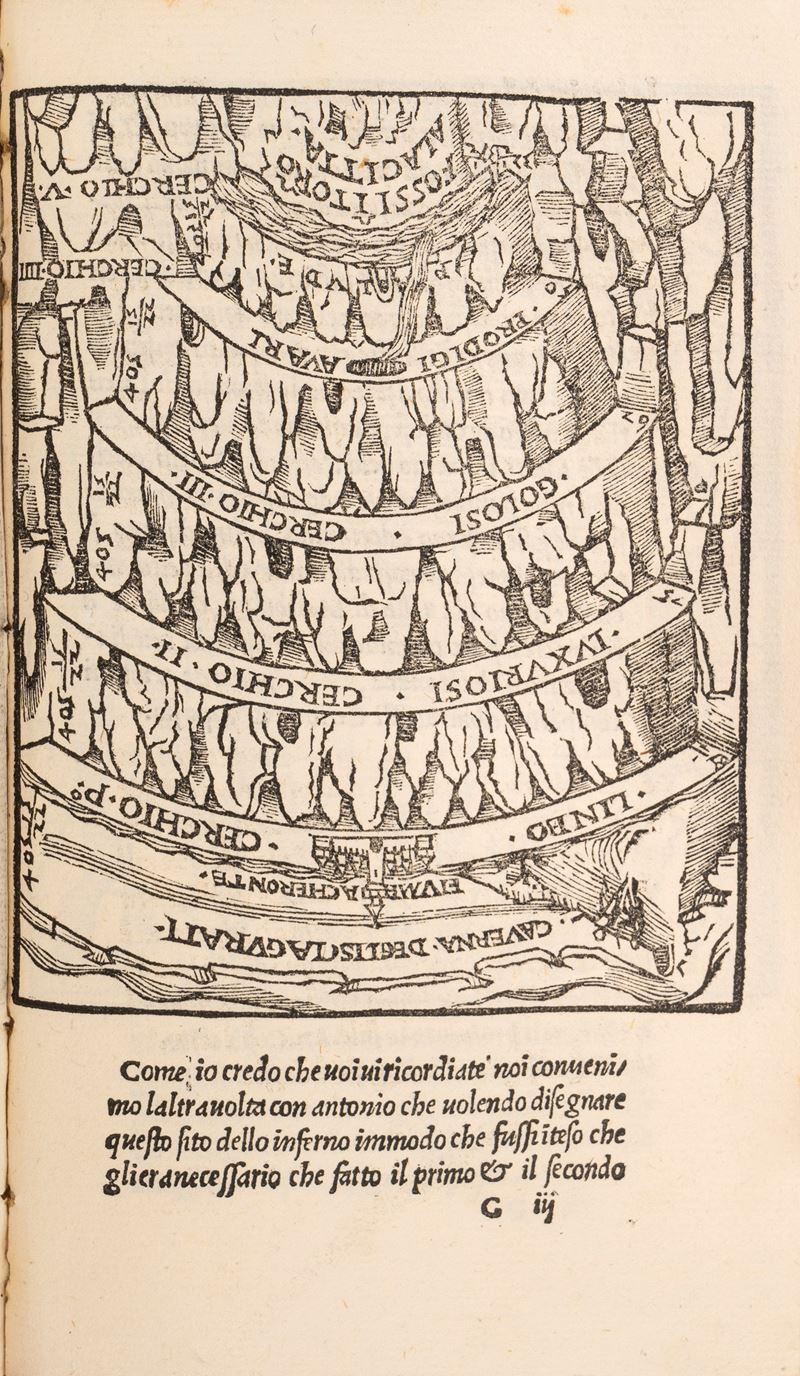
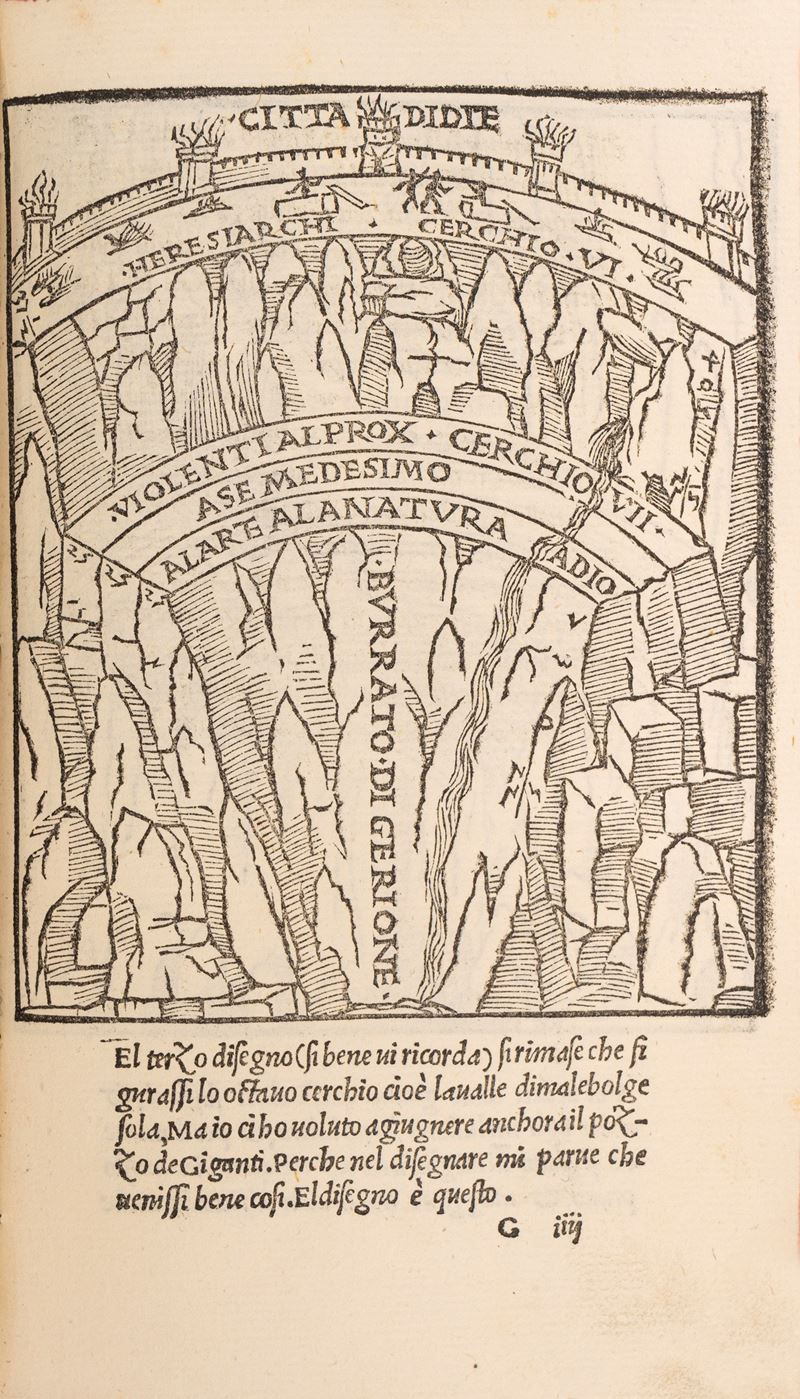
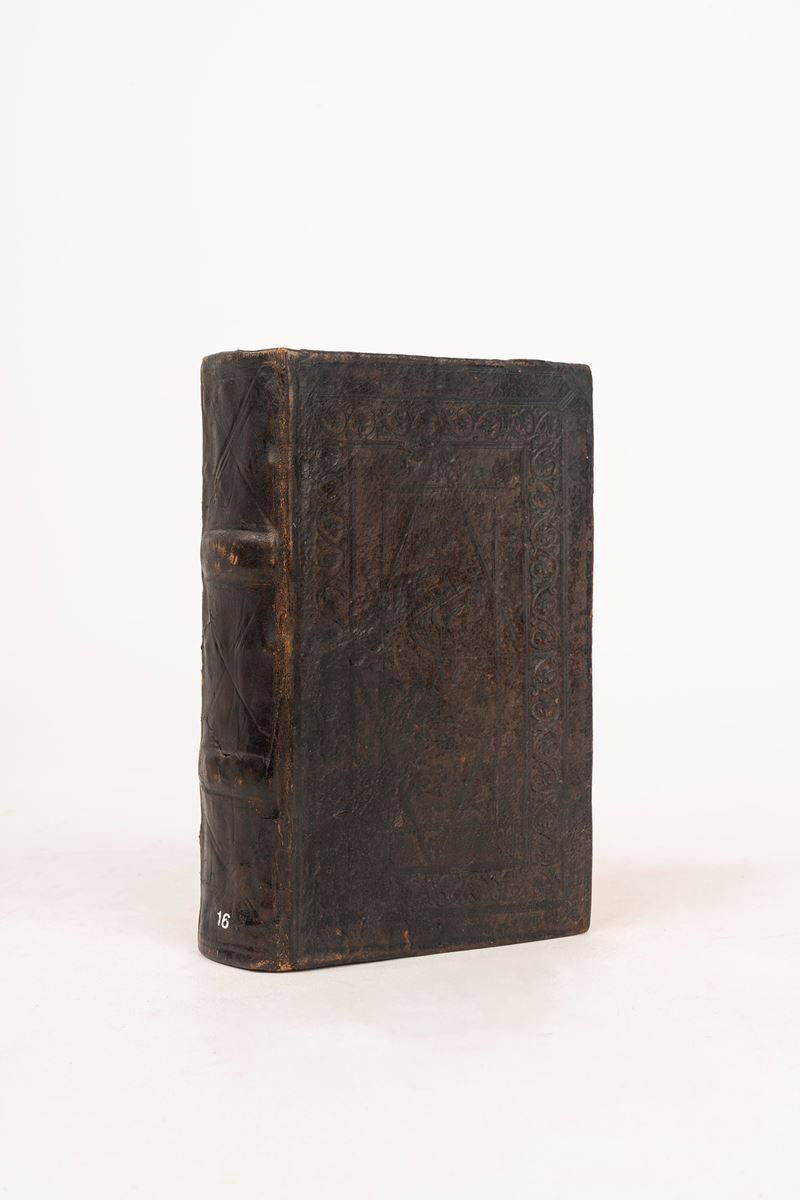
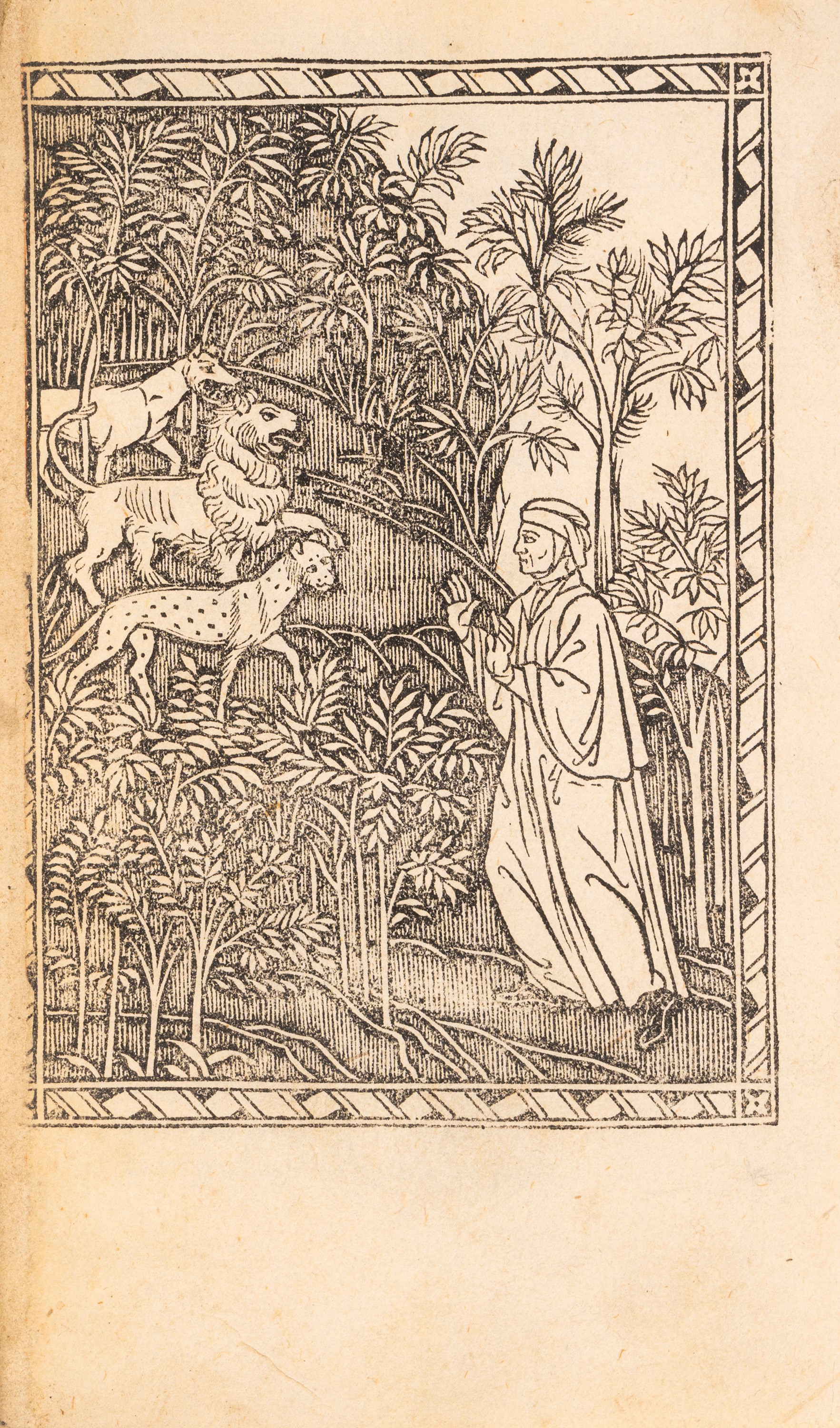
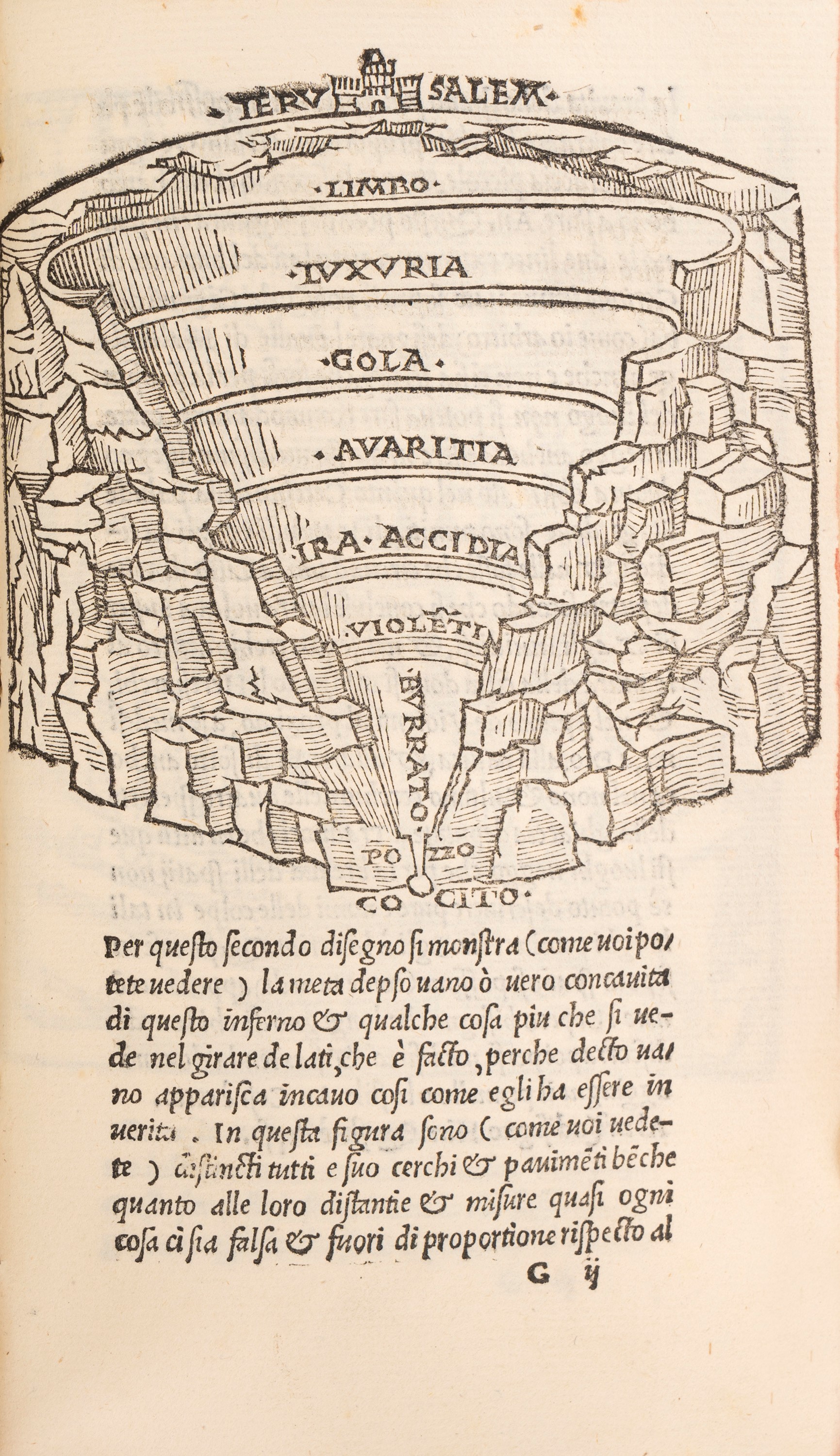
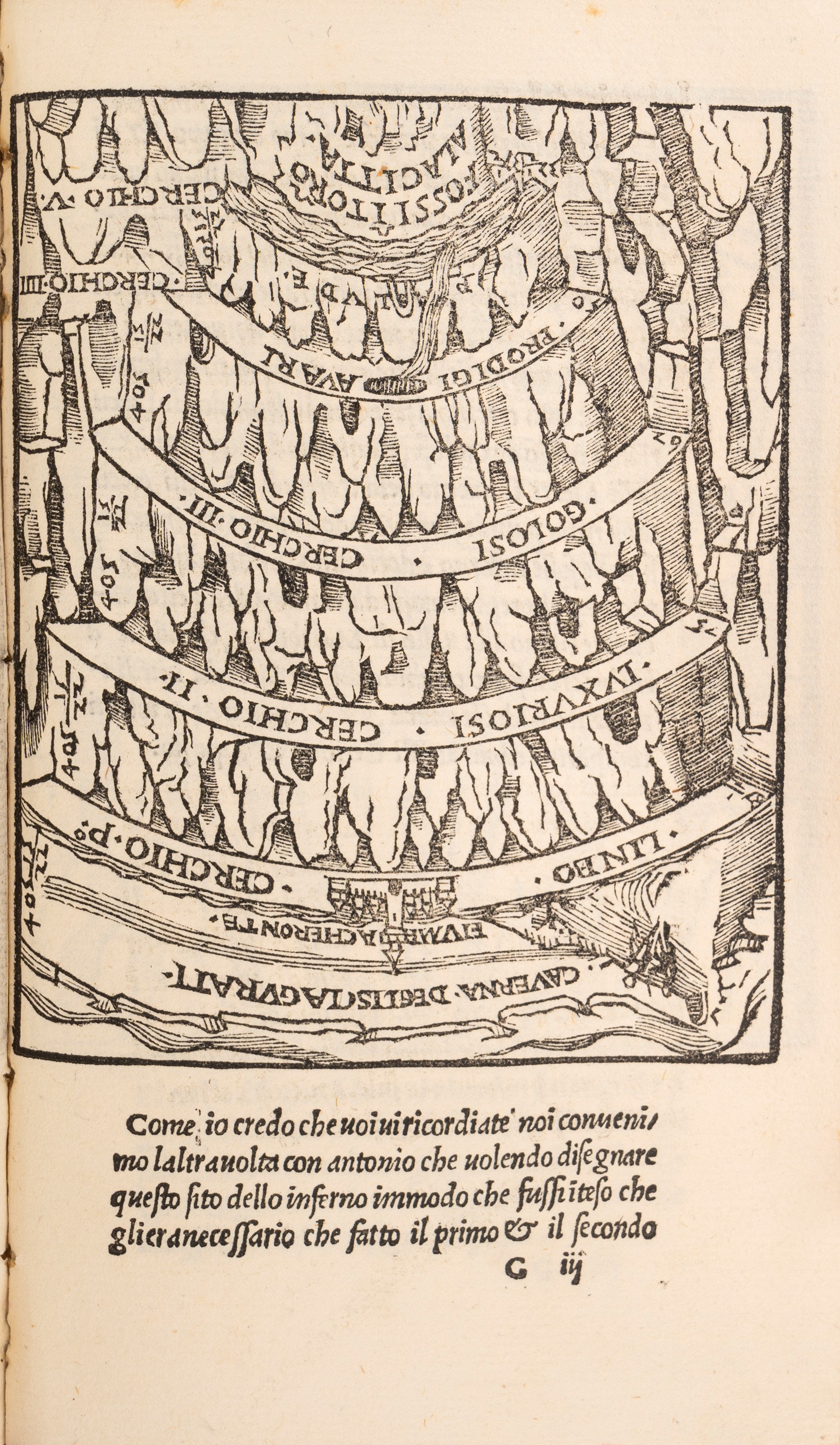
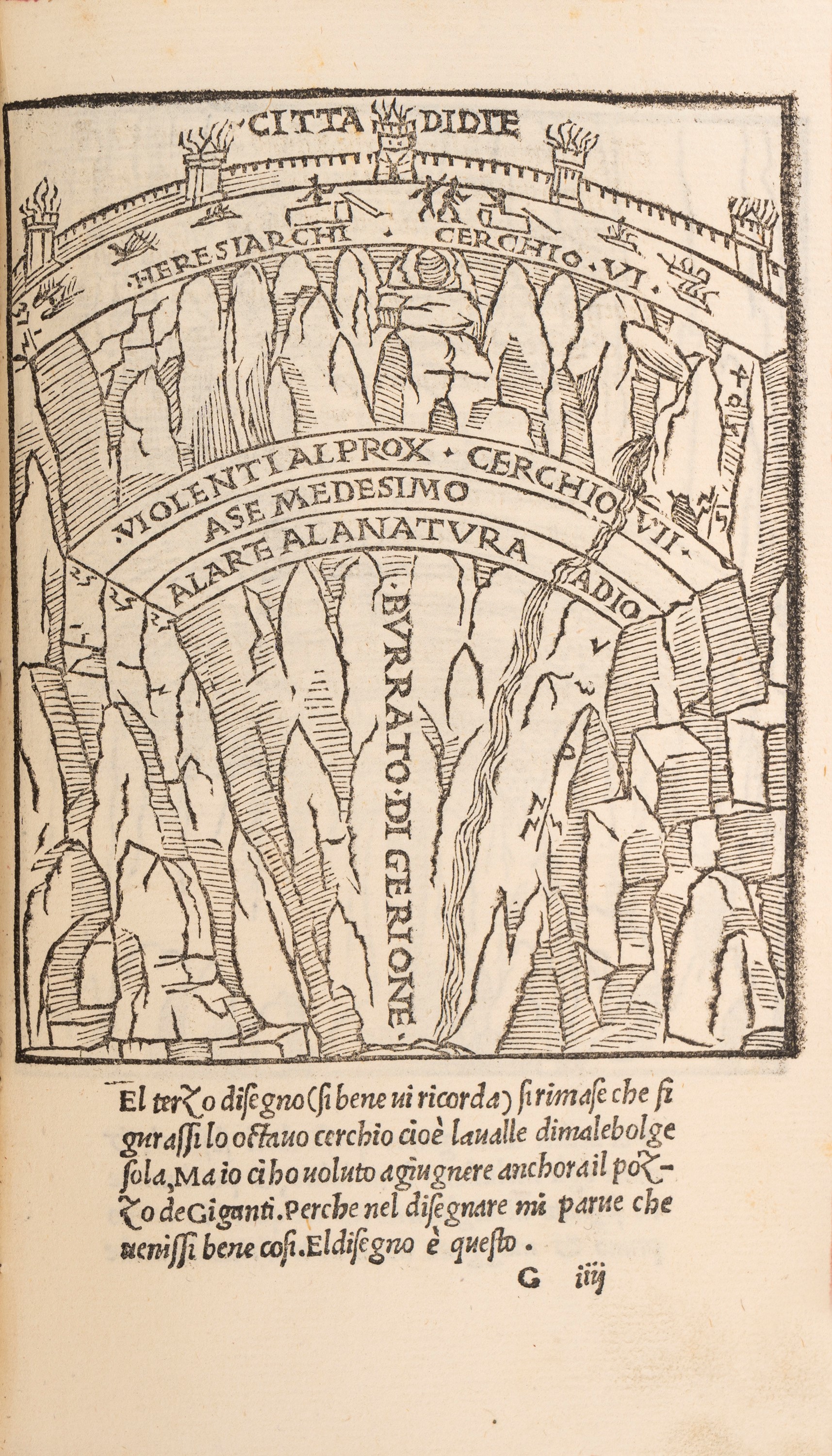
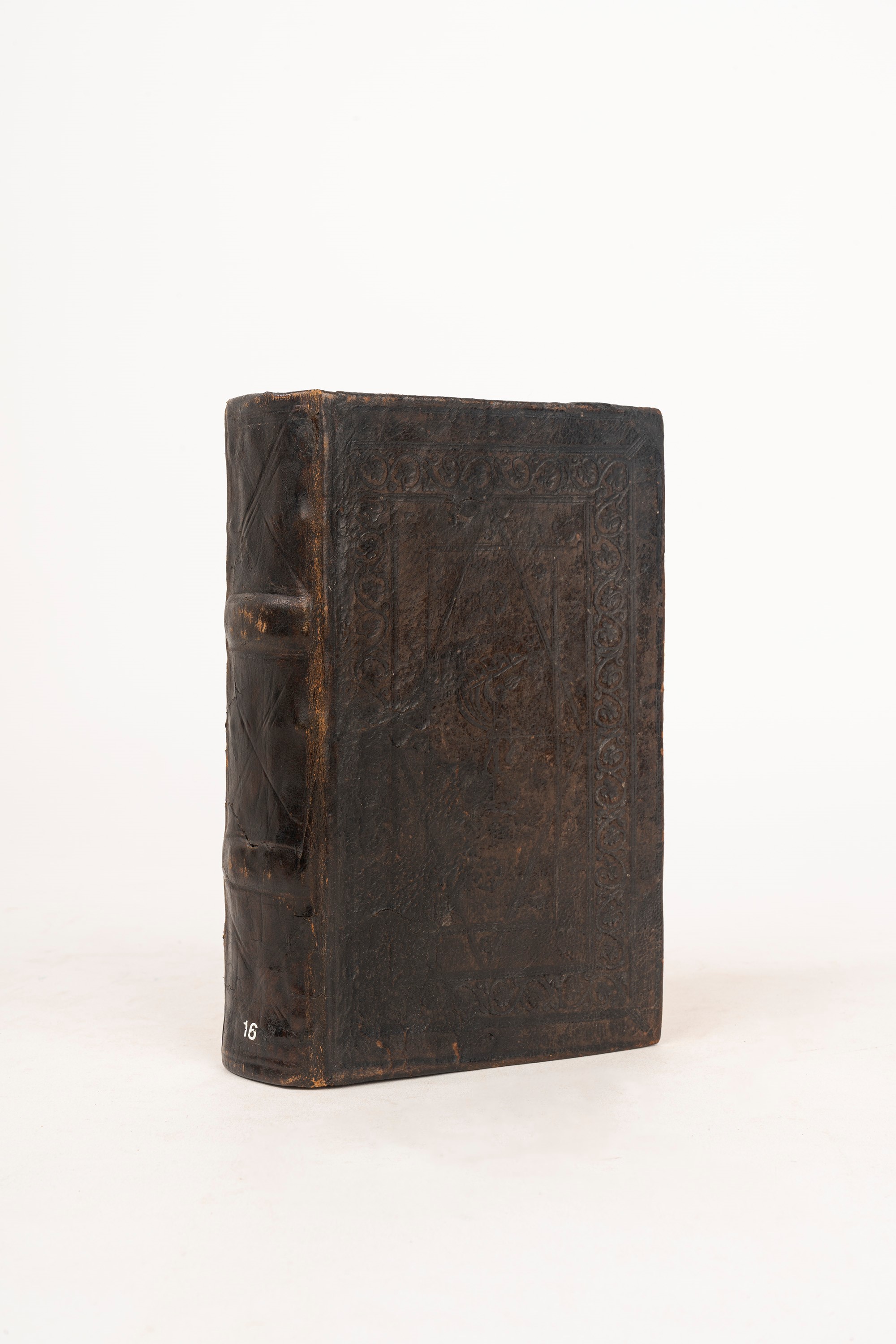
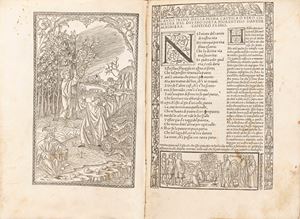
Florence, by the work and expense of Philippo di Giunta of Florence, 1506, 20th August. In 8°. 157 x 95 mm. Full-page woodcut illustration depicting Dante in the vestibule of hell with the three beasts and 7 almost full-page woodcut engravings depicting plans and sections of Dante's hell, small restoration on the title page, missing leaves G5-6, marginal reddening and light stains, contemporary annotations especially in Purgatory and Paradise, SPLENDID VENETIAN BINDING CONTEMPORARY TO THE FORTUNA , restored and partially redone spine, red edges.
This copy contains, after the text of the Comedy, Manetti's Dialogue in the second known version. This edition was probably printed in Florence by Filippo Giunta the Elder (for the printer and date, see D. Decia, I Giunti tipografi editori di Firenze 1497-1570 , vol. I, p. 246, no. 2). The colophon of the 1506 edition and the final errata pages are therefore missing.
This copy contains, after the text of the Comedy, Manetti's Dialogue in the second known version. This edition was probably printed in Florence by Filippo Giunta the Elder (for the printer and date, see D. Decia, I Giunti tipografi editori di Firenze 1497-1570 , vol. I, p. 246, no. 2). The colophon of the 1506 edition and the final errata pages are therefore missing.
Specialist Notes
Second Florentine edition of the Comedy, very rare, a splendid copy in its original binding.
Aldine's Dante would become the new vulgate, but not before a last valiant attempt by the Florentines to reclaim their author with this edition of the poem, commonly called Dante Giuntina. As in the case of Landino, the response had to come from the most authoritative level of Florentine culture. On this occasion, the text was prepared by the greatest living Florentine poet of the time, Girolamo Benivieni (1453-1542). Like most cultured Florentines of his generation (including Machiavelli), Benivieni had always possessed a love and profound knowledge of the poem, informed by a profound religious sensitivity nourished by his attendance at the Florentine Neoplatonic academy and his friendship with the philosopher Giovanni Pico della Mirandola. Benivieni was also among the first intellectuals of humanist Florence to convert to the impetuous and prophetic preaching of Girolamo Savonarola. Benivieni introduces his Dante edition with a chapter in terza rima entitled, Cantico by Ieronimo Benivieni, citizen of Florence, in praise of the most excellent poet Dante Alighieri and of the Divine Comedy that followed, divinely composed by him. From a textual point of view, the Giuntina is the most significant sixteenth-century edition of the poem, besides the Aldine editions of 1502 and the Accademia della Crusca edition of 1595. Benivieni evidently took great care with the text (because non-Tuscans had again raised the stakes) and on many occasions improved the Aldine text, preferring readings that later proved authoritative. However, Benivieni based his correction of the text on the Aldine edition of 1502, and it is significant that the Giuntina of 1506 was the last complete edition of the poem to appear in Florence in the sixteenth century, until the Accademia della Crusca edition of 1595. Dante had meanwhile become an "Italian" classic. And the process by which the Florentine poet became an Italian classic during the sixteenth century is roughly parallel to that through which the essentially Florentine language of the 14th-century Florentine classics, Dante, Petrarch, and Boccaccio, became the national literary language of all Italy in the same period.” ( Renaissance Dante in print , 1472-1629. University of Notre Dame; The Newberry Library and the University of Chicago).
Mambelli 20; Gamba 386; Sander 2317.
Aldine's Dante would become the new vulgate, but not before a last valiant attempt by the Florentines to reclaim their author with this edition of the poem, commonly called Dante Giuntina. As in the case of Landino, the response had to come from the most authoritative level of Florentine culture. On this occasion, the text was prepared by the greatest living Florentine poet of the time, Girolamo Benivieni (1453-1542). Like most cultured Florentines of his generation (including Machiavelli), Benivieni had always possessed a love and profound knowledge of the poem, informed by a profound religious sensitivity nourished by his attendance at the Florentine Neoplatonic academy and his friendship with the philosopher Giovanni Pico della Mirandola. Benivieni was also among the first intellectuals of humanist Florence to convert to the impetuous and prophetic preaching of Girolamo Savonarola. Benivieni introduces his Dante edition with a chapter in terza rima entitled, Cantico by Ieronimo Benivieni, citizen of Florence, in praise of the most excellent poet Dante Alighieri and of the Divine Comedy that followed, divinely composed by him. From a textual point of view, the Giuntina is the most significant sixteenth-century edition of the poem, besides the Aldine editions of 1502 and the Accademia della Crusca edition of 1595. Benivieni evidently took great care with the text (because non-Tuscans had again raised the stakes) and on many occasions improved the Aldine text, preferring readings that later proved authoritative. However, Benivieni based his correction of the text on the Aldine edition of 1502, and it is significant that the Giuntina of 1506 was the last complete edition of the poem to appear in Florence in the sixteenth century, until the Accademia della Crusca edition of 1595. Dante had meanwhile become an "Italian" classic. And the process by which the Florentine poet became an Italian classic during the sixteenth century is roughly parallel to that through which the essentially Florentine language of the 14th-century Florentine classics, Dante, Petrarch, and Boccaccio, became the national literary language of all Italy in the same period.” ( Renaissance Dante in print , 1472-1629. University of Notre Dame; The Newberry Library and the University of Chicago).
Mambelli 20; Gamba 386; Sander 2317.
Contact
Suggested lots
Caricamento lotti suggeriti...
More Lots
95