
Estimate
€ 2.000 - 3.000
Sold
€ 2.560
The price includes buyer's premium
Do you have a similar item you would like to sell?
Information
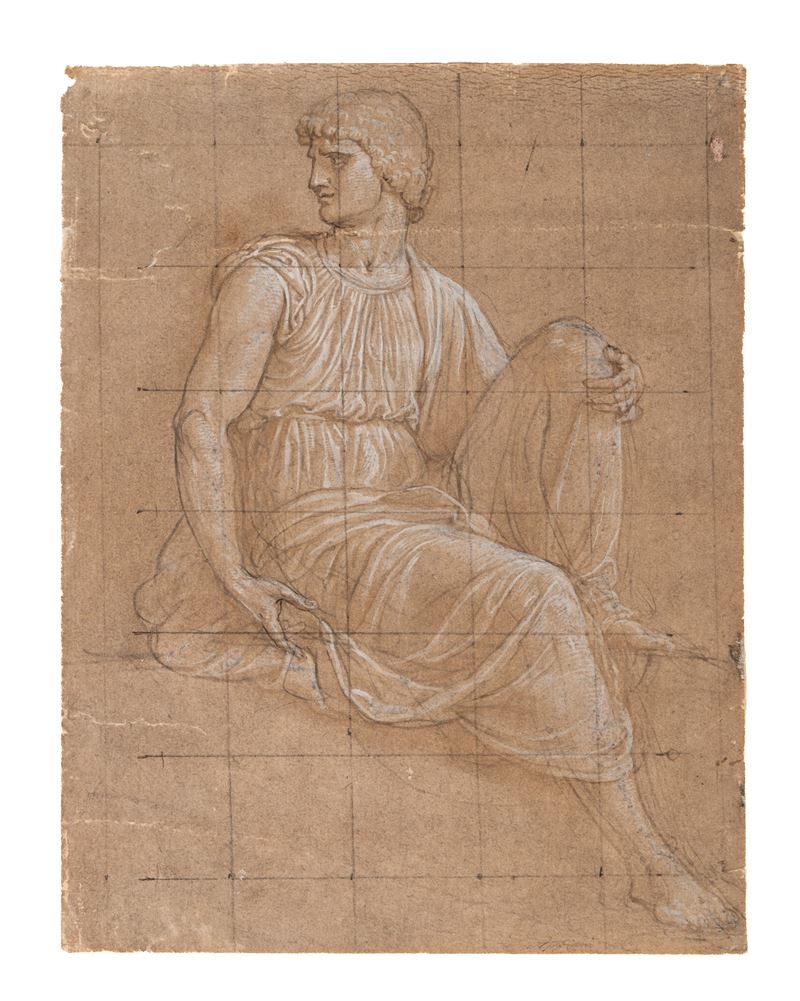
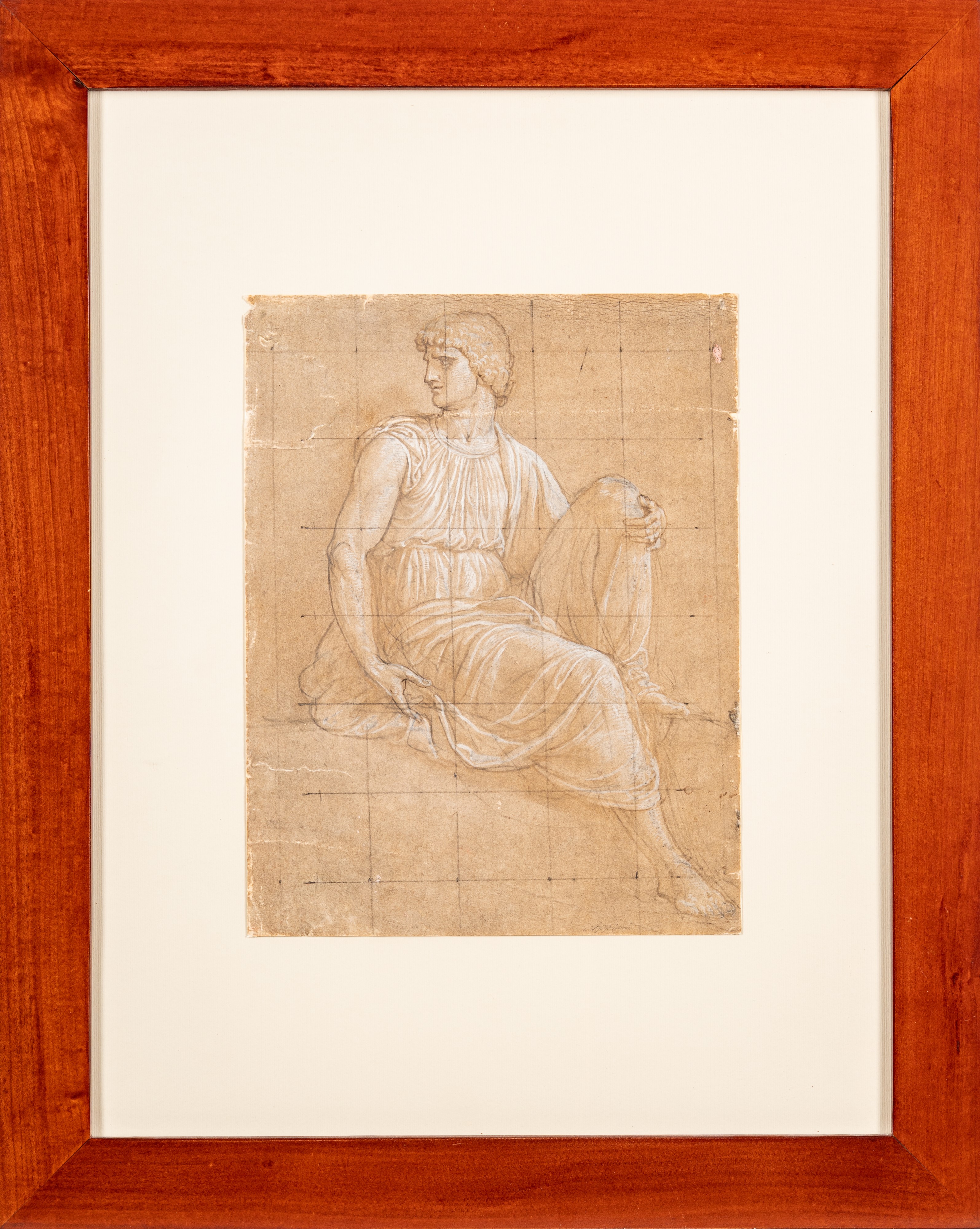
pencil, charcoal and white lead on prepared and squared paper
263 x 201 mm
263 x 201 mm
Specialist Notes
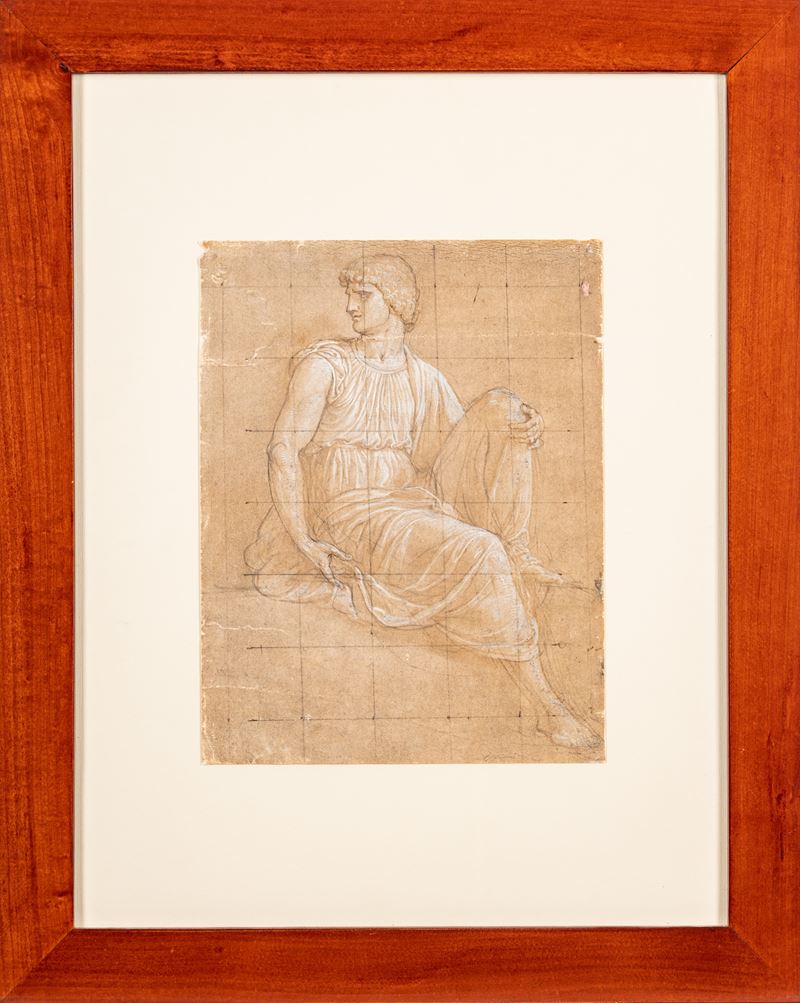
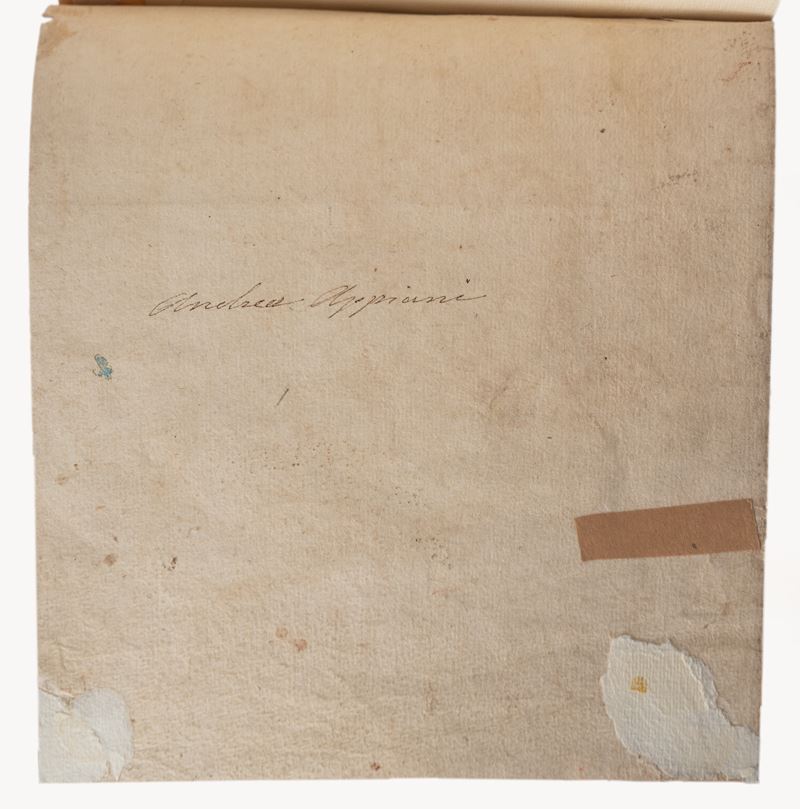
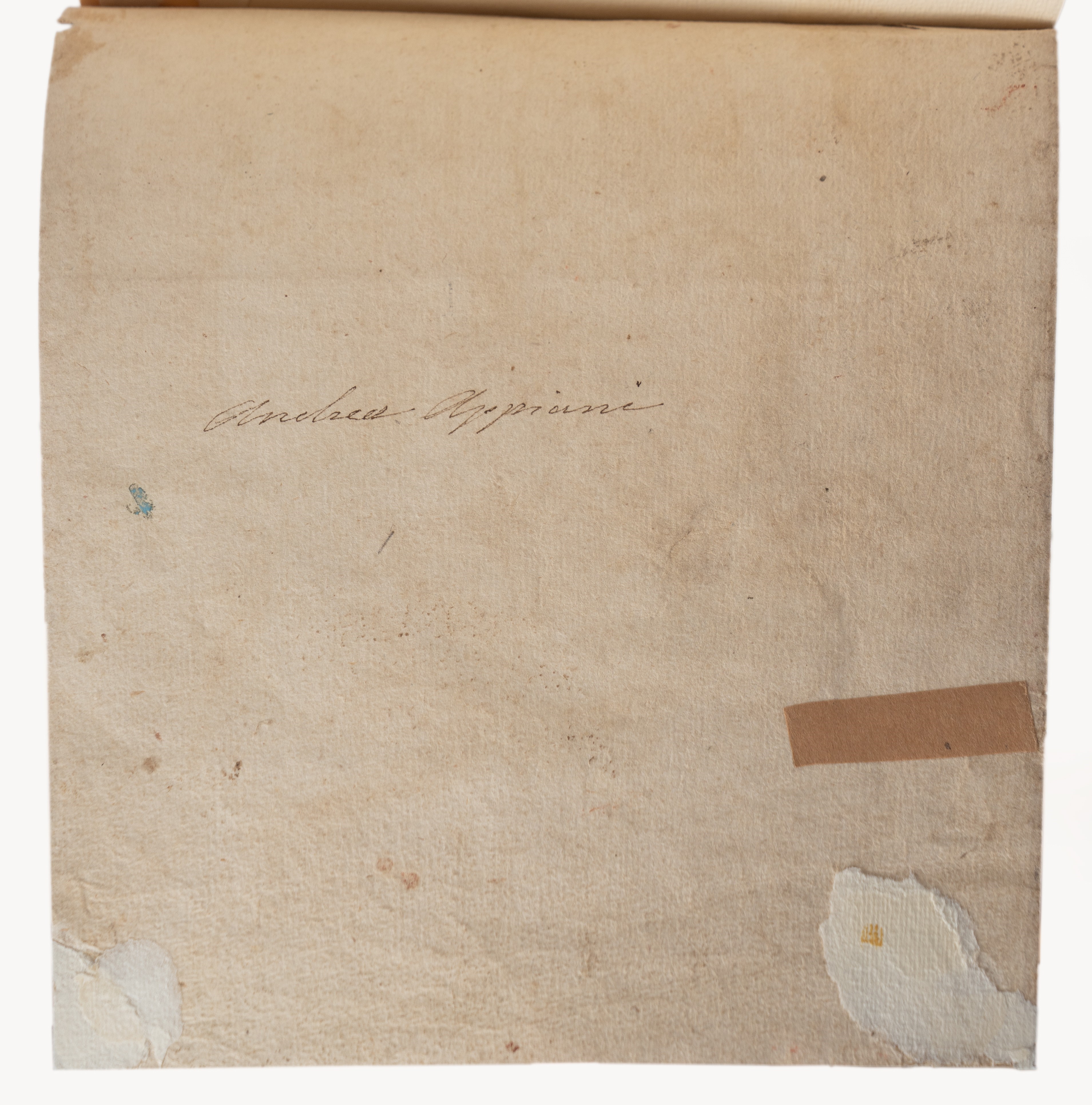
This drawing, very intense and of extraordinary quality, is an important and rare testimony to Andrea Appiani's early activity, when in 1782-1783 it was used for the first time in the decorations of the Court Palace of Milan (later Royal), then intended as the residence of Archduke Ferdinand of Habsburg and his wife Maria Beatrice d'Este. It is in fact the preparatory drawing, as can also be seen from the squaring, for one of the figures in one of the fake tapestry panels designed and created by the ornamental painter Giuseppe Levati to decorate, by filling the empty spaces, the three rooms on the main floor intended for the exhibition of the famous series of seven tapestries with the Stories of Jason , woven by the Parisian Gobelins Manufactory between 1764 and 1773. Only in the third and final room did Appiani intervene, collaborating with Levati, on the four large panels (one of which has been lost) and on eight smaller ones, all decorated with ancient ornamental motifs consisting of trophies, candelabra, racemes and spirals designed taking inspiration from the pillars of Raphael's Loggias in the Vatican and in any case from the tradition of grotesques which had returned to favour in neoclassical environments at the time. In these panels, Appiani's intervention concerns the figures, representing allegories and mythological or purely decorative deities, which stand out for their strength and beauty within the ornamental apparatus. Our drawing specifically refers to one of the two figures, the one on the right, who are seated symmetrically on the edge of an ancient basin, their backs to each other but with their heads turned to look at each other, in one of the three large surviving panels still on display in one of the tapestry rooms in the Royal Palace. The very high quality of this sheet, to which the white lead treatment gives great pictorial prominence, confirms Appiani's excellence as a draftsman, concentrated in this case in the rendering of the dense folds of the tunic and the physiognomic strength of the beautiful face.
Bibliographic references
E. Colle and F. Mazzocca, The Royal Palace of Milan , Milan, Skira, 2001;
Appiani. Neoclassicism in Milan , exhibition catalogue (Milan, Palazzo Reale, 23 September 2025 – 11 January 2026), edited by F. Leone, F. Mazzocca, D. Piraina, Milan, Electa, 2025, pp. 108-109.
Fernando Mazzocca
Suggested lots
Caricamento lotti suggeriti...
More Lots


66