
Estimate
€ 1.500 - 1.800
Sold
€ 1.664
The price includes buyer's premium
Do you have a similar item you would like to sell?
Information
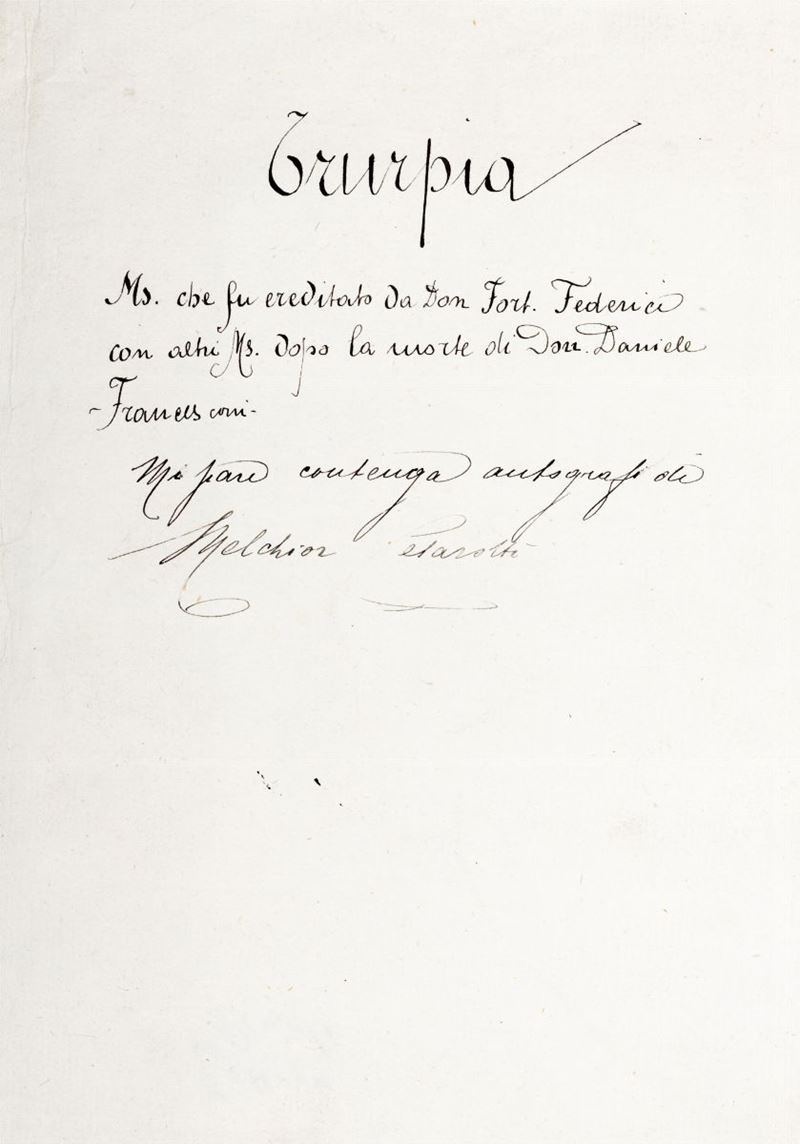
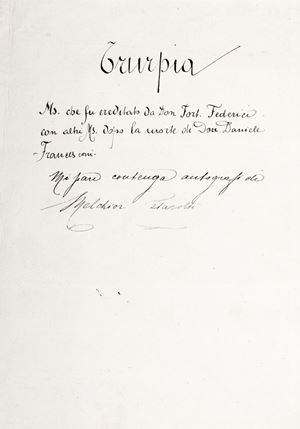
Set of 108 loose papers, mostly measuring 210 x 290 mm, written on 176 pages by various hands, preserved in a modern red canvas case, all datable to the 18th century. About the origin, so we read on the first card: Ms. which was inherited by Don Fort. Federici with other ms. after the death of Don Daniele Francesconi. Fortunato Federici (Esino, Brescia 1778 - Padua 1842) was Abbot of Cassino and from 1836 Director of the University Library of Padua. Daniele Francesconi (Belvedere di Cordignano, Treviso 1761 - Padua 1835), was Professor and Librarian of the University of Padua from 1805.
Specialist Notes
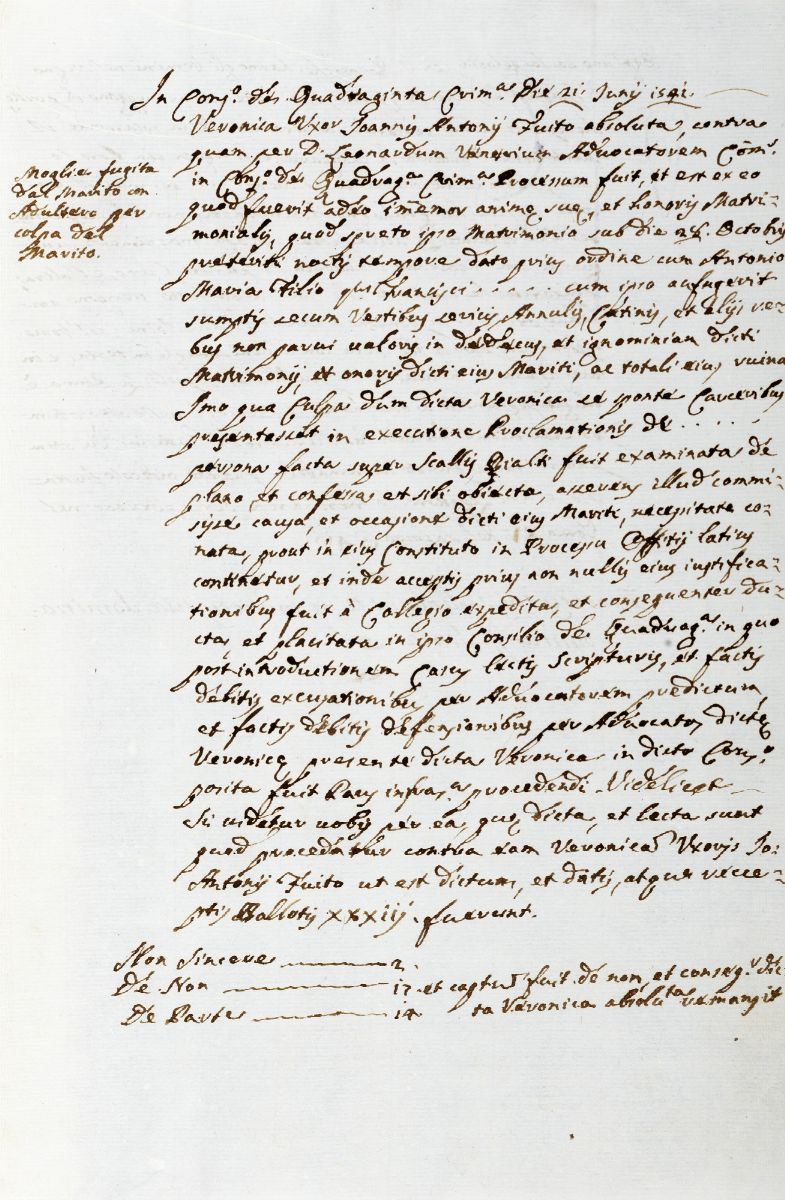
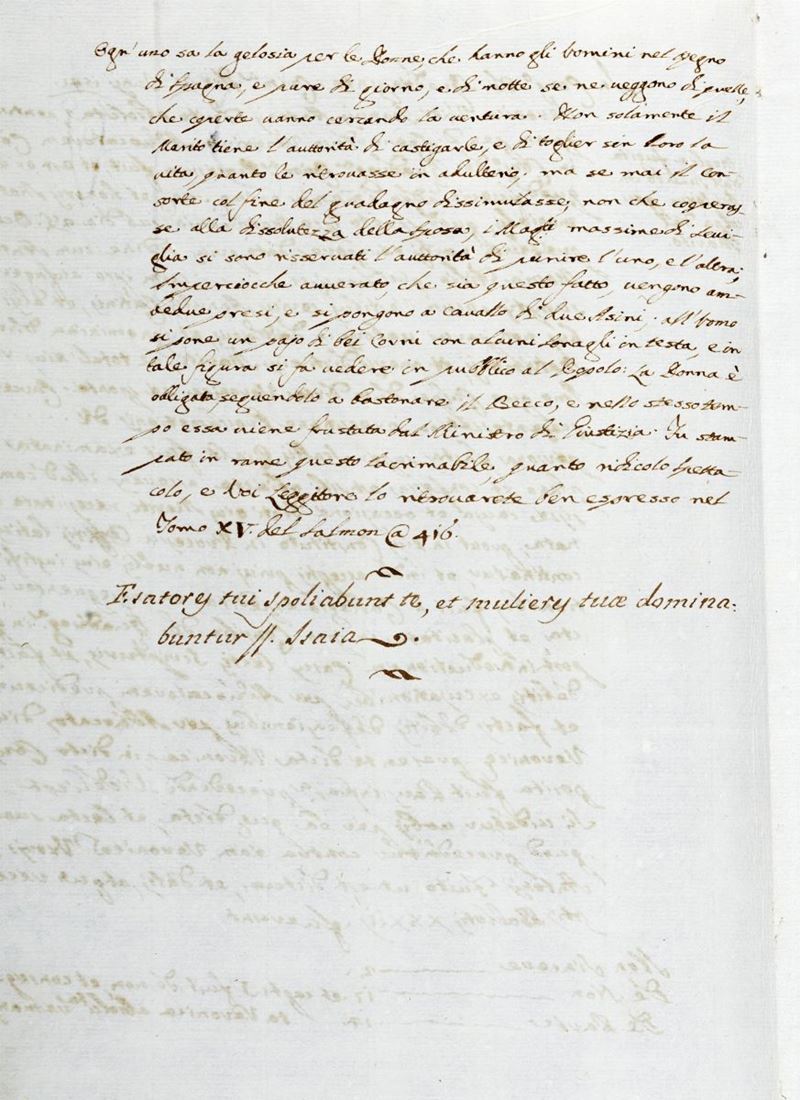
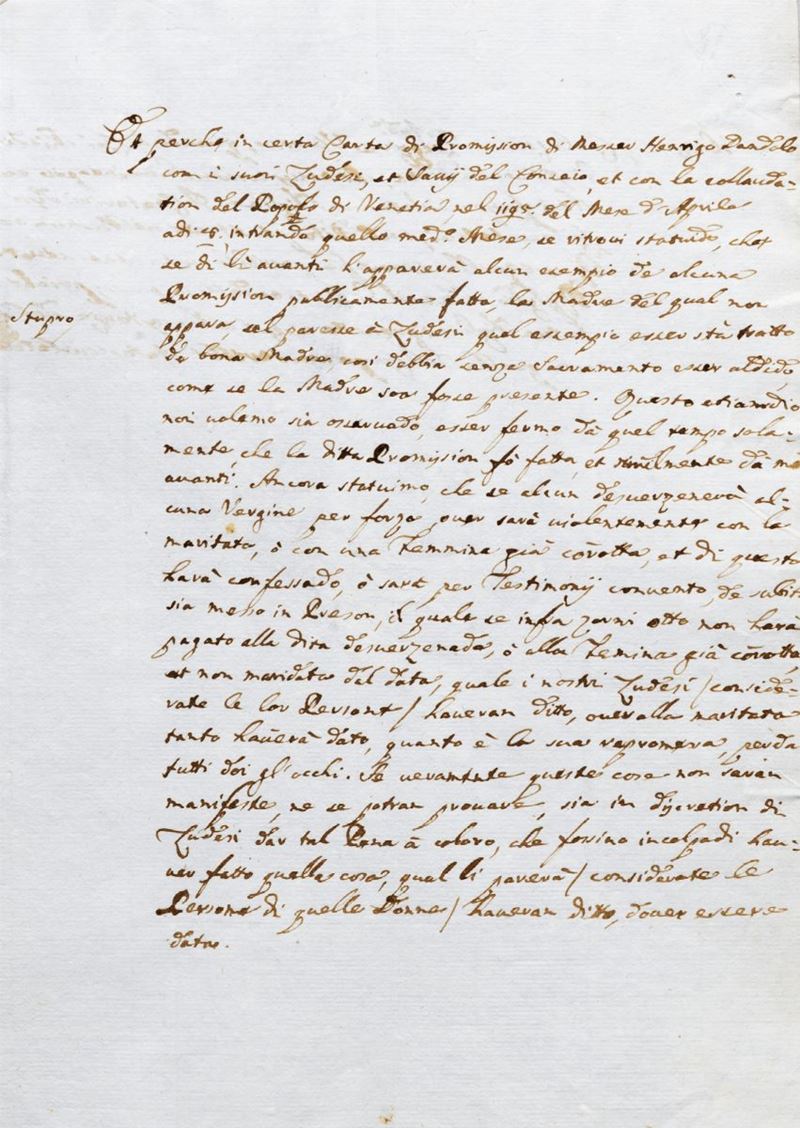
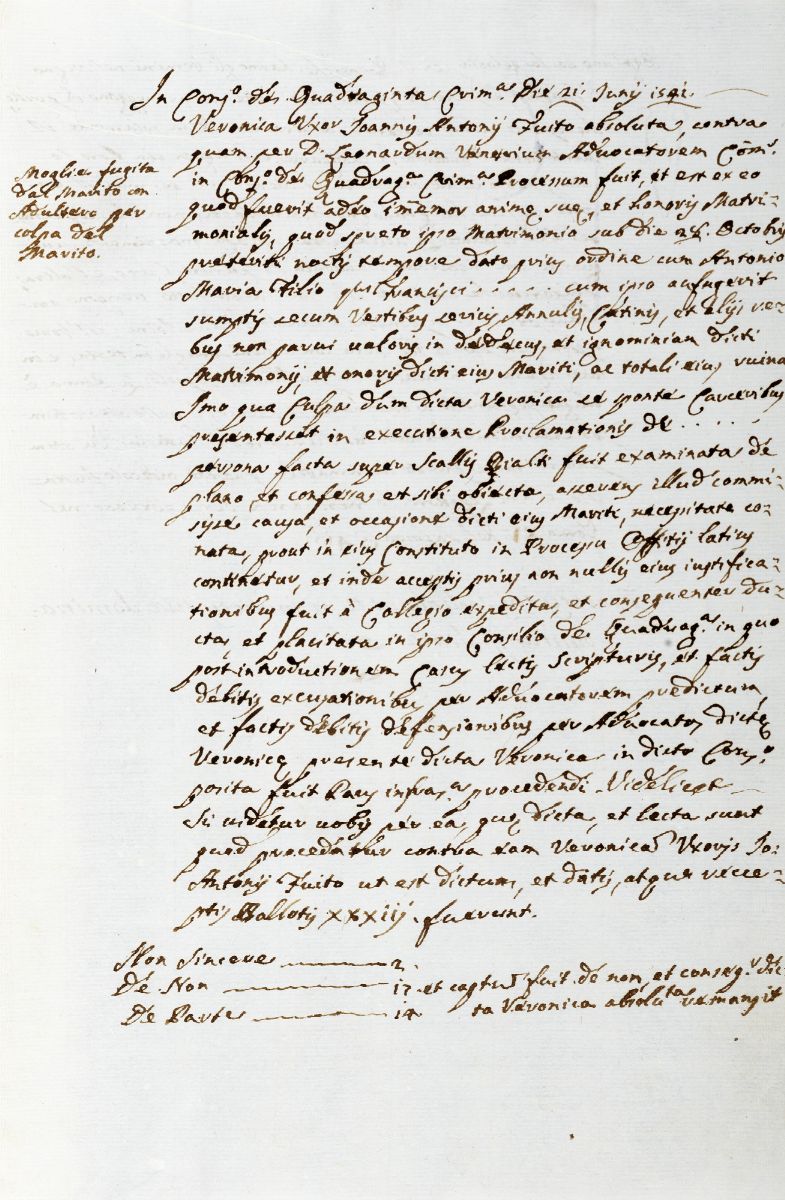
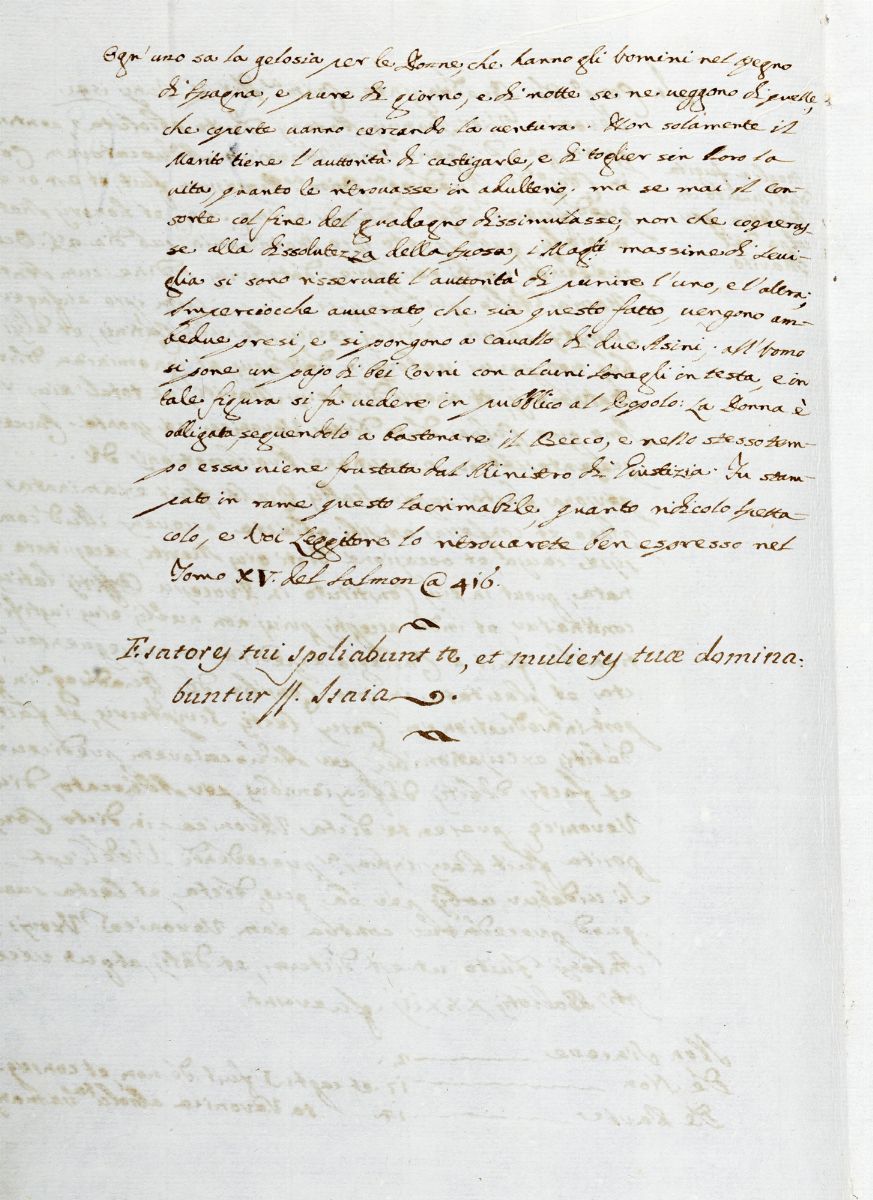
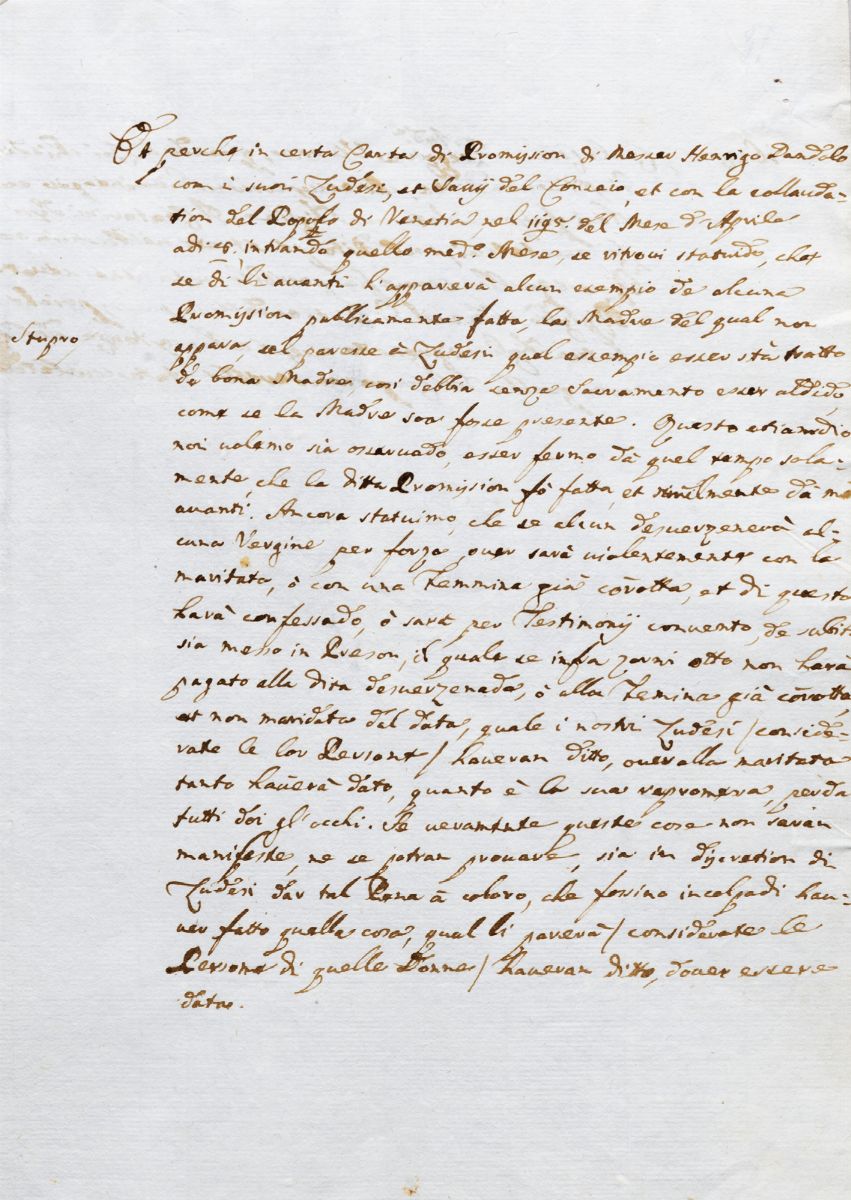
Curious and documented eighteenth-century zibaldone that collects information, in succinct form, but sometimes with complete transcription, mostly derived from the Magistracies of the Council of Ten, Council of Forty, Maggior Consiglio and Pregadi, all concerning: Sodomy, Harlots, Women shameless, Venetian nobles who married prostitutes, Rape, Lascivia, Incest, Adultery, Unions of females, Uxoricide, Bigamy, Rape of girls etc. with sentences of conviction, even capital (see the case of sodomites, between the two columns of Piazza San Marco, severed head and burned body), or acquittals of honor killings etc. & nbsp;
Yes it starts from the first card, which contains a dissertation on venereal disease (or syphilis) and comes to the last one, concerning the marriage ban for a girl under the age of seven. In between, a vast series of crimes of a sexual nature, observed in the light of Venetian law, and analyzed in their various implications, following the different cases. It is striking how in the case of rape, the Venetian Statute already provided for the blinding of the guilty person not able to compensate the victim in eight days, as agreed by the Zudesi (judges). The penalties for sodomy were equally severe, while adulterous women married to impotent husbands were condoned; just as in a letter of 1697 to the Captain of Bergamo the possibility of "unions of Femine" with prior "permission", a concession of absolute modernity, transpires. From the cases listed above, a scrupulous attention to violence against women emerges, whether it occurs outside the marriage environment or within the home. Just as equally stigmatized is the sodomized violence towards children, to whom the worst punishment is reserved. & Nbsp;
The Venetian Republic demonstrates also in this matter a legal openness and a not indifferent social sensitivity, a sign of a a free society which, however, knew how to regulate certain matters and adopt adequate penalties for the various crimes, often aimed at decisively protecting the rights of the weakest. & nbsp; & nbsp; & nbsp;
Yes it starts from the first card, which contains a dissertation on venereal disease (or syphilis) and comes to the last one, concerning the marriage ban for a girl under the age of seven. In between, a vast series of crimes of a sexual nature, observed in the light of Venetian law, and analyzed in their various implications, following the different cases. It is striking how in the case of rape, the Venetian Statute already provided for the blinding of the guilty person not able to compensate the victim in eight days, as agreed by the Zudesi (judges). The penalties for sodomy were equally severe, while adulterous women married to impotent husbands were condoned; just as in a letter of 1697 to the Captain of Bergamo the possibility of "unions of Femine" with prior "permission", a concession of absolute modernity, transpires. From the cases listed above, a scrupulous attention to violence against women emerges, whether it occurs outside the marriage environment or within the home. Just as equally stigmatized is the sodomized violence towards children, to whom the worst punishment is reserved. & Nbsp;
The Venetian Republic demonstrates also in this matter a legal openness and a not indifferent social sensitivity, a sign of a a free society which, however, knew how to regulate certain matters and adopt adequate penalties for the various crimes, often aimed at decisively protecting the rights of the weakest. & nbsp; & nbsp; & nbsp;
Contact
Suggested lots
Caricamento lotti suggeriti...
More Lots
![Letters [...] dedicated to the most illustrious Mr. Antonio Vallisnieri](https://api.finarte.it/api/lotto/immagine/64540/0/300.jpg)
206
Redi, Francesco
Letters [...] dedicated to the most illustrious Mr. Antonio Vallisnieri, 1724
Estimate € 200 - 300
Starting bid € 200