

Information
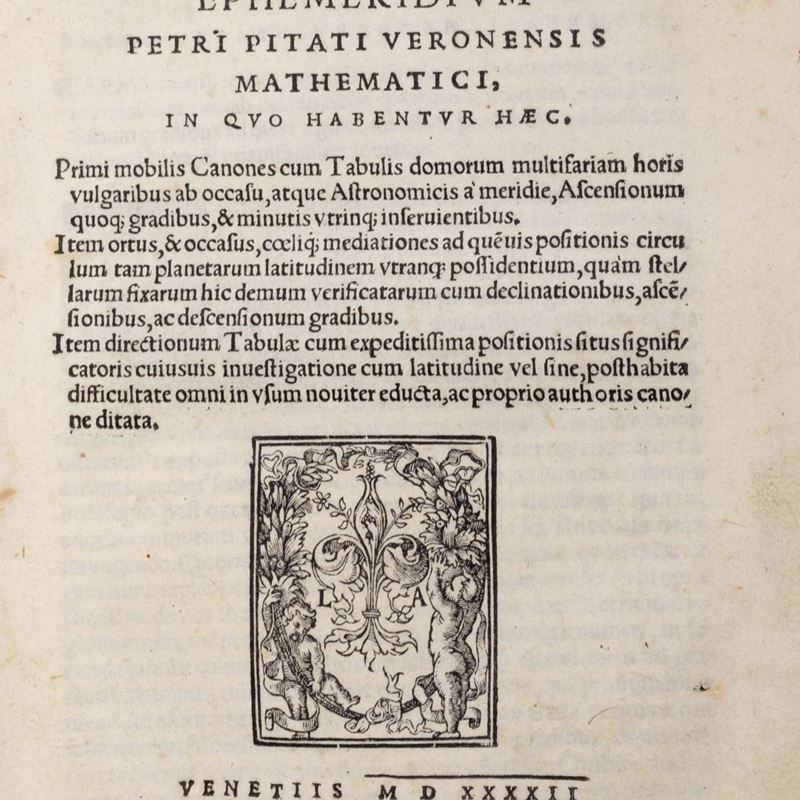
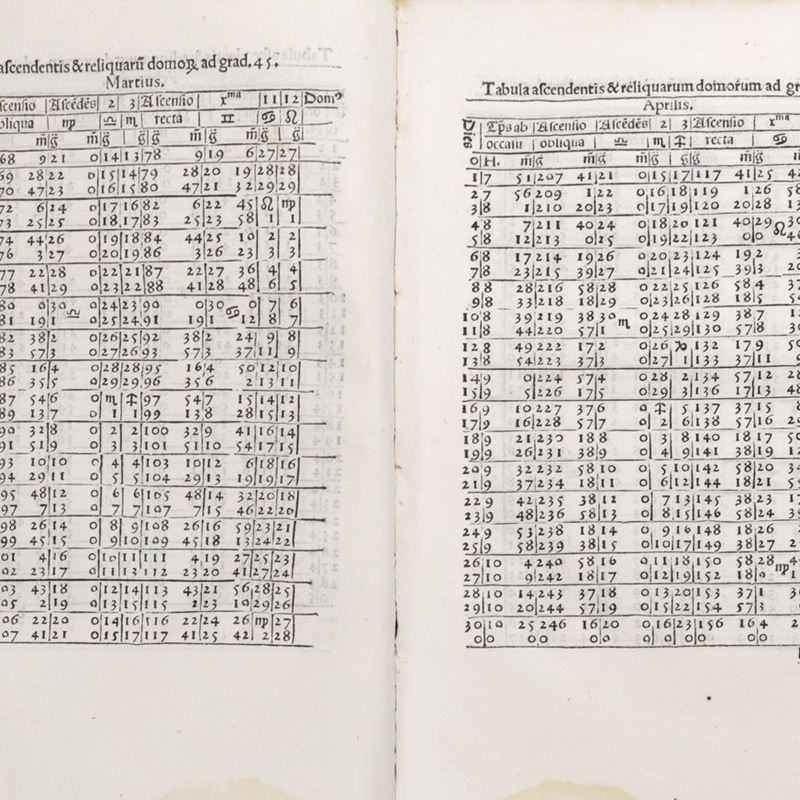
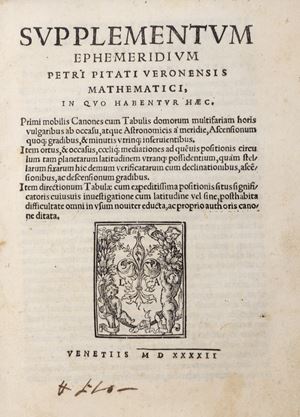
Venice, heirs of L. Giunti, 1542. In 4th. Printer's brand on the title page and at the end of the volume, numerous tables, halos and stains, small gaps in the margins of a few pages, original parchment binding, handwritten title on the spine, stains and defects.
Specialist Notes
Very rare edition of the Veronese astronomer and mathematician Pietro Pitati, author of numerous astronomical treatises and almanacs.
Pitati's name remains linked to chronological studies and calendars. The inadequacy of the Julian calendar and of the rules established by the Council of Nicaea for the calculation of Christian movable feasts - Easter in primis - had been known for at least four centuries, but the numerous reform proposals had not found outlets. While the Council of Trent did not deal directly with the reform of the calendar, the last session recognized the urgency of the matter by delegating its care to the pontiff. The problem of the date of Easter had already been addressed by Pitati in his first work, the Paschales atque noviluviorum mensurni canones addressed to Paul III (1537); shortly afterwards he arrived at the rule still in use to keep the date of Easter close to the vernal equinox, which now fell on March 10 (rather than 21 as assumed by the Council of Nicaea). The origin of the rule is not mentioned either by Giglio or by the German Jesuit Christopher Clavius in his defense of the Gregorian reform (1603), authors who dealt with the reform of the Calendar, but modern critics agree in assigning its origin to Pitati.
Riccardi I, 285 and 286.
Pitati's name remains linked to chronological studies and calendars. The inadequacy of the Julian calendar and of the rules established by the Council of Nicaea for the calculation of Christian movable feasts - Easter in primis - had been known for at least four centuries, but the numerous reform proposals had not found outlets. While the Council of Trent did not deal directly with the reform of the calendar, the last session recognized the urgency of the matter by delegating its care to the pontiff. The problem of the date of Easter had already been addressed by Pitati in his first work, the Paschales atque noviluviorum mensurni canones addressed to Paul III (1537); shortly afterwards he arrived at the rule still in use to keep the date of Easter close to the vernal equinox, which now fell on March 10 (rather than 21 as assumed by the Council of Nicaea). The origin of the rule is not mentioned either by Giglio or by the German Jesuit Christopher Clavius in his defense of the Gregorian reform (1603), authors who dealt with the reform of the Calendar, but modern critics agree in assigning its origin to Pitati.
Riccardi I, 285 and 286.
Contact
Condition report
To request a Condition Report, please contact libriestampe@finarte.it
The department will provide you with a general report of the condition of the property described above. Please note that what Finarte declares with respect to the state of conservation of the objects corresponds only to a qualified opinion and that we are not professional conservators or restorers.
We urge you to consult with a restorer or conservator of your choice who will be better able to provide a detailed, professional report. We always suggest prospective buyers to inspect each lot to satisfy themselves as to condition during the exhibition days as indicated in the catalog.
Suggested lots
Caricamento lotti suggeriti...
More Lots
37
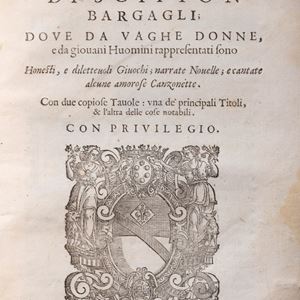
Bargagli, Lorenzo
The entertainments where charming women and young men are represented are Honesti and dilettevoli..., 1591
Estimate € 120 - 200
Starting bid € 120
38
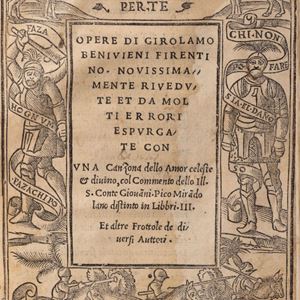
Benivieni, Girolamo
Works by Girolamo Beniuieni Firentino. Very recently rejected and expurgated from many errors with..., 1522
Estimate € 250 - 350
Starting bid € 250
39