Information
51 x 47 x 18 cm
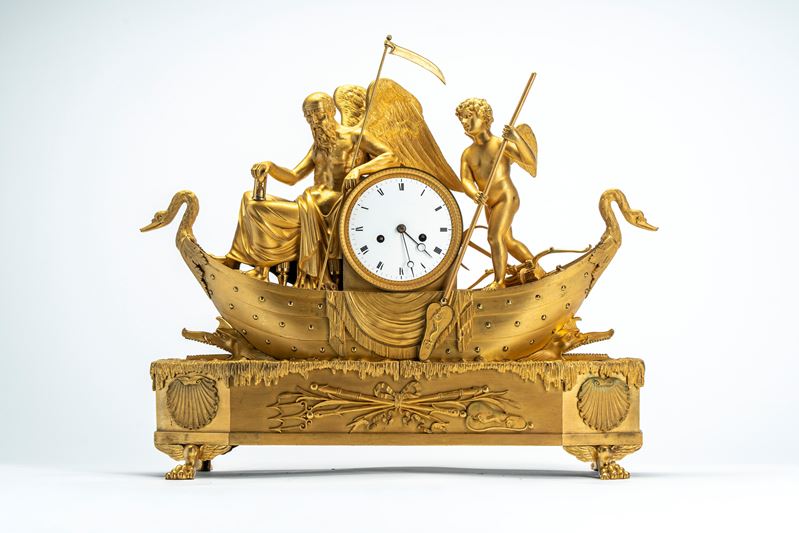
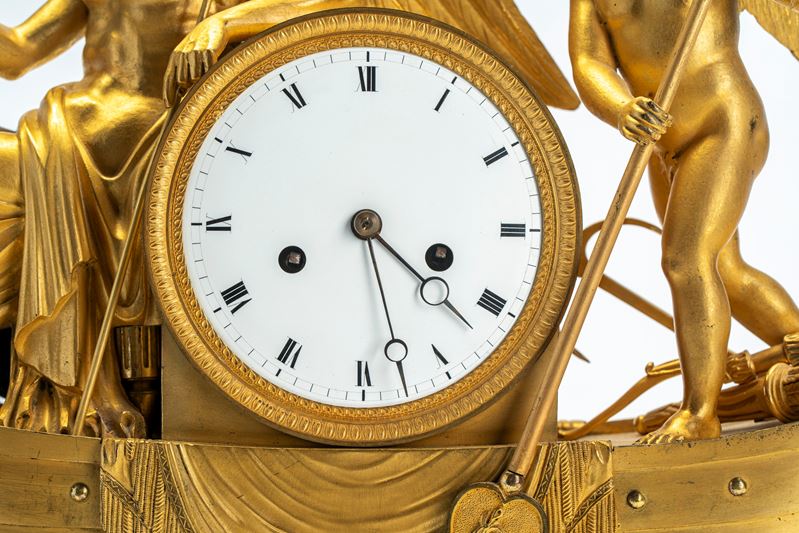
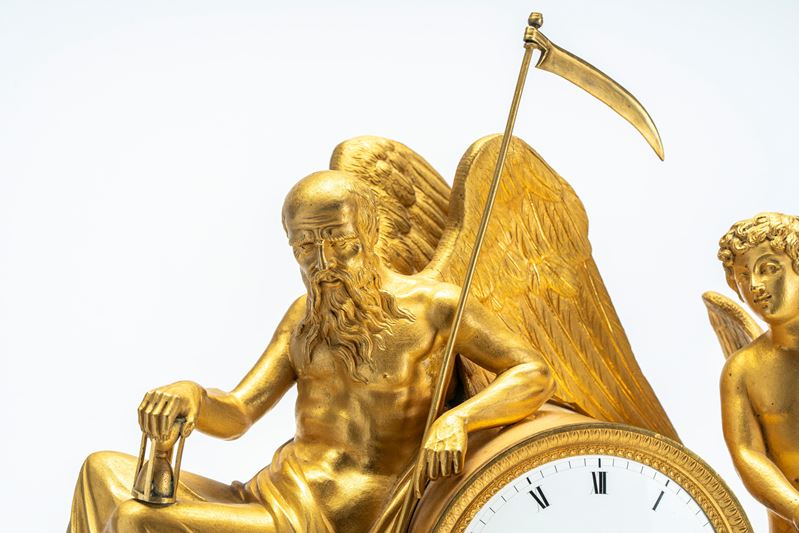
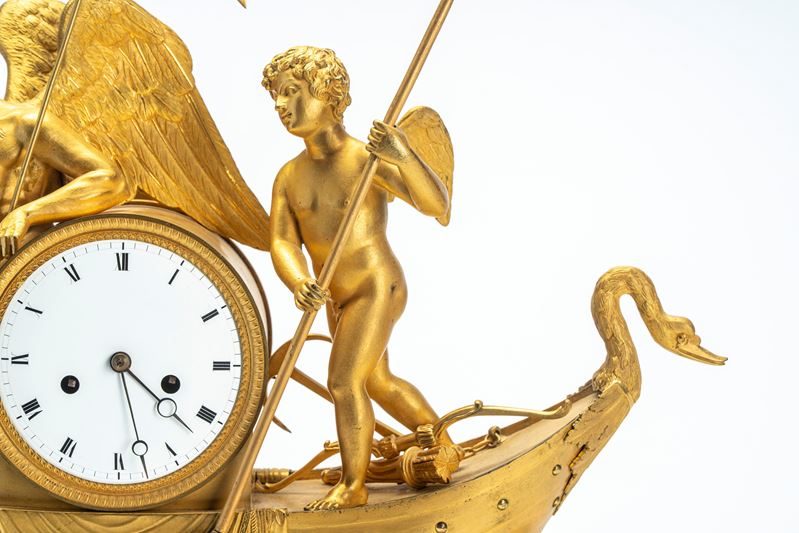
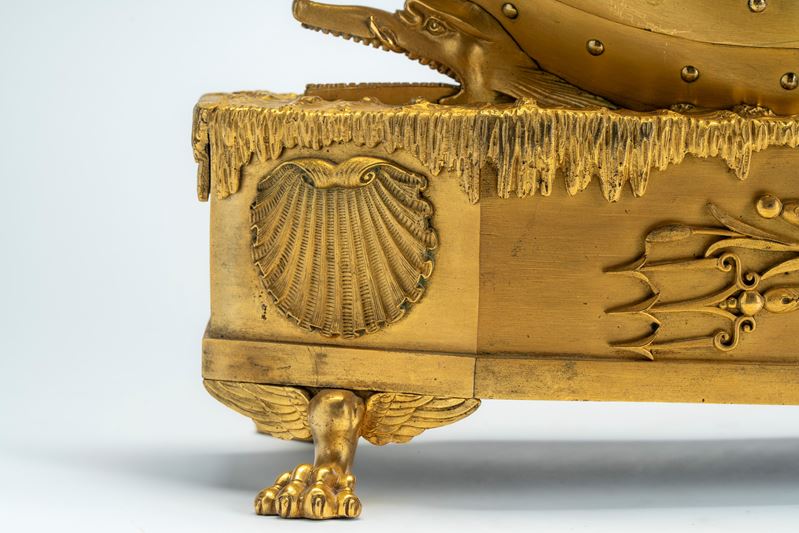
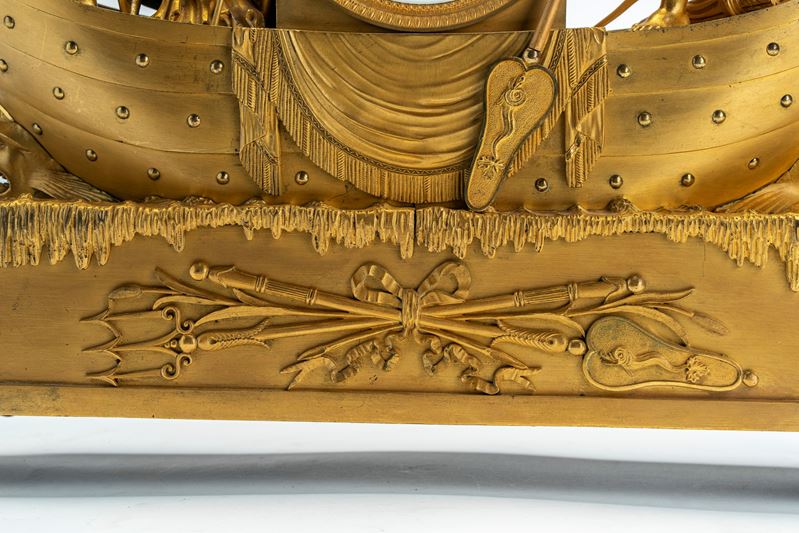
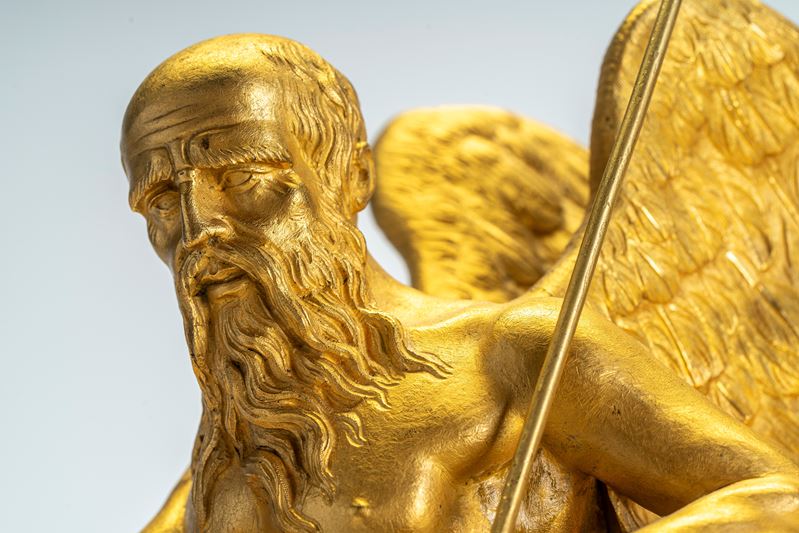
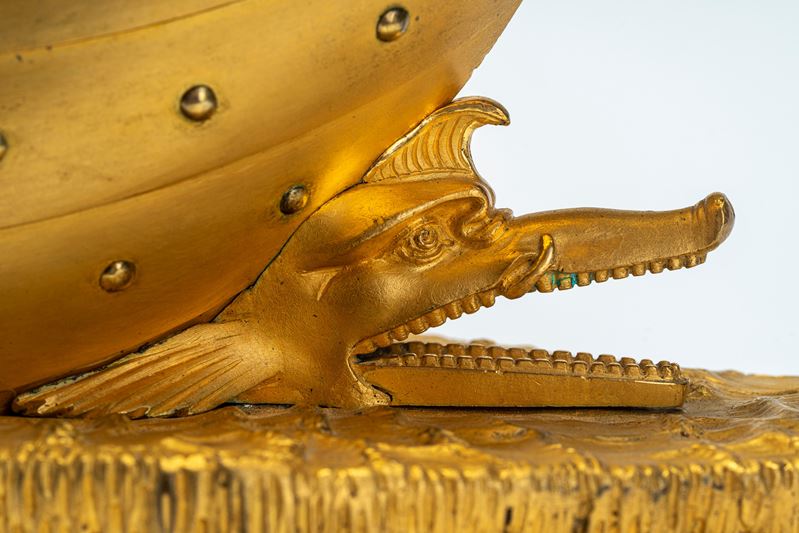
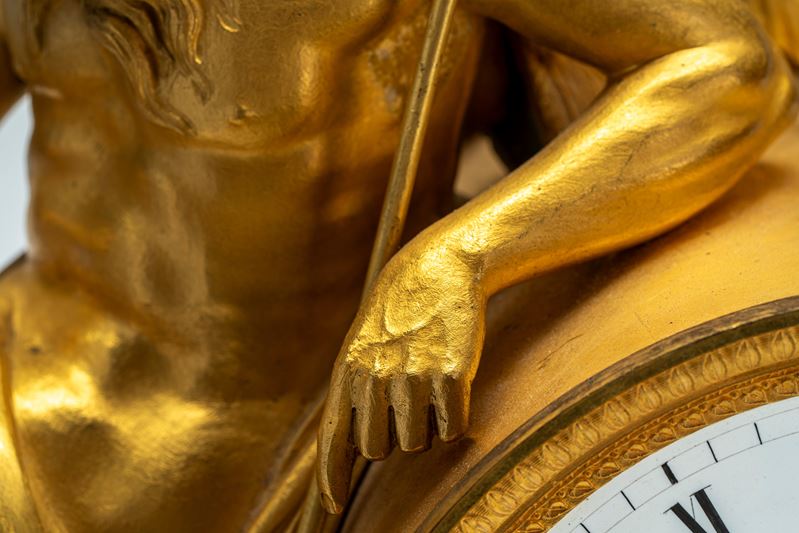
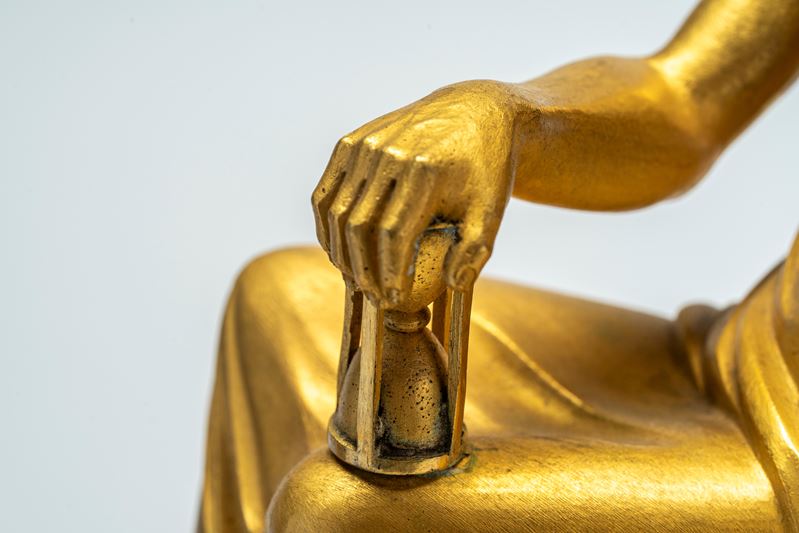
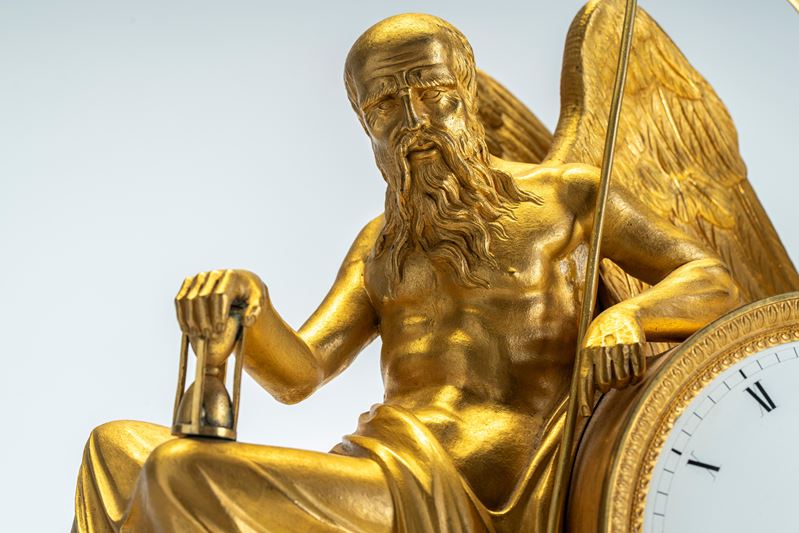
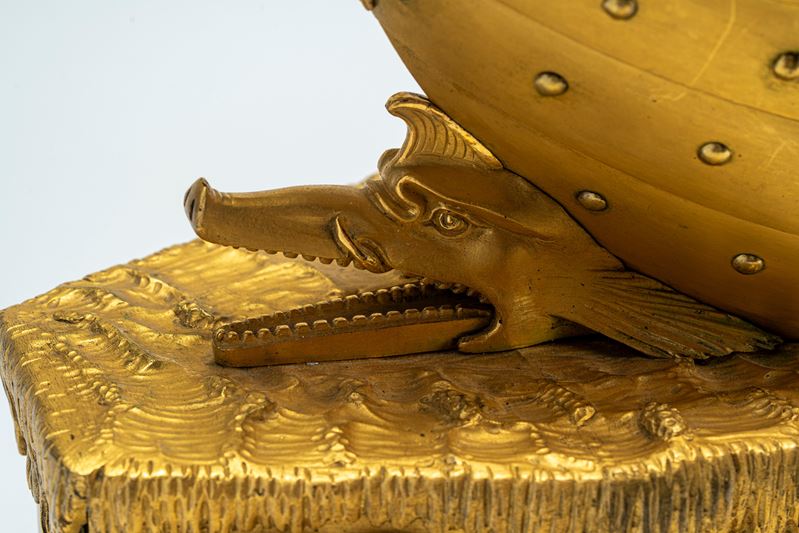
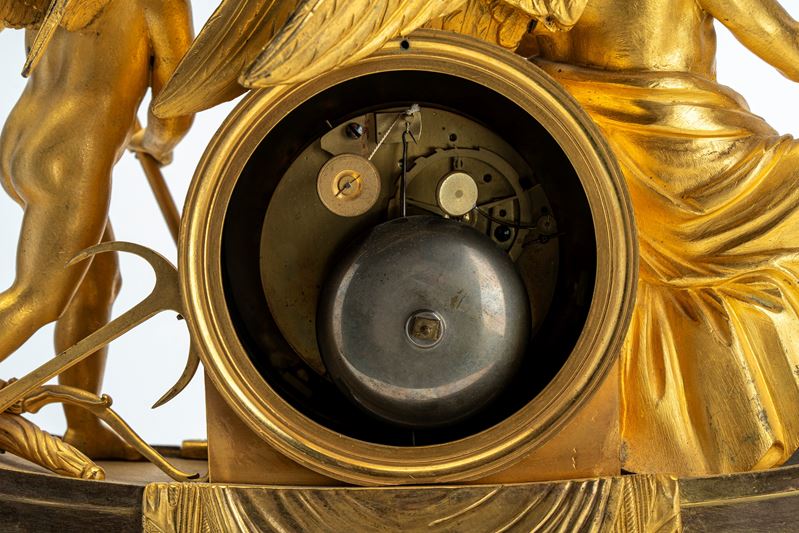
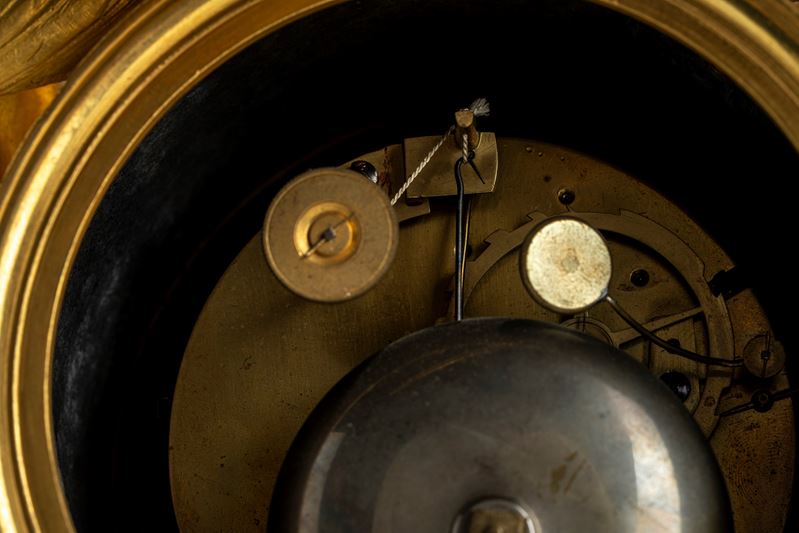
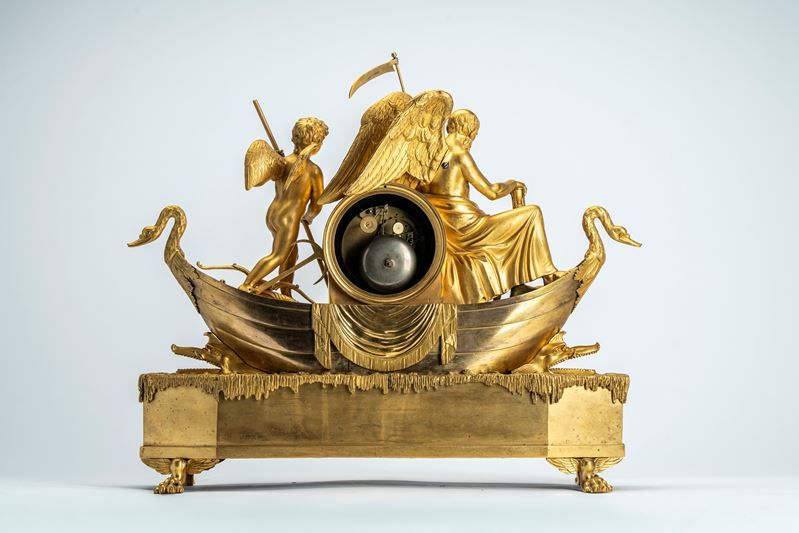
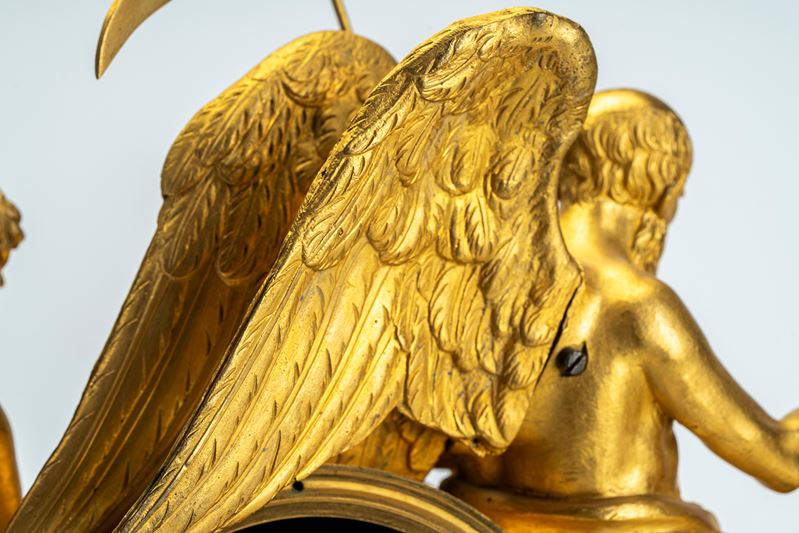
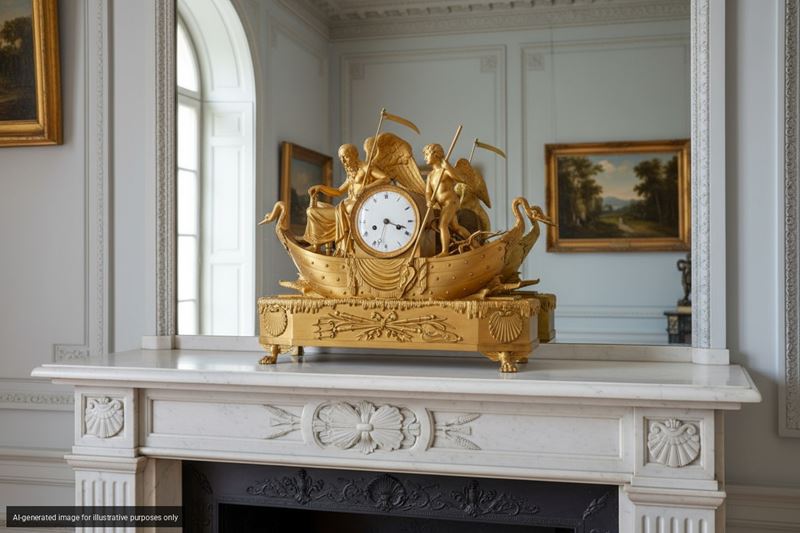
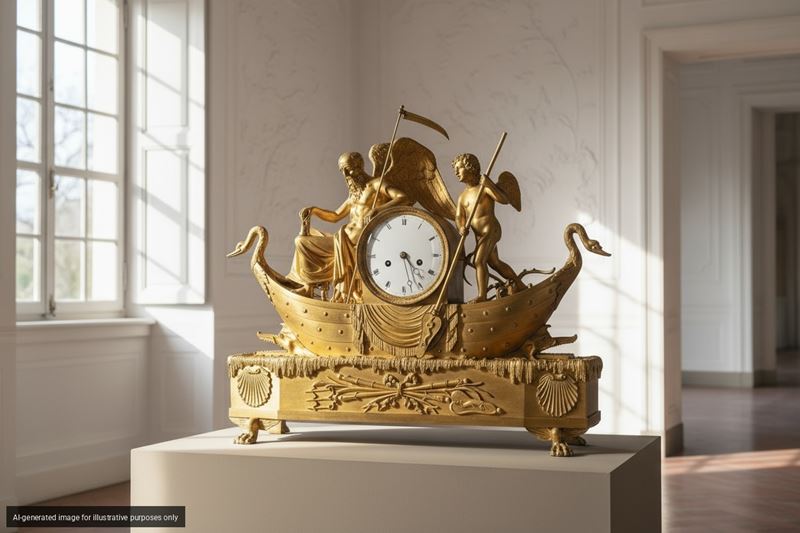
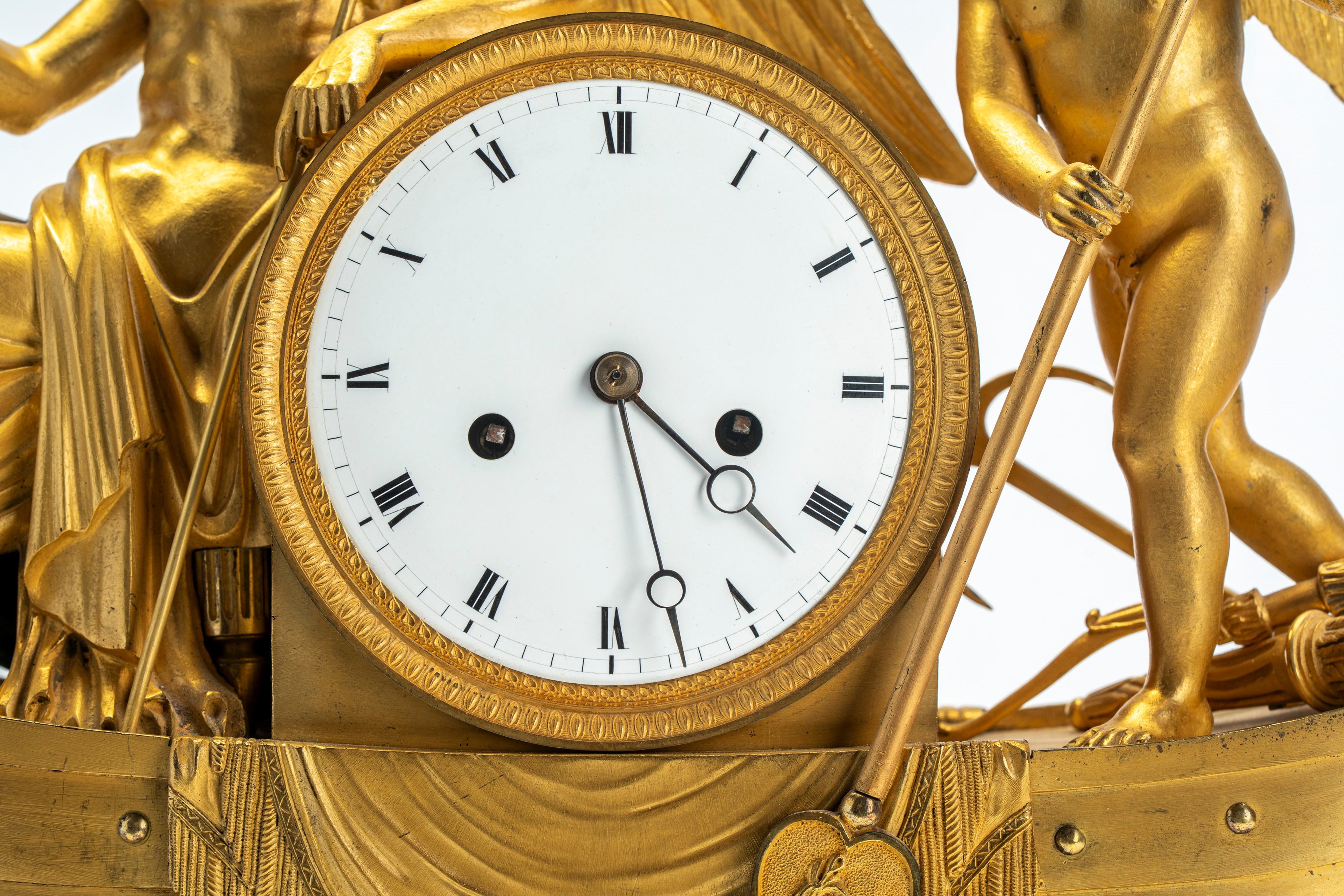
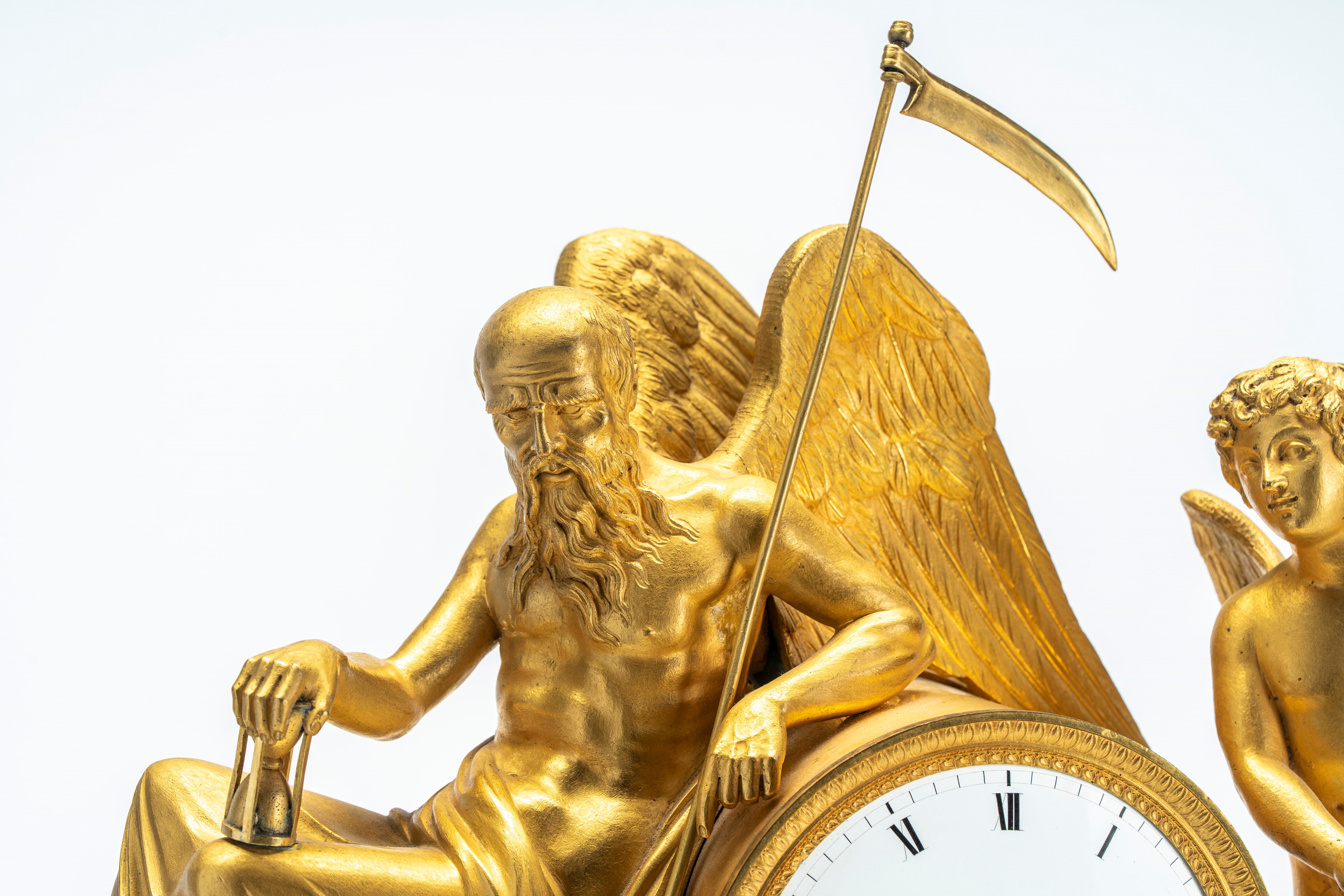
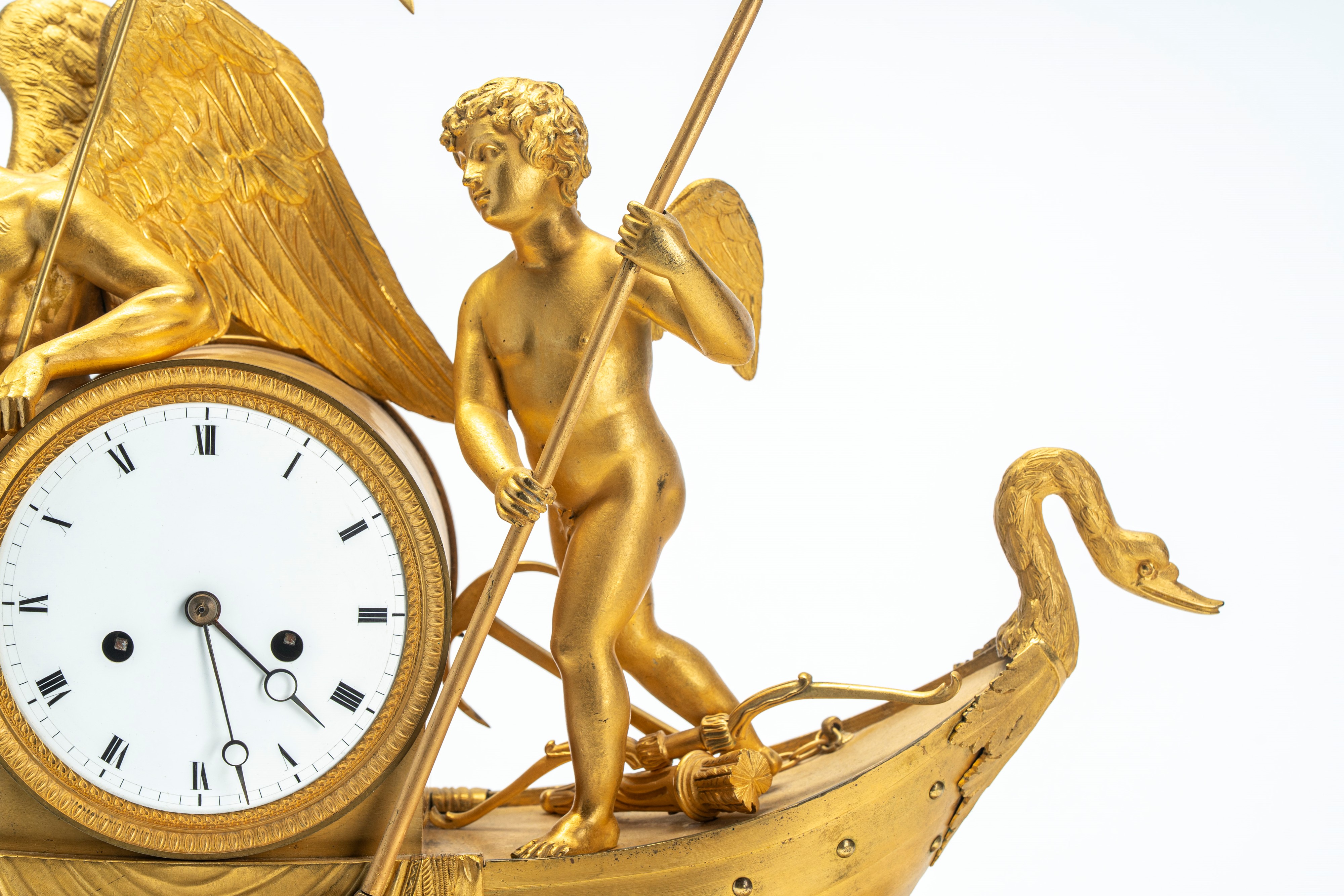
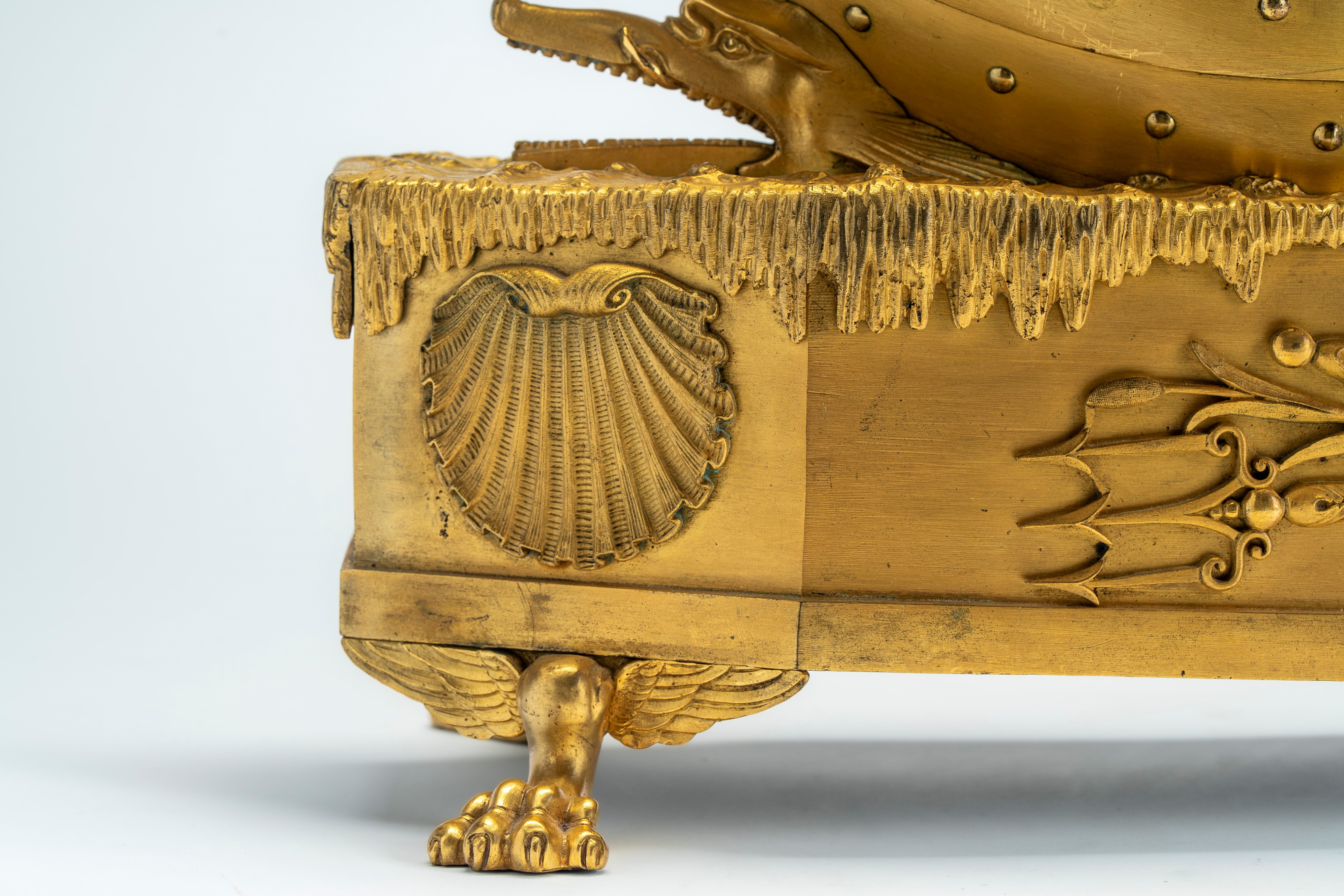
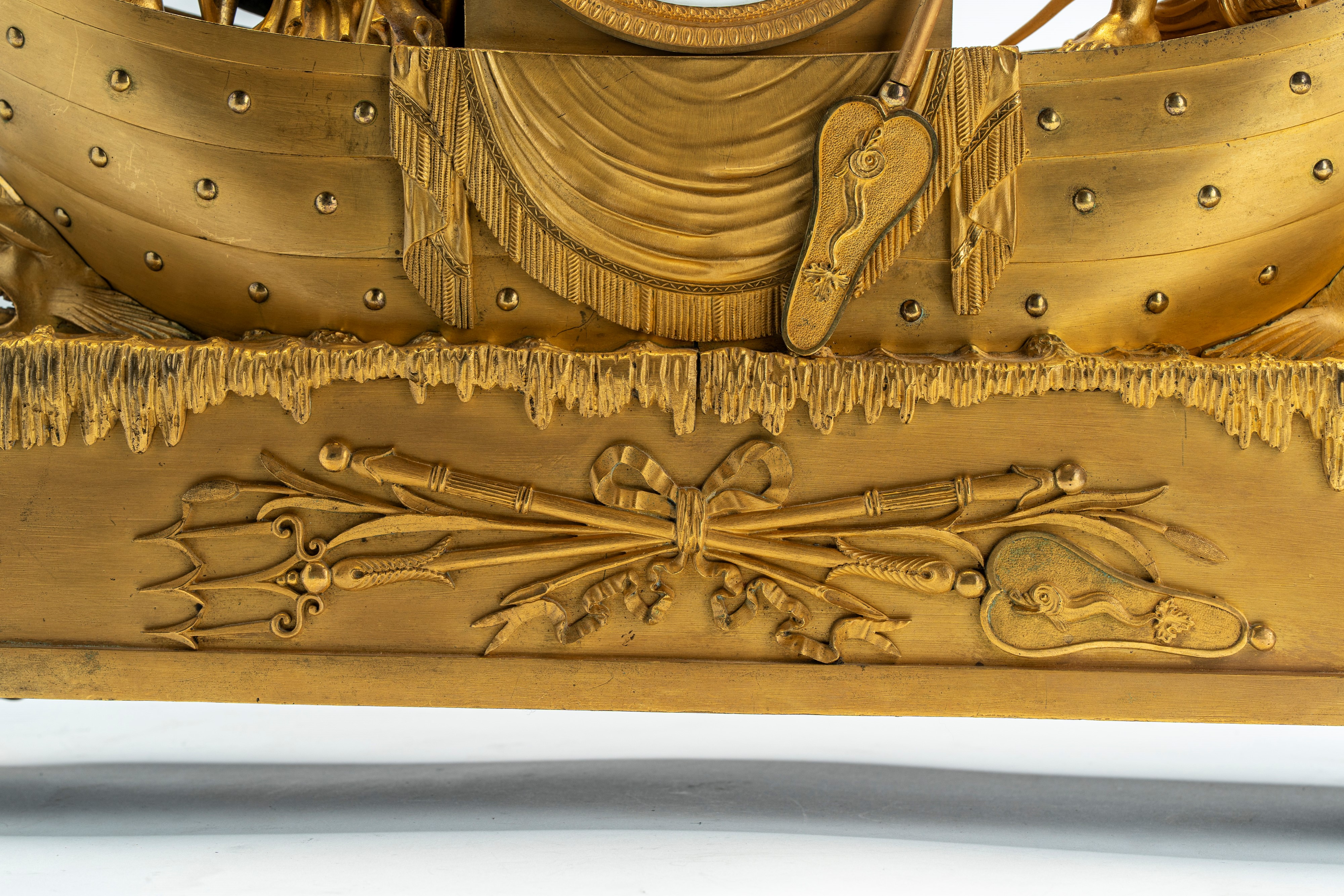
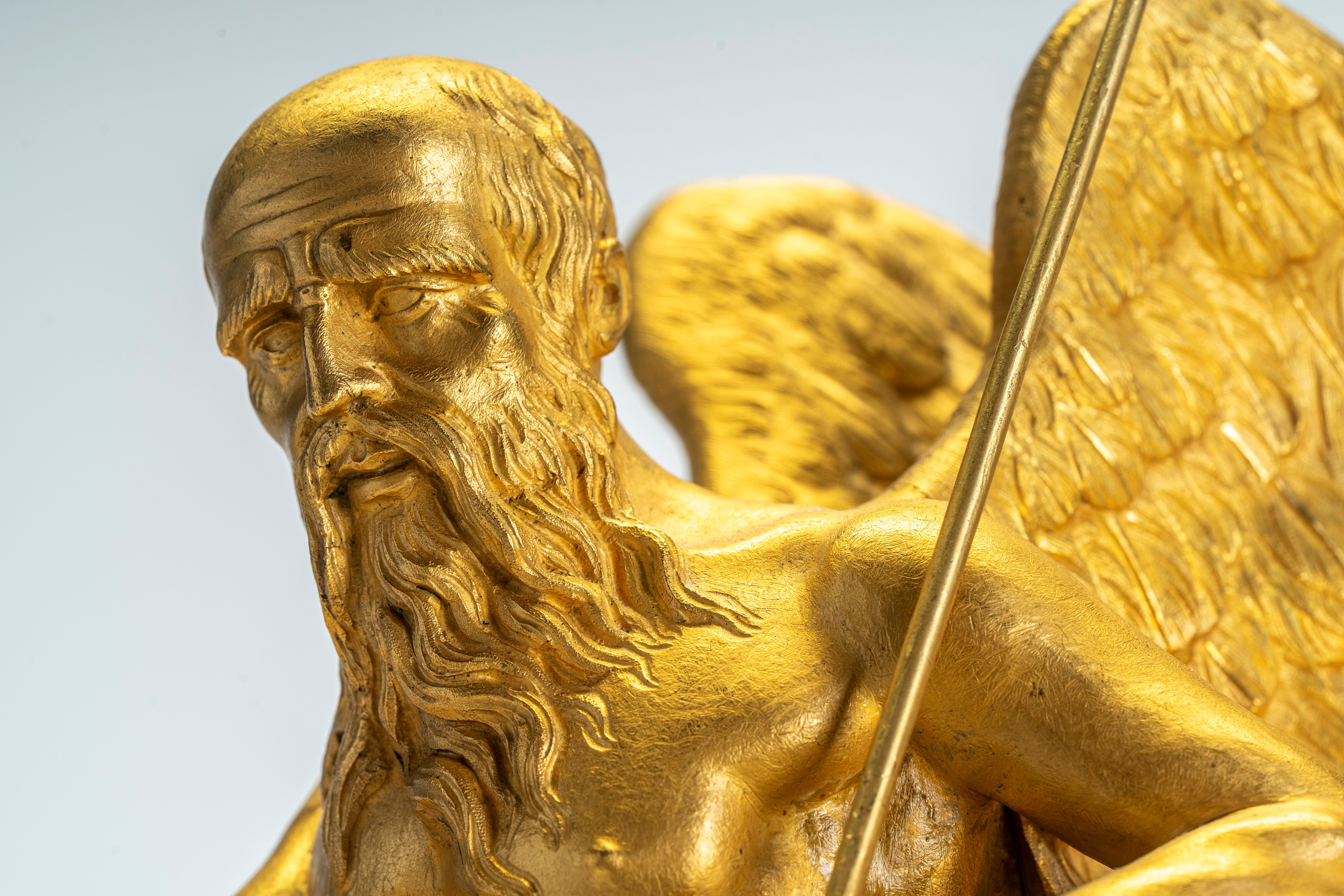
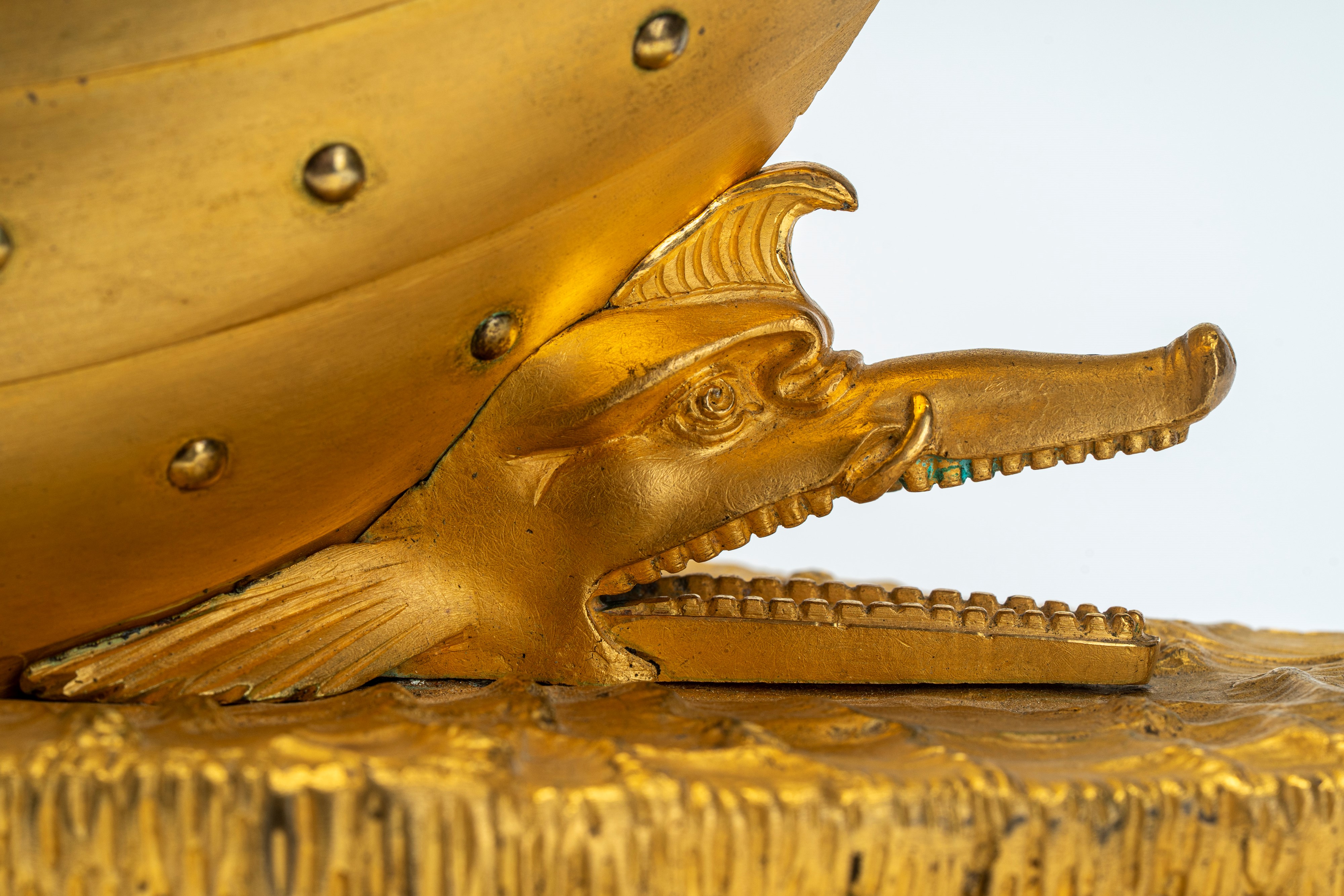
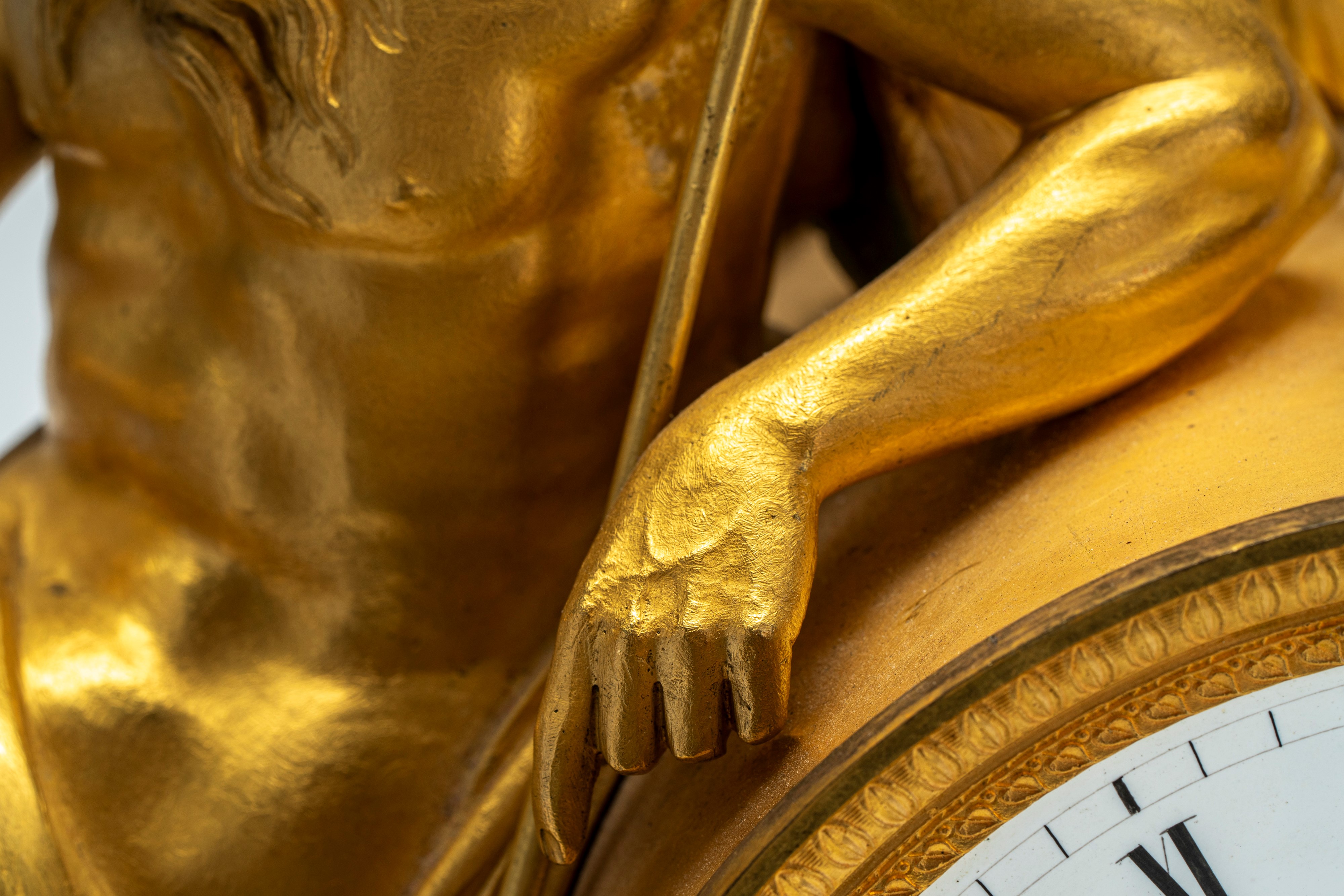
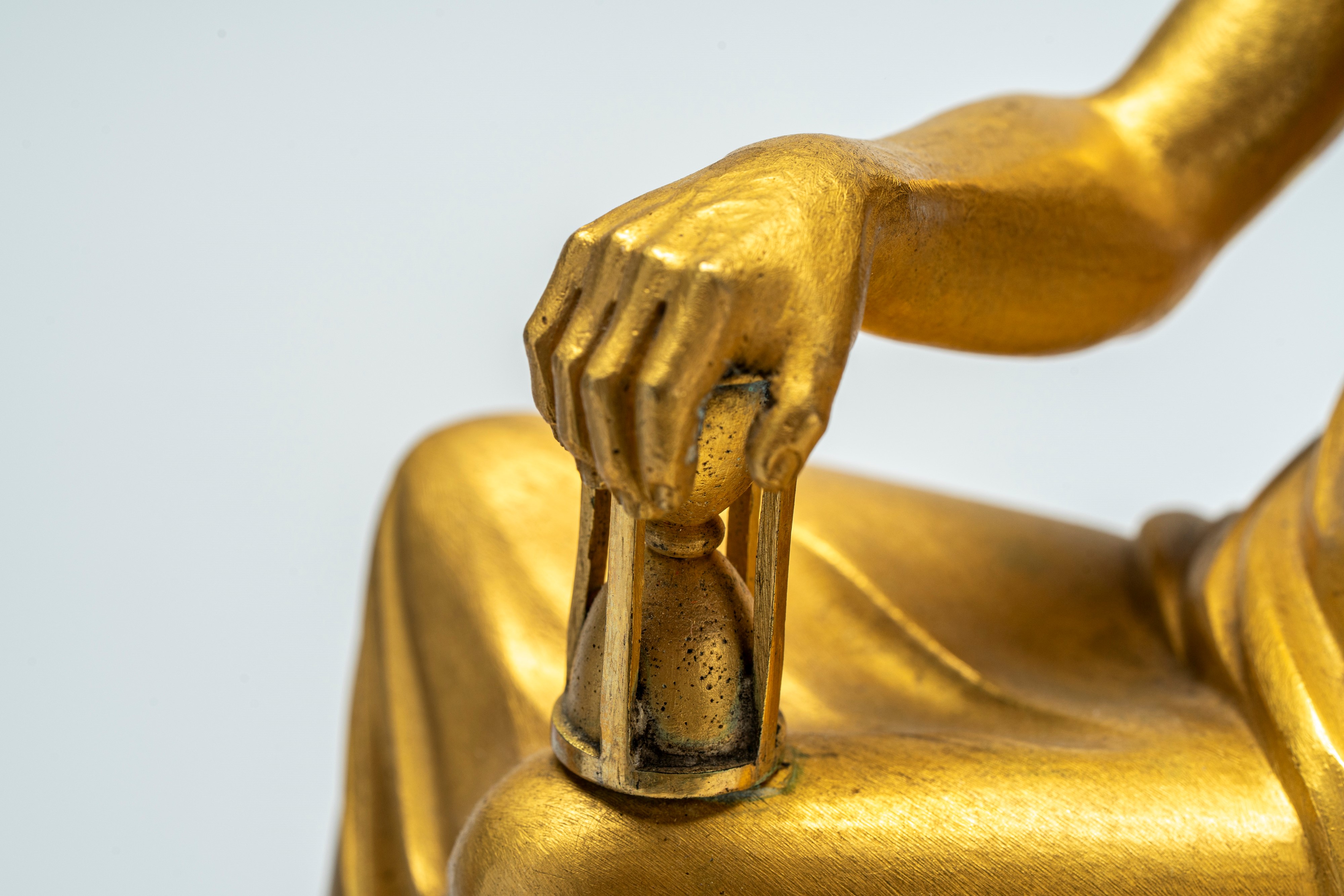
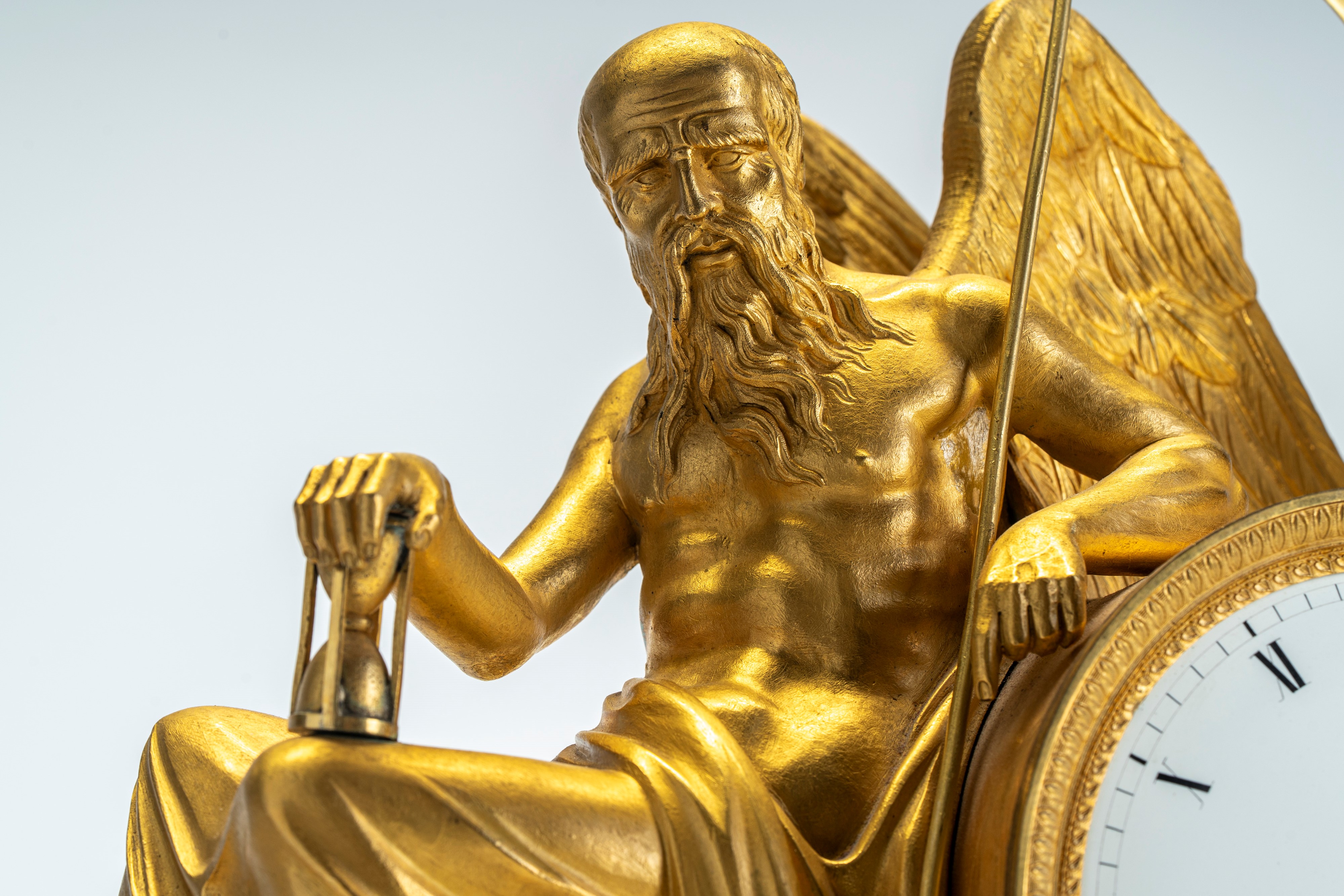
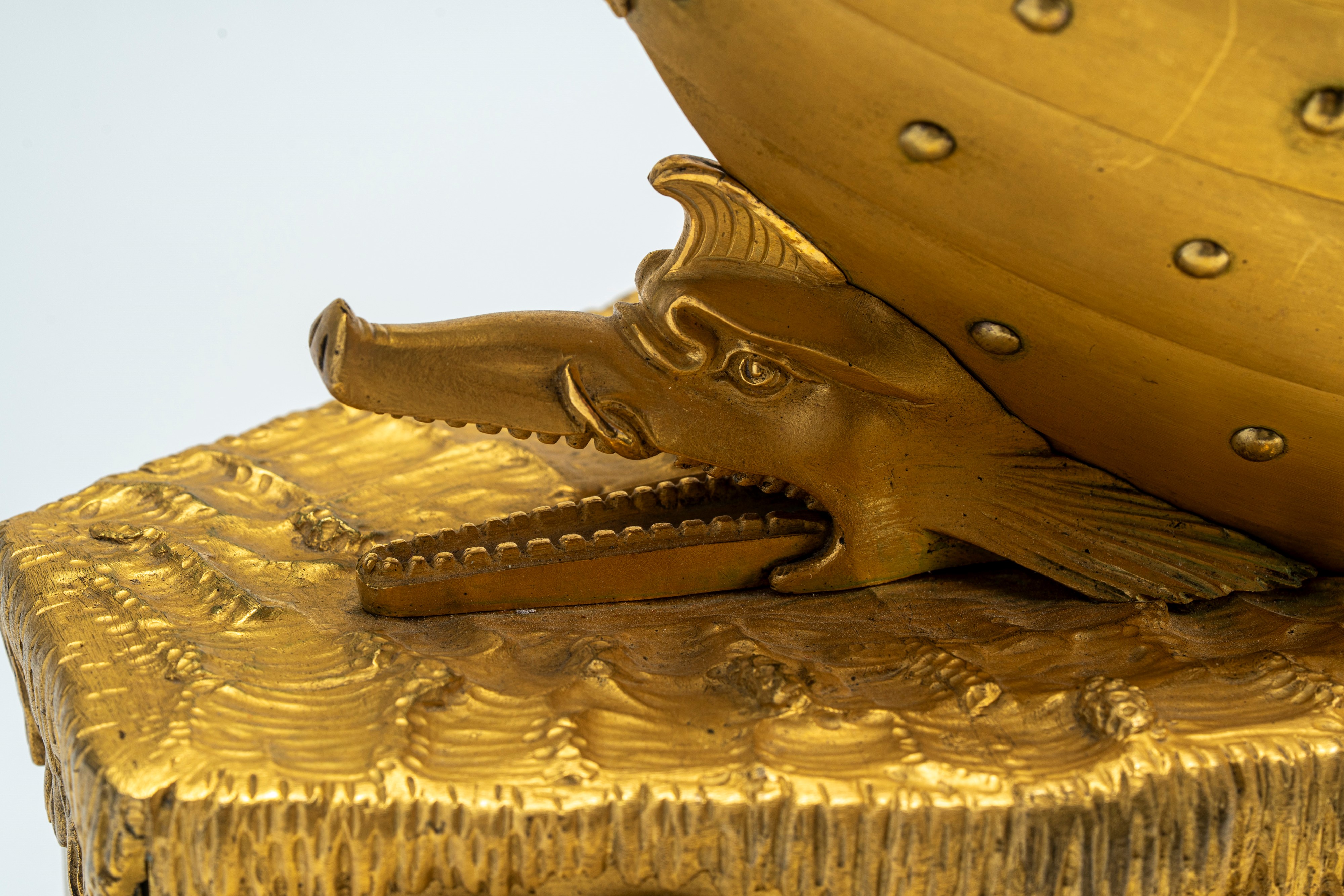
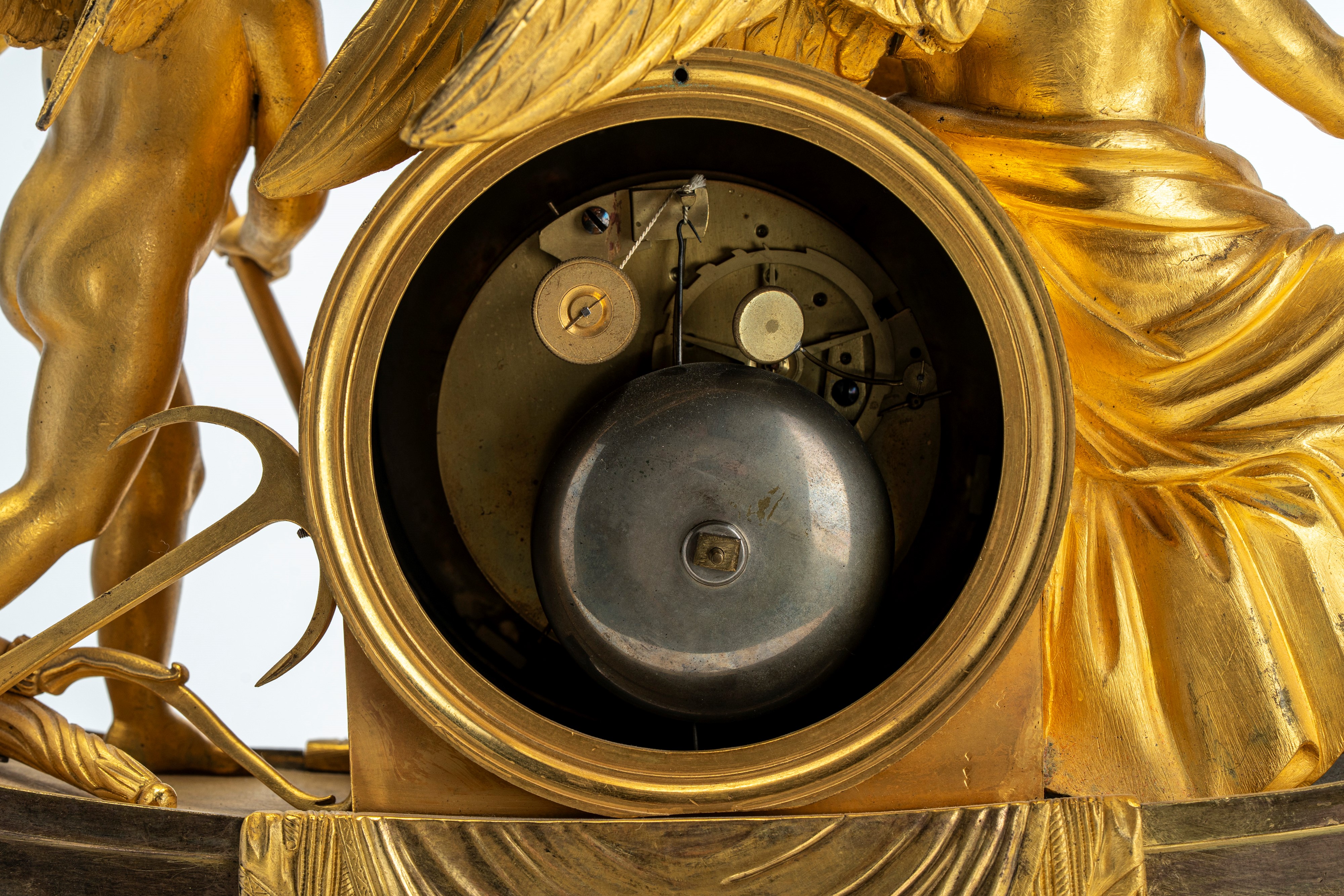
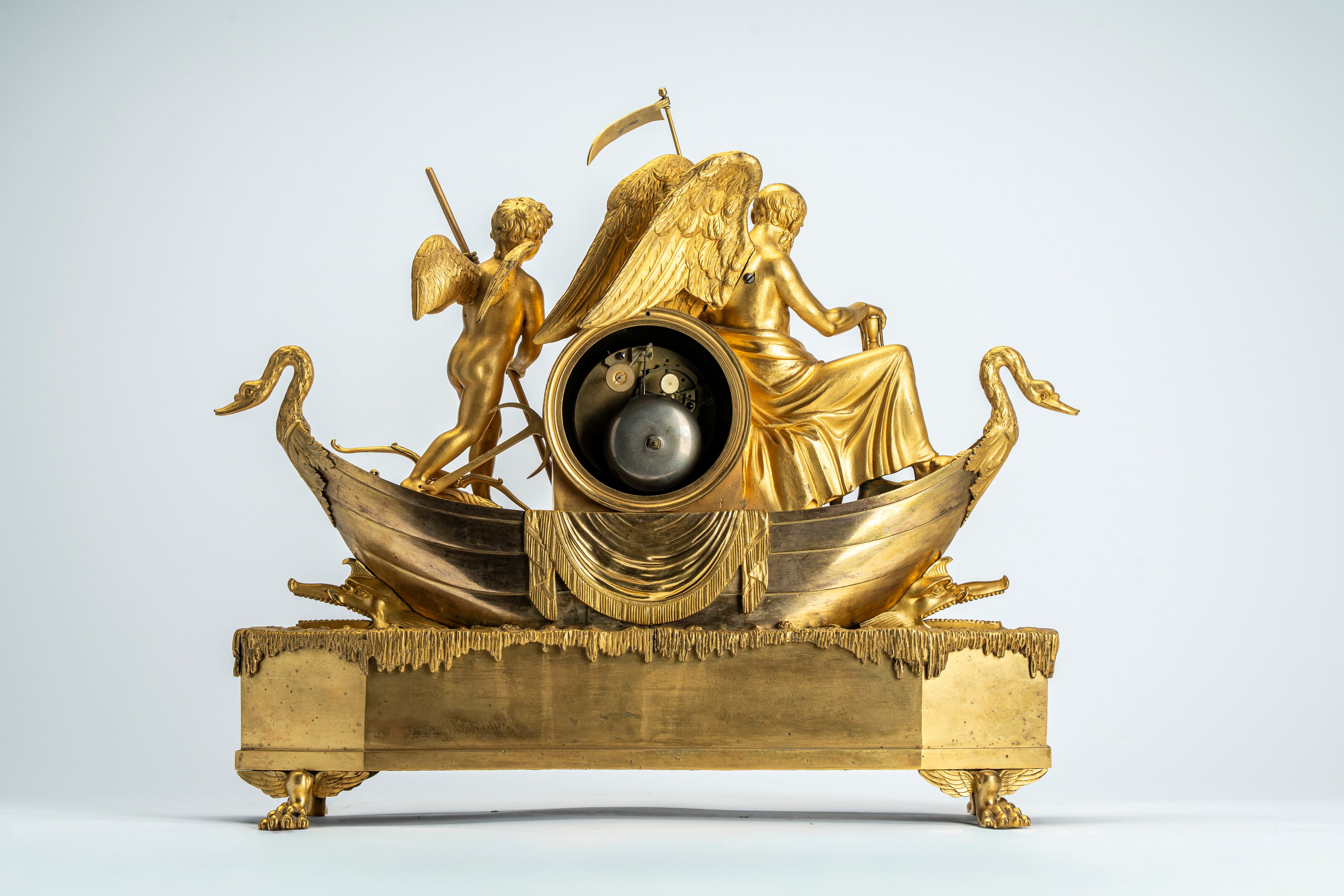
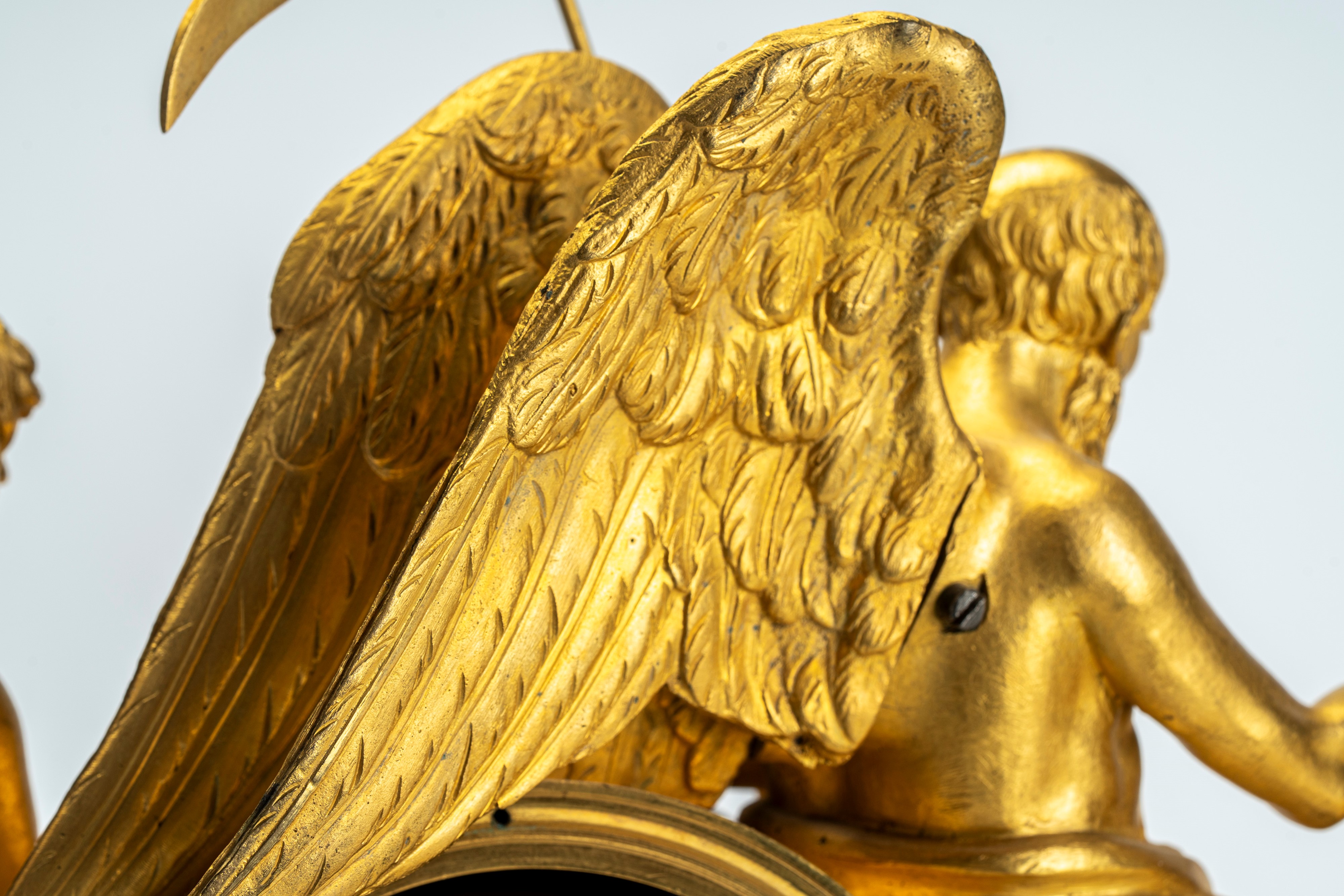
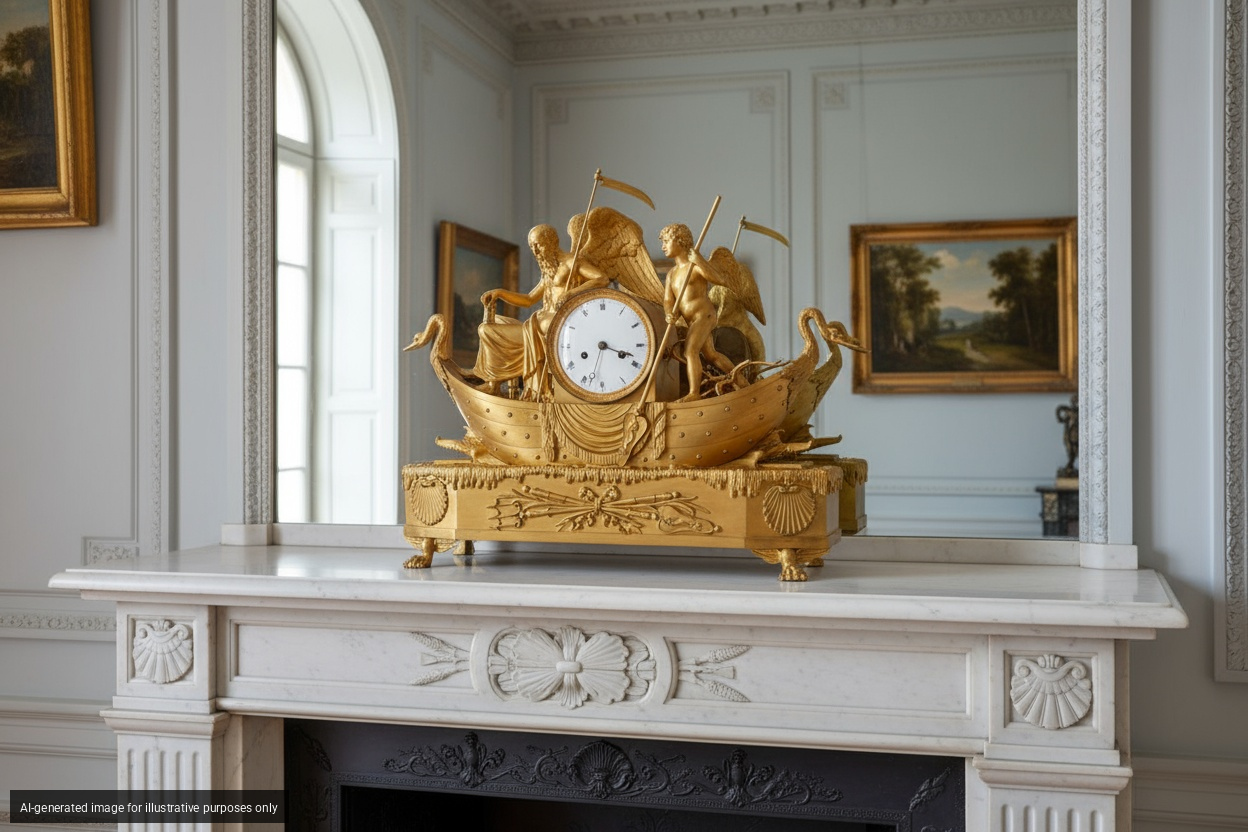
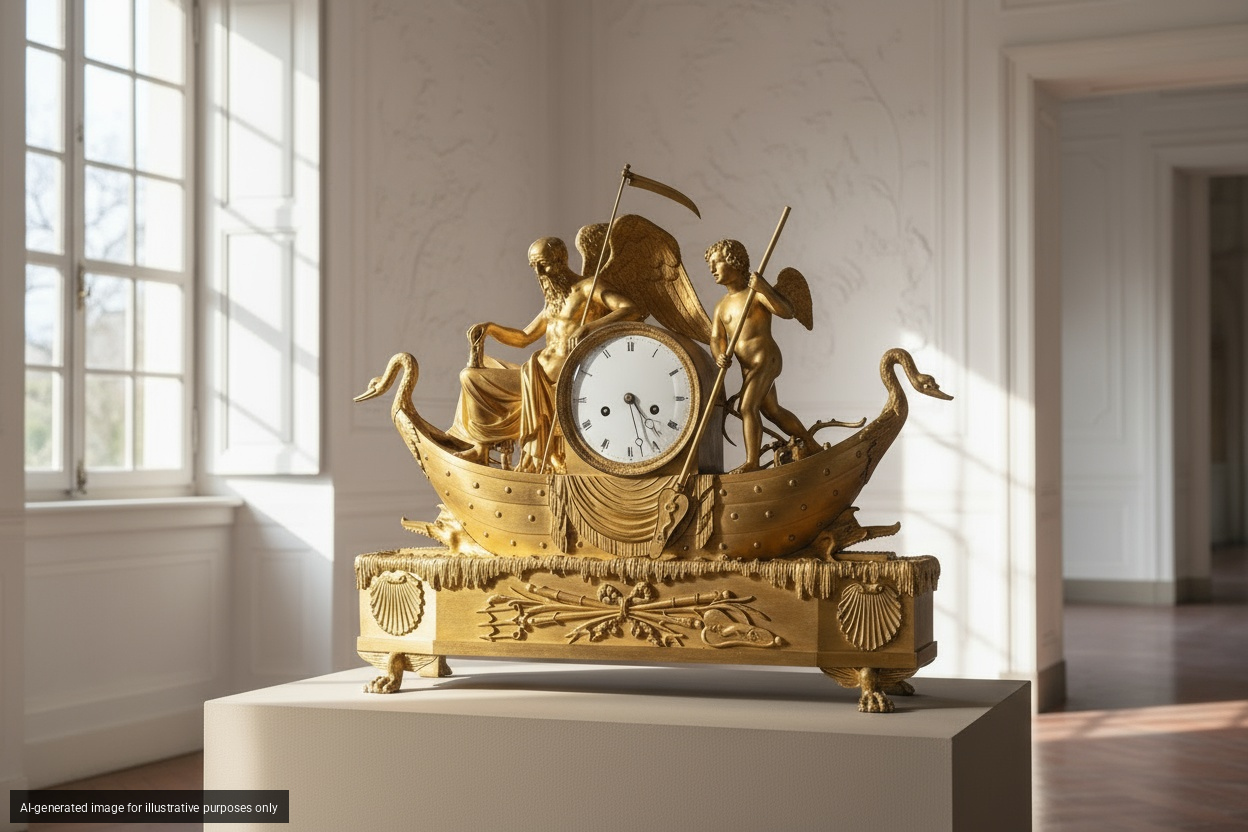
Depicting Saturn and Cupid aboard a vessel with swan heads at the ends and two dragon heads beneath the hull. Cupid steers the boat with an oar, while Saturn leans on a case containing a white enamel dial with Roman numerals. The vessel rests on an octagonal base simulating sea waves and adorned with shells on the short sides and a bas-relief, neoclassical-style fasces with a shovel and trident on the long side. The base rests on four feline paws.
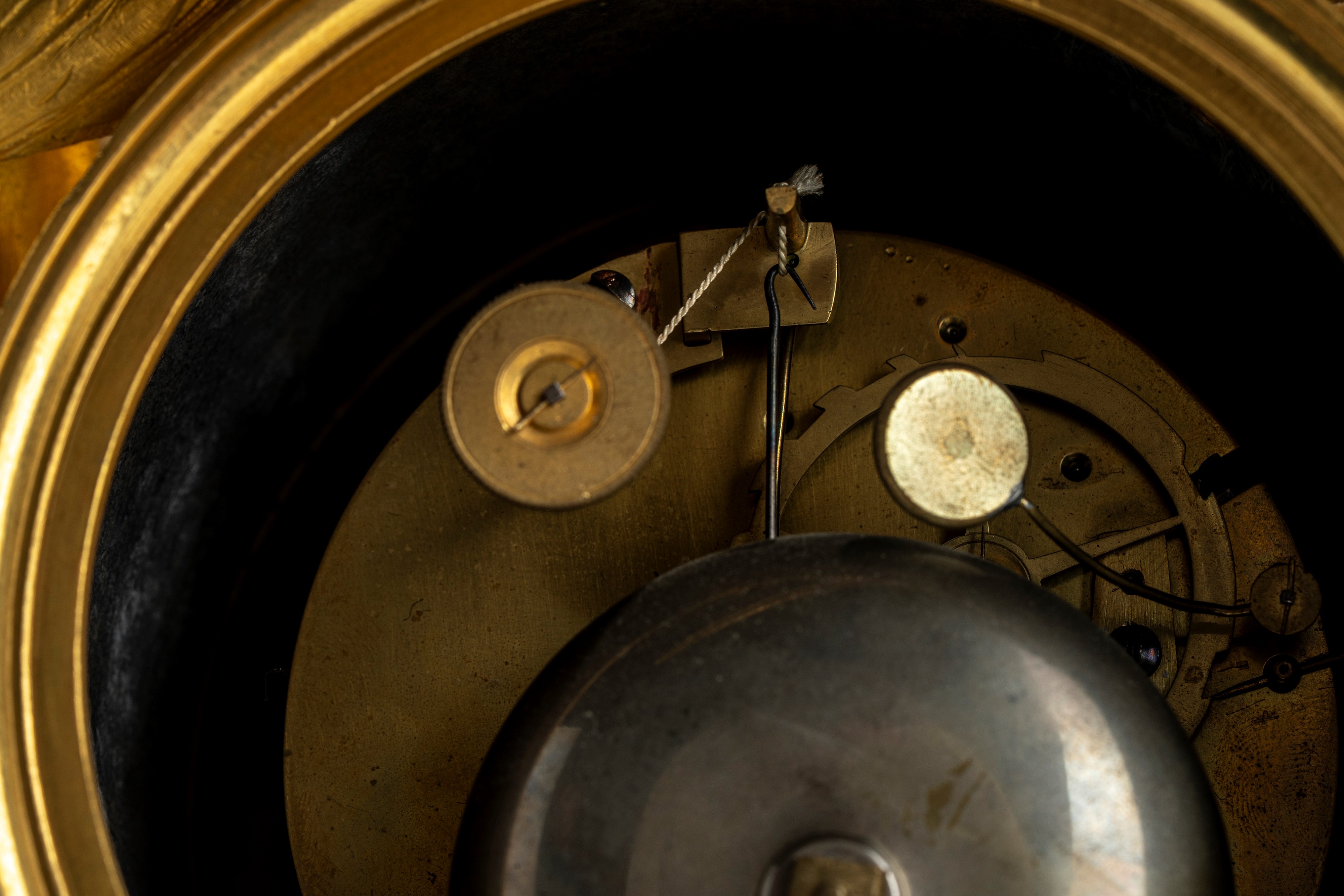
Probable substitutions.
This iconography has been linked to the composition "Le voyage de l'Amour et du Temps" by Viscount Joseph-Alexandre de Ségur (1756-1805), created during the French Revolution and which became famous throughout France. Specifically, the scene refers to the stanza "Love makes Time pass," a message of serenity symbolized by the presence of the anchor, a symbol of stability and hope.
Comparative bibliography:
Depicting Saturn and Cupid aboard a vessel with swan heads at the ends and two dragon heads beneath the hull. Cupid steers the boat with an oar, while Saturn leans on a case containing a white enamel dial with Roman numerals. The vessel rests on an octagonal base simulating sea waves and adorned with shells on the short sides and a bas-relief, neoclassical-style fasces with a shovel and trident on the long side. The base rests on four feline paws.
Probable substitutions.
This iconography has been linked to the composition "Le voyage de l'Amour et du Temps" by Viscount Joseph-Alexandre de Ségur (1756-1805), created during the French Revolution and which became famous throughout France. Specifically, the scene refers to the stanza "Love makes Time pass," a message of serenity symbolized by the presence of the anchor, a symbol of stability and hope.
Comparative bibliography:
Tardy, Dictionnaire des Horlogers Francais , Paris 1971, p. 243 (GALLE Paris Rue Vivienne);
E. Colle, S. Condemi (eds.), Real Time and the Time of Reality. The Clocks of Palazzo Pitti from the 17th to the 19th Century , exhibition catalogue (Florence, Galleria d'Arte Moderna di Palazzo Pitti, 13 September 2016 - 8 January 2017), Livorno 2016, pp. 236-237.
Provenance
Koller Auctionen, Zurich, December 2010
Contact
Condition report
To request a Condition Report, please contact arredi@finarte.it
The department will provide you with a general report of the condition of the property described above. Please note that what Finarte declares with respect to the state of conservation of the objects corresponds only to a qualified opinion and that we are not professional conservators or restorers.
We urge you to consult with a restorer or conservator of your choice who will be better able to provide a detailed, professional report. We always suggest prospective buyers to inspect each lot to satisfy themselves as to condition during the exhibition days as indicated in the catalog.
Suggested lots
Caricamento lotti suggeriti...