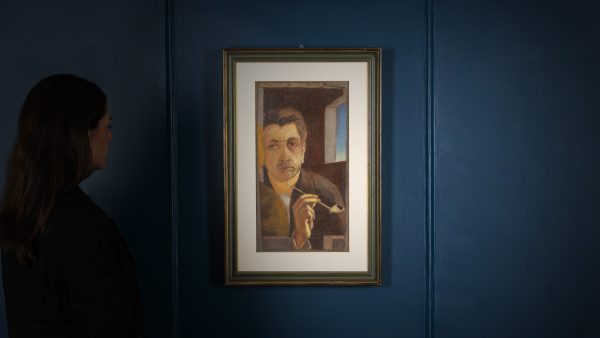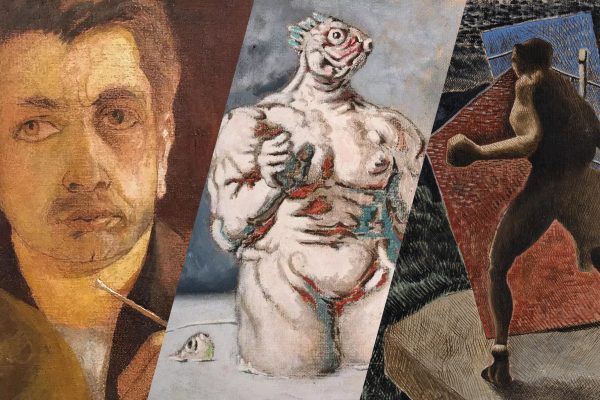
The history of the Self-Portrait with a Clay Pipe (1914) is closely intertwined with the most prolific period of Giorgio de Chirico’s career and, subsequently, with the intimate and private affairs of his family.
The creation in Paris (1914)
The work was painted in 1914 in Paris, a crucial period during which de Chirico forged strong ties with the French avant-garde — in particular with the poet Guillaume Apollinaire and the gallery owner Paul Guillaume. It was the year in which the artist defined and consolidated his metaphysical period and in which some of his absolute masterpieces were created, such as Il canto d’amore. The use of enigmatic or everyday objects placed in suspended contexts (such as the plaster pipe, in fact) became a distinctive feature of his exploration of mystery and melancholy.
The bond with the family and the role of ‘Talisman’
Unlike many other Parisian paintings sold to collectors of the time, this painting remained a family treasure for decades. The work belonged to the private collection of Baroness Gemma Cervetto de Chirico, Giorgio de Chirico’s mother, and subsequently passed to Angelica Savinio, daughter of the writer and painter Alberto Savinio (Giorgio de Chirico’s brother) and thus a direct granddaughter of the Pictor Optimus.
For Angelica Savinio, this painting was not merely a work of inestimable historical and artistic value, but a truly cherished and personal object, a sort of talisman.
Up for auction for the first time (2026)
Contemporary Art Week, to be discovered and appreciated by critics and collectors from all over the world.
To request further information about the artwork: