Estimate
€ 600 - 900
Sold
€ 635
The price includes buyer's premium
Do you have a similar item you would like to sell?
Information
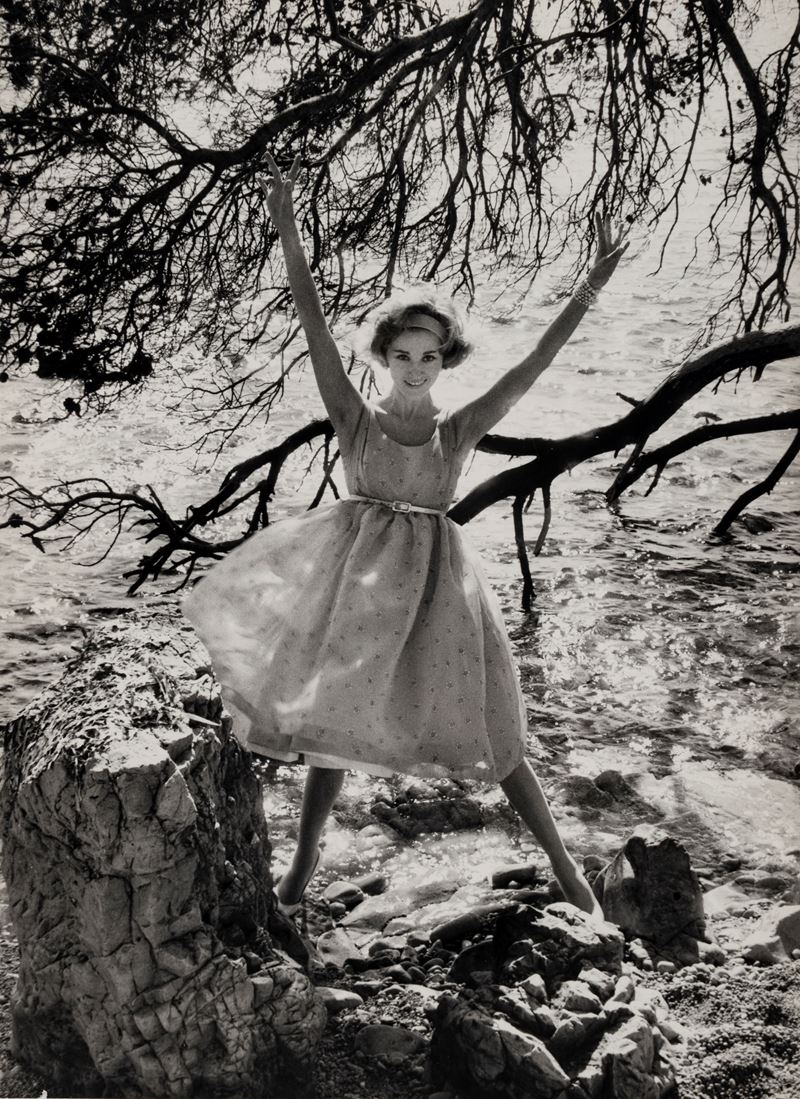
Vintage gelatin silver print
cm 30,3 x 22,4 | 11.9 x 8.8 in.
Photographer's credit stamp on the verso
Frank Horvat (Abbazia, Croatian 1928 – Paris, France 2020) from a Jewish family, escaped to Switzerland where he sold his stamp collection and bought a camera with which, having moved to Milan in 1947, he began a career that would change when in Paris he met Cartier-Bresson and Capa who initiated him into reportage. He implements this on a trip made without a return ticket to India and Pakistan: here he makes images that allow him to collaborate with Life. Another fundamental meeting is with William Klein, who introduces him to the world of fashion and to magazines such as Les Jardin des Modes, Elle, Vogue, Harper's Bazaar. In the 1990s he is one of the first to experiment with fantastic stories using digital photomontages.
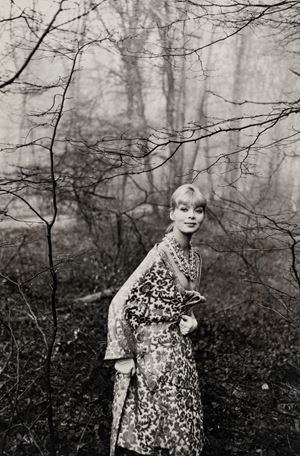
Frank Horvat used to say that he willingly took on work in the fashion industry because, being shy, he found it easier to interact with women. Whether true or not, the fact remains that he brought a different, freer, and more direct approach to that world – the very same approach he employed in his travel reports. Like William Klein, he makes his models move through city streets, chasing them outdoors in a feigned yet carefully staged normality, as these examples clearly demonstrate. We are faced – or so it seems – with two girls striking poses with the simplicity characteristic of young women; they smile at the camera even when in unlikely settings such as a barn and seem like friends on a day out. All this lends Horvat’s images a freshness that is new to the world of fashion.
cm 30,3 x 22,4 | 11.9 x 8.8 in.
Photographer's credit stamp on the verso
Frank Horvat (Abbazia, Croatian 1928 – Paris, France 2020) from a Jewish family, escaped to Switzerland where he sold his stamp collection and bought a camera with which, having moved to Milan in 1947, he began a career that would change when in Paris he met Cartier-Bresson and Capa who initiated him into reportage. He implements this on a trip made without a return ticket to India and Pakistan: here he makes images that allow him to collaborate with Life. Another fundamental meeting is with William Klein, who introduces him to the world of fashion and to magazines such as Les Jardin des Modes, Elle, Vogue, Harper's Bazaar. In the 1990s he is one of the first to experiment with fantastic stories using digital photomontages.
Frank Horvat used to say that he willingly took on work in the fashion industry because, being shy, he found it easier to interact with women. Whether true or not, the fact remains that he brought a different, freer, and more direct approach to that world – the very same approach he employed in his travel reports. Like William Klein, he makes his models move through city streets, chasing them outdoors in a feigned yet carefully staged normality, as these examples clearly demonstrate. We are faced – or so it seems – with two girls striking poses with the simplicity characteristic of young women; they smile at the camera even when in unlikely settings such as a barn and seem like friends on a day out. All this lends Horvat’s images a freshness that is new to the world of fashion.
Contact
Suggested lots
Caricamento lotti suggeriti...