
4
Illustrati
William Hamilton
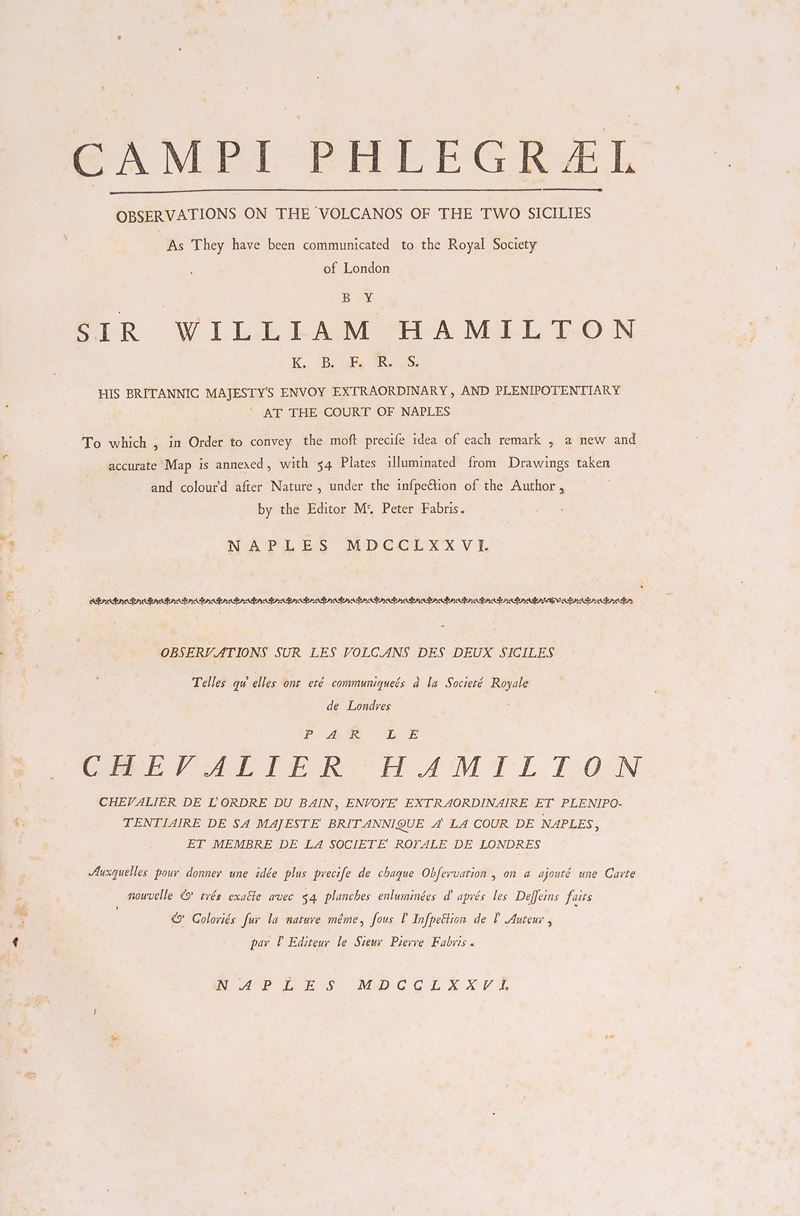
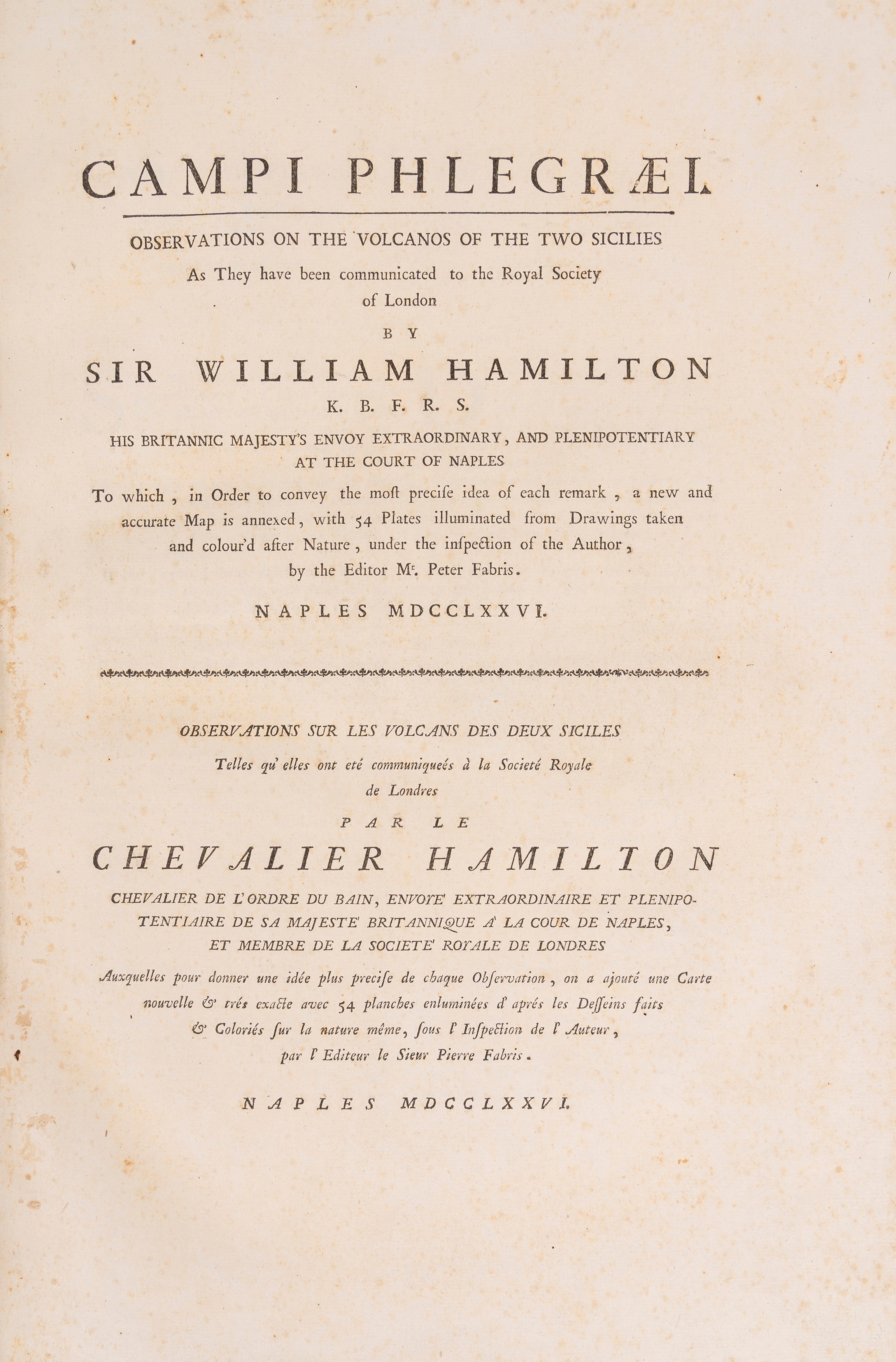
Phlegraei fields. Observations on the Volcanoes of the Two Sicilies as they have been communicated to the Royal Society of London, 1776
Estimate
€ 40.000 - 70.000
Sold
€ 44.450
The price includes buyer's premium
Do you have a similar item you would like to sell?
Information
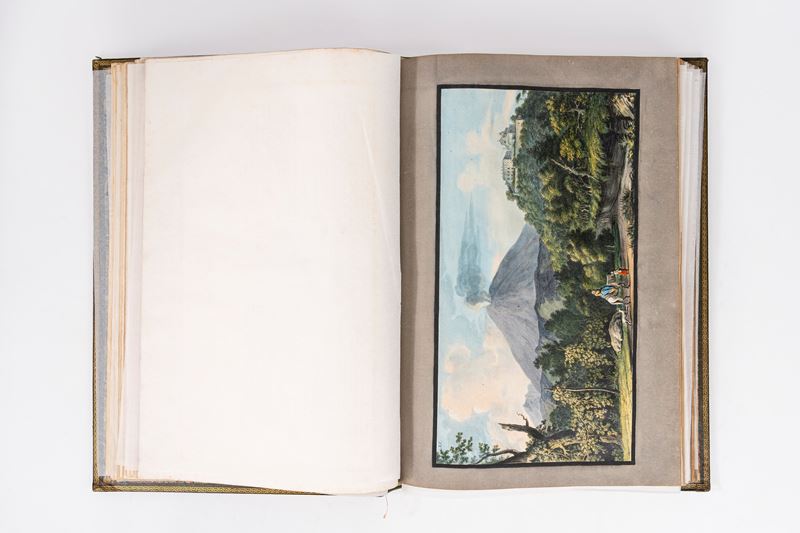
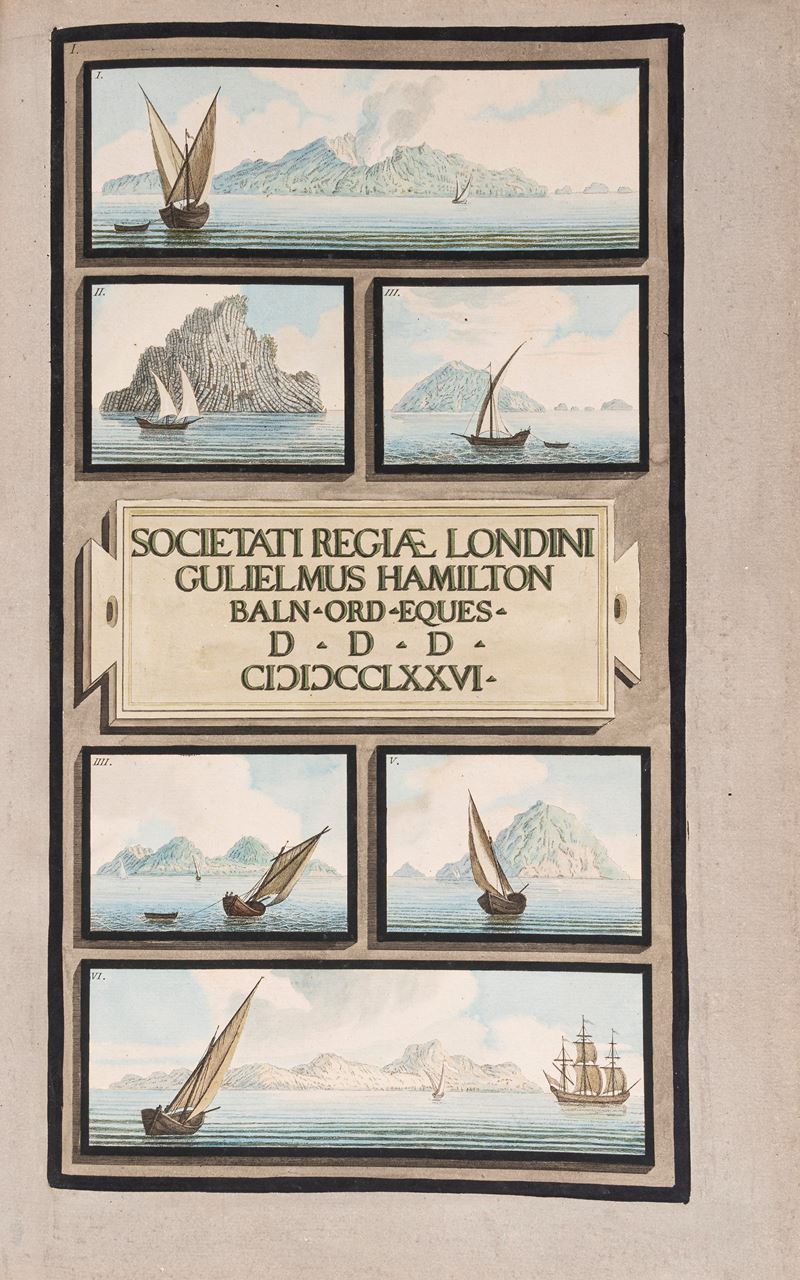
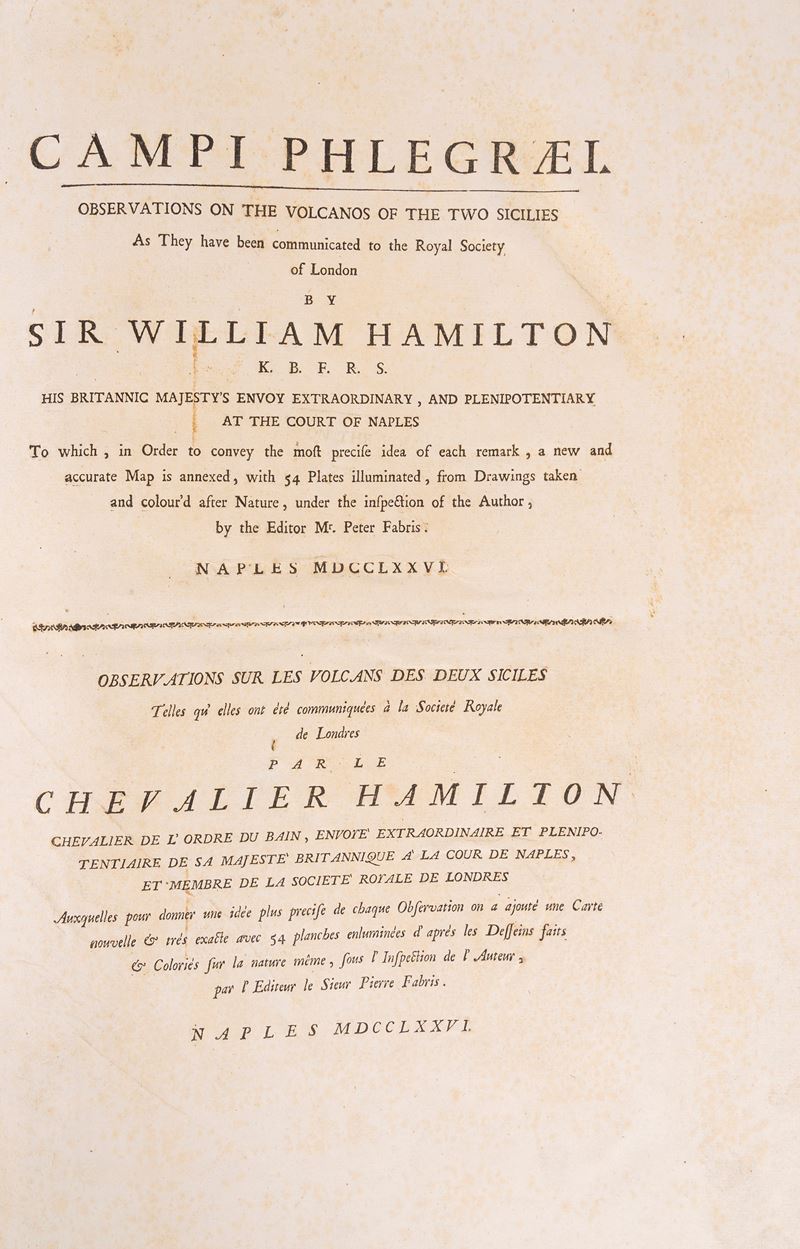
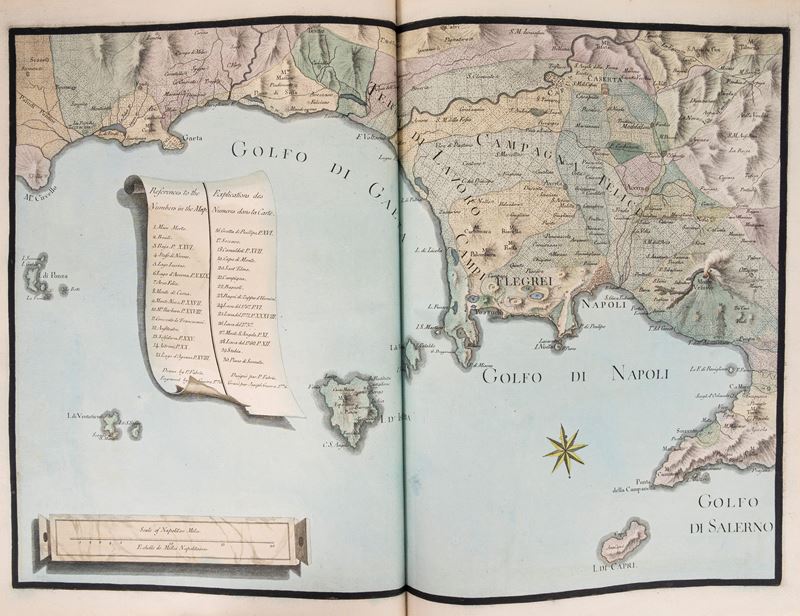
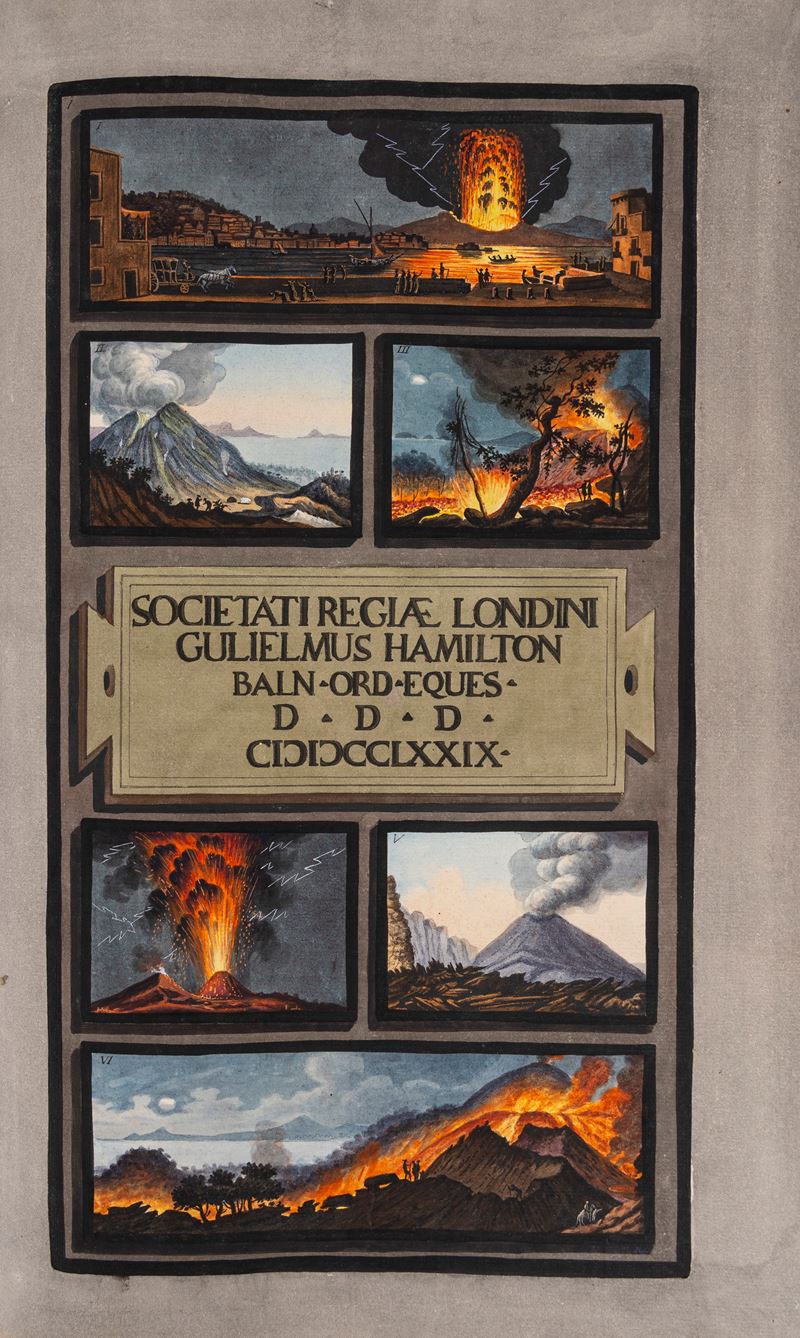
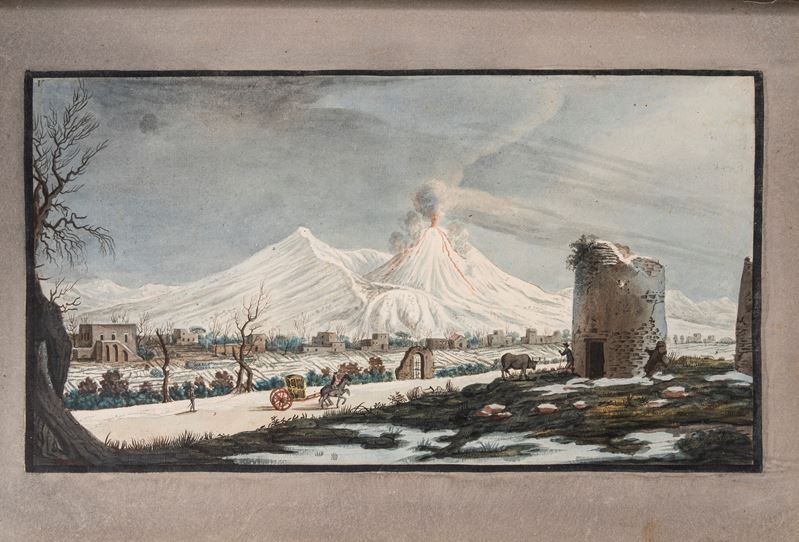
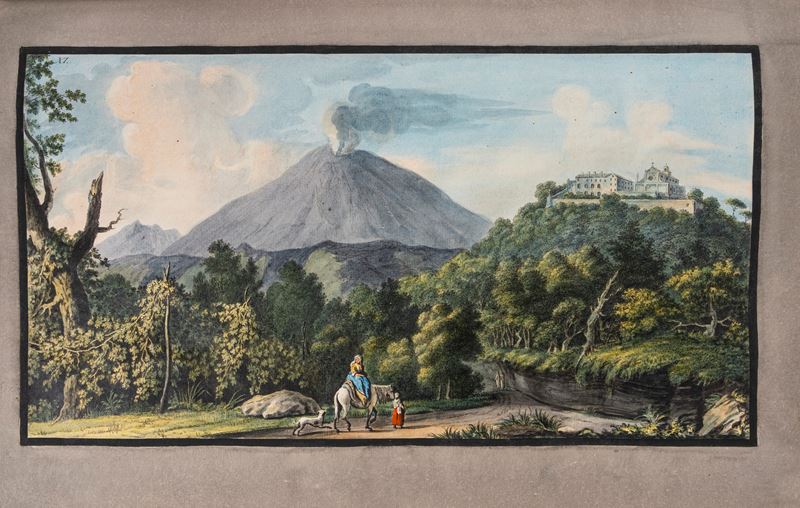
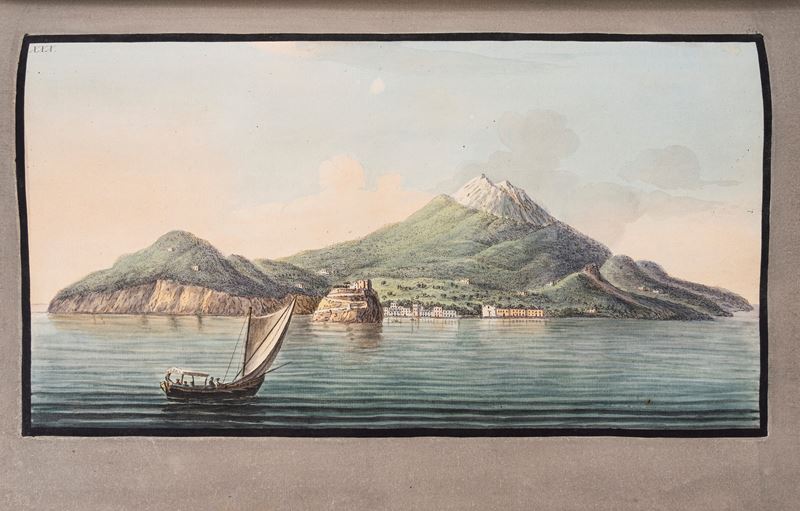
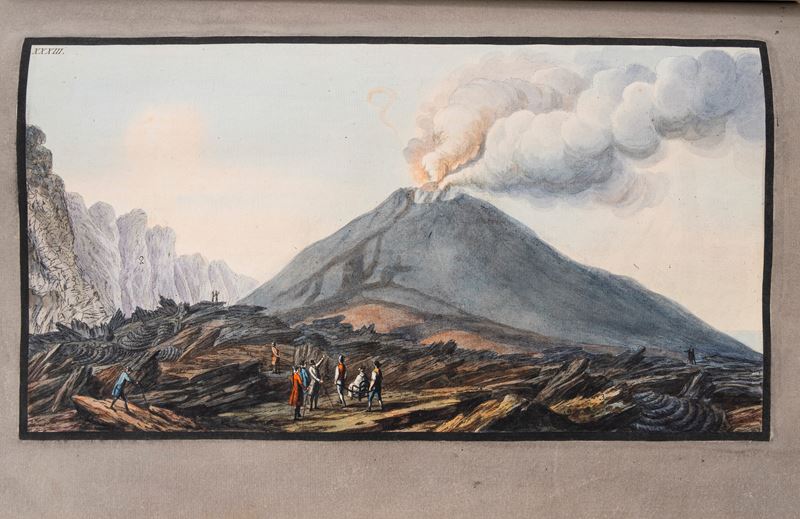
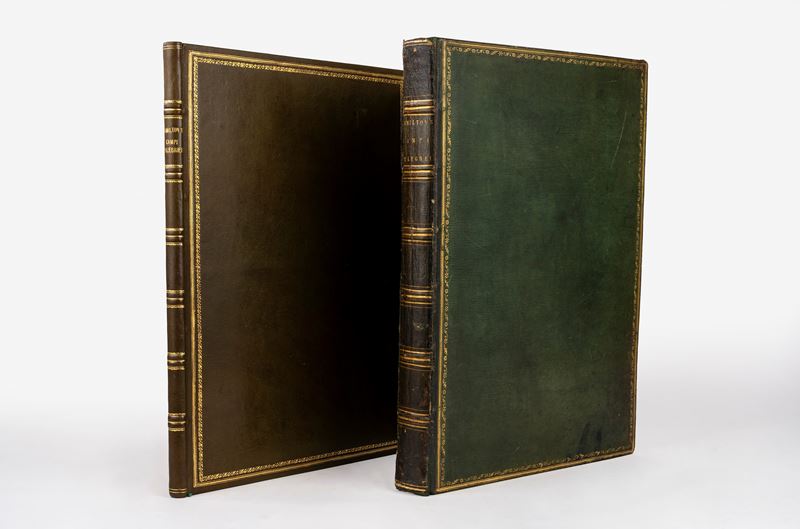
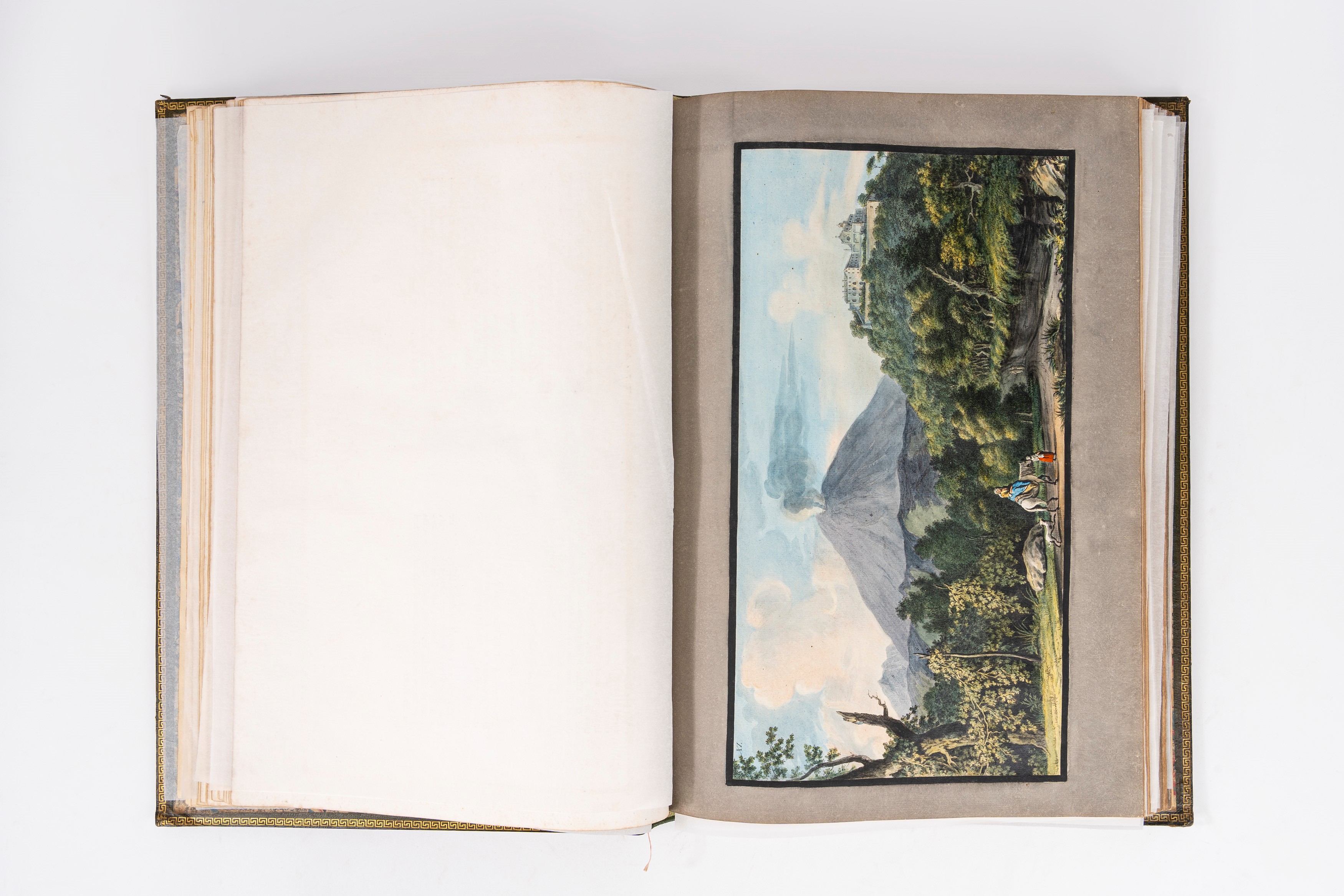
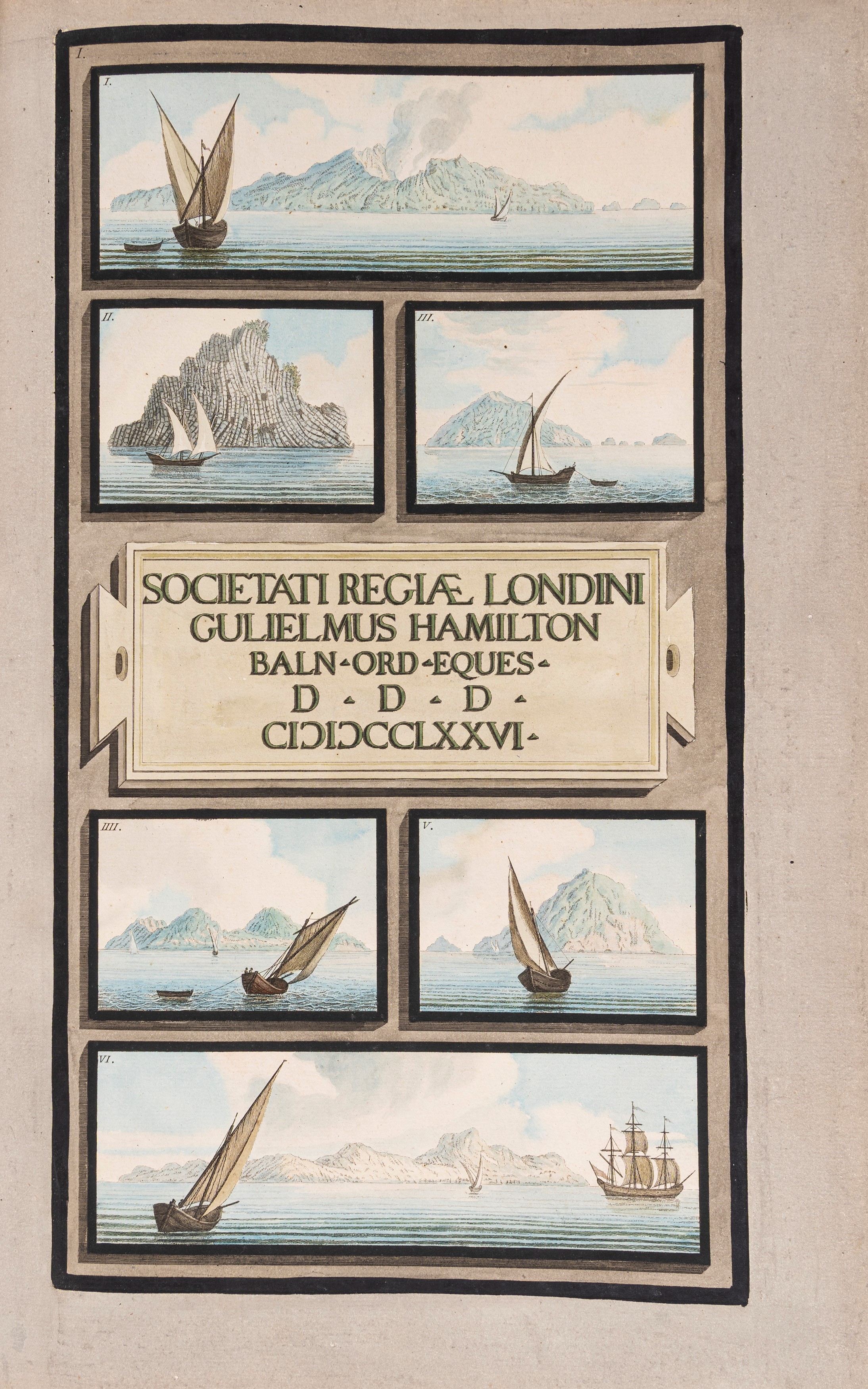
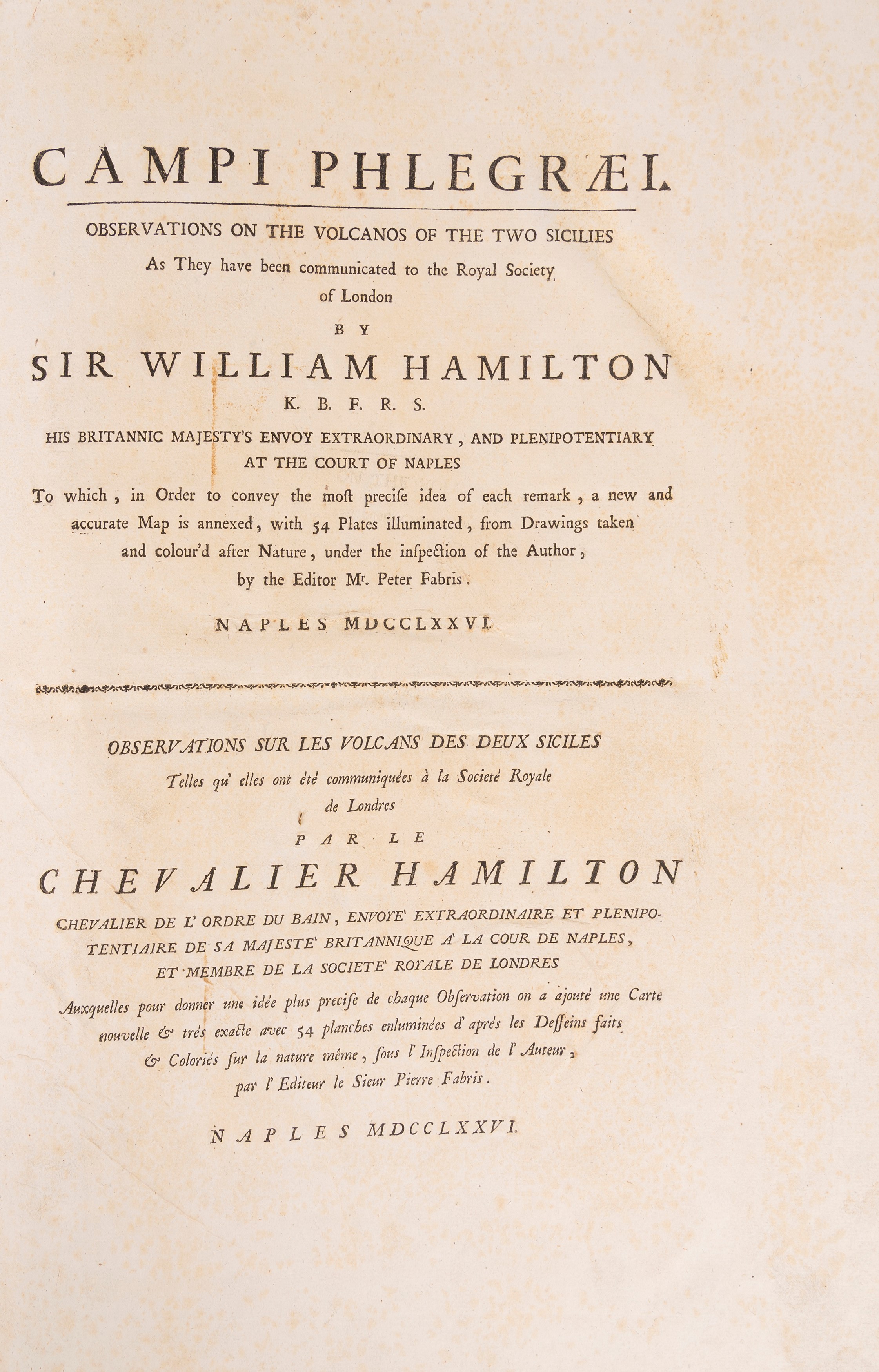
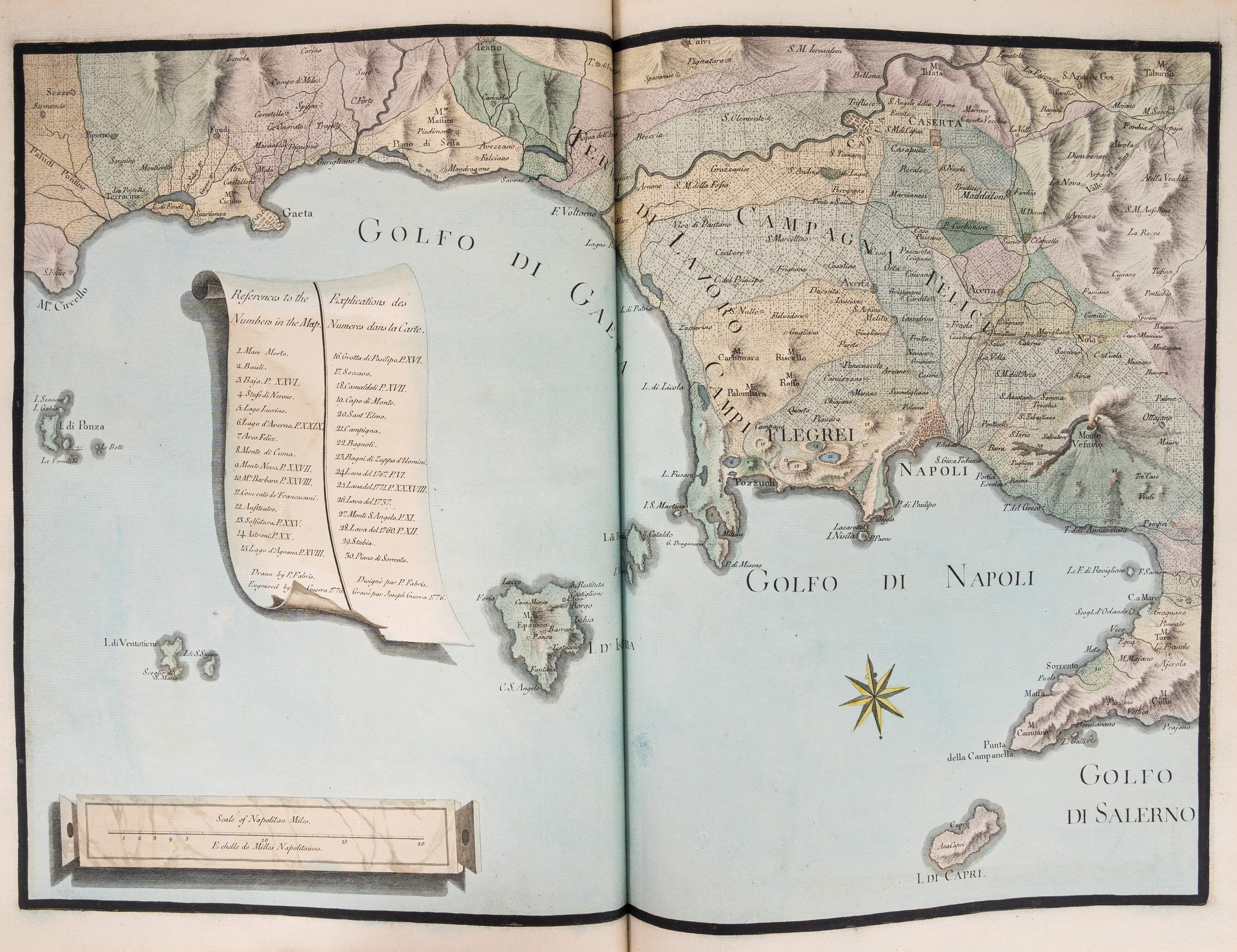
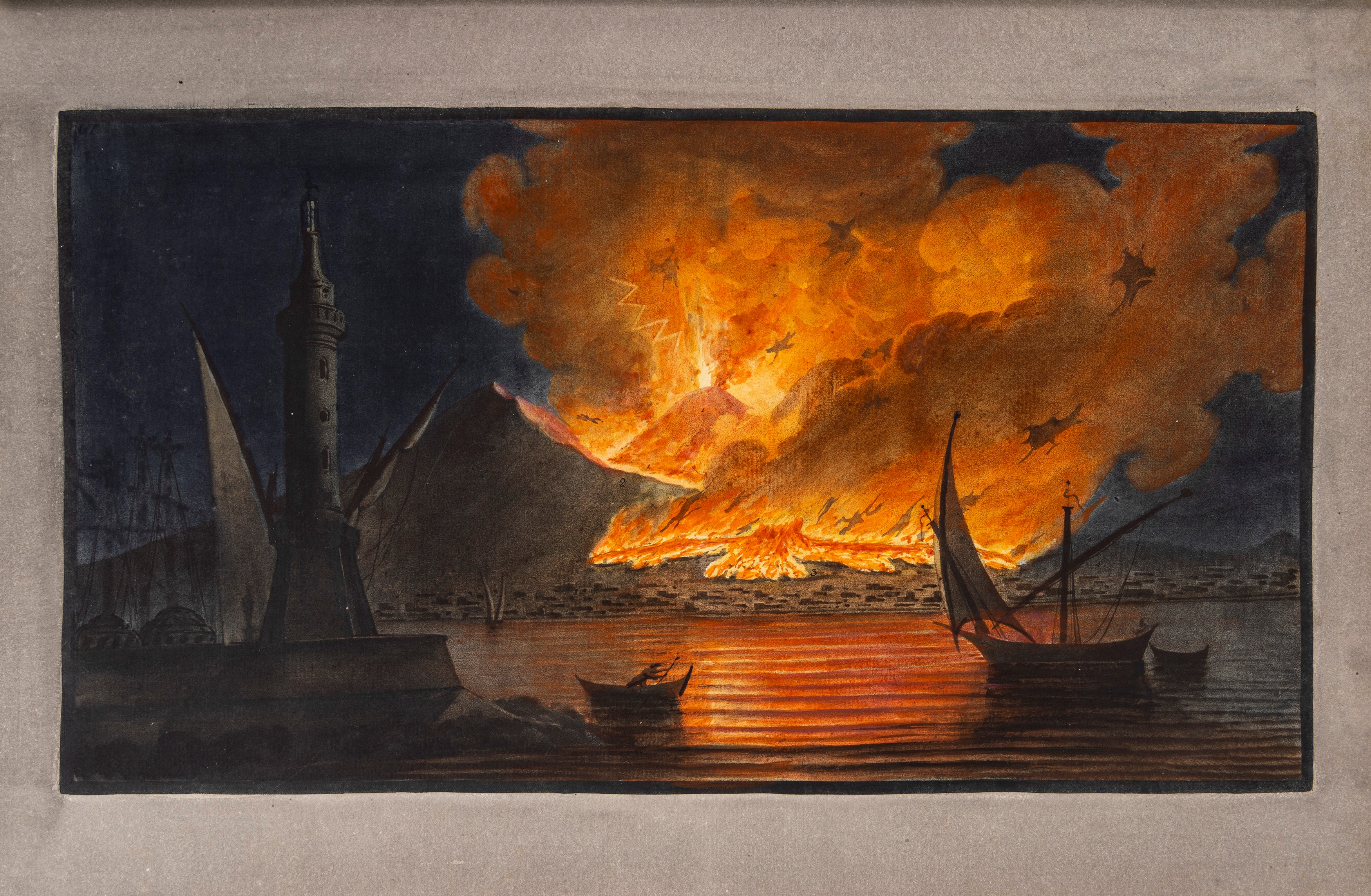
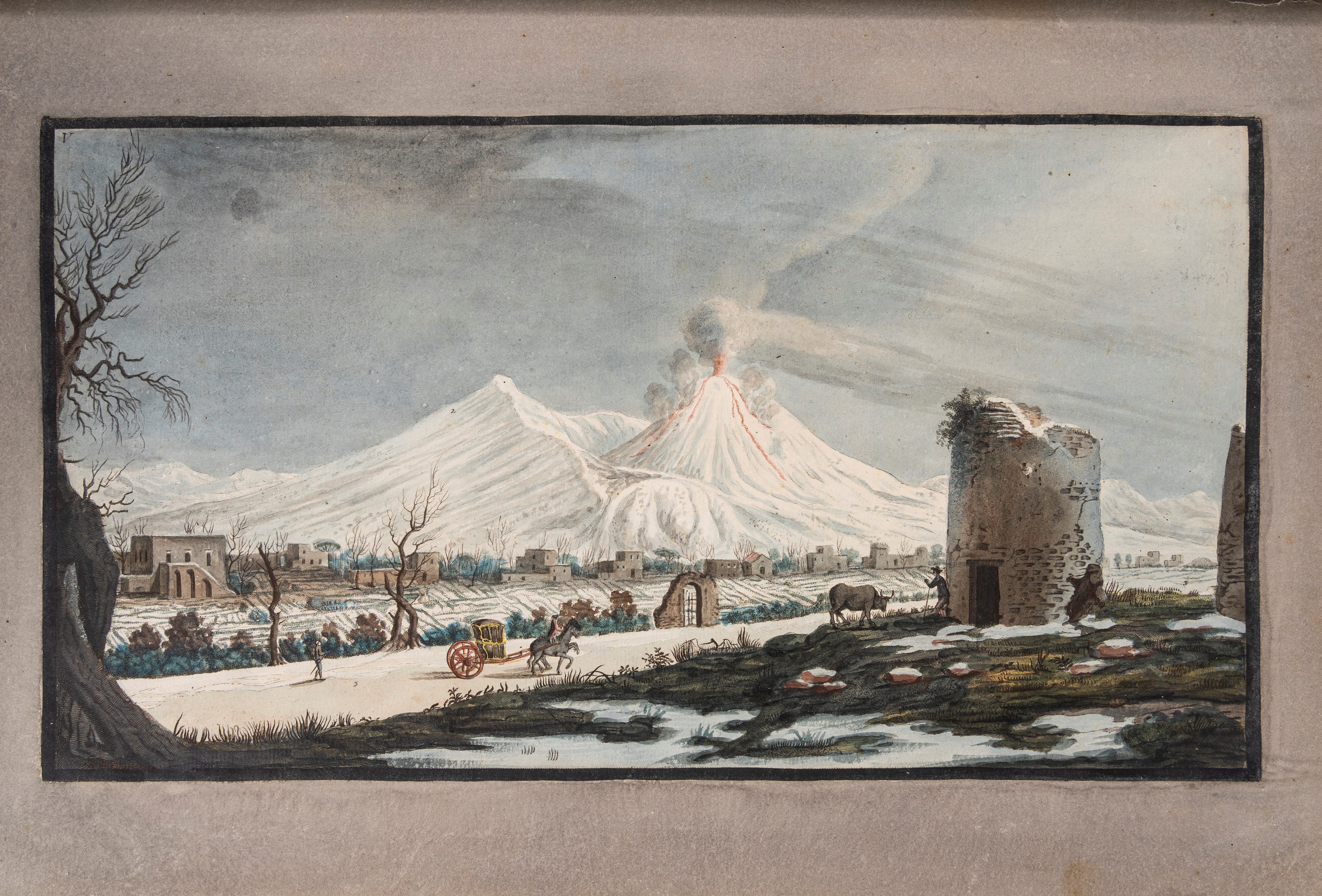
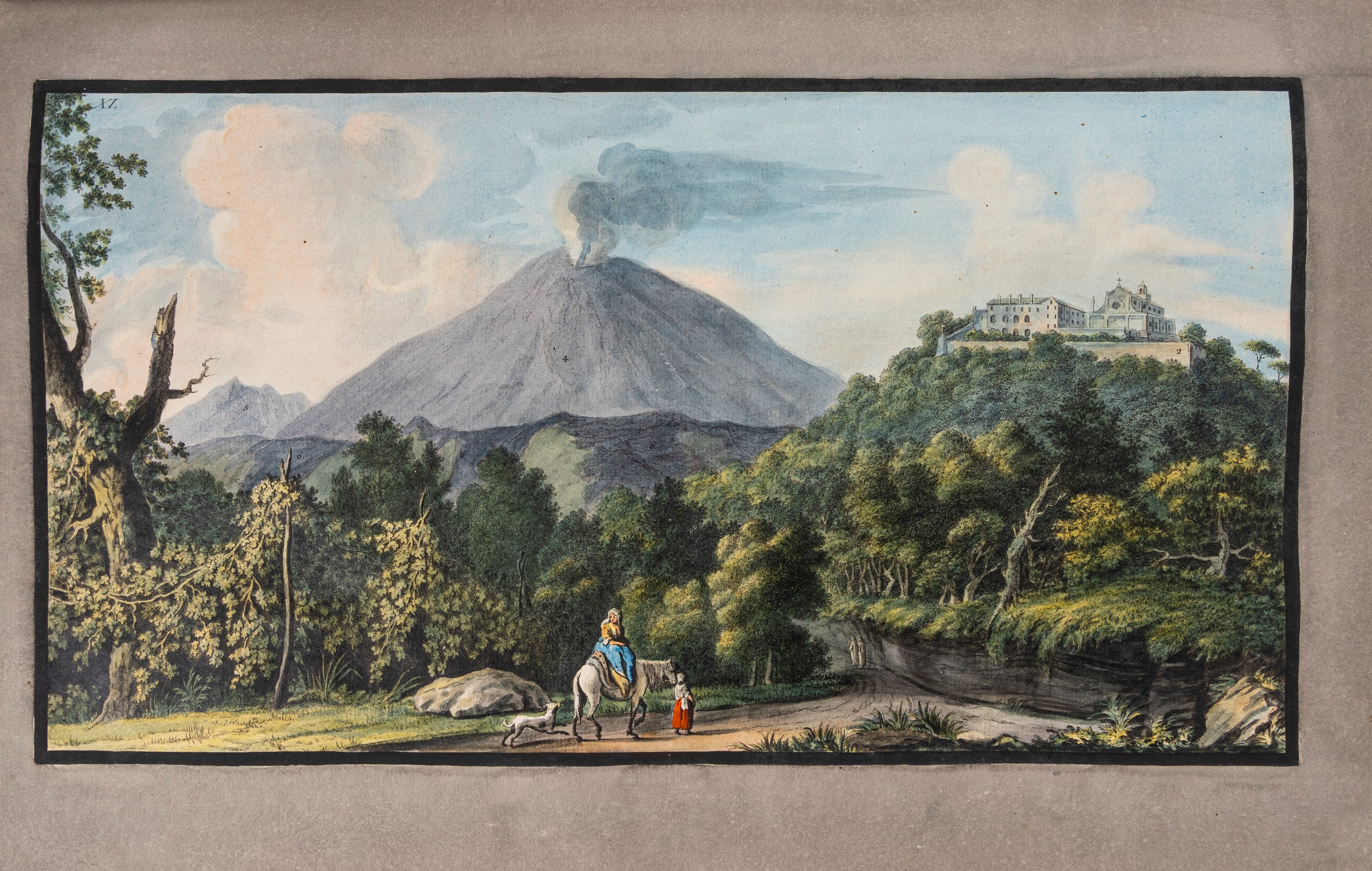
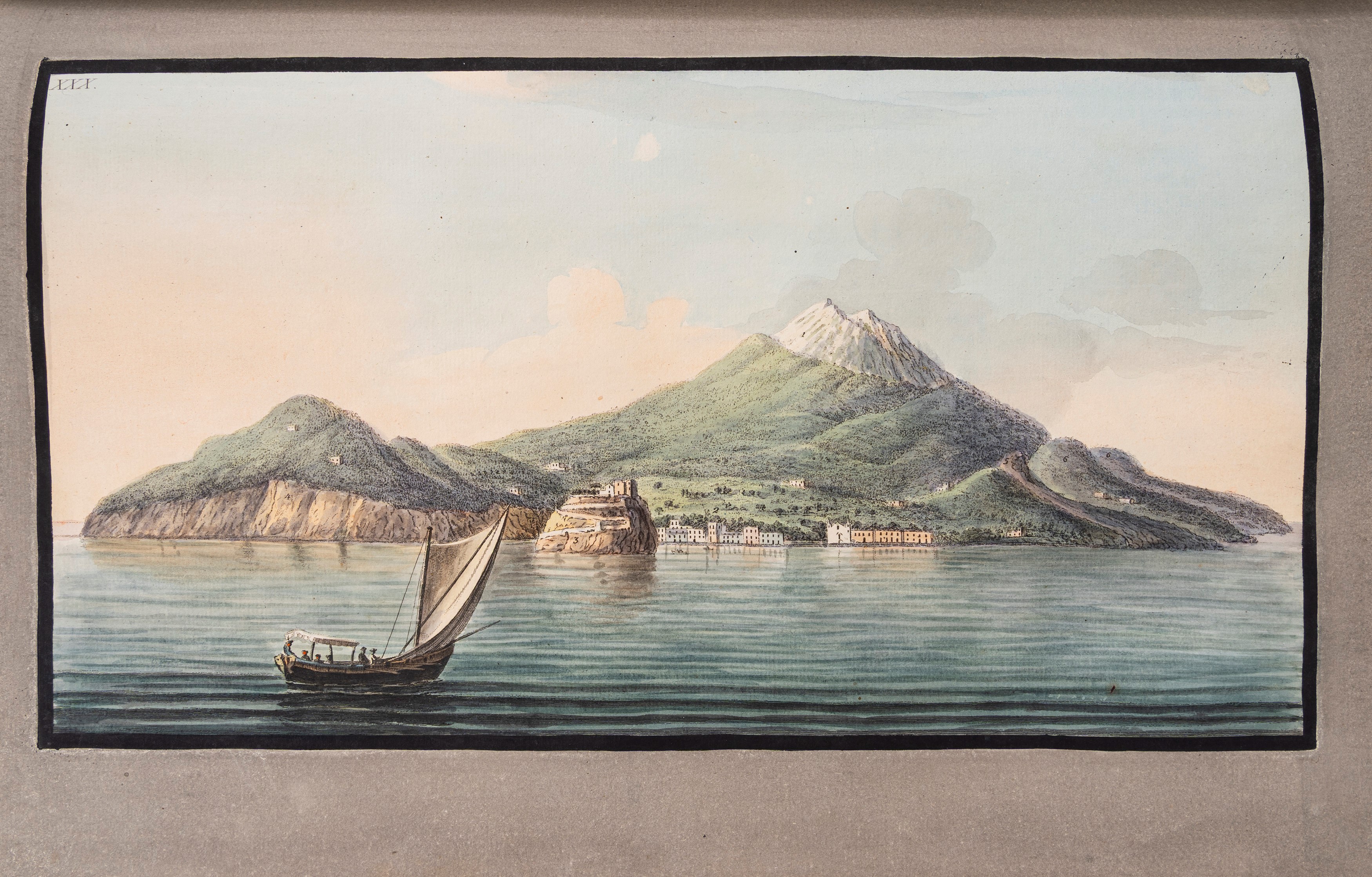
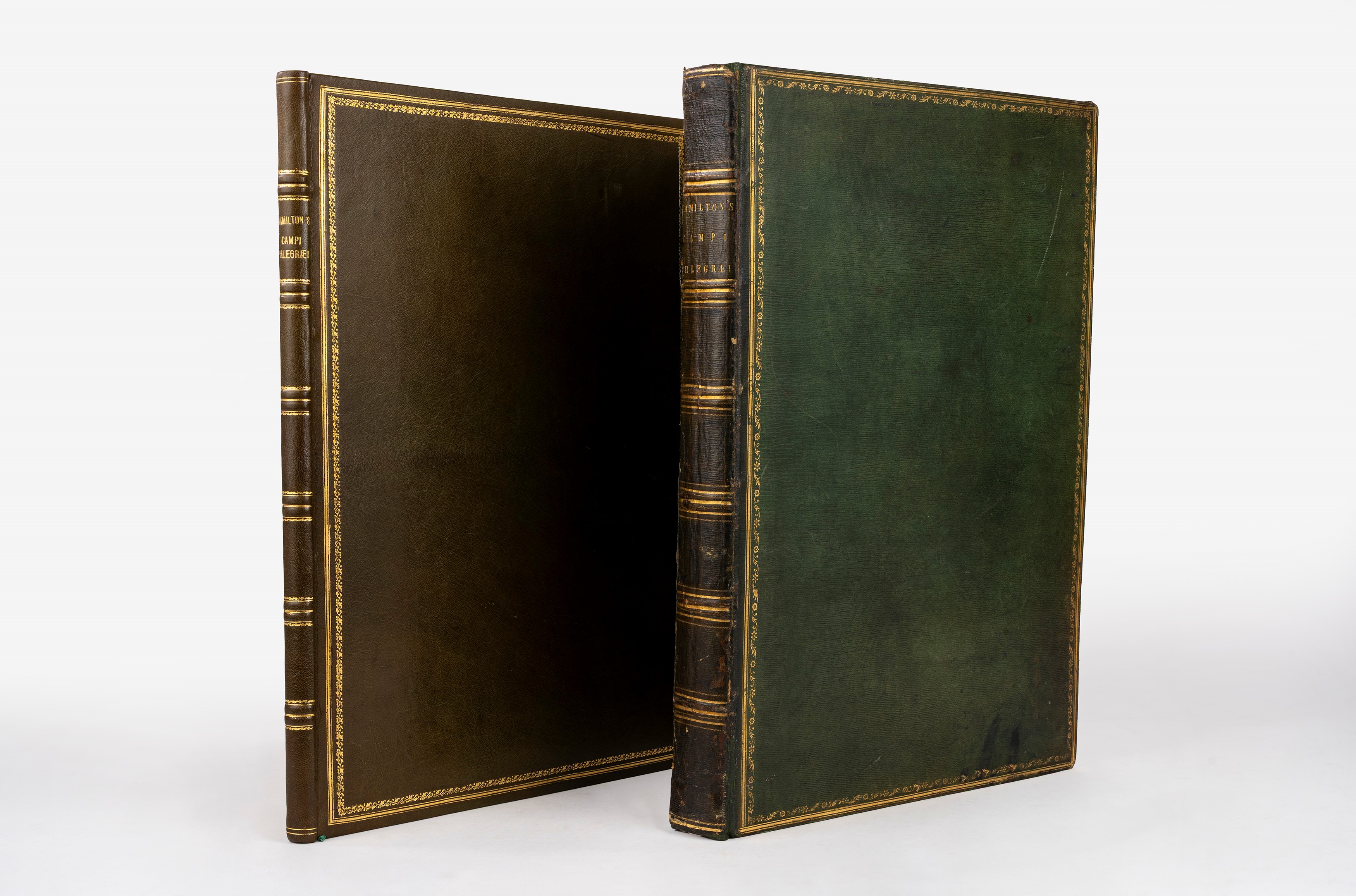
Naples, [Pietro Fabris], 1776. In 2°. 3 parts in 2 volumes. One volume of plates and textual commentary, with a copper-engraved frontispiece with contemporary colored marine views, a printed title page, a double-page map of the Gulf of Naples engraved by Giuseppe Guerra, 54 full-page plates with PERIOD COLORING within a black frame and gray margin engraved by Pietro Fabris. Bound with a Supplement to the Campi Phlegraei, Naples, [Pietro Fabris], 1779. With 5 full-page plates with contemporary colored engraving within a black frame and gray margin engraved by Pietro Fabris. Some very slight browning, binding in long-grain green morocco, early 19th century, boards framed with gilt friezes on the boards and spine, gilt dentils, gilt title on the spine, gilt edges, very minor defects. An exclusively textual volume (90,(2) pp.) with the introduction to the work printed in 2 columns in English and French, some very light marginal browning, posterior leather binding with gold decorations on the covers and spine, gold dentils and lettering, gilt edges, very light defects. Later slipcase in green morocco and marbled paper.
Specialist Notes
A sumptuous copy of the first complete edition of one of the most famous and fascinating works of eighteenth-century Europe, dedicated to the study of the volcanoes of southern Italy and unanimously considered a masterpiece both editorially and scientifically.
The Campi Phlegraei represent the highest point of the volcanological activity of Sir William Hamilton (1730–1803), diplomat, geologist and refined man of culture, who was British ambassador to the Kingdom of Naples from 1764 to 1800.
Having settled in Naples, Hamilton was profoundly impressed by the power and spectacular nature of Vesuvius, to which he devoted years of direct observations, risky ascents, and unprecedented systematic documentation. Between 1766 and 1779, he sent numerous letters to the Royal Society of London, of which he was a member, in which he recorded with scientific rigor the eruptions, landscape transformations, and volcanic phenomena of the Neapolitan area. From this material, Hamilton's work was born, conceived not only as a scientific account but also as an attempt to convey to the public a direct experience of the volcano and its primordial force. The title, Campi Phlegraei, refers to the vast volcanic region that includes Naples and its environs, but Hamilton's investigation also extends to other major volcanic complexes in southern Italy, such as the Aeolian Islands and Mount Etna, giving the work a broader geographical and scientific scope. Hamilton's method, based on direct observation and accurate descriptions of natural phenomena, marked a turning point in the history of volcanology, offering a clear and innovative explanation of the role of volcanoes in the formation and shaping of the Earth's surface.
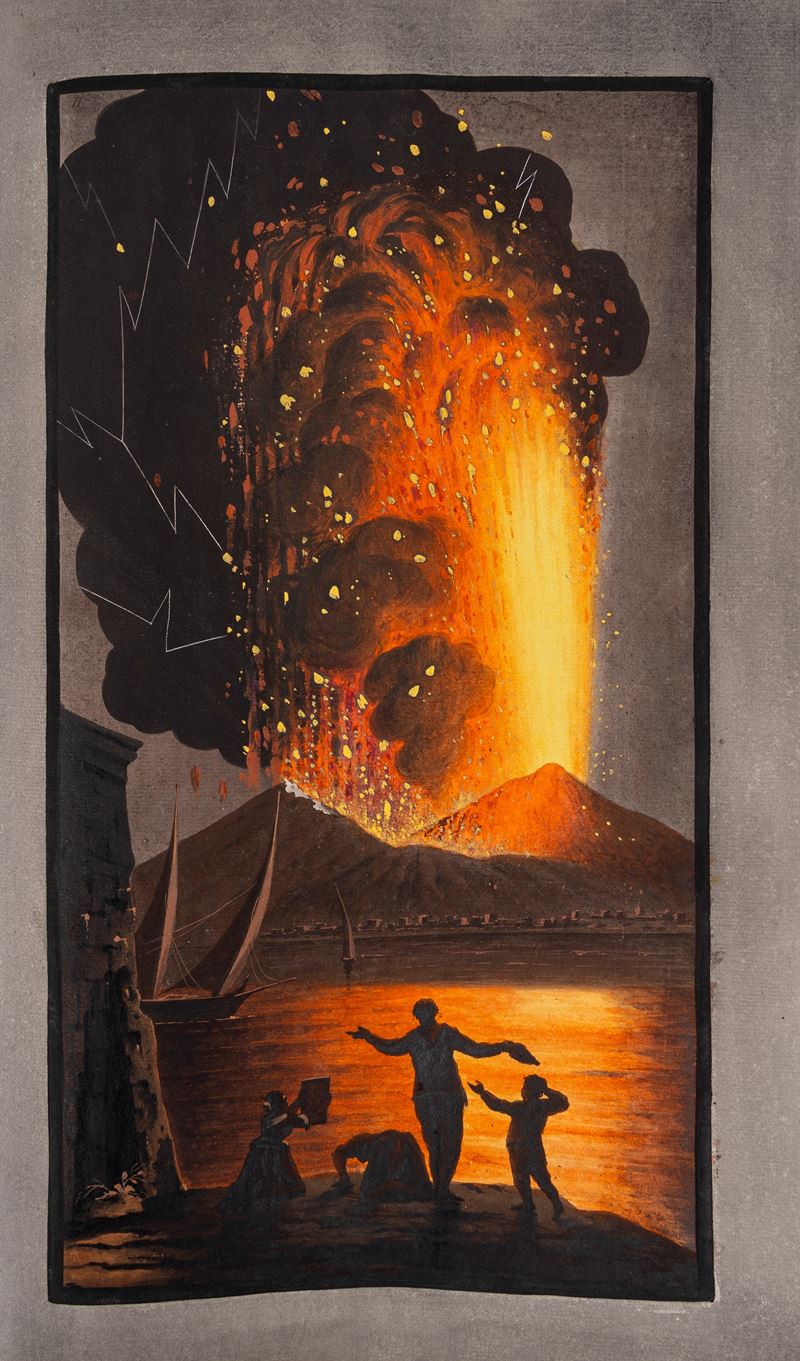
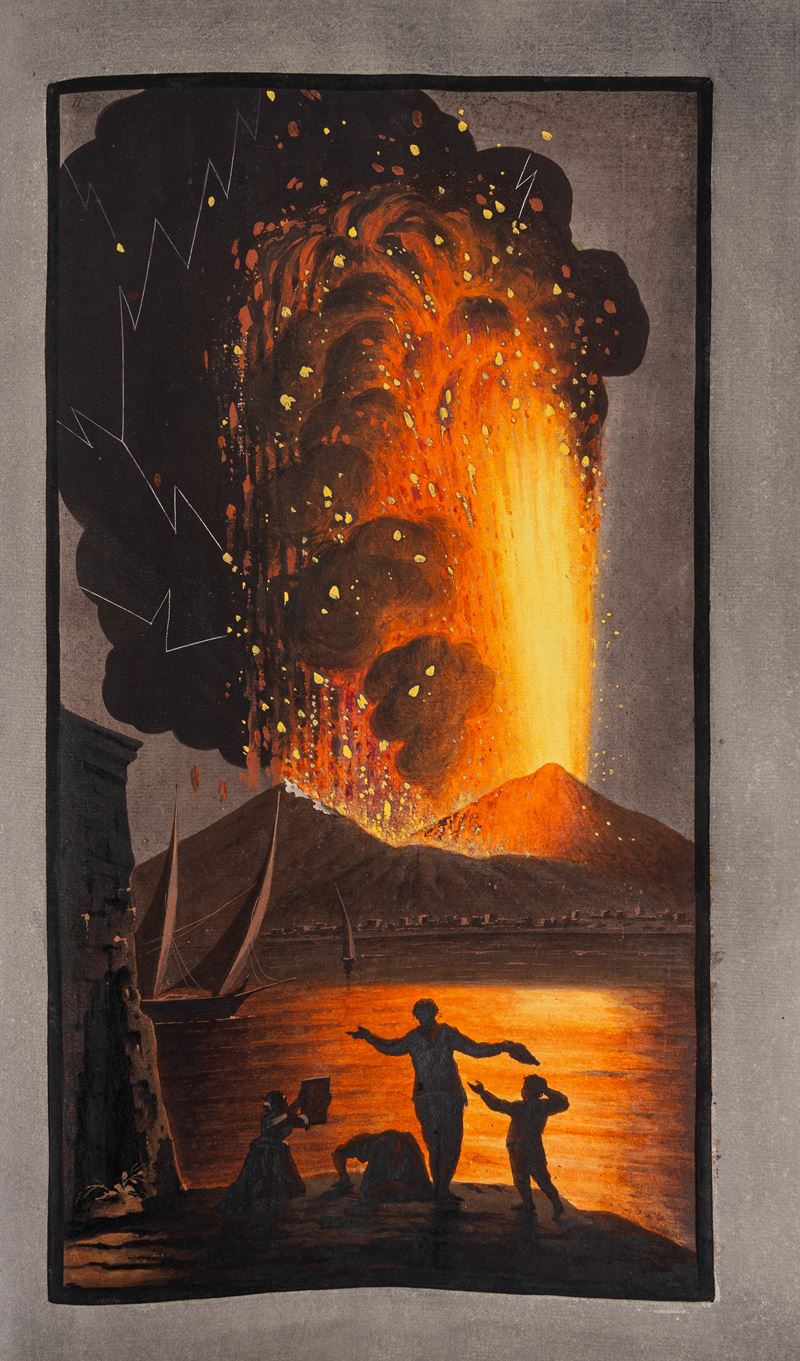
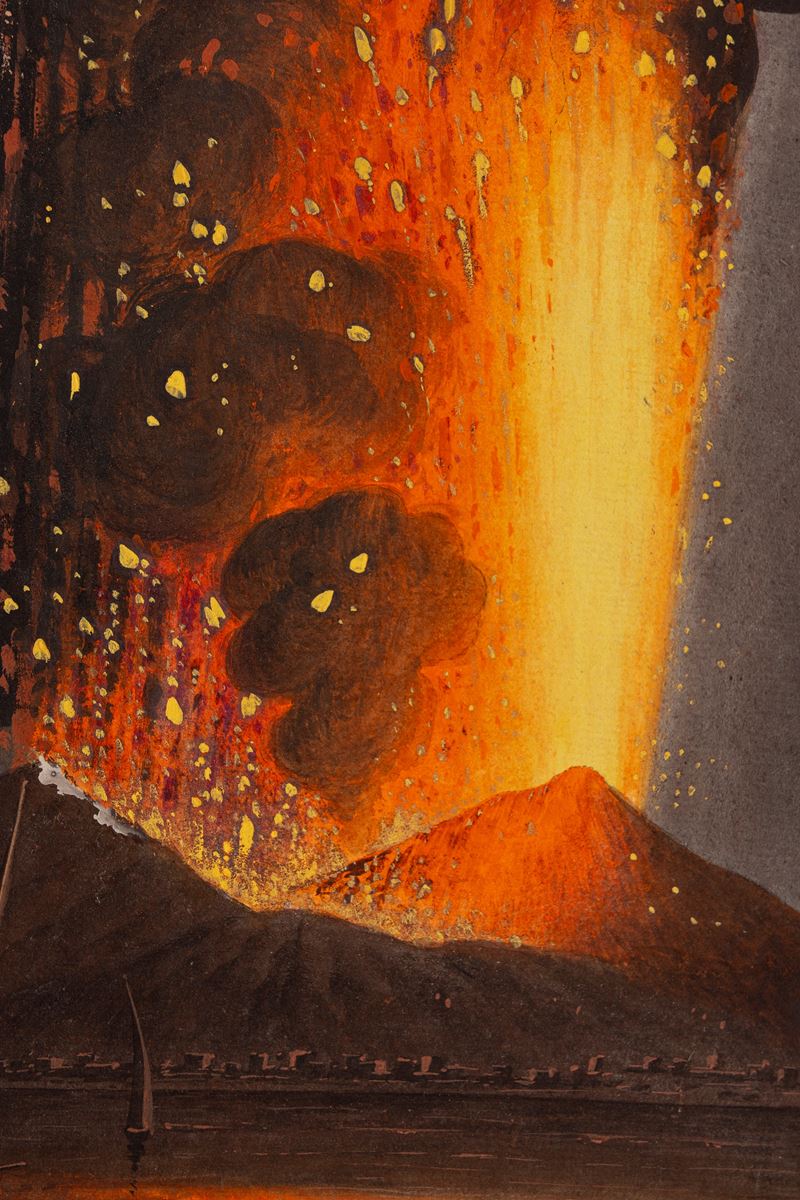
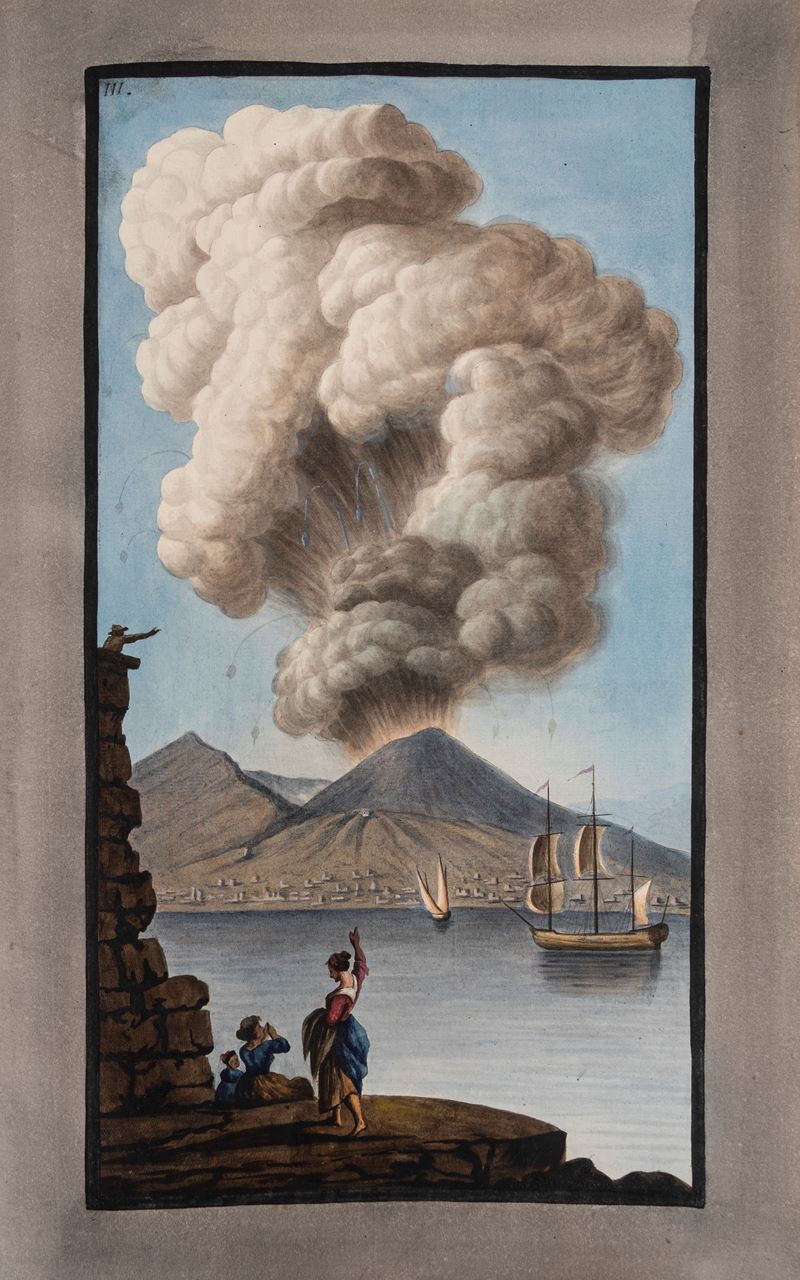
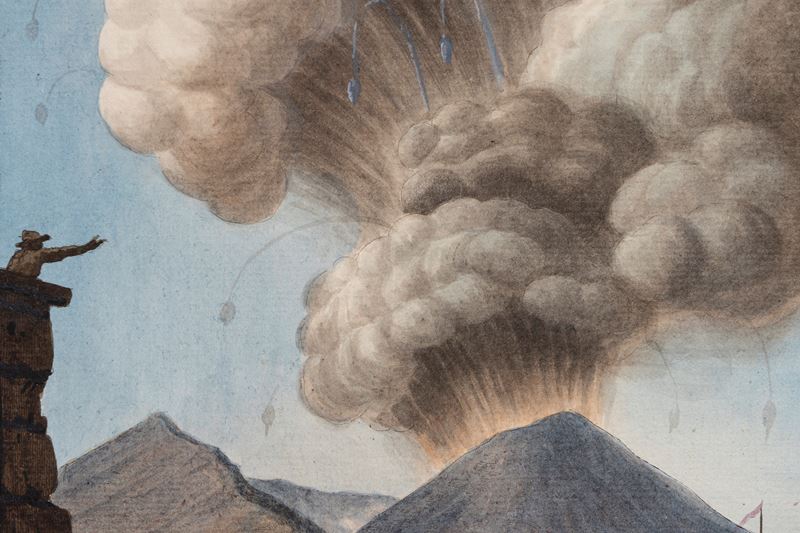
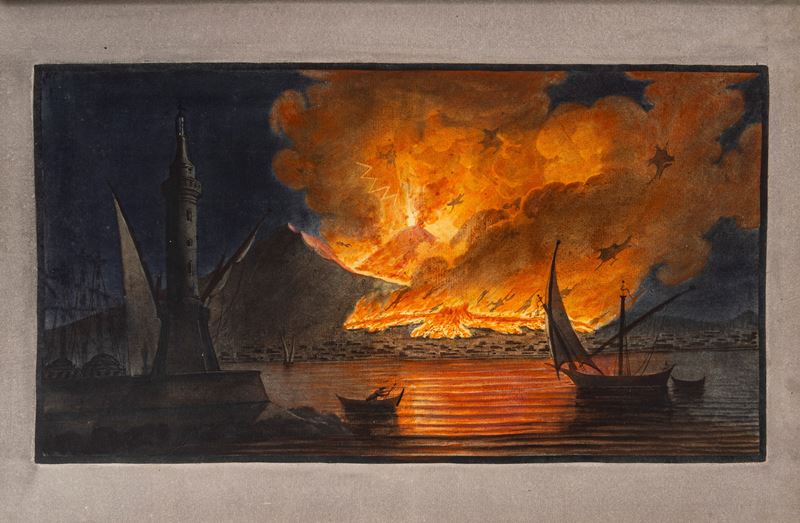
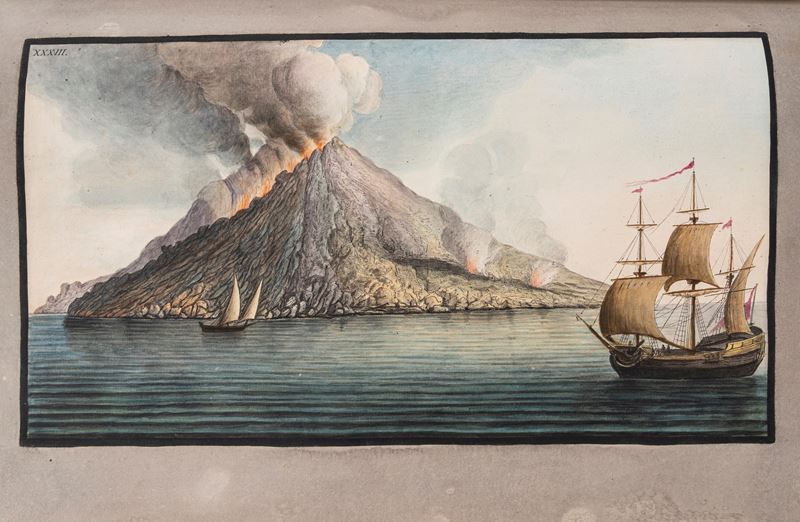
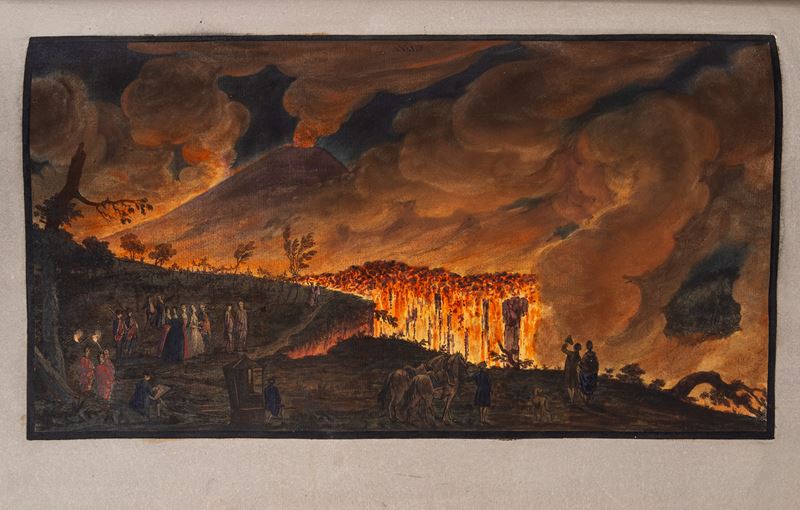
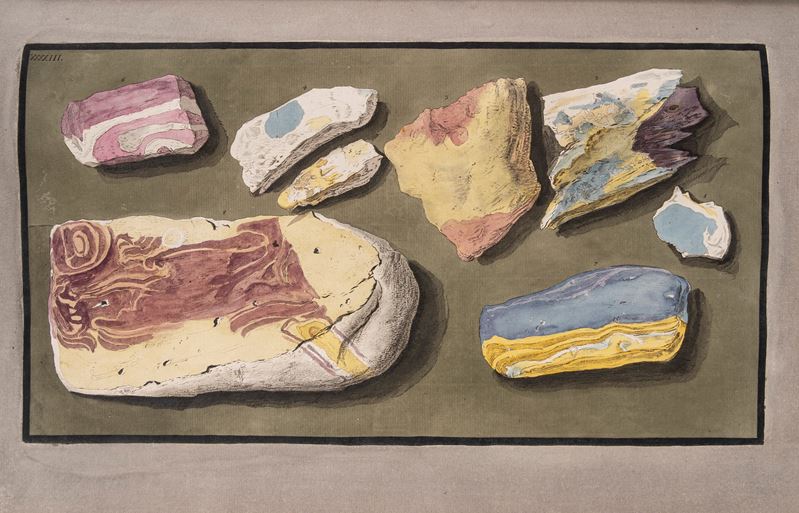
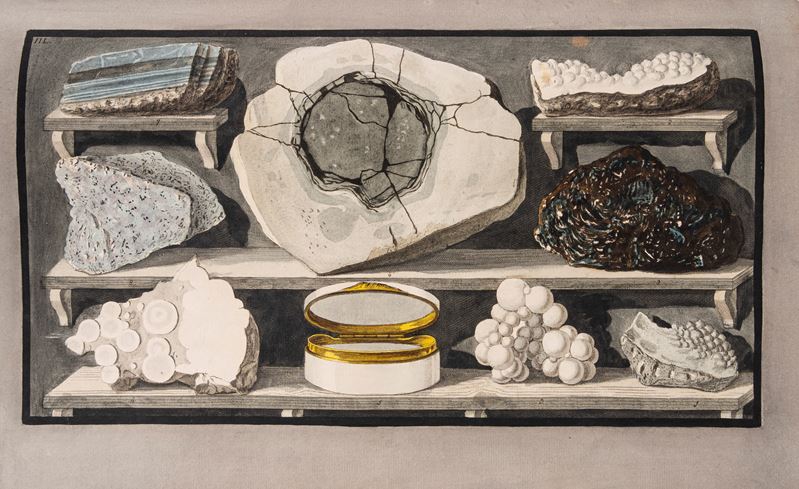
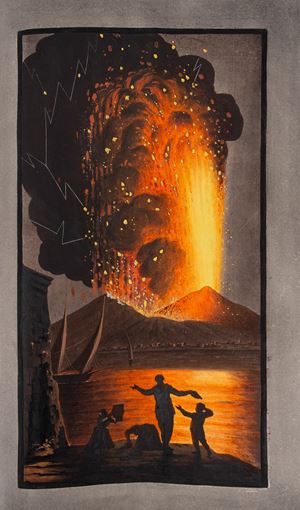
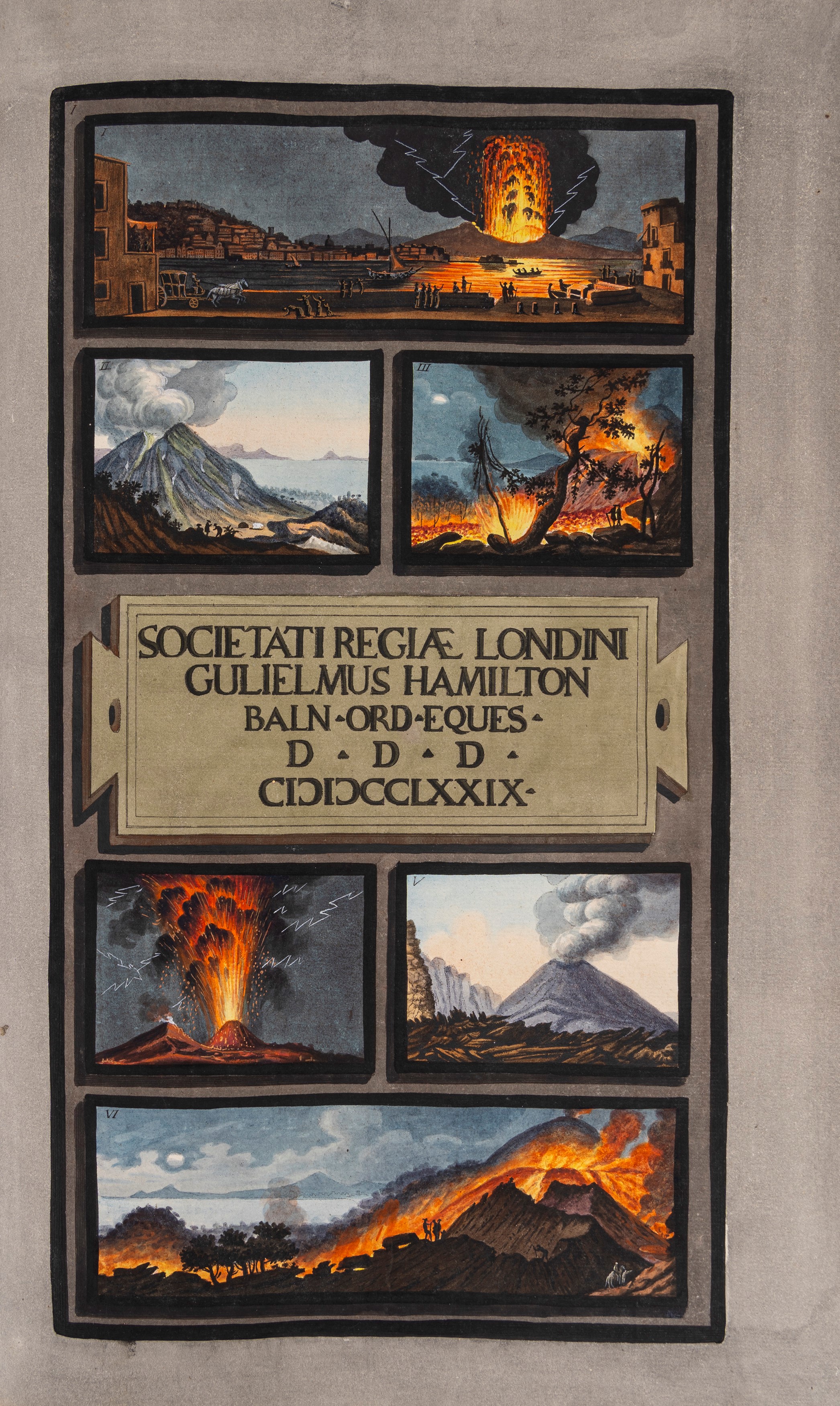
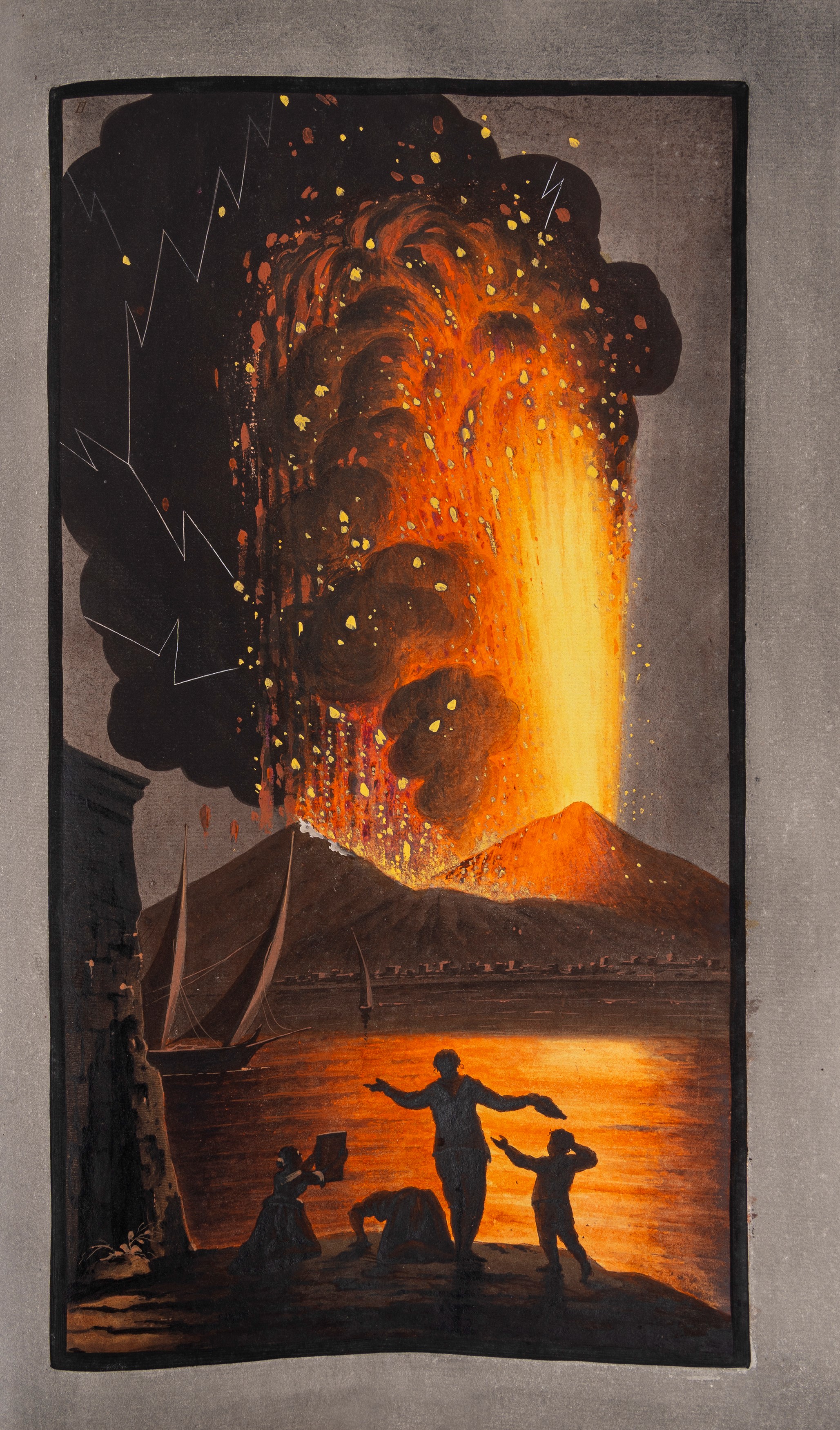
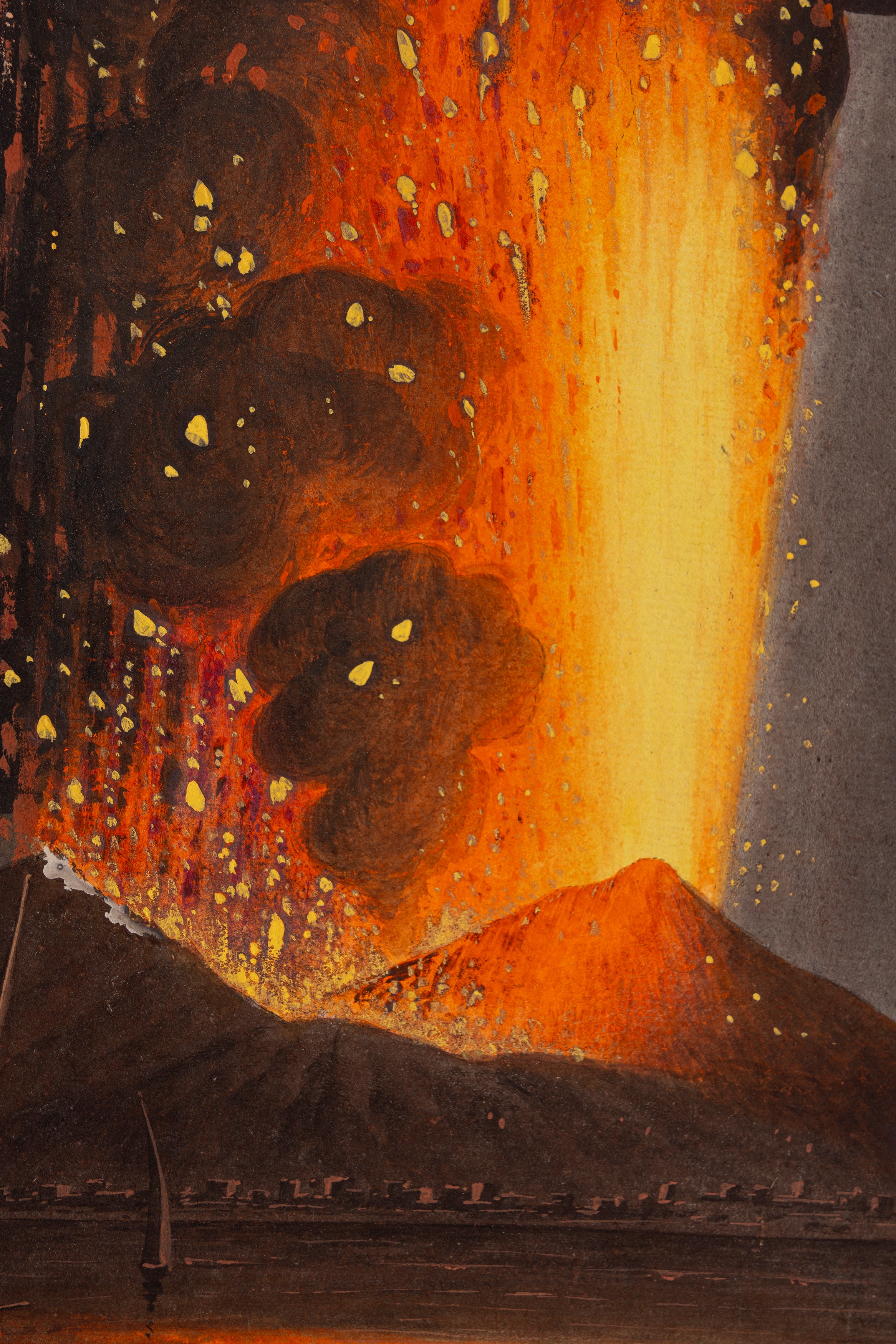
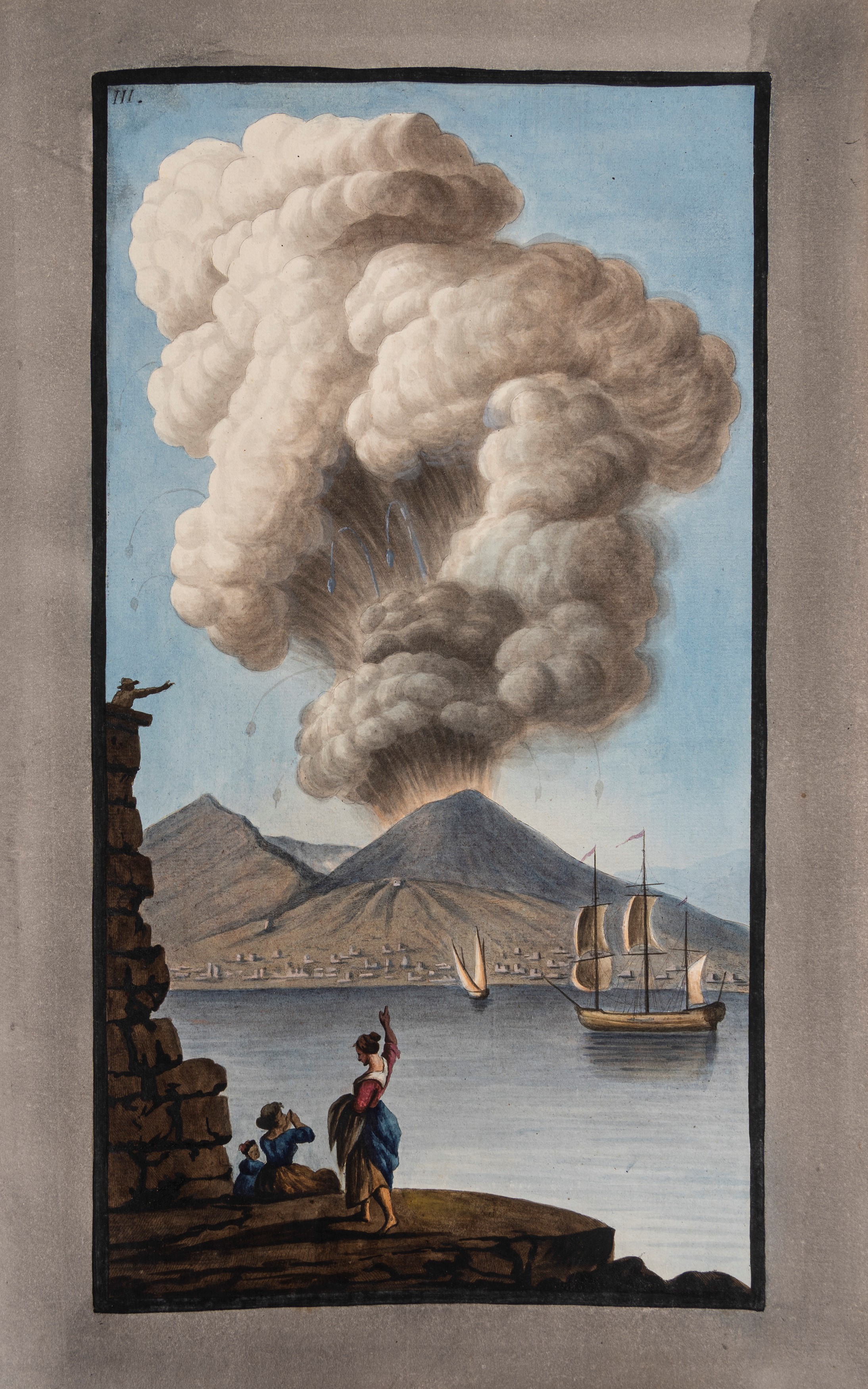
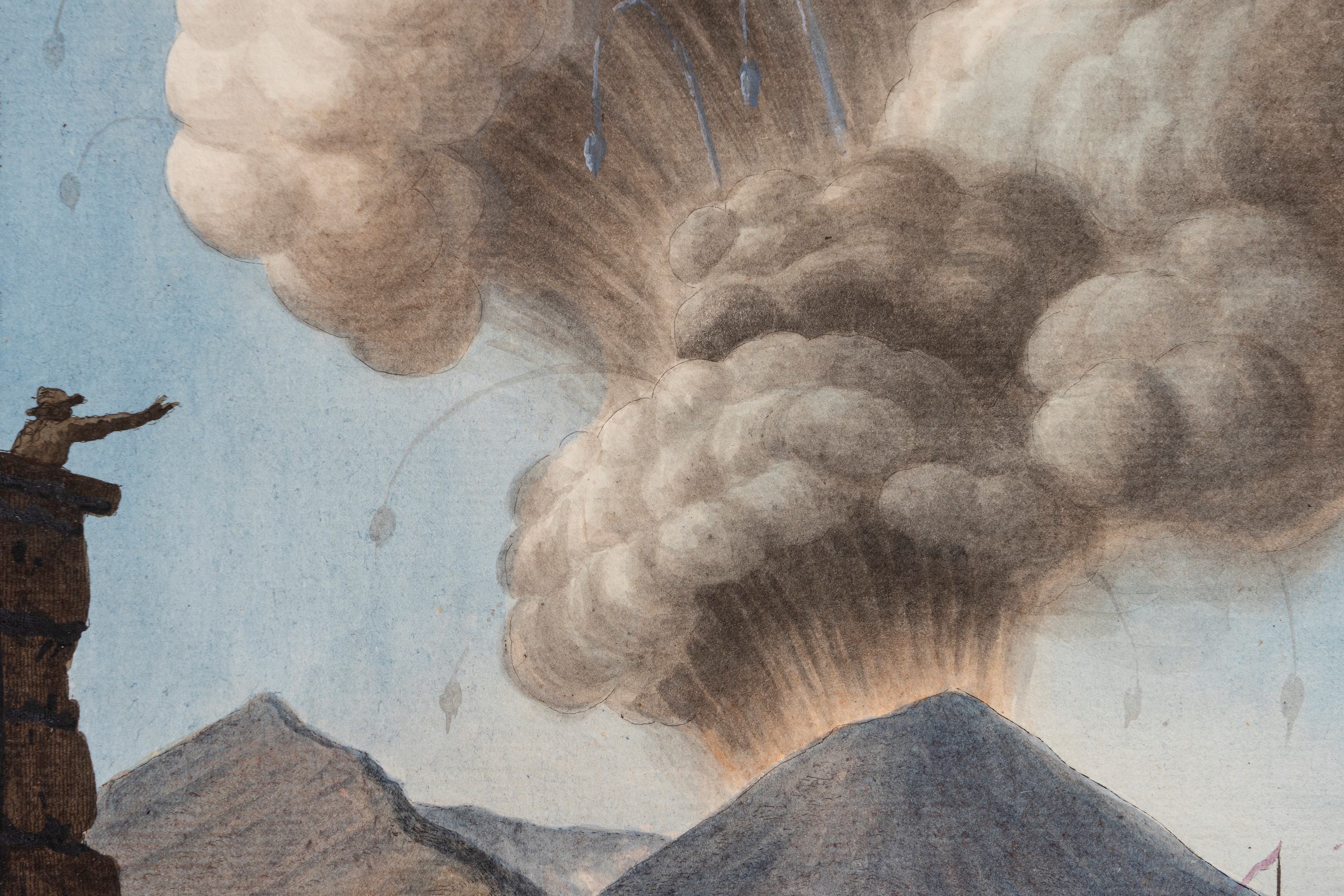
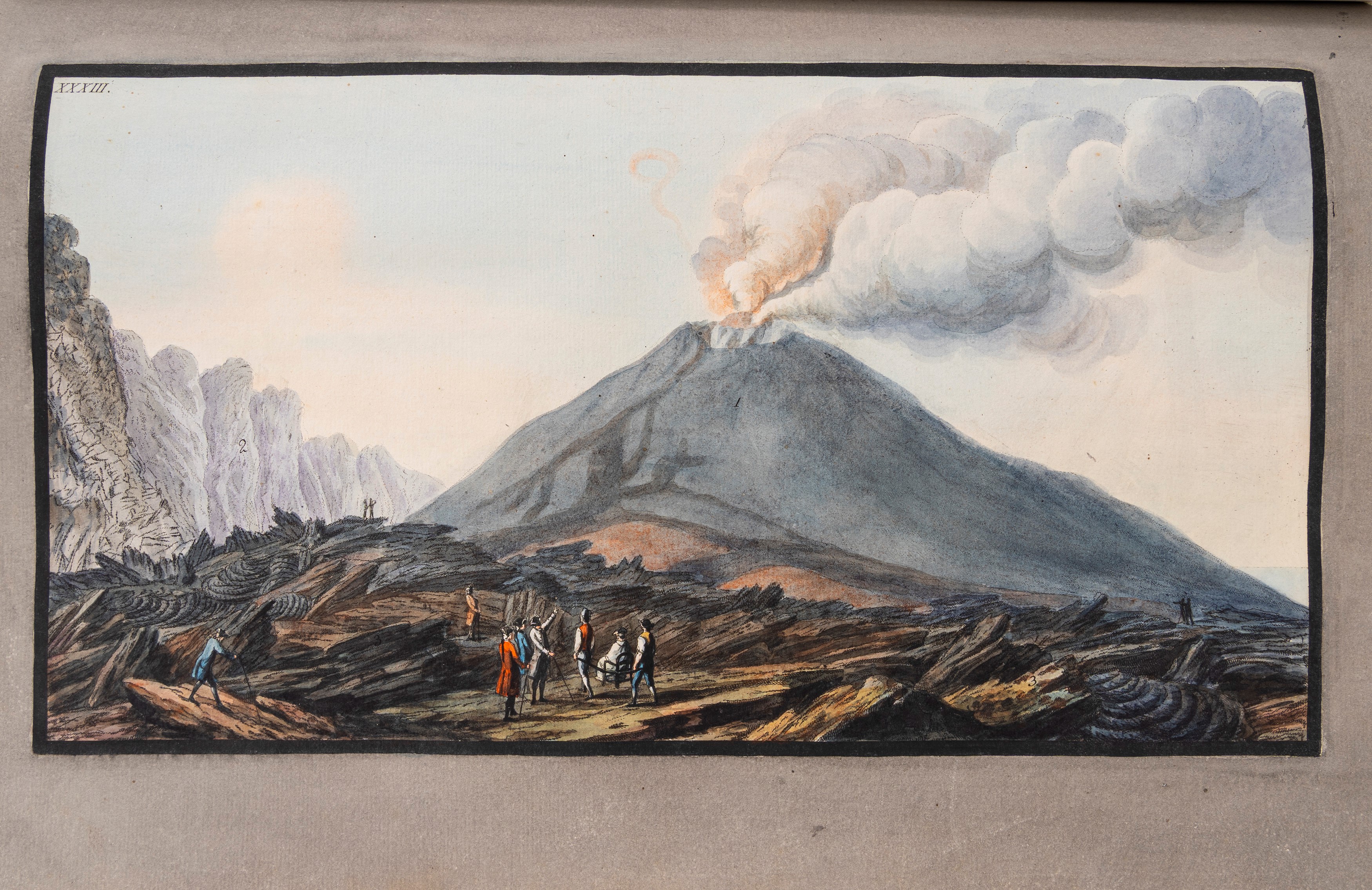
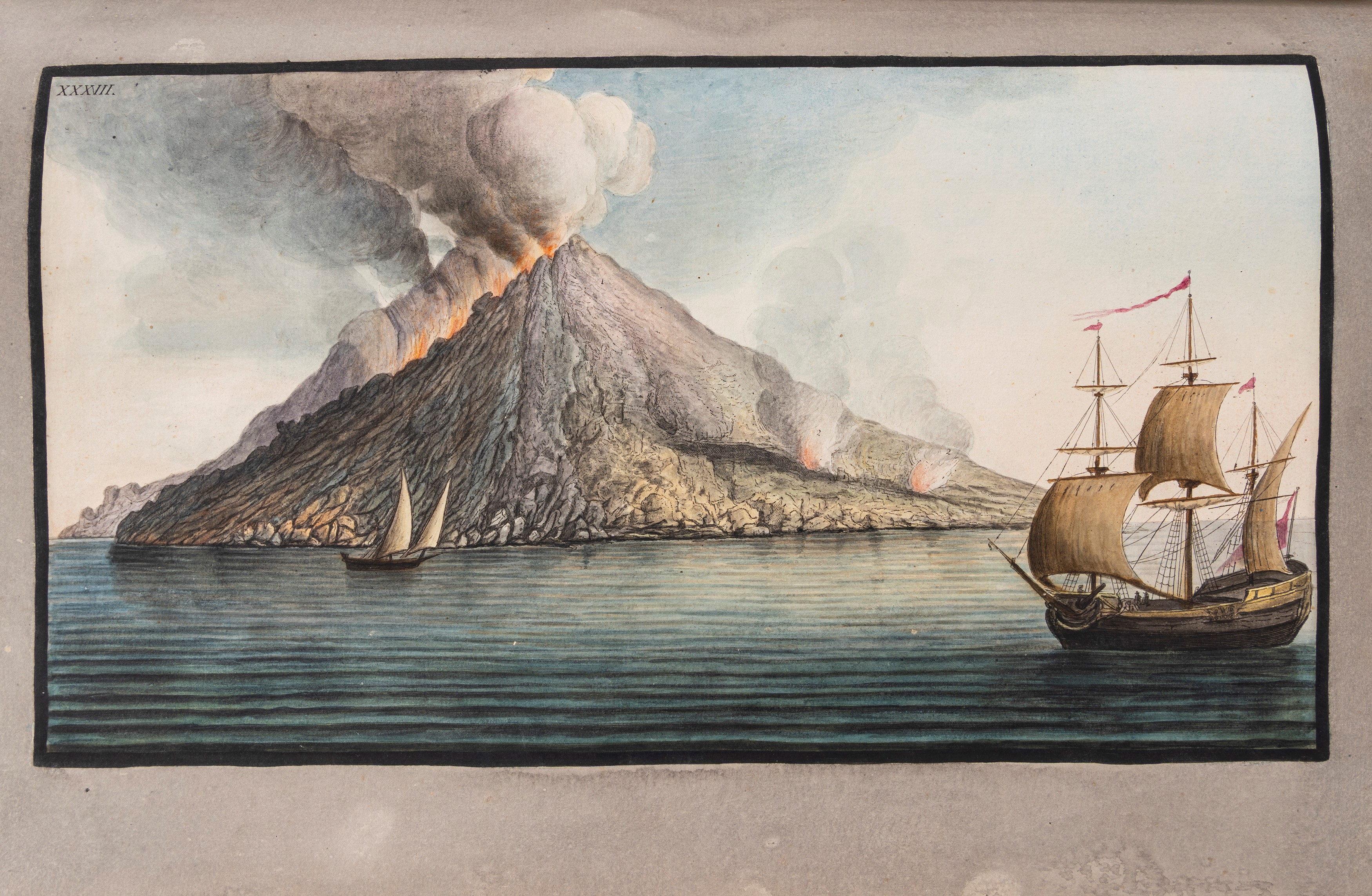
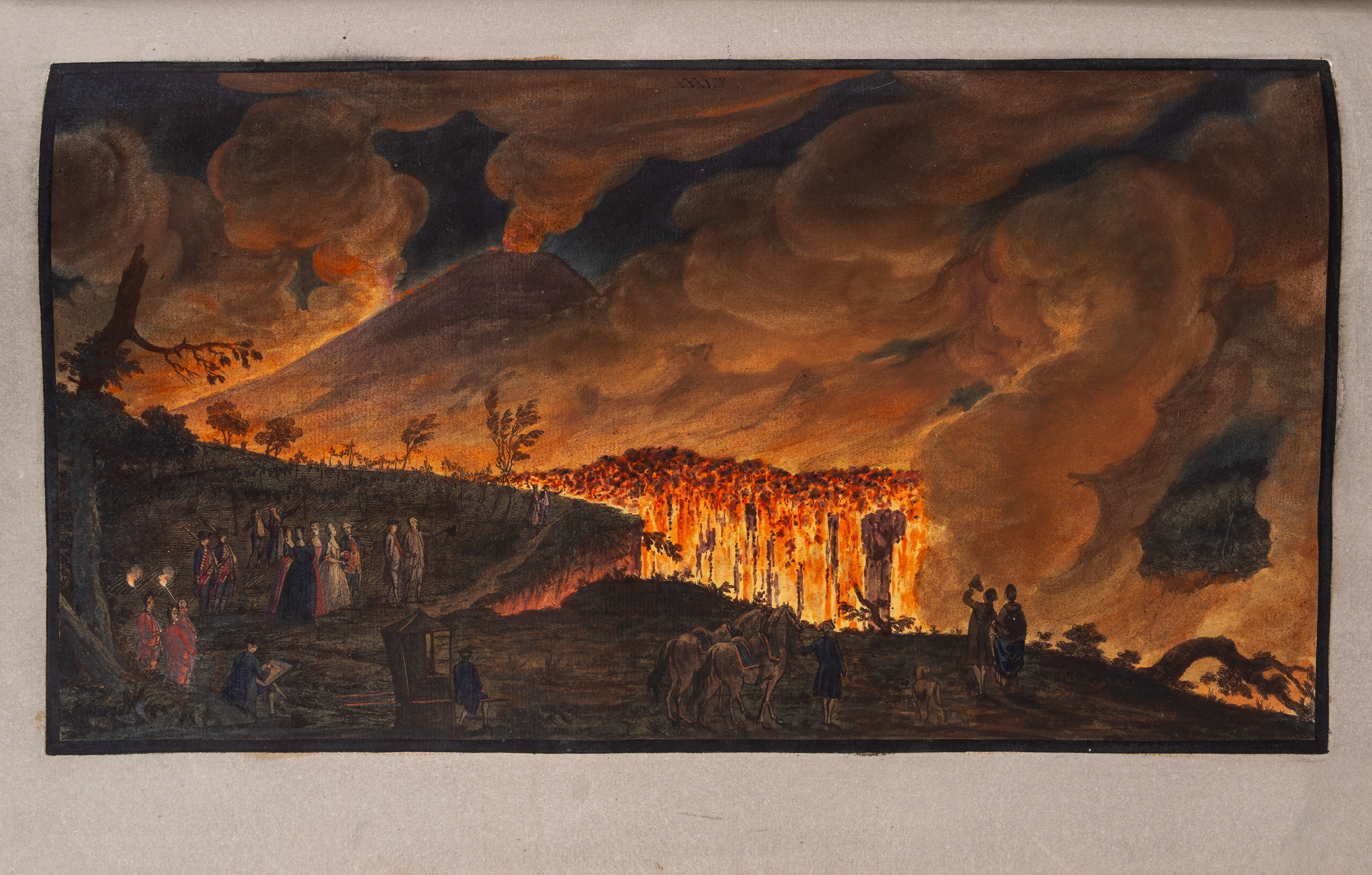
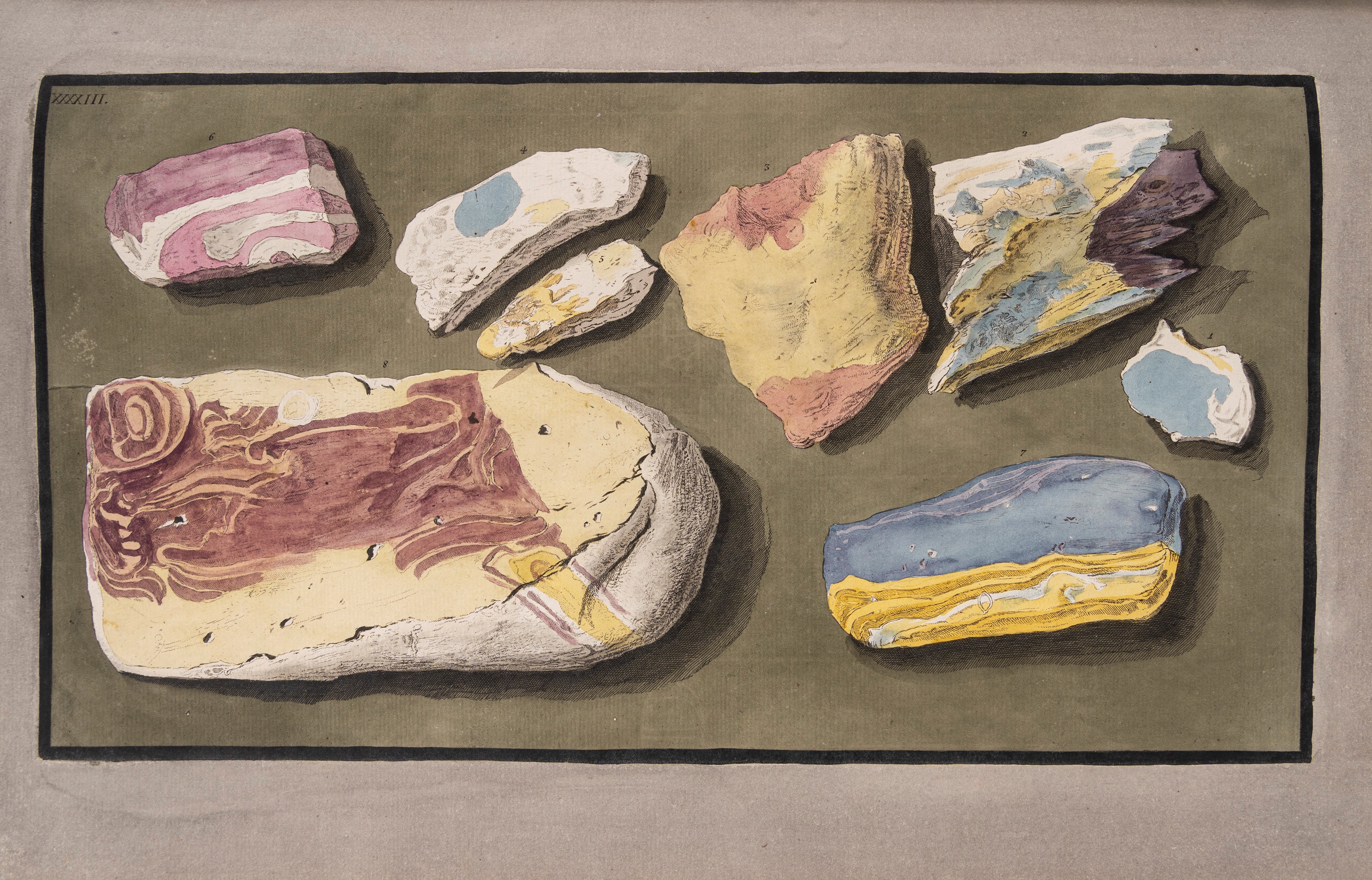
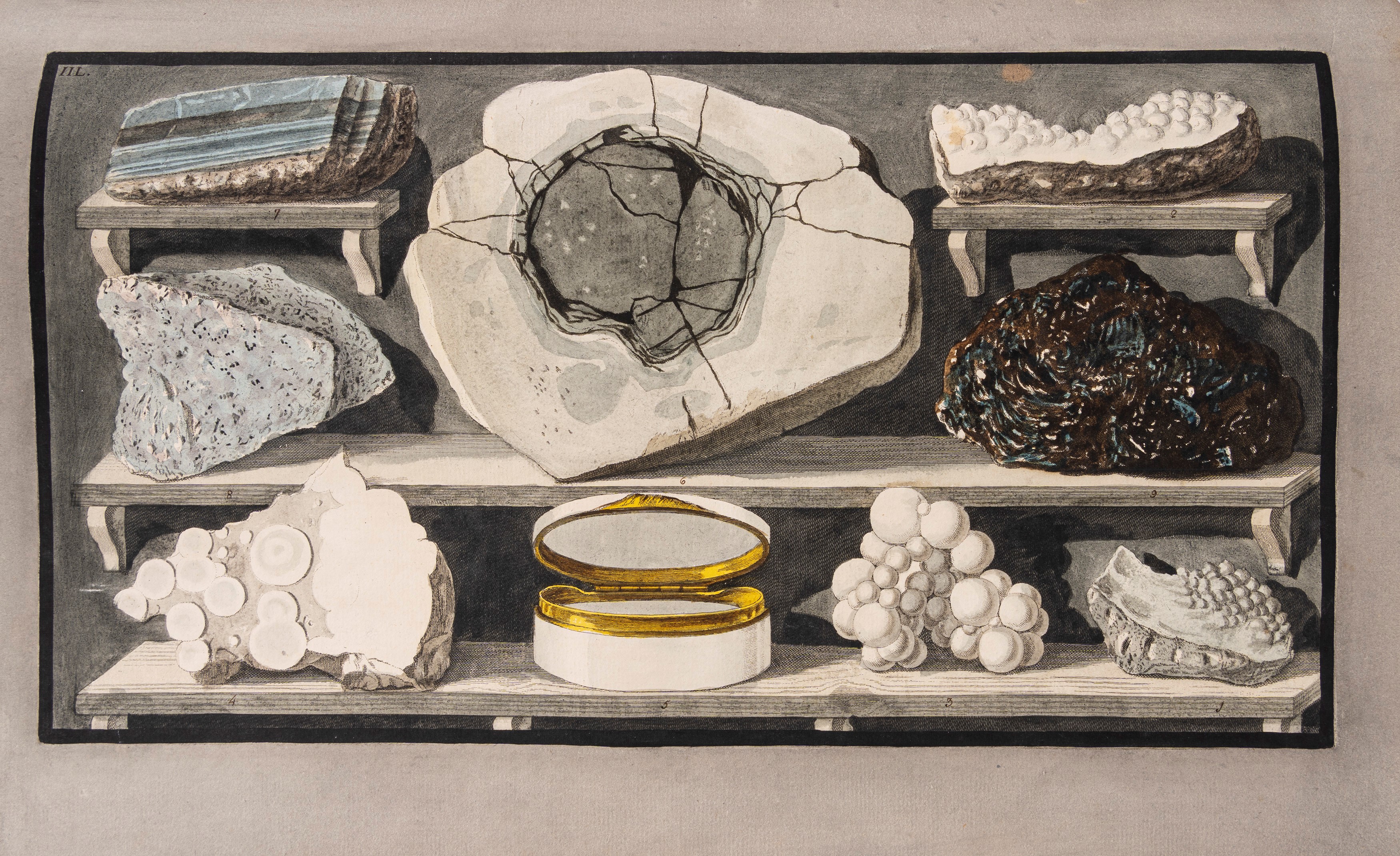
The iconographic apparatus is extraordinary, consisting of 59 engraved plates, finely hand-colored at the time, based on drawings by Pietro Fabris, an artist personally chosen by Hamilton and considered by him unsurpassed in combining scientific precision and aesthetic quality. Fabris accompanied Hamilton on his excursions and worked under his constant supervision; the two often appear in the views intent on observing and measuring natural phenomena, recognizable by their characteristic coats, red for Hamilton and blue for Fabris. The images depict craters, lava flows, geological sections, rock samples, panoramas of the Gulf of Naples, Pozzuoli, the Solfatara, Ischia, Stromboli, Mount Etna, as well as spectacular daytime and nighttime eruptions of Vesuvius, culminating in the famous plates in the Supplement, dedicated to the 1779 eruption.
Each plate is accompanied by an explanatory text that illustrates its content and demonstrative purpose with scientific precision, making the work a perfect balance between image and word. The visual impact of the plates, permeated by a taste for the sublime, contributed decisively to establishing the romantic myth of Vesuvius in the European imagination and consecrating it as an essential stop on the Grand Tour.
A work of exceptional historical and cultural importance, Campi Phlegraei is considered one of the most beautiful illustrated books of the 18th century and a milestone in the development of geophysics and volcanology.
The Campi Phlegraei represent the highest point of the volcanological activity of Sir William Hamilton (1730–1803), diplomat, geologist and refined man of culture, who was British ambassador to the Kingdom of Naples from 1764 to 1800.
Having settled in Naples, Hamilton was profoundly impressed by the power and spectacular nature of Vesuvius, to which he devoted years of direct observations, risky ascents, and unprecedented systematic documentation. Between 1766 and 1779, he sent numerous letters to the Royal Society of London, of which he was a member, in which he recorded with scientific rigor the eruptions, landscape transformations, and volcanic phenomena of the Neapolitan area. From this material, Hamilton's work was born, conceived not only as a scientific account but also as an attempt to convey to the public a direct experience of the volcano and its primordial force. The title, Campi Phlegraei, refers to the vast volcanic region that includes Naples and its environs, but Hamilton's investigation also extends to other major volcanic complexes in southern Italy, such as the Aeolian Islands and Mount Etna, giving the work a broader geographical and scientific scope. Hamilton's method, based on direct observation and accurate descriptions of natural phenomena, marked a turning point in the history of volcanology, offering a clear and innovative explanation of the role of volcanoes in the formation and shaping of the Earth's surface.
The iconographic apparatus is extraordinary, consisting of 59 engraved plates, finely hand-colored at the time, based on drawings by Pietro Fabris, an artist personally chosen by Hamilton and considered by him unsurpassed in combining scientific precision and aesthetic quality. Fabris accompanied Hamilton on his excursions and worked under his constant supervision; the two often appear in the views intent on observing and measuring natural phenomena, recognizable by their characteristic coats, red for Hamilton and blue for Fabris. The images depict craters, lava flows, geological sections, rock samples, panoramas of the Gulf of Naples, Pozzuoli, the Solfatara, Ischia, Stromboli, Mount Etna, as well as spectacular daytime and nighttime eruptions of Vesuvius, culminating in the famous plates in the Supplement, dedicated to the 1779 eruption.
Each plate is accompanied by an explanatory text that illustrates its content and demonstrative purpose with scientific precision, making the work a perfect balance between image and word. The visual impact of the plates, permeated by a taste for the sublime, contributed decisively to establishing the romantic myth of Vesuvius in the European imagination and consecrating it as an essential stop on the Grand Tour.
A work of exceptional historical and cultural importance, Campi Phlegraei is considered one of the most beautiful illustrated books of the 18th century and a milestone in the development of geophysics and volcanology.
Contact
Suggested lots
Caricamento lotti suggeriti...
More Lots

![The art of beating the meat and perfecting the construction of the meat of the apparatus [...]](https://api.finarte.it/api/lotto/immagine/181847/0/300.jpg)
8