45
Perù
Francisco de Xeres
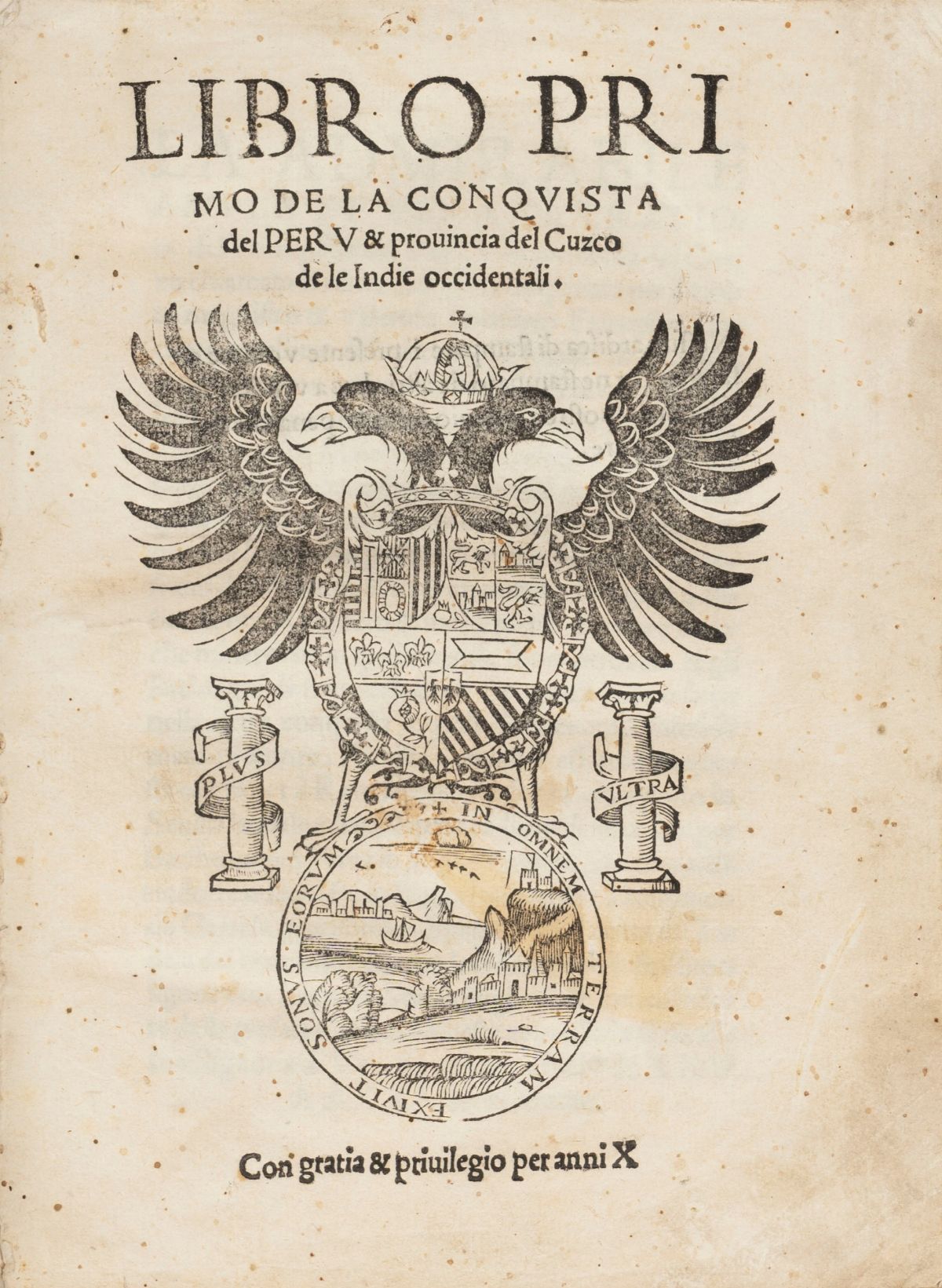
First book of the conquest of Peru & province of Cuzco of the West Indies, 1535
Estimate
€ 4.500 - 5.500
Sold
€ 10.800
The price includes buyer's premium
Do you have a similar item you would like to sell?
Information
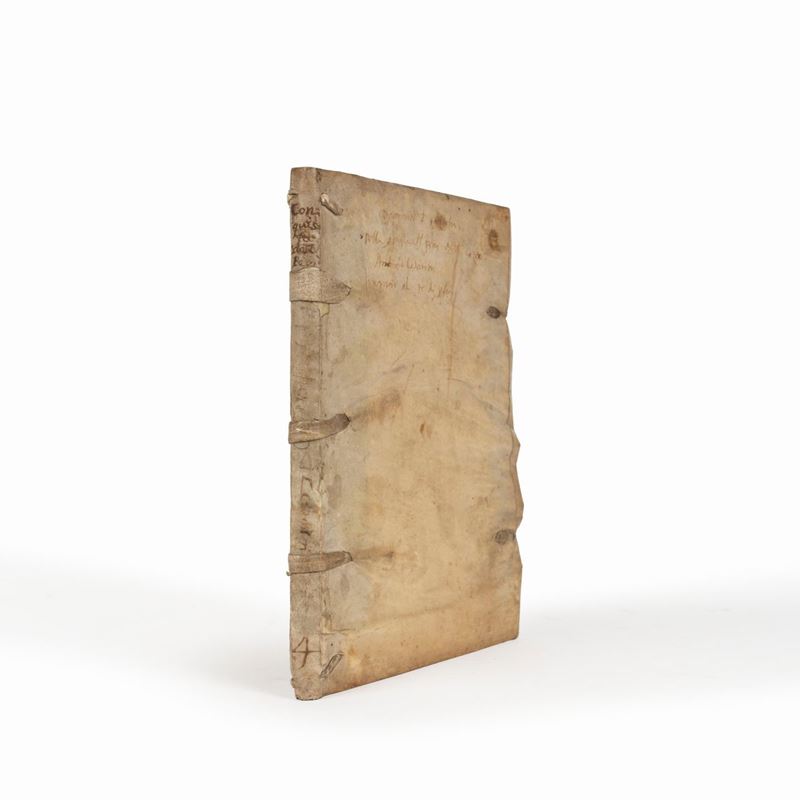
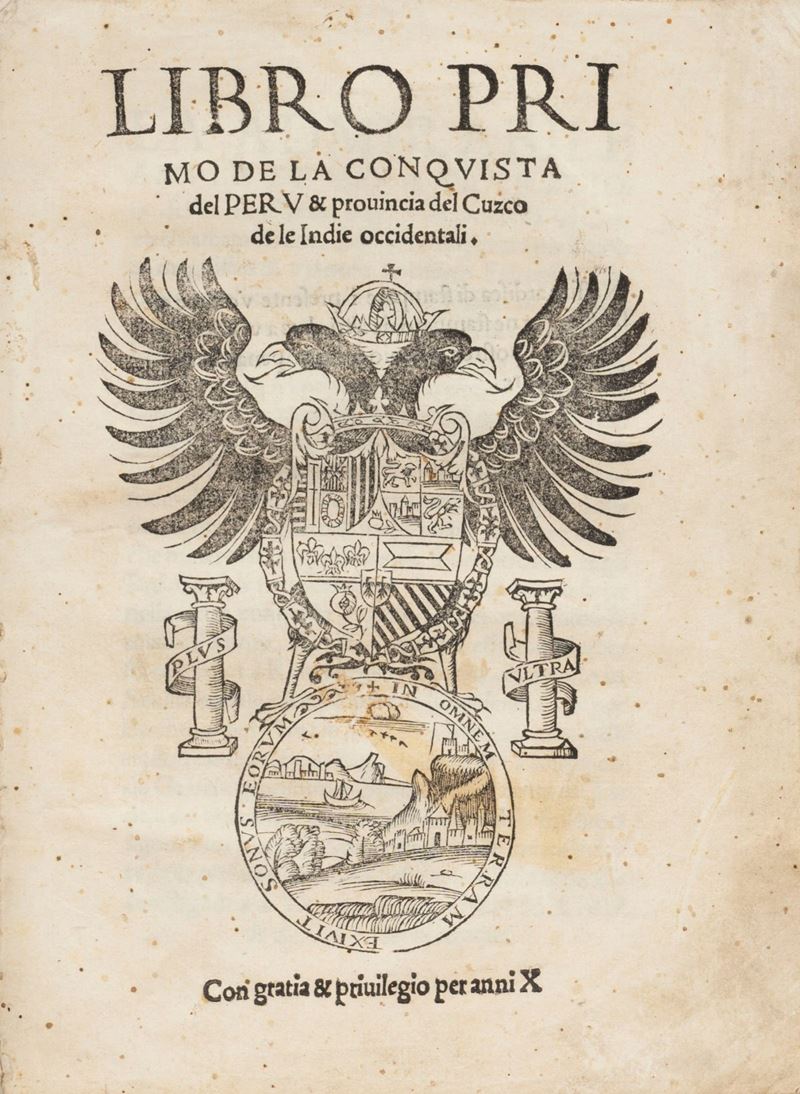
Venice, for master Stephano da Sabio [Stefano Nicolini da Sabbio], 1535 in the month of March. In 4th. On the frontispiece, large woodcut depicting the imperial arms of Charles V, medallion below bearing the arms of Andrea Gritti and the translator, Domingo de Gaztelu, woodcut initials, typographic brand on the reverse of the colophon: Crown surmounting a bridge, on the band the inscription: Sabio , a very fresh example, contemporary binding in loose parchment. Ex libris on the backplate by Jaco Calleri Damonte, Graya (Piedmont).
Specialist Notes
First Italian edition, translated by Dominico de Gaztelu, only one year after the first Spanish edition.
Francisco de Xerez was alongside Francisco Pizarro in the mission of conquest of the Inca Empire and the present work is one of the most important testimonies of the conquest of Peru. "Xeres, secretary of Pizarro, left Spain with him in January 1530. This narrative was written by order of his master, while he was in America and was printed immediately after his return to Seville, which he reached ... in July of 1534. As is natural, for those who personally knew the actors of that drama and witnessed its bloody events, Xeres tries to attenuate their actions of rape, destruction and massacre. The narrative is interspersed with many anecdotes and personal memories" (Church, pp. 161-163).
European Americana 535/21; Harrisse 200; JCB I:119; Medina BHA 95n; Sabin 105721.
Francisco de Xerez was alongside Francisco Pizarro in the mission of conquest of the Inca Empire and the present work is one of the most important testimonies of the conquest of Peru. "Xeres, secretary of Pizarro, left Spain with him in January 1530. This narrative was written by order of his master, while he was in America and was printed immediately after his return to Seville, which he reached ... in July of 1534. As is natural, for those who personally knew the actors of that drama and witnessed its bloody events, Xeres tries to attenuate their actions of rape, destruction and massacre. The narrative is interspersed with many anecdotes and personal memories" (Church, pp. 161-163).
European Americana 535/21; Harrisse 200; JCB I:119; Medina BHA 95n; Sabin 105721.
Contact
Suggested lots
Caricamento lotti suggeriti...
More Lots
48
Paolo Manuzio
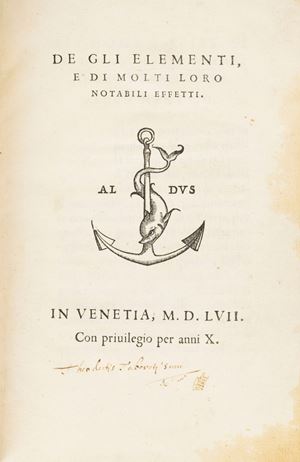
Of the elements, and of many of their notable effects, 1557
Estimate € 1.000 - 1.500