301
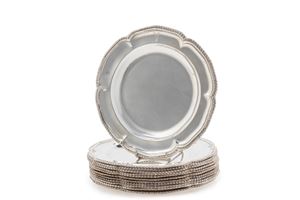
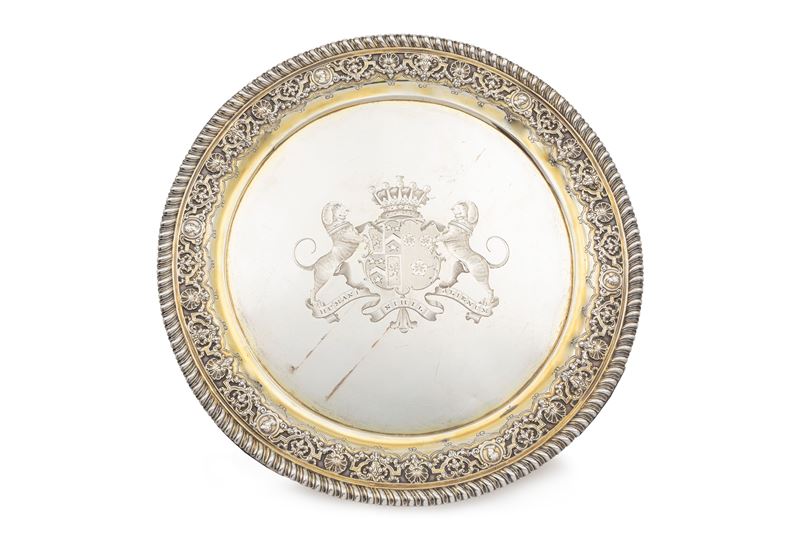
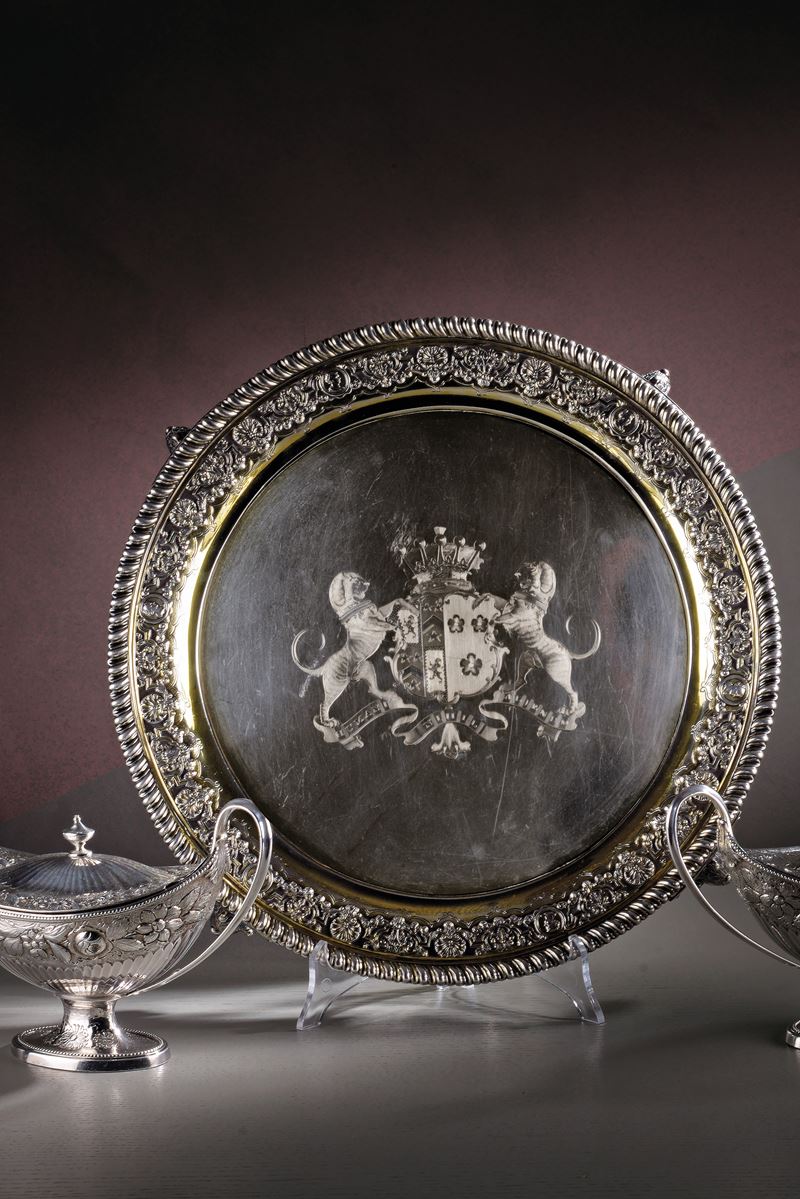
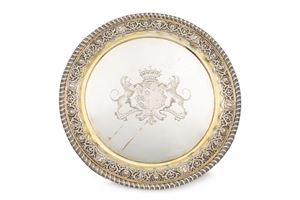
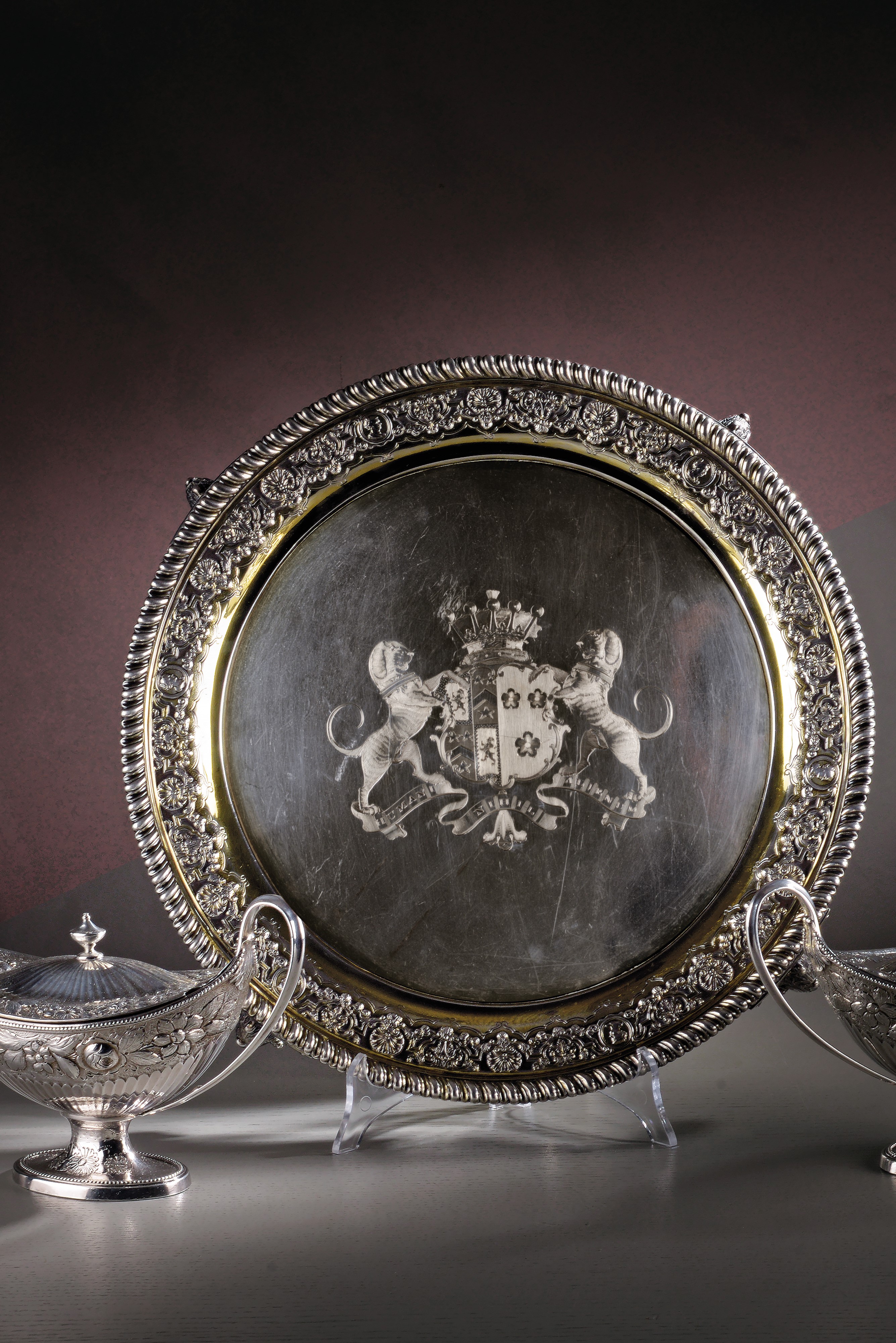
Salver, London, first half of 18th century
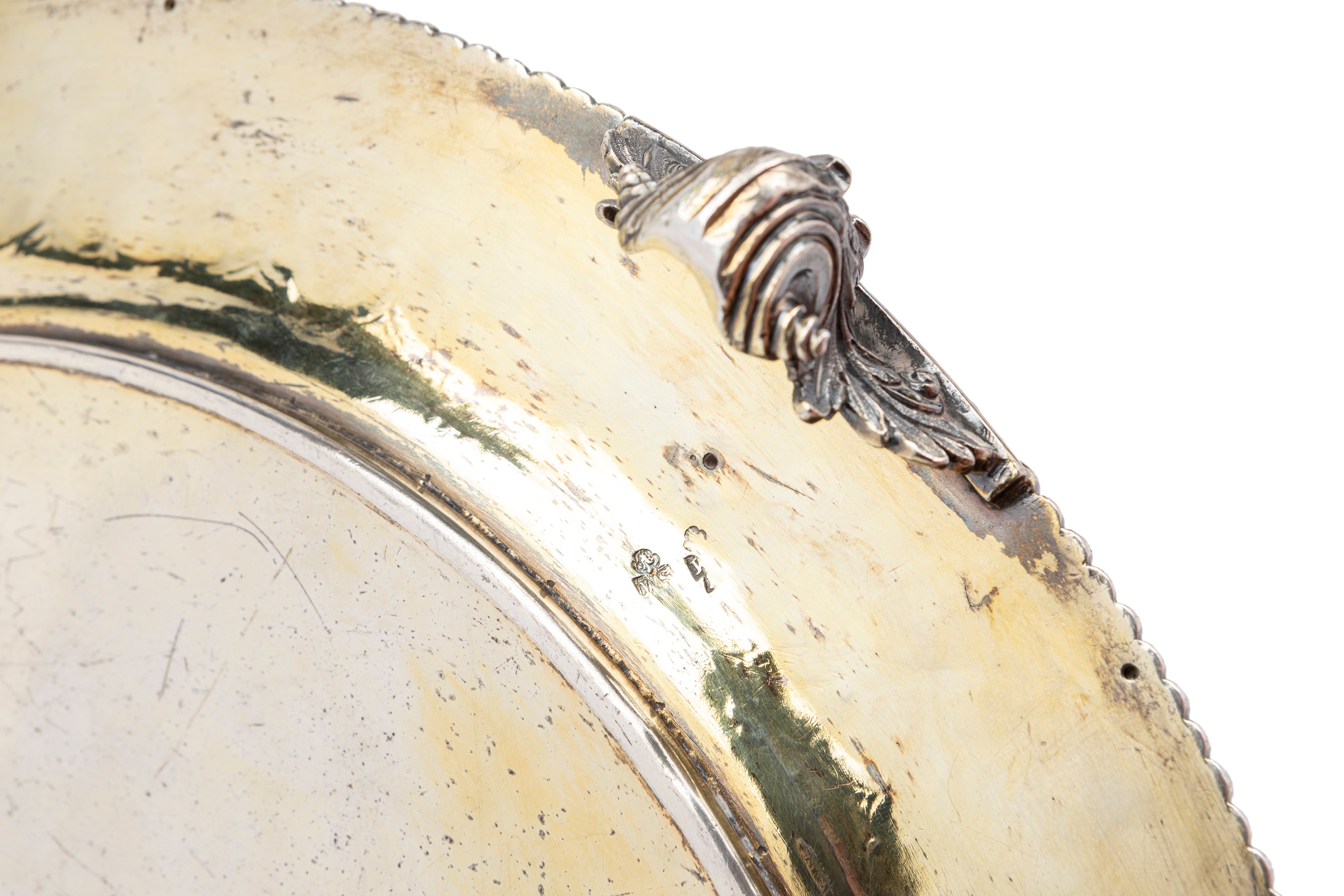
in silver and vermeilSilversmith SM (Samuel Margas?),
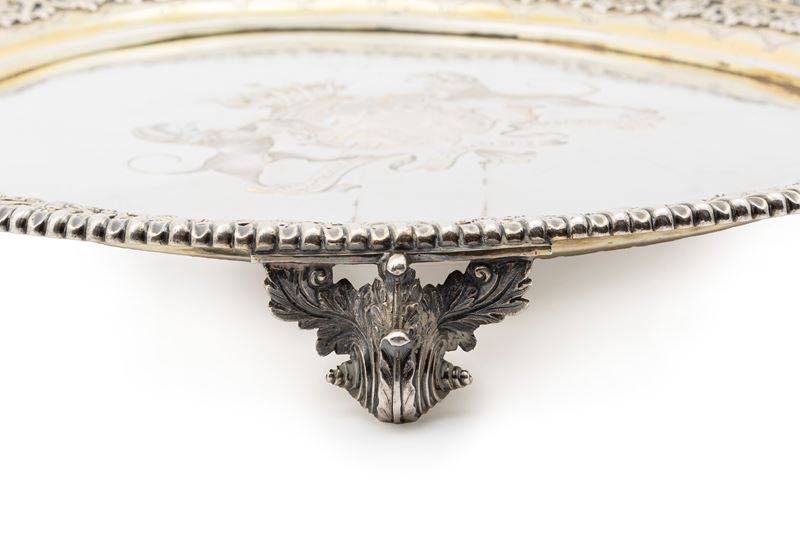
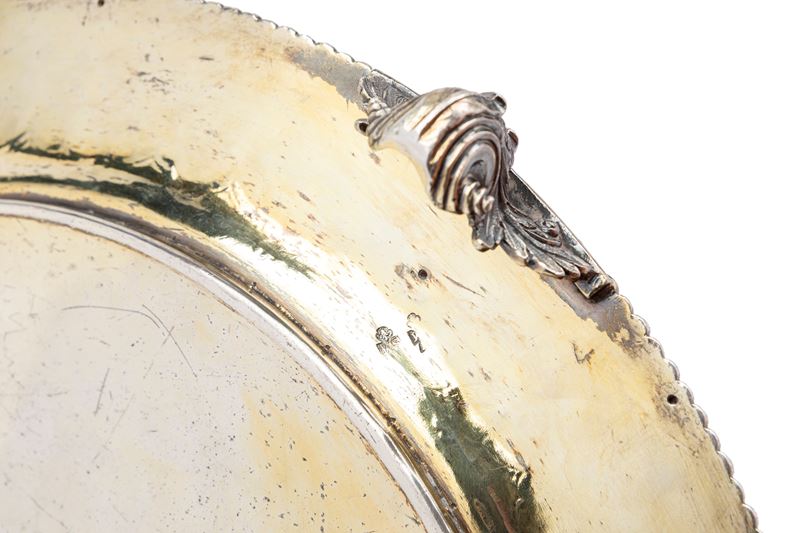
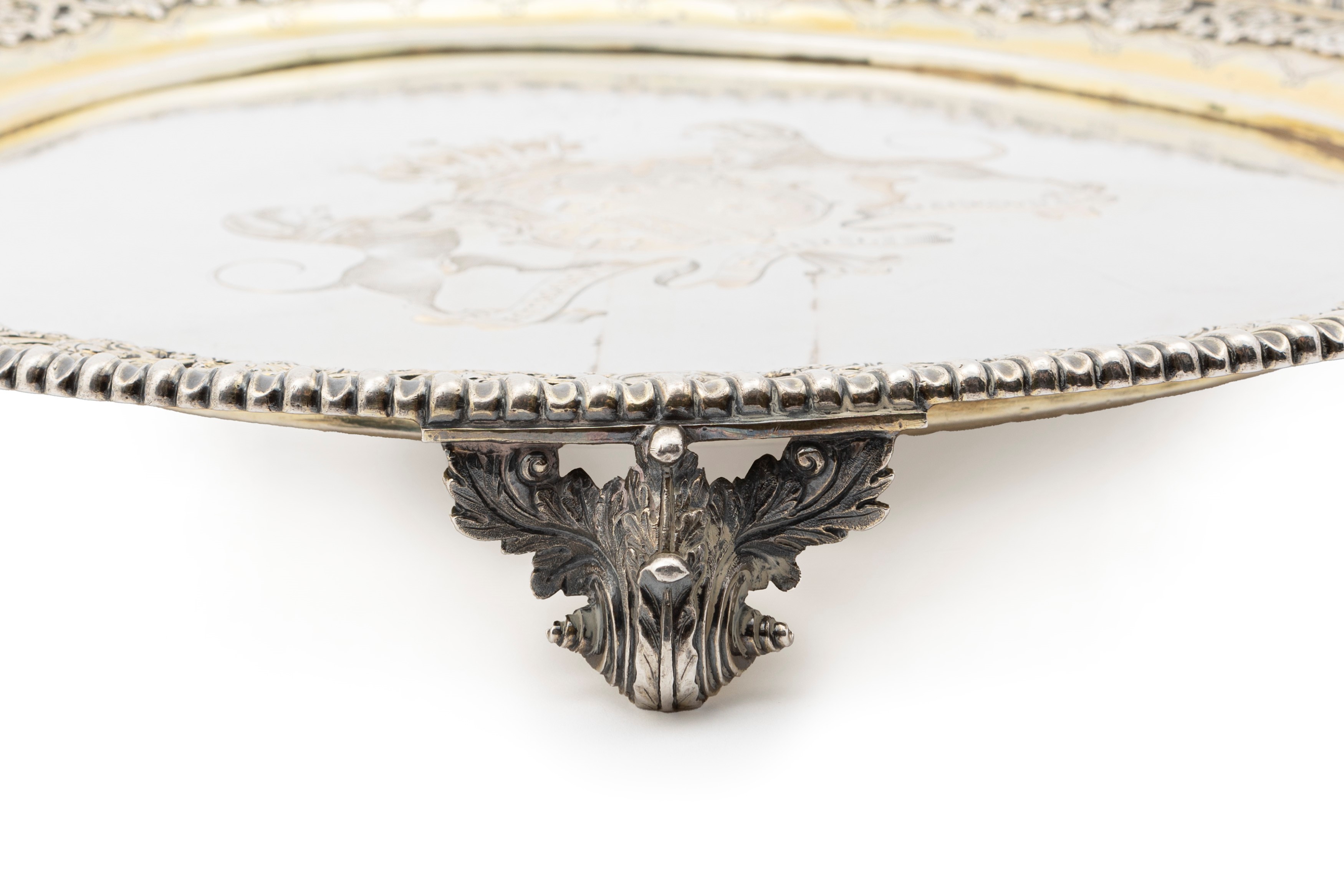
probably made on the occasion of a wedding, it bears the engraved heraldic coat of arms of the Talbot family in the centre, with the motto "humani nihil alienum", richly embossed and chiselled, on four feet, circular edge with pods, defects (partially faded vermeil).
Weight kg 2,340 diam cm 40,00
Starting bid
€ 700
Sold
€ 3.612
The price includes buyer's premium
Do you have a similar item you would like to sell?
Information
Literature
Samuel Margas who was born in London, circa 1690, coming from a dynasty of goldsmiths based in Rouen (Normandy). His father, also called Samuel, a goldsmith in Rouen, formed part of the large Huguenot diaspora in the 1670s-1690s. He arrived in London circa 1683 with his wife Marthe Harache, a relative to the celebrated Huguenot silversmith in London, Pierre Harache, together with their children Jacob and Anne.
Jacob started his apprenticeship as a silversmith with Thomas Jenkins of the Butchers' Company, and then took on his London-born brother Samuel in 1708. In 1714, he became a freeman of the Butchers' Company, entered his mark and was listed at the address 'St Martin's Lane.'
He worked with his brother and both appeared on a list of Subordinate Royal Goldsmiths during the reign of George I, and supplied several pieces to the Royal Jewel House. They certainly worked together on the magnificent wine cistern of the Marquis of Crewe, London, 1714, which was attributed to Samuel by Arthur Grimwade, but recently discovered as bearing the mark of Jacob. The cistern was sold at Sotheby's, New York, 27 January 2011, lot 489.
Samuel was also responsible for a large silver-gilt ewer and basin, circa 1721, as part of a large order placed by Empress Catherine the Great. The ewer and dish remained in the Russian Imperial family until 1917 and is now in the Metropolitan Museum, New York (gift of Irwin Untermyer, 1968, 68.141.133).
Jacob started his apprenticeship as a silversmith with Thomas Jenkins of the Butchers' Company, and then took on his London-born brother Samuel in 1708. In 1714, he became a freeman of the Butchers' Company, entered his mark and was listed at the address 'St Martin's Lane.'
He worked with his brother and both appeared on a list of Subordinate Royal Goldsmiths during the reign of George I, and supplied several pieces to the Royal Jewel House. They certainly worked together on the magnificent wine cistern of the Marquis of Crewe, London, 1714, which was attributed to Samuel by Arthur Grimwade, but recently discovered as bearing the mark of Jacob. The cistern was sold at Sotheby's, New York, 27 January 2011, lot 489.
Samuel was also responsible for a large silver-gilt ewer and basin, circa 1721, as part of a large order placed by Empress Catherine the Great. The ewer and dish remained in the Russian Imperial family until 1917 and is now in the Metropolitan Museum, New York (gift of Irwin Untermyer, 1968, 68.141.133).
Contact
Suggested lots
Caricamento lotti suggeriti...